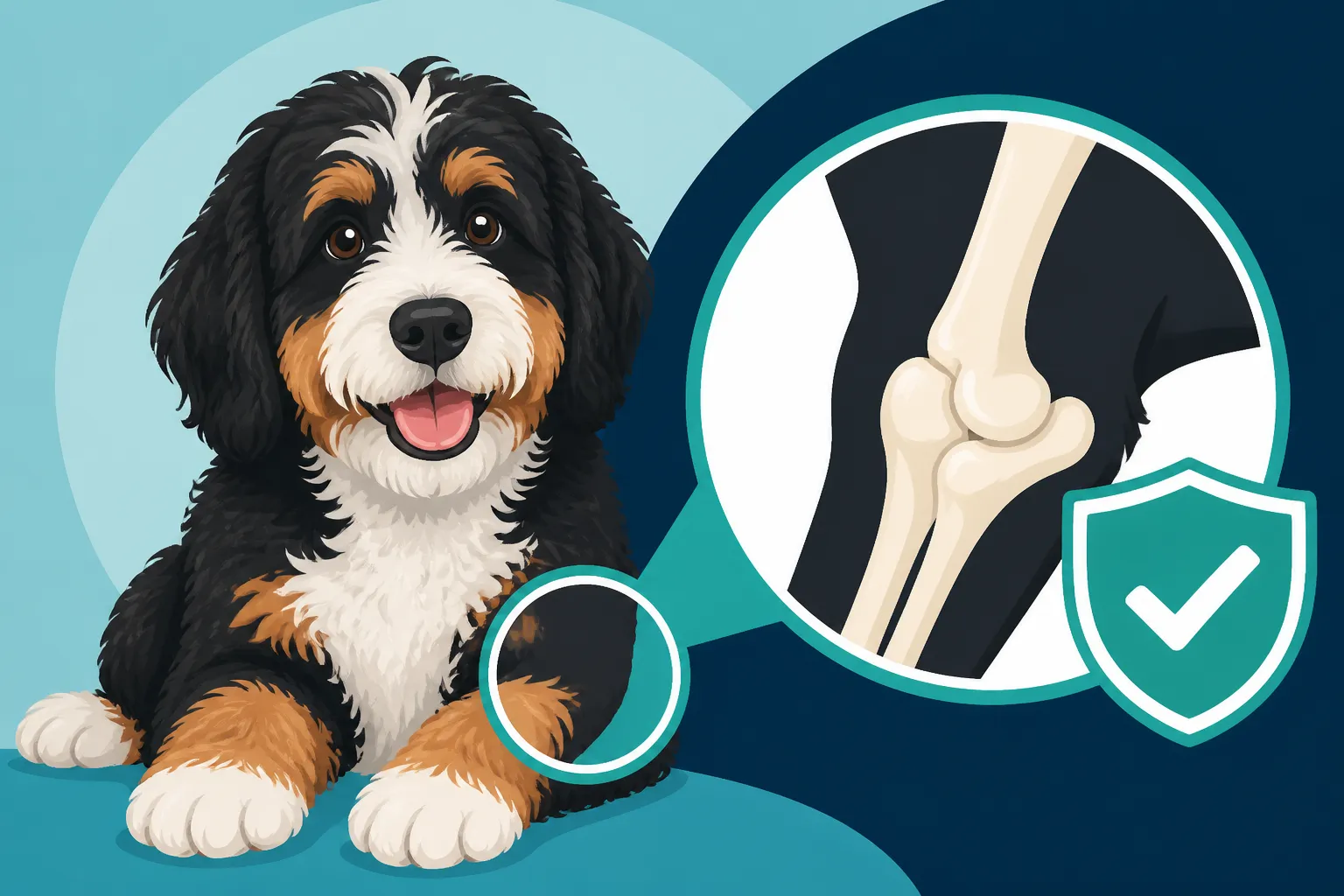
The Elbow Grades a Bernedoodle Breeder Should Show
Bringing a Bernedoodle into your life is an absolute joy, but let's be honest, it also comes with a whole lot of worry, especially when you think about the health issues that can crop up in larger breeds. One of the biggest concerns for prospective Bernedoodle parents is elbow dysplasia, a common and often painful condition. This comprehensive guide is here to demystify what elbow grades mean, what reputable breeders should be transparently showing you, and why this information is absolutely crucial for your puppy's future health and your peace of mind.
Understanding Elbow Dysplasia in Bernedoodles
Elbow dysplasia is one of those veterinary terms that sounds intimidating, but it's really important to grasp, especially with a breed like the Bernedoodle. It's not a single disease but rather a complex condition involving multiple developmental abnormalities of the elbow joint. Essentially, the bones that make up the elbow joint don't fit together quite right, leading to wear and tear, pain, and eventually arthritis.
What is Elbow Dysplasia?
Imagine three bones meeting perfectly to form a hinge – that's what a healthy elbow joint should be like. In dogs with elbow dysplasia, one or more of these bones might develop abnormally, causing incongruity in the joint. This can manifest as several distinct issues, such as:
- Fragmented Coronoid Process (FCP): A small piece of bone breaks off the ulna.
- Osteochondrosis Dissecans (OCD): A flap of cartilage separates from the bone.
- Ununited Anconeal Process (UAP): A growth plate doesn't fuse properly.
- Elbow Incongruity: The bones don't align correctly.
Any of these can lead to inflammation, lameness, and chronic pain as the dog ages. It's a progressive condition, meaning it tends to get worse over time, often culminating in debilitating arthritis. For a big, active dog like a Bernedoodle, this can severely impact their quality of life, making simple activities like running or playing incredibly painful.
Why Bernedoodles Are Prone to Elbow Issues
Unfortunately, Bernedoodles, being a cross between the Bernese Mountain Dog and the Poodle, inherit a predisposition to certain health conditions from both sides. The Bernese Mountain Dog is notoriously susceptible to elbow dysplasia, alongside other joint issues like hip dysplasia. While Poodles are generally healthier in this regard, they can also carry genes for elbow dysplasia, especially the larger Standard Poodles.
When you combine the genetic predisposition of the Bernese with the rapid growth rate often seen in large breed puppies, you've got a recipe for potential joint trouble. A Bernedoodle puppy, especially a Standard Bernedoodle, can grow incredibly fast, sometimes adding several pounds a week. If their joints aren't developing perfectly, this rapid growth puts immense stress on imperfectly formed elbows, accelerating the damage. This is why paying close attention to factors like Elbow Dysplasia in a Growing Bernedoodle and ensuring slow, controlled growth is so paramount. Breeders often try to mitigate this by carefully selecting parent dogs, but it remains a significant risk.
Deciphering OFA Elbow Grades
Navigating the world of canine health clearances can feel like learning a new language. You'll hear terms like "OFA certified" and "elbow scores," and it can be hard to know what's good, what's bad, and what truly matters. The Orthopedic Foundation for Animals (OFA) is the gold standard for evaluating elbow health in dogs, and understanding their grading system is crucial when you're choosing a Bernedoodle puppy.
The Orthopedic Foundation for Animals OFA Grading System
The OFA's mission is to promote the health and welfare of companion animals through objective evaluations of genetic diseases. For elbows, they use X-rays to assess the joint congruity and look for any signs of the developmental abnormalities mentioned earlier. Dogs are typically x-rayed for elbow clearances at two years of age or older, as this ensures their joints are fully mature.
The OFA elbow grades are straightforward:
- Normal (Grade 0): This is what you want to see! A dog with normal elbows shows no evidence of elbow dysplasia. These dogs are considered suitable for breeding, assuming all other health clearances are also excellent.
- Grade 1 (Mild Elbow Dysplasia): This indicates minimal bone change, which might or might not cause clinical signs (like lameness) in the dog. While it's considered "mild," dogs with Grade 1 elbows should generally not be bred. The goal of health testing is to improve the breed, not to perpetuate conditions, even mild ones.
- Grade 2 (Moderate Elbow Dysplasia): This grade means there are moderate bone changes indicative of elbow dysplasia. These dogs are highly likely to experience pain and lameness, and breeding them is strongly discouraged.
- Grade 3 (Severe Elbow Dysplasia): Dogs with Grade 3 elbows have severe bone changes, often with significant arthritis. They will almost certainly be symptomatic and suffer considerable discomfort. Breeding dogs with this grade is completely irresponsible.
It’s important to note that the OFA grades each elbow individually and then assigns an overall grade based on the worst elbow. So, if a dog has one normal elbow and one Grade 1, their overall OFA elbow grade will be Grade 1.
What "Clear" Really Means for Bernedoodle Elbows
When a breeder tells you their dogs are "clear" for elbows, what they should mean is that both parent dogs have received an OFA grade of "Normal" (Grade 0). This is the only acceptable grade for breeding animals when it comes to elbow dysplasia. Anything less than "Normal" means the dog has some degree of the condition and should ideally not be used in a breeding program.
Don't settle for vague statements like "my vet said their elbows look fine" or "they don't limp, so they're clear." These aren't objective, verifiable statements. The OFA evaluation is performed by a panel of three independent veterinary radiologists, ensuring a consistent and unbiased assessment. True "clearance" means demonstrable, public-record proof of Normal (Grade 0) elbows for both the sire and the dam of your potential puppy. This is a non-negotiable expectation from a truly ethical and responsible Bernedoodle breeder.
What a Reputable Bernedoodle Breeder Should Show
Choosing a Bernedoodle breeder can feel overwhelming, with so many options out there. But when it comes to health, particularly joint health, the proof is in the pudding – or rather, in the paperwork. A truly reputable breeder won't just tell you their dogs are healthy; they'll show you the comprehensive health clearances that back up those claims.
Proof of Parent Testing
This is perhaps the most critical piece of information a breeder should provide, unprompted. You need to see the actual OFA certificates for both the mother (dam) and the father (sire) of the litter. These aren't just informal notes; they are official documents from the Orthopedic Foundation for Animals. Each certificate will list:
- The dog's registered name and OFA registration number. This is crucial for verification.
- Their breed, date of birth, and sex.
- The specific health screening performed (e.g., Elbow Dysplasia).
- The final OFA grade received (e.g., Normal, Grade 1).
- The date the evaluation was performed. Remember, elbows should be evaluated at 24 months of age or older.
A responsible breeder will happily provide copies of these certificates. Even better, many will have their dogs' results publicly verifiable on the OFA website (www.ofa.org). You can simply go to the site, enter the dog's registered name or OFA number, and see the results for yourself. This independent verification is a powerful tool against breeders who might be less than truthful. Don't be shy about asking for this information, and always, always verify it yourself.
Understanding Heritability and Risk
Elbow dysplasia is a polygenic trait, meaning it's influenced by multiple genes. It's also affected by environmental factors like nutrition and exercise during growth. Because of its complex heritability, even two "Normal" rated parents can, theoretically, produce offspring with some degree of elbow dysplasia, though the risk is significantly lower. This is why testing both parents is absolutely non-negotiable. If only one parent is tested and deemed "clear," you still have a huge unknown from the untested side.
A responsible breeder understands this nuance. They aren't just looking for "pass" or "fail"; they're looking to stack the genetic deck in your puppy's favor as much as possible. They will aim for generations of dogs with clear elbow (and hip, and eye, and cardiac) clearances. They'll also be able to discuss the health of the broader lines behind their breeding dogs, looking at grandparents and great-grandparents to assess long-term health trends. This depth of understanding goes beyond simply showing a piece of paper; it demonstrates a commitment to genuinely reducing the risk of conditions like elbow dysplasia in future generations. For a deeper dive into the genetic aspect, you might want to read Whether Elbow Dysplasia Is Heritable in a Bernedoodle.
The Importance of Transparency and Verification
It’s one thing for a breeder to say they do all the right health testing, and another entirely for them to prove it. In the world of Bernedoodles, where demand is high and prices can be too, unfortunately, not every breeder operates with the highest ethical standards. Transparency and independent verification are your best friends in ensuring you bring home the healthiest puppy possible.
Red Flags to Watch Out For
When you're communicating with a potential breeder, pay close attention to how they respond to questions about health clearances. Here are some major red flags that should make you pause:
- "My vet checks their joints, they're fine": While your breeder's regular vet might palpate joints, a physical exam is not a substitute for OFA x-rays and evaluations by board-certified radiologists. This statement indicates either a lack of understanding or an unwillingness to invest in proper testing.
- "We don't believe in those expensive tests": Health tests are an investment in the health of the breed and your future puppy. If a breeder is cutting corners here, where else are they cutting corners? This is a huge red flag.
- "The results aren't back yet" (when puppies are already born): OFA clearances are typically done on adult dogs (24 months or older) before they are bred. If the clearances aren't done by the time puppies are conceived or born, it's too late for that litter, and the breeder is being irresponsible.
- Refusal to provide specific OFA numbers or registered names: If they are hesitant or make excuses about giving you the information you need to look up results yourself, be wary.
- Only providing one parent's clearances: As discussed, you need to see both the dam and sire's clearances.
- Showing only "preliminary" results: Preliminary clearances can be done on younger dogs, but the final, official OFA certification is only given after 24 months. While prelims can give an indication, always ask for the final results.
An ethical breeder will be proud of their health testing and will actively educate you on why it's so important. They see it as an essential part of responsible breeding, not an optional extra.
Why Independent Verification Matters
You wouldn't buy a used car without checking its history, and you shouldn't get a puppy without verifying its parents' health history. The OFA website's public database is an invaluable tool for this. By using the dog's registered name or OFA number, you can confirm:
- The existence of the clearance: Is the dog actually in the database?
- The accuracy of the grade: Does it match what the breeder told you?
- The date of the clearance: Was it done at the appropriate age (24 months or older for final elbow clearances)?
This independent verification protects you from misrepresentations, accidental errors, or outright deception. It empowers you to make an informed decision and gives you confidence that the breeder is truly doing their due diligence. Investing in a Bernedoodle puppy is a significant financial and emotional commitment, so taking the time to verify these critical health claims is a small but powerful step in safeguarding your future pet's well-being. It can also save you enormous veterinary bills down the line if your pup were to develop severe elbow dysplasia, which is a major reason why many people opt for pet insurance like Healthy Paws.
Beyond Elbow Grades: A Holistic Approach to Joint Health
While understanding OFA elbow grades is critical, it's just one piece of the puzzle when it comes to ensuring your Bernedoodle enjoys a long, healthy life free from joint pain. Even with the best genetics, environmental factors play a huge role in joint development and overall well-being.
Impact of Nutrition and Exercise on Elbow Development
For a rapidly growing, large breed puppy like a Bernedoodle, what they eat and how much they exercise can significantly influence their joint development.
- Proper Nutrition: Overfeeding a puppy or feeding a diet too high in calcium can lead to skeletal problems, including exacerbating hip and elbow dysplasia. It's crucial to feed a high-quality large breed puppy food that is specifically formulated for controlled growth. These diets have carefully balanced calcium and phosphorus levels to prevent rapid, unnatural growth spurts that can stress developing joints. If your breeder isn't knowledgeable about this, it's another red flag. You should always aim for Growing a Standard Bernedoodle Slowly on Purpose rather than pushing for maximum size early on.
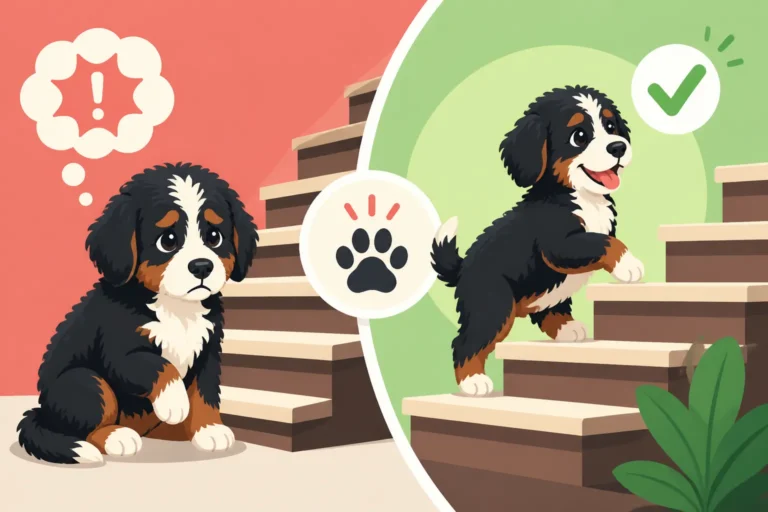
- Controlled Exercise: While Bernedoodle puppies are full of energy and seem to have boundless enthusiasm for play, it's vital to moderate their exercise, especially during their first year. Too much high-impact activity, like jumping off furniture, running long distances, or excessive stair climbing, can put undue stress on their soft, developing joints. Stick to the "five-minute rule" – five minutes of structured exercise per month of age, twice a day. So, a four-month-old puppy would get two 20-minute walks per day. Gentle play, short walks on soft surfaces, and controlled socialization are ideal. You can learn more about this in The Five Minute Rule on a Bernedoodle Puppy's Walks and understand that Whether Jumping Off Furniture Hurts a Bernedoodle is a real concern.
Early Signs and Veterinary Consultation
Even with the best genetics and care, joint issues can sometimes arise. Being observant and knowing the early signs of elbow pain can make a big difference in managing the condition and maintaining your dog's comfort.
Keep an eye out for these subtle indicators in your Bernedoodle puppy or young adult:
- Lameness or limping: This might be intermittent or more pronounced after exercise or rest.
- Stiffness: Especially noticeable after waking up or after periods of inactivity.
- Reluctance to play or exercise: A normally energetic puppy suddenly seems less interested in their usual activities.
- Difficulty getting up or lying down: They might struggle or move awkwardly.
- Altered gait: They might carry a limb differently, or have a short, choppy stride in the front legs.
- Swelling or warmth around the elbow joint: Though this can be harder to detect due to their thick coat.
- Pain response: Whimpering or showing discomfort when the elbow area is touched.
If you notice any of these signs, don't hesitate to consult your veterinarian immediately. Early diagnosis and intervention can significantly impact the long-term prognosis and quality of life for your Bernedoodle. They can conduct a thorough physical exam and recommend imaging (like X-rays or even more advanced scans) to get a clear picture of what's happening in the joint. For more detailed information on what to look for, check out Signs a Bernedoodle Puppy's Elbows Hurt.
| OFA Elbow Grade | Description | Breeding Suitability | Clinical Impact (Likely) |
|---|---|---|---|
| Normal (0) | No evidence of elbow dysplasia. | Recommended | None |
| Grade 1 | Mild bone change, minimal incongruity. | Not Recommended | May or may not show signs; mild discomfort. |
| Grade 2 | Moderate bone changes, clear signs of incongruity. | Strongly Discouraged | Likely to show signs; moderate pain/lameness. |
| Grade 3 | Severe bone changes, significant arthritis. | Completely Unsuitable | High likelihood of severe pain, chronic lameness. |
Disclaimer
The information provided in this article is for general informational and educational purposes only and is not a substitute for professional veterinary advice. Always seek the advice of your veterinarian or other qualified animal health provider with any questions you may have regarding a medical condition or health management plan for your Bernedoodle.