Whether Stairs Hurt a Standard Bernedoodle Puppy
Bringing home a Bernedoodle puppy is an absolute joy, filled with boundless energy, adorable antics, and a whole lot of questions. One of the biggest worries many new Bernedoodle parents have, especially with a standard-sized pup, revolves around protecting those developing joints. You might find yourself staring at your staircase, wondering if those daily trips up and down could actually be doing more harm than good to your furry friend. This guide is here to unravel that common concern, explaining the delicate nature of a growing Bernedoodle's joints and offering practical, real-world advice to keep them safe and sound as they grow into magnificent adults.
Understanding Bernedoodle Puppy Growth Plates and Joint Health
It's completely natural to worry about your Bernedoodle puppy's long-term health, especially when you think about their impressive size as adults. These aren't tiny lapdogs; they're substantial, and their rapid growth spurt can put unique stresses on their developing bodies. Protecting their joints during this crucial period is paramount for a lifetime of happy, active adventures.
The Delicate Nature of Puppy Growth Plates
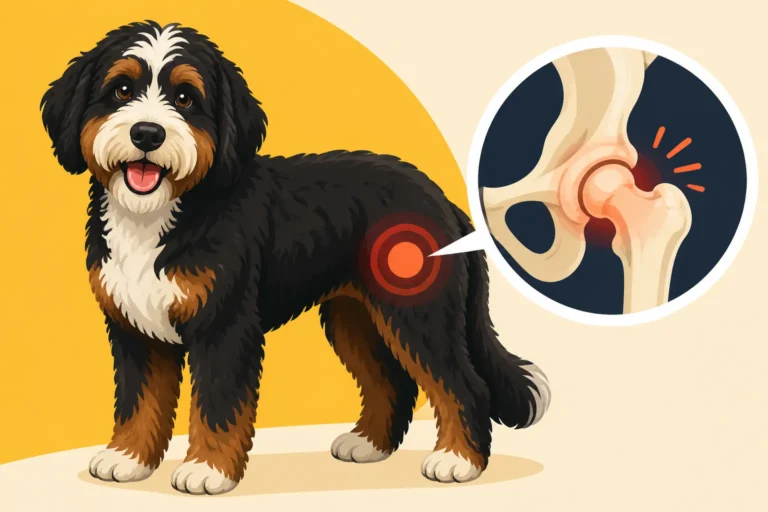
When your Bernedoodle is a tiny, wobbly pup, their bones aren't fully formed and hardened like an adult dog's. Instead, they have areas of cartilage at the ends of their long bones called "growth plates" or "epiphyseal plates." Think of these as little soft spots where the bone is actively lengthening, allowing your puppy to grow from that small bundle of fluff into a sizable dog. These growth plates are incredibly vulnerable to injury because they haven't yet calcified and become strong bone. Any excessive stress, impact, or twisting motion can damage them, potentially leading to pain, abnormal bone development, or even permanent lameness if not addressed promptly.
For a standard Bernedoodle, this period of rapid growth and vulnerable growth plates typically lasts until they are around 12 to 18 months old, sometimes even a bit longer for the very largest individuals. They gain a tremendous amount of weight and height in a relatively short time, which means their joints are under significant strain even with normal activity. This is why careful management of their environment and exercise is so critical during these formative months. It's not just about avoiding major accidents; it's about cumulative stress from everyday activities.
Common Orthopedic Concerns in Bernedoodles
Bernedoodles, being a crossbreed of Bernese Mountain Dogs and Poodles, can inherit predispositions to certain orthopedic conditions from both sides of their family tree. Two of the most common and concerning issues are hip and elbow dysplasia. Hip dysplasia is a condition where the hip joint doesn't form correctly, leading to a loose joint and eventual arthritis. Similarly, Elbow Dysplasia in a Growing Bernedoodle involves abnormal development of the elbow joint, causing pain and lameness. These conditions are complex, with both genetic and environmental factors playing a role.
While reputable breeders diligently screen their parent dogs for these genetic predispositions (you should always ask to see OFA or PennHIP clearances!), environmental factors during puppyhood can significantly impact whether a dog develops symptoms, or how severe those symptoms become. Things like rapid weight gain, inappropriate nutrition, and excessive or high-impact exercise can exacerbate a mild genetic predisposition into a debilitating condition. For a large breed puppy like a Bernedoodle, preventing unnecessary stress on these developing joints isn't just a recommendation; it's a vital part of responsible puppy rearing. This is why the advice to prioritize Growing a Standard Bernedoodle Slowly on Purpose is so crucial, as it reduces strain on these vulnerable areas.
The "Stairs" Question: When, How Much, and Why it Matters
So, back to those stairs. The question isn't just "are they bad?" but rather, "when are they bad, how much is too much, and how can I manage them safely?" It's a nuanced topic, and the answer often lies in understanding the mechanics of a puppy's movement and the cumulative effect of seemingly small actions.
The Risks of Repetitive Stair Climbing
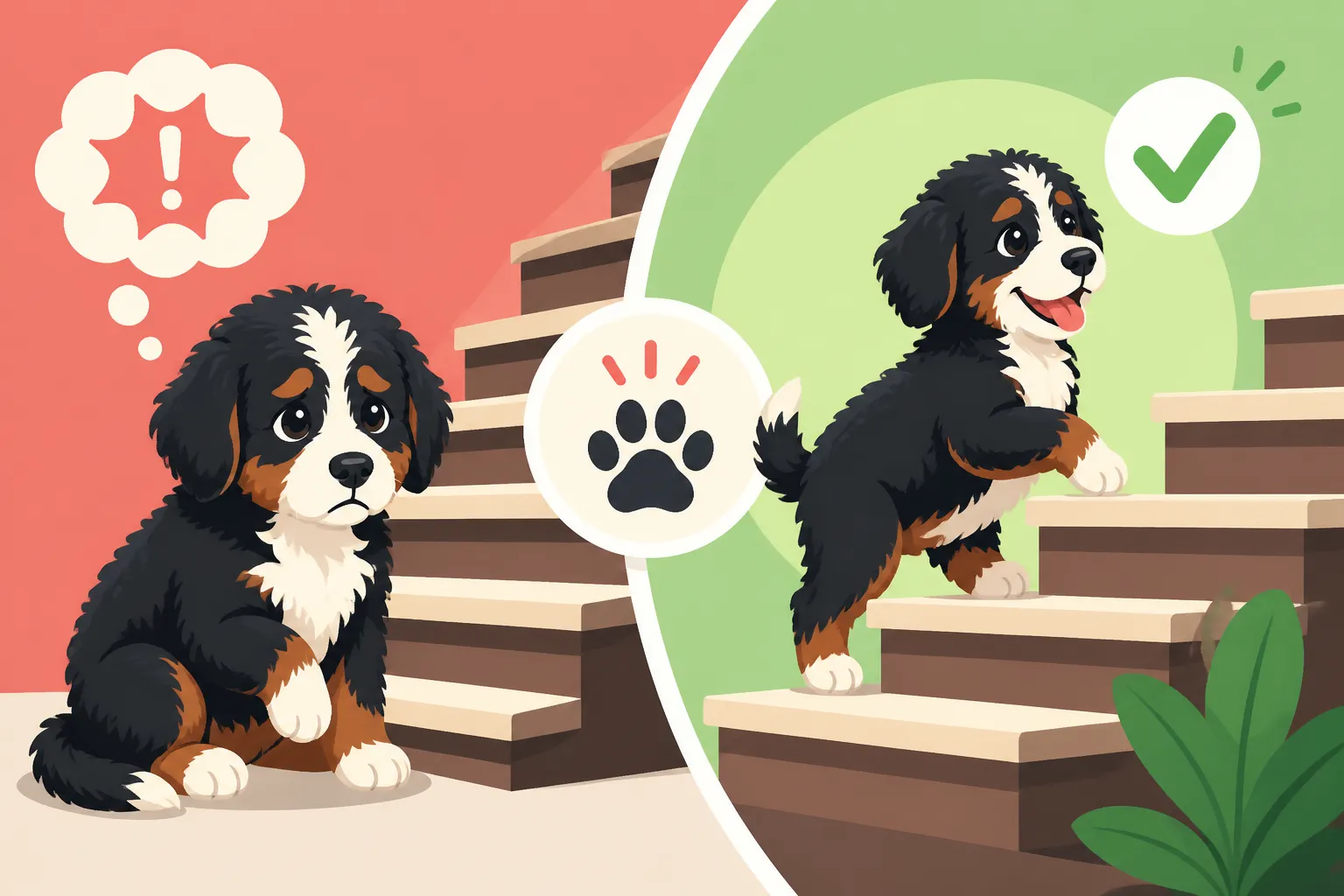
Imagine a human toddler trying to navigate a flight of stairs. They're clumsy, often falling, and certainly not built for the repetitive impact. A Bernedoodle puppy, despite its four legs, isn't much different in its early stages. When a young Bernedoodle puppy goes up or down stairs, especially quickly, they often don't use a controlled, deliberate motion. Going down stairs can be particularly risky. Puppies tend to leap or bound, absorbing the impact with their front legs, which puts significant stress on their shoulders, elbows, and wrists. The jolting force can transmit up through their growth plates, leading to microtraumas that can accumulate over time.
Going up stairs also presents challenges. While perhaps less impactful than descending, it still requires jumping and pushing off, which puts strain on the rear legs, hips, and knees. If your puppy is doing this multiple times a day, every day, the repetitive stress can interfere with proper joint formation. This is especially true for standard Bernedoodles who will carry a lot of weight – imagine that weight being repeatedly slammed down on soft, developing cartilage. It's a recipe for potential problems down the line, increasing the risk of conditions like Hips on a Ninety Pound Bernedoodle or elbow issues.
Safe Alternatives and Management Strategies
The good news is that managing stairs for your Bernedoodle puppy doesn't mean you have to live in a single-story home or never let them see a staircase. It's all about thoughtful prevention and management during their most vulnerable period.
Firstly, baby gates are your best friend. Install them at the top and bottom of staircases to prevent unsupervised access. This is a simple, effective barrier that removes the temptation and the risk. If your puppy needs to get upstairs or downstairs, the safest option is to carry them. This might sound like a workout, especially as your Bernedoodle grows, but it's a small price to pay for healthy joints. A standard Bernedoodle puppy can easily reach 30-40 pounds by 4-5 months, so get ready for some heavy lifting!
Another excellent alternative, particularly for outdoor steps or if carrying becomes too difficult as they get heavier, is a ramp. A sturdy, non-slip ramp allows your puppy to ascend and descend with minimal impact. You might need to teach them how to use it, perhaps with some tasty treats and gentle guidance, but it's a fantastic investment in their joint health.
When can your Bernedoodle start to use stairs? Generally, most vets and breeders recommend waiting until a large breed puppy is at least 6 months old, and ideally closer to 12-18 months when their growth plates have largely closed, before allowing unrestricted access. Even then, teach them to go slowly, one step at a time, rather than bounding. Always keep their daily exercise within reasonable limits, adhering to guidelines like The Five Minute Rule on a Bernedoodle Puppy's Walks, which suggests five minutes of structured exercise per month of age, twice a day. This applies to overall activity, not just walks, and certainly includes limiting stair use.
Practical Tips for Protecting Your Bernedoodle Puppy's Joints
Beyond managing stairs, there are several other practical steps you can take around your home and in your daily routine to ensure your Bernedoodle puppy develops strong, healthy joints. These small considerations can make a huge difference in their long-term comfort and mobility.
Creating a Joint-Friendly Home Environment
Your home environment plays a significant role in your Bernedoodle puppy's joint health. One of the biggest culprits for joint strain, besides stairs, is slippery flooring. Hardwood, tile, and laminate floors can be like ice rinks for a clumsy puppy with undeveloped coordination. Their paws slide out from under them, leading to splits, falls, and abnormal splaying of their legs, all of which put immense stress on hips, elbows, and knees. To combat this, strategically place rugs, runners, or non-slip mats in high-traffic areas where your puppy spends a lot of time, especially where they eat, sleep, and play. Ensure these rugs have non-slip backing to prevent them from sliding around.
Another critical aspect is managing their play and jumping habits. While it's adorable to see a puppy zoom around, uncontrolled, high-impact activities should be limited. Avoid encouraging roughhousing that involves a lot of twisting, sudden stops, or high jumps, especially on hard surfaces. Discourage behaviors like jumping off furniture, as a sudden impact from even a short height can injure delicate growth plates. If your Bernedoodle loves to be on the couch with you, gently lift them up and down, rather than letting them jump. Remember, it's about cumulative stress, and even small jumps can add up. For more insights on this, read up on Whether Jumping Off Furniture Hurts a Bernedoodle.
Finally, provide supportive bedding. A soft, orthopedic bed can make a big difference in supporting their joints, especially as they grow larger and heavier. A proper bed disperses their weight evenly, preventing pressure points and providing cushioning.
Nutrition and Vet Care for Optimal Bone Development
Proper nutrition is foundational for healthy bone and joint development in large breed puppies like Bernedoodles. It's not just about how much they eat, but what they eat. Always choose a high-quality, large-breed puppy food formulated specifically for large and giant breeds. These foods are designed with carefully controlled calcium and phosphorus levels, which are critical for slow and steady bone growth. Too much calcium, surprisingly, can be just as detrimental as too little, leading to rapid growth that outpaces the development of supportive soft tissues and can contribute to orthopedic problems. Understanding Why Calcium Levels Matter for a Growing Bernedoodle is key to making informed dietary choices.
Your veterinarian is an invaluable partner in your Bernedoodle's health journey. Regular check-ups are essential to monitor their growth, weight, and overall joint health. Your vet can provide guidance on appropriate exercise, nutrition, and when it might be safe to introduce more strenuous activities. They can also perform initial physical examinations to check for any signs of early joint looseness or discomfort.
It's also a wise idea to consider pet insurance from an early age. Even with the best preventive care, large breed dogs can unfortunately develop orthopedic issues or face unexpected medical emergencies. Companies like Healthy Paws offer comprehensive coverage that can help ease the financial burden if your Bernedoodle needs costly treatments for hip dysplasia, elbow surgery, or other conditions. Having a plan like Healthy Paws in place provides peace of mind, knowing you can make treatment decisions based on what's best for your dog, not just your wallet.
Building Strength Safely for a Lifetime of Activity
The goal isn't to turn your Bernedoodle puppy into a bubble-wrapped recluse, but to foster healthy development that allows them to be active and happy throughout their entire life. It's about moderation, appropriate challenges, and building strength gradually.
Controlled Exercise and Development
During puppyhood, focus on controlled, low-impact exercise. Short, frequent walks on soft surfaces like grass or dirt trails are ideal. Avoid long, strenuous hikes or runs on hard pavement, especially during their first year. The rule of thumb for exercise, as mentioned earlier, is often five minutes per month of age, twice a day. So, a four-month-old puppy would get two 20-minute sessions of structured activity. This helps build muscle and stamina without overstressing developing joints.
Introducing low-impact activities like supervised swimming can be excellent for muscle development without any concussive impact on their joints. Just be sure the water is warm enough, and they are introduced slowly and safely, always wearing a life vest. Remember, the focus is on steady, healthy development. Your Bernedoodle will have plenty of years for intense activities once their growth plates have closed and their body has matured.
When Can Your Bernedoodle Tackle Stairs Safely?
There's no magic age when all stairs suddenly become safe, but general guidelines suggest that most large breed puppies, including standard Bernedoodles, can start using stairs more regularly once their growth plates have completely closed. This typically occurs between 12 and 18 months of age, though it can vary by individual. Your vet can give you a more precise idea based on your dog's growth and radiographs if needed.
Even after their growth plates close, it's a good idea to teach your Bernedoodle how to use stairs properly. Encourage them to go one step at a time, in a controlled manner, rather than bounding up or down. If you have particularly steep or long flights of stairs, continued caution might be warranted. Always observe your dog for any signs of discomfort after using stairs, such as limping, stiffness, or reluctance to move. If you notice any issues, consult your veterinarian immediately. Early intervention is key for many joint problems. Remember, the ultimate goal is a lifetime of good health, so a little patience and careful management in puppyhood go a long, long way. For some owners, investing in a good pet insurance policy through a provider like Healthy Paws from a young age brings comfort, knowing that unforeseen joint issues can be managed without undue financial stress.
| Puppy Age Range | Safe Activities (Low Impact) | Cautionary Activities (Moderate Impact) | Avoid Completely (High Impact/Repetitive) |
|---|---|---|---|
| 8-16 Weeks | Short, supervised play sessions (5-10 min) on soft surfaces, gentle leash walks (grass), crate training. | Very short, controlled stair introductions (carried mostly). | Long walks on hard surfaces, strenuous running, jumping off furniture, repetitive stair use. |
| 4-6 Months | Increased structured walks (grass/dirt), very gentle swimming, puzzle toys, positive reinforcement training. | Brief, supervised stair use (learning to go one step at a time, mostly carried). | Rough play with other large dogs, extensive fetching, dog parks (uncontrolled play), agility. |
| 6-12 Months | Longer walks, hiking on varied terrain (moderate), continued swimming, basic obedience classes, introduction to ramps. | Gradual increase in stair use, but still encourage control and avoid excessive bounding. | Intense running, forced jumping, long-distance running, intense agility training. |
| 12-18 Months (or after growth plates close) | Most normal activities, including moderate running, longer hikes, continued training, gradual introduction to higher impact activities. | Unrestricted stair use should now be safer, but still monitor for signs of discomfort. | Overly aggressive play that causes collisions, marathon running. Consult vet for high-impact sports. |
Remember, every puppy is an individual. This table provides general guidelines, but always consult with your veterinarian about the best exercise plan for your Bernedoodle, especially as they grow and mature.
Disclaimer
The information provided in this article is for general informational purposes only and does not constitute veterinary advice. Always consult with a qualified veterinarian for any health concerns or before making any decisions related to your Bernedoodle's care and well-being.