Which Bernedoodle Tests Can Be Run at Eight Weeks
Bringing home a Bernedoodle puppy is such an exciting time, full of dreams about future cuddles and adventures. But for many prospective owners, there's also a quiet anxiety bubbling beneath the surface: is this puppy truly healthy? It’s a completely valid concern, especially with the high price tag on these beloved pups and the known health challenges in their parent breeds. You want to make sure you're getting as much peace of mind as possible from the start, and that often means asking about health testing. This guide will delve into exactly what health tests are realistically possible and meaningful for a Bernedoodle puppy at just eight weeks old, and what information you should be looking for from your breeder.
Understanding Early Health Screening Limitations
It's natural to want all the answers about your puppy's health before you even bring them home. When you're picking up an eight-week-old Bernedoodle, you might be hoping the breeder has a stack of paperwork confirming a clean bill of health on every possible genetic condition. While responsible breeders do a tremendous amount of health screening on the parents, the scope of what can be definitively tested on a tiny eight-week-old puppy is actually quite limited. This isn't a reflection of the breeder's dedication, but rather the biological realities of canine development and the diagnostic tools available.
The Difference Between Initial Screening and Full Certifications
Think of it this way: there’s a big difference between a quick check-up and a comprehensive, adult-level certification. When your Bernedoodle puppy is eight weeks old, they are still very much a baby. Their bones and joints are soft and rapidly developing, their internal organs are maturing, and many genetic conditions simply haven't had enough time to manifest or be reliably detected. For instance, orthopedic issues like hip and elbow dysplasia, which can plague larger breeds, require X-rays of fully formed joints for official certification. This kind of assessment, like those done by the Orthopedic Foundation for Animals (OFA) or PennHIP, can't typically be performed until a dog is at least 12 months, and often 24 months, of age. So, a breeder can't hand you an "OFA Excellent" certificate for an eight-week-old puppy's hips – that's simply not how it works.
What can be done at eight weeks is more about initial observation and genetic predisposition. A vet can conduct a thorough physical exam to check for obvious congenital defects, listen to the heart for murmurs, and palpate for issues like umbilical hernias or undescended testicles. Beyond that, specialized genetic DNA tests can provide insight into hereditary diseases that a puppy might carry, but these tests confirm genetic markers, not the presence or absence of the disease itself at such a young age, nor do they cover structural issues. This distinction is crucial for managing your expectations and understanding the documentation your breeder provides.
Why Some Major Health Issues Can't Be Detected This Early
The reality is, many of the more serious health concerns that Bernedoodles can inherit, particularly from their Bernese Mountain Dog lineage, simply don't show up in a definitive way at eight weeks. Conditions such as various cancers – for example, the aggressive Histiocytic Sarcoma prevalent in Bernese – develop much later in life. Even something like Von Willebrand's Disease in a Bernedoodle, a bleeding disorder, might be screened for genetically, but a puppy showing active symptoms is less common at this age.
Similarly, other significant inherited conditions like Degenerative Myelopathy, a neurological disease that causes progressive paralysis, typically manifests in middle to older age, usually after six or seven years. While genetic tests can identify if a puppy is a "carrier" or "at risk," you won't see physical signs of it in a young puppy. The same goes for many eye conditions; while some are present at birth, others like Progressive Retinal Atrophy (PRA) have later onset, making early diagnosis impossible without a genetic test showing risk. It's a hard truth, but much of a Bernedoodle's long-term health journey unfolds long after they leave their birth home, which is why parent screening is paramount.
What Tests Can Be Done and What They Tell You
Even with the limitations, there are still valuable health checks that can and should be performed on a Bernedoodle puppy at eight weeks old. These early assessments provide a crucial baseline and can flag any immediate concerns, giving you and your veterinarian a starting point for their lifelong care.
Initial Veterinary Check-Ups and Physical Exams
Every reputable breeder will have their puppies examined by a licensed veterinarian before they go to their new homes, typically around the 7-8 week mark. This isn't just a quick peek; it's a comprehensive physical assessment. During this exam, the vet will:
- Listen to the heart and lungs: They're checking for murmurs, which could indicate congenital heart defects, or any abnormal lung sounds. Sometimes, a "flow murmur" is innocent and resolves as the puppy grows, but it's important to be aware of.
- Palpate the abdomen: To check for organ size, tenderness, and to ensure there are no obvious hernias (like an umbilical hernia, which is often minor and easily repaired, but still good to know about).
- Check the eyes and ears: Looking for signs of infection, abnormal discharge, or structural issues like entropion (inward-rolling eyelids) which can cause irritation. They might also check the puppy's response to sound. You'll want to ensure the puppy doesn't show signs of ear infections in a Bernedoodle's drop ear, which can sometimes start early.
- Examine the mouth and teeth: To ensure proper bite alignment and check for any cleft palate issues.
- Assess joints and gait: While not a definitive orthopedic clearance, the vet will observe the puppy walking and gently palpate their tiny legs to check for obvious lameness, pain, or significant structural abnormalities. They can identify obvious issues but won't be able to predict future hip or elbow dysplasia.
- Check for external parasites: Fleas or mites are common in puppies, and the vet will ensure the litter is clear or treated appropriately.
- Verify vaccination status and deworming: The vet will confirm the puppy has received its first round of core vaccinations and has been dewormed on a regular schedule.
This initial vet check is incredibly important. It’s your first snapshot of your puppy's physical well-being. Always ask your breeder for the veterinary health certificate or record from this examination. It should be signed by a vet and detail all findings.
DNA Panel Screening for Genetic Diseases
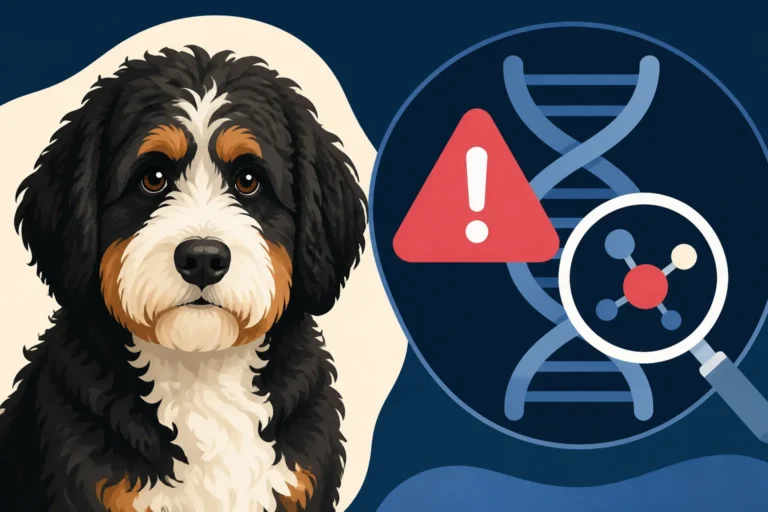
Here's where modern science truly helps us understand potential future health. While physical exams can only tell you what's present physically at eight weeks, DNA tests can tell you what genetic predispositions your puppy might have. Many reputable Bernedoodle breeders will have already run these tests on both parent dogs to ensure they are not passing on known genetic conditions. However, some breeders may opt to test individual puppies for certain conditions as an added measure, especially if the parentage isn't fully clear or if they want to identify carriers in a litter destined for breeding.
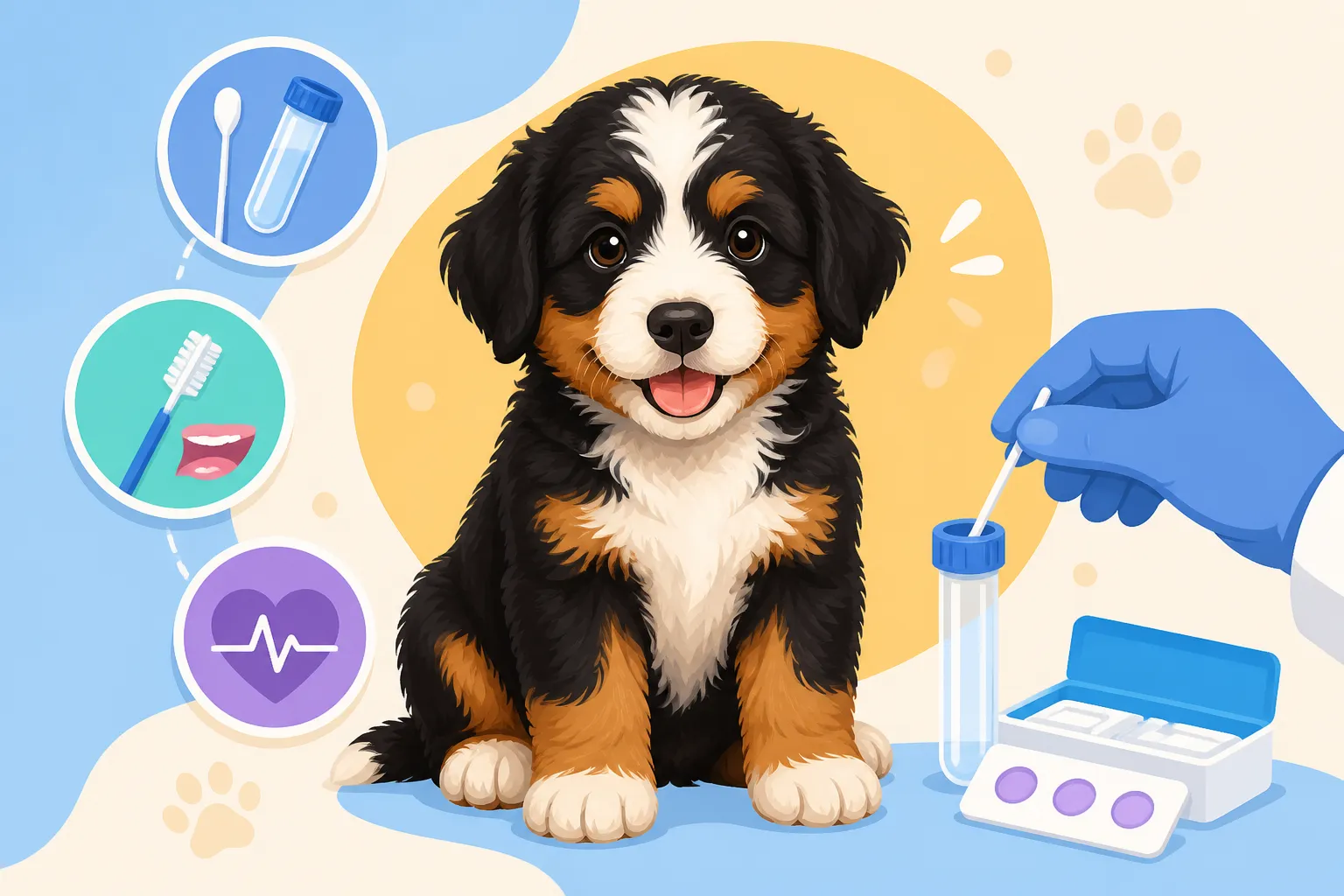
The types of genetic tests that can be run on an eight-week-old puppy (usually from a cheek swab or blood sample) typically cover conditions like:
- Degenerative Myelopathy (DM): This devastating neurological disease primarily affects older dogs. A DNA test can identify if a puppy is "clear," a "carrier," or "at-risk." You should always ask if both Bernedoodle parents should be SOD1 tested, as this is the gene associated with DM. Understanding what an At Risk SOD1 result means for a Bernedoodle is critical if either parent or the puppy itself tests positive.
- Von Willebrand's Disease (vWD): This is a bleeding disorder that can lead to excessive bleeding after injury or surgery. The Bernese Mountain Dog side of the Bernedoodle often carries Type I vWD. A DNA test can tell you if your puppy is clear, a carrier, or affected. This is highly relevant because if your puppy is affected, it might indicate future concerns if not managed, like excessive bleeding during spay/neuter surgery. You can find more information on which Von Willebrand type the Bernese carries.
- Progressive Retinal Atrophy (PRA): This group of genetic eye diseases leads to blindness. Different forms exist, but DNA tests can screen for the common variants. This helps identify puppies at risk of developing vision problems later in life, though symptoms might not appear for years. This is one of the eye conditions a Bernedoodle is tested for.
It's vital that you get copies of any DNA test results for your specific puppy, or at the very least, for both of their parents. These results are usually pretty straightforward, often showing "Clear," "Carrier," or "Affected/At-Risk." A "Carrier" puppy will not develop the disease itself but could pass the gene on if bred. A "Clear" puppy is free of the specific genetic mutation tested.
Early Eye and Hearing Checks
Beyond the general eye and ear assessment during the physical exam, some breeders might opt for more specialized early checks:
- BAER (Brainstem Auditory Evoked Response) Testing: This test is typically done for breeds prone to congenital deafness, and while less common for Bernedoodles generally, it might be done if there are concerns, especially with certain merle coat patterns which can sometimes be linked to deafness (though merle is not traditionally part of the Bernedoodle breed). This test measures electrical activity in the brain in response to sound, determining if a puppy has normal hearing in both ears.
- Ophthalmologist Examination (CAER or CERF Equivalent): A certified veterinary ophthalmologist can conduct a Canine Eye Registry Foundation (CERF) or Companion Animal Eye Registry (CAER) exam on puppies as young as six to eight weeks. This exam looks for congenital eye abnormalities present at birth. While it won't predict later-onset conditions, it can rule out immediate problems. You'll find that a Bernedoodle needs a CAER exam each year as part of ongoing health maintenance.
These specialized tests are not always standard for every litter, but if your breeder has invested in them, it shows an extra layer of diligence. Ask about their eye and hearing testing protocols and what results they have for the litter.
What to Look For in Breeder Practices and Documentation
When you're dealing with a Bernedoodle puppy at eight weeks old, the most important "tests" aren't necessarily on the puppy itself, but on the parents and the breeder's practices. A responsible breeder understands that the foundation of a healthy puppy lies in healthy parents.
Asking for Parent Health Clearances
This is the absolute bedrock of responsible breeding. Before a breeder even considers breeding two dogs, they should have completed a comprehensive set of health clearances on both the Bernese Mountain Dog parent and the Poodle parent. These are the "five clearances a Bernedoodle breeder should have" that you'll hear about. For an eight-week-old puppy, these parent clearances are far more indicative of its potential long-term health than any tests done directly on the puppy.
Here’s what you should be asking to see for both parent dogs:
- Hip and Elbow Dysplasia Clearances: Look for official certifications from organizations like OFA (Orthopedic Foundation for Animals) or PennHIP. These are typically done at 24 months of age or older. Good ratings (e.g., OFA Good or Excellent hips, OFA Normal elbows) are crucial, especially given the size and growth trajectory of a standard Bernedoodle.
- Eye Clearances: Annual examinations by a board-certified veterinary ophthalmologist (CAER/CERF) to check for various eye conditions, including those with later onset.
- Cardiac Clearances: Examinations by a board-certified veterinary cardiologist to check for congenital heart disease. This is often an OFA cardiac certification.
- Genetic DNA Panels: Proof that both parents have been screened for common genetic diseases relevant to their breeds, such as Degenerative Myelopathy (SOD1 gene) and Von Willebrand’s Disease (vWD) from the Bernese side, and various forms of PRA, Neonatal Encephalopathy with Seizures (NEwS), and others from the Poodle side. Ensure both Bernedoodle parents are SOD1 tested to mitigate the risk of passing on DM. This ensures that even if a puppy is a "carrier" from one parent, it won't be "at-risk" (affected) by inheriting two copies of a bad gene.
A transparent breeder will readily provide these documents, often including the official OFA numbers or links to public databases where you can verify the results. If a breeder makes excuses about not having parent clearances, it's a huge red flag. Remember, the goal of the Bernedoodle cross was partly to reduce cancer and other inherited diseases found in the Bernese. While it doesn't eliminate them, rigorous parent testing is the best defense.
Interpreting Health Guarantees and Puppy Records
A health guarantee is a contract between you and the breeder, outlining their responsibility for certain genetic or congenital health issues that might arise in your puppy. For an eight-week-old, this is particularly important because, as we've discussed, many conditions aren't detectable at that age.
What to look for in a health guarantee:
- Coverage Period: How long does the guarantee last? Reputable breeders often offer guarantees of one to three years, sometimes longer, covering serious hereditary conditions like hip or elbow dysplasia, certain heart conditions, or severe genetic diseases.
- Covered Conditions: What specific conditions are included? Be wary of vague guarantees.
- Remedy: What happens if a covered condition arises? Does the breeder offer a replacement puppy, a partial refund, or assistance with vet bills?
- Requirements: What do you need to do to keep the guarantee valid? Often, it requires you to take your puppy to a vet within a certain timeframe (e.g., 48-72 hours) of bringing them home for your own independent health check.
Along with a health guarantee, you should receive a complete set of records for your eight-week-old puppy. This includes:
- Veterinary Health Certificate: From their recent physical exam.
- Vaccination Records: Showing which vaccines the puppy has received and when the next ones are due.
- Deworming Schedule: Dates and medications used.
- Microchip Information: If the puppy has been microchipped.
- Parent Health Clearance Copies: As discussed above.
These documents are not just paperwork; they're a testament to the breeder's commitment to the health of their puppies and provide vital information for your ongoing veterinary care. A comprehensive set of records, coupled with a solid health guarantee, offers you peace of mind as you embark on life with your new Bernedoodle.
Preparing for Future Health Monitoring and Care
Bringing home an eight-week-old Bernedoodle puppy is just the beginning of a long and joyful journey, but it also marks the start of your responsibility for their health and well-being. Even with all the best testing and breeder practices, there's always an element of the unknown. Proactive care and planning are your best allies.
The Importance of Ongoing Veterinary Care
Once your Bernedoodle puppy is home, the torch of health monitoring passes to you and your chosen veterinarian. Your puppy will need a series of follow-up vaccinations, regular deworming, and routine check-ups throughout their first year. These initial visits are critical for building a relationship with your vet and allowing them to monitor your puppy's growth and development. They'll also perform crucial screenings for issues that can manifest later.
As your Bernedoodle grows, your vet will continue to keep an eye out for signs of inherited conditions. For a large breed dog like a standard Bernedoodle, particular attention will be paid to joint health as they mature. Early detection of issues can sometimes allow for more effective management, whether through diet, exercise modification, or medical intervention. This consistent, attentive veterinary care, coupled with an understanding of their genetic predispositions (thanks to those parent clearances!), is the best way to ensure your Bernedoodle thrives. Be sure to ask your vet about the screening a Bernedoodle should have yearly as they age.
Considering Pet Insurance Early
Given the potential for inherited conditions and the generally higher costs of veterinary care for large breed dogs, investing in pet insurance for your Bernedoodle from a young age is a decision many owners are grateful for down the line. It's easy to think of a bouncy, healthy eight-week-old puppy as invincible, but life happens. Accidents occur, and unfortunately, despite all the best efforts, some genetic conditions may still arise.
Pet insurance, from providers like Healthy Paws, can help cover a significant portion of unexpected veterinary bills, from emergency care to treatments for chronic conditions like allergies or even some cancers. The key is to enroll your puppy before any conditions are diagnosed, as pre-existing conditions are typically not covered. Waiting until a problem arises means it's usually too late to get coverage for that specific issue. Research different plans and understand what they cover, including hereditary conditions and emergency care, to find one that fits your budget and offers comprehensive protection for your beloved Bernedoodle. It's a proactive step that can provide immense financial relief and allow you to make treatment decisions based on your dog's needs, not just your wallet.
Key Takeaways on Eight-Week Bernedoodle Testing
Navigating the world of Bernedoodle health testing can feel a bit overwhelming, especially with so much information available. To sum it up, while your eight-week-old puppy might not come with a complete medical dossier covering every potential future ailment, a responsible breeder will have taken crucial steps to ensure their foundational health.
At eight weeks, you should expect:
- A thorough physical examination by a licensed veterinarian, with a signed health certificate.
- Up-to-date vaccination and deworming records.
- Proof of comprehensive health clearances for both parent dogs, including hips, elbows, eyes, heart, and relevant genetic DNA panels (like DM and vWD).
- A clear health guarantee outlining what the breeder covers for future inherited conditions.
These elements collectively offer the best possible picture of your Bernedoodle puppy's health at this early stage and provide a strong foundation for a healthy, happy life together. It's all about transparency, due diligence, and preparing for the long haul with your furry family member.
Disclaimer
The information provided in this article is for general informational purposes only and does not constitute veterinary advice. Always consult with a qualified veterinarian for any health concerns or before making any decisions about your pet's medical care.