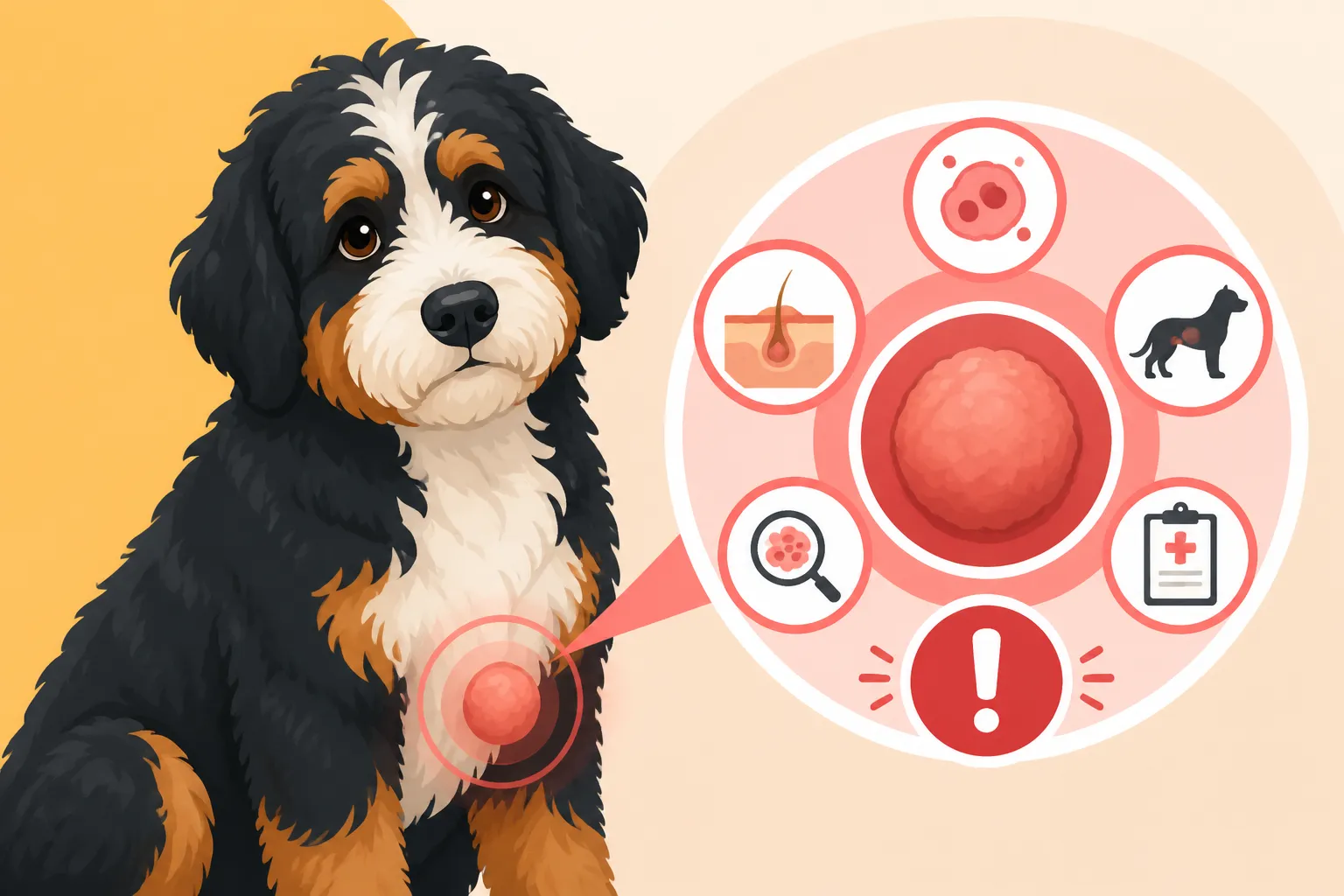
Lumps a Bernedoodle Owner Should Not Wait On
That moment when your hand, stroking through your Bernedoodle's wonderfully soft coat, suddenly brushes against something hard, soft, or just not right underneath the skin – it's enough to send a jolt of panic through any dog parent. It's completely natural to fear the worst, especially with Bernedoodles who inherit certain predispositions from their Bernese Mountain Dog lineage. This guide aims to equip you with the knowledge to understand different types of lumps, when to act quickly, and what to expect during veterinary investigation, so you can navigate this unsettling discovery with confidence.
The Startling Discovery: When You Feel a Lump
Finding a lump on your beloved Bernedoodle can be incredibly alarming. Your mind immediately races to the worst-case scenario, and the uncertainty can be overwhelming. But before you dive headfirst into a spiral of worry, it's important to approach the situation methodically. Your calm observation and clear communication with your vet will be invaluable in determining the next steps.
The Immediate Assessment: What to Look and Feel For
Once you've found a lump, take a deep breath and try to gather some initial information. This isn't about diagnosing it yourself, but rather providing your veterinarian with the most accurate description possible. Gently feel the lump. Is it hard like a marble or soft and squishy like a marshmallow? Can you easily move it under the skin, or does it feel fixed to underlying tissue? Note its size – is it tiny, like a pea, or larger, like a grape or even an egg? Also, pay attention to its shape: is it perfectly round, or more irregular?
Look at the skin directly over the lump. Is it red, inflamed, or irritated? Is there any hair loss, scabbing, or discharge? Sometimes, what feels like a lump is actually an external skin lesion or an insect bite that has caused swelling. Consider your Bernedoodle's overall behavior. Are they acting normally, eating, playing, and going to the bathroom without issue, or do they seem lethargic, in pain, or uninterested in their usual activities? Any accompanying symptoms can be crucial clues for your vet.
Knowing When It's Time for the Vet
Honestly, with any new lump, especially on a Bernedoodle, it's almost always a good idea to consult your vet. While many lumps turn out to be benign, some can be aggressive, and early detection truly makes a difference in treatment outcomes. If the lump appears suddenly, grows rapidly, is painful to the touch, or if your Bernedoodle shows any signs of illness like lethargy, loss of appetite, vomiting, or difficulty breathing, you need to see your vet as soon as possible. These could be indicators of something more serious that requires immediate attention.
Even if the lump seems small and your dog appears fine, a professional opinion is vital. Think of it as peace of mind. Your vet can perform a quick preliminary assessment and advise on whether further diagnostics are necessary. It's far better to have a false alarm than to wait and discover too late that you should have acted sooner. Don't fall into the trap of hoping it will just go away on its own, especially with a breed prone to certain types of cancers.
Keeping a Detailed Record
When you find a lump, start a little log for it. Note the date you first discovered it, its exact location on your Bernedoodle's body (take a photo if you can, with something for scale), and your initial observations about its size, texture, and mobility. Regularly recheck the lump, perhaps weekly, and record any changes. Has it gotten bigger, smaller, or changed in shape or texture? Does it seem to be causing your dog any discomfort?
This detailed record will be incredibly helpful for your veterinarian. They'll have a clear timeline and specific observations, which can guide their diagnostic process. Being able to say, "I found this lump three weeks ago, and it's doubled in size," is much more useful than a vague "It just appeared." This meticulous approach ensures you're providing the best possible information to help your vet make an informed decision about your Bernedoodle's health.
Decoding Benign Bumps: The Less Frightening Findings
While our minds often jump to the scariest possibilities, many lumps found on dogs, including Bernedoodles, are completely benign. These non-cancerous growths, though sometimes unsightly or a nuisance, typically pose no serious threat to your dog's health. Understanding these common benign types can help temper that initial panic, even though a vet visit is still warranted for confirmation.
Lipomas: The Common Fatty Tumors
Lipomas are probably the most common type of benign lump you'll encounter on a Bernedoodle, especially as they get older. These are essentially just benign fatty tumors. They often feel soft and somewhat squishy, like a small, firm pillow, and you can usually move them around relatively freely under the skin. They tend to grow slowly and are typically not painful to your dog. You'll often find them on the trunk, chest, or legs, and sometimes even in the armpits or groin.
While lipomas are harmless, they can sometimes grow quite large, potentially interfering with movement or becoming ulcerated if your dog licks or chews at them excessively. In such cases, or if they're in an awkward spot, your vet might recommend surgical removal. However, for most small, non-obtrusive lipomas, monitoring them for significant changes is often the only course of action needed. It's still wise to have any new lump checked, even if you suspect it's a lipoma, just to get a definitive diagnosis.
Sebaceous Cysts and Follicular Cysts: Skin Deep Concerns
Sebaceous cysts are another common, usually benign finding. These occur when a sebaceous gland, responsible for producing the oily substance that keeps skin and hair moisturized, gets blocked. The accumulated oil, dead skin cells, and other debris form a sac under the skin. These cysts often feel firm but can sometimes rupture, releasing a thick, cottage cheese-like or pasty substance. They can become inflamed or infected if they rupture or if your dog irritates them, which can make them quite painful.
Similar to sebaceous cysts are follicular cysts, which arise from hair follicles. Both types of cysts generally appear as small to medium-sized bumps, often on the head, neck, or back. They can sometimes be mistaken for something more serious, so it’s important for your vet to differentiate. While they are usually benign, infected or frequently rupturing cysts might require antibiotics, warm compresses, or even surgical removal if they become a recurring problem or cause significant discomfort for your Bernedoodle.
Warts, Skin Tags, and Abscesses: Other Non-Malignant Growths
Beyond lipomas and cysts, Bernedoodles can develop other non-malignant growths. Warts, or papillomas, are caused by a virus and typically appear as small, cauliflower-like growths, often around the mouth or eyelids, especially in younger dogs. They usually disappear on their own but can be removed if they interfere with eating or sight. Skin tags are small, fleshy growths that often hang off the skin; they’re harmless but can get irritated if caught on collars or brushed frequently.
Abscesses are another type of "lump" that requires prompt attention, though they are usually not cancerous. An abscess is a localized collection of pus, typically caused by a bacterial infection from a bite wound, scratch, or foreign body. They feel warm, soft, and often very painful, and your dog might be lethargic or feverish. An abscess needs to be drained and treated with antibiotics by a vet to prevent systemic infection. While these are distinct from cancerous lumps, their appearance can certainly be alarming, emphasizing the need for veterinary evaluation of any new bump or swelling.
The Shadow of Malignancy: Cancers Bernedoodle Owners Must Understand
This is where the Bernedoodle's Bernese Mountain Dog heritage comes into sharper focus. Bernese Mountain Dogs have a higher predisposition to certain types of cancers, and unfortunately, these risks can pass on to their Bernedoodle offspring. While the Poodle side of the mix might offer some diluting effect, it doesn't eliminate the risk entirely. It's crucial for Bernedoodle owners to be aware of the more serious lumps that demand immediate attention and thorough investigation. For more on this, you might want to read about Whether the Bernedoodle Cross Actually Reduced Cancer.
Mast Cell Tumors: The Great Pretenders
Mast cell tumors (MCTs) are notoriously tricky and often called "the great pretenders" because they can look and feel like almost anything else. They can be found anywhere on or under the skin, or even internally. They might appear as a soft, fatty lump, a firm nodule, or even an inflamed red sore. They can fluctuate in size, sometimes appearing to shrink, which can give owners a false sense of security. These tumors contain histamine and other inflammatory chemicals, and when disturbed, they can "degranulate," causing local swelling, redness, and itching, known as the "Darier's sign."
Because of their varied appearance and potential for rapid growth and spread, any lump that feels suspicious, changes quickly, or recurs, should be immediately checked for MCTs. These tumors can range from low-grade, relatively slow-growing types that are curable with wide surgical margins, to high-grade, aggressive forms that metastasize quickly to lymph nodes, spleen, and liver. Early diagnosis and aggressive treatment are paramount. You can learn more about finding them in Mast Cell Tumors Hidden in a Bernedoodle's Coat.
Histiocytic Sarcoma: A Serious Threat from the Bernese Line
Perhaps one of the most devastating cancers a Bernedoodle can inherit is Histiocytic Sarcoma (HS). This is a highly aggressive cancer that originates from histiocytes, a type of immune cell. It's particularly prevalent in Bernese Mountain Dogs, making it a significant concern for Bernedoodle owners. HS can manifest as a localized tumor, often affecting the spleen, lymph nodes, lungs, or bone, or as a disseminated (widespread) form. When it appears as a lump, it might be deep within tissues, making it harder to detect visually or by touch until it's quite advanced.
The insidious nature of Histiocytic Sarcoma means that by the time overt symptoms like lethargy, loss of appetite, or difficulty breathing appear, the disease can be quite progressed. If you have a Bernedoodle, especially a standard size, understanding Whether a Bernedoodle Can Inherit Histiocytic Sarcoma is crucial. There are unfortunately no specific genetic tests that completely predict HS risk in Bernedoodles, making vigilance and early diagnostic work-ups on any suspicious findings absolutely critical. This cancer underscores why lumps on Bernedoodles are simply not something to wait on.
Lymphoma: When Lymph Nodes Signal Trouble
Lymphoma is another common cancer in dogs, and Bernedoodles, due to their heritage, are certainly not immune. This cancer affects lymphocytes, a type of white blood cell, and typically manifests as enlarged, firm, and non-painful lymph nodes. You might notice these enlarged nodes most easily under the jaw (mandibular), in the armpits (axillary), in the groin (inguinal), or behind the knees (popliteal). While these aren't "lumps" in the traditional sense of skin growths, they are firm swellings that owners often discover while petting their dog.
Beyond the external lymph nodes, lymphoma can also affect internal organs like the spleen, liver, or gastrointestinal tract, leading to a range of non-specific symptoms such as weight loss, lethargy, vomiting, or diarrhea. Because enlarged lymph nodes are a primary sign, it's a good practice to gently feel your Bernedoodle's lymph node regions during your regular at-home checks. If you discover any enlarged nodes, it's essential to consult your vet promptly for further investigation, which will likely include a fine needle aspirate.
Other Concerning Lumps: Osteosarcoma and Soft Tissue Sarcomas
While less common than the above, other types of malignant lumps can also affect Bernedoodles. Osteosarcoma, a highly aggressive bone cancer, is more often seen in large and giant breeds. It doesn't present as a "lump" on the skin but rather as a painful swelling over a bone, most commonly affecting the limbs (especially near joints like the shoulder, wrist, or knee). Owners might notice their dog limping, showing pain, or reluctant to bear weight. This is a very serious condition requiring immediate veterinary attention and often involves X-rays for diagnosis.
Soft tissue sarcomas are a group of malignant tumors that arise from connective tissues like fat, muscle, and fibrous tissue. They can appear anywhere on the body, often feeling firm and fixed, growing slowly but steadily. While they can be less aggressive than some other cancers, early and wide surgical removal is critical to prevent recurrence. Any firm, growing lump that is fixed to underlying tissues should be a cause for concern and needs prompt veterinary evaluation. For more information about the general warning signs, you might review The First Signs of Cancer in a Bernedoodle.
The Path to Diagnosis: What Your Vet Will Do
When you bring your Bernedoodle in for a lump, your veterinarian will embark on a diagnostic journey to determine what kind of lump it is. This process typically involves a combination of physical examination and more specific tests, moving from less invasive to more definitive procedures. Being prepared for these steps can help ease your mind during what can be an anxious time.
Fine Needle Aspirate FNA: Quick and Minimally Invasive
The first and often most common diagnostic step for a lump is a Fine Needle Aspirate (FNA). This procedure is fantastic because it's minimally invasive and usually doesn't require sedation, especially if your Bernedoodle is good-natured and holds still. Your vet will use a very thin needle, similar to those used for vaccinations, to collect a small sample of cells directly from the lump. This sample is then spread onto a glass slide and examined under a microscope by your vet or sent to a veterinary pathologist.
An FNA can often distinguish between benign fatty tumors (lipomas), cysts, and some types of cancerous cells, like mast cell tumors or lymphoma. However, it's important to understand that an FNA doesn't always provide a definitive answer. Sometimes, the sample collected might not be representative of the entire lump, or the cells might be too few or too damaged for a clear diagnosis. In these cases, or if the results are ambiguous, your vet will recommend a more invasive procedure. This is a common step, and understanding Whether a Bernedoodle Lump Should Be Aspirated is a good idea.
Biopsy and Histopathology: The Definitive Answer
If an FNA doesn't yield a clear diagnosis, or if the suspicion of malignancy is high, your vet will likely recommend a biopsy. A biopsy involves surgically removing a small piece of the lump, or even the entire lump (an excisional biopsy), for thorough examination by a veterinary pathologist. This procedure provides much more detailed information about the tissue structure and cell type, allowing for a definitive diagnosis and grading of any cancerous cells present.
There are different types of biopsies: an incisional biopsy removes only a portion of the lump, while an excisional biopsy removes the whole lump. Your vet will decide which is best based on the lump's size, location, and suspected nature. Biopsies usually require sedation or general anesthesia, as it's a surgical procedure. The tissue sample is then sent to a specialized laboratory for histopathology, where a pathologist examines it under a microscope to identify cell types, evaluate tumor margins (if the entire lump was removed), and determine the tumor's grade (how aggressive it is). The results from a biopsy are typically the most accurate and will guide the subsequent treatment plan.
Advanced Imaging: X-rays, Ultrasounds, and CT Scans
For certain types of lumps, or if there's concern about internal spread (metastasis), your vet might recommend advanced imaging. X-rays are often used to check for evidence of lung metastasis or to evaluate bone involvement, especially if osteosarcoma is suspected. For example, if your Bernedoodle has a suspicious lump on a limb, an X-ray can reveal if the bone itself is affected.
Ultrasound is excellent for looking at soft tissue structures and internal organs. If your vet suspects lymphoma or Histiocytic Sarcoma, an abdominal ultrasound can help visualize lymph nodes, spleen, and liver for signs of enlargement or tumors. For more complex cases, or to plan surgical removal with precise margins, a CT scan might be recommended. CT scans provide highly detailed, three-dimensional images of internal structures. While these imaging techniques can be more costly, their ability to reveal the extent of the disease is invaluable for accurate staging and treatment planning, especially for aggressive cancers like those often seen in Bernedoodles. This is where comprehensive pet insurance like Healthy Paws can truly make a difference, helping to cover these significant diagnostic costs.
Navigating Treatment Options and Prognosis
Receiving a cancer diagnosis for your Bernedoodle can be heartbreaking. However, it's important to remember that significant advancements have been made in veterinary oncology, and many forms of cancer are treatable, or at least manageable, allowing your beloved companion to have a good quality of life for an extended period. The treatment approach will depend heavily on the type of lump, its stage, and your individual dog's health.
Surgical Removal: The Primary Course of Action
For many types of lumps, particularly those that are localized to the skin or easily accessible, surgical removal is often the first and most effective line of treatment. The goal of surgery is to remove the entire tumor with clean, wide margins – meaning a border of healthy tissue around the lump – to minimize the chance of recurrence. For benign lumps, surgery is typically curative. For malignant tumors, successful surgery can be curative if the cancer has not spread, or it can significantly extend your dog's life and improve their comfort.
The extent of the surgery will vary based on the size and location of the lump. Some small, superficial lumps can be removed relatively easily under local anesthesia and sedation, while larger or more invasive tumors may require general anesthesia and more extensive surgery. Your vet will discuss the risks and benefits of surgery, potential complications, and what to expect during the recovery period. Post-operative care, including pain management and wound monitoring, is crucial for your Bernedoodle's comfort and healing.
Chemotherapy and Radiation Therapy: Supporting Modalities
For certain aggressive cancers, or when surgical removal isn't enough, chemotherapy and/or radiation therapy may be recommended as additional treatments. Chemotherapy involves the use of drugs to kill cancer cells, and it can be administered orally or intravenously. Unlike human chemotherapy, which often aims for a cure at all costs, veterinary chemotherapy often focuses on achieving remission, slowing cancer progression, and maintaining a good quality of life for the patient. Dogs generally tolerate chemotherapy much better than humans do, with fewer severe side effects. You can find more details on What Chemotherapy Achieves for a Bernedoodle.
Radiation therapy uses high-energy rays to damage and kill cancer cells. It's often used for tumors that are difficult to remove surgically, or to target microscopic cancer cells that might remain after surgery. It can also be used palliatively to reduce pain and discomfort associated with large tumors. Both chemotherapy and radiation therapy involve multiple treatments over a period of weeks or months and require careful monitoring by a veterinary oncologist. These advanced treatments, while effective, can be quite costly, which highlights the value of having robust pet insurance coverage from providers like Healthy Paws.
Managing Your Dog's Comfort and Quality of Life
Regardless of the diagnosis or chosen treatment path, maintaining your Bernedoodle's comfort and ensuring a good quality of life is always paramount. If a lump is benign but causing irritation, or if a malignant tumor is inoperable or too advanced, palliative care becomes the focus. Palliative care aims to alleviate symptoms, manage pain, and support your dog's overall well-being. This can involve pain medications, anti-inflammatory drugs, nutritional support, and other therapies designed to keep your dog comfortable and happy.
Open communication with your veterinary team is essential throughout this process. They will guide you in making informed decisions that prioritize your Bernedoodle's comfort and dignity. Sometimes, the most loving decision is to choose quality of life over aggressive treatments that may cause more suffering. Understanding what your Bernedoodle needs as they age is also a good idea; you might look into What Changes in a Bernedoodle After Eight to prepare. Making these difficult choices is part of being a responsible pet parent, and having a supportive veterinary team makes all the difference.
Proactive Measures: Early Detection and Prevention
While you can't prevent every lump or cancer from developing, there's a lot you can do as a Bernedoodle owner to increase the chances of early detection and potentially mitigate some risks. Being proactive and informed is your best defense against the unsettling reality of canine lumps and bumps.
Regular At-Home Body Checks
This is hands down one of the most powerful tools you have as a Bernedoodle owner. You know your dog better than anyone. Make it a routine to perform thorough "lump checks" at least once a month, if not more frequently. This can be a pleasant bonding experience – a gentle massage while you're relaxing on the couch or after a bath. Systematically run your hands over your Bernedoodle's entire body, from nose to tail, paying close attention to areas like the head, neck, armpits, chest, belly, flanks, and legs. Don't forget their paws and between their toes!
Feel for anything new or unusual: any bumps, masses, skin changes, or areas of tenderness. Note the size, shape, and consistency of anything you find. Early detection of a small, treatable lump can make a world of difference compared to finding a large, advanced tumor later on. Establishing this routine also helps you become familiar with what's "normal" for your Bernedoodle, making new discoveries stand out more readily. This regular screening is a fundamental aspect of maintaining your dog's health. You should also consider The Screening a Bernedoodle Should Have Yearly with your vet.
Understanding Genetic Predispositions and Breeder Choices
As we've discussed, Bernedoodles inherit some cancer predispositions from their Bernese Mountain Dog lineage, particularly for types like Histiocytic Sarcoma. While hybrid vigor from the Poodle cross might offer some reduction in overall cancer rates compared to purebred Bernese, the risk is not eliminated. This makes choosing a reputable breeder absolutely critical. A responsible Bernedoodle breeder will perform extensive health testing on their parent dogs, including screening for genetic conditions that could be passed down.
Ask breeders about the health history of their lines, particularly regarding cancer in the Bernese parents and grandparents. While no breeder can guarantee a cancer-free dog, those who prioritize health and transparency are your best bet. Avoid breeders who cannot provide verifiable health clearances or seem evasive when you ask about health issues. Understanding the importance of these clearances from the start, as discussed in articles like Whether an Untested Bernedoodle Litter Is Worth Buying or The Five Clearances a Bernedoodle Breeder Should Have, empowers you to make an informed choice that can impact your Bernedoodle's long-term health.
The Role of Diet and Lifestyle
While there's no magic bullet diet to prevent all cancers, a healthy diet and lifestyle can play a supportive role in your Bernedoodle's overall well-being and immune function. Feed your Bernedoodle a high-quality, balanced diet appropriate for their age, size, and activity level. Avoid excessive treats or table scraps, which can lead to obesity. Maintaining a healthy weight is vital, as obesity can contribute to inflammation and may exacerbate certain health conditions. Some research suggests certain nutrients, like Omega-3 fatty acids, might have anti-inflammatory and anti-cancer properties, but always consult your vet before adding significant supplements.
Regular, appropriate exercise is also essential for maintaining a strong immune system and healthy body weight. While Bernedoodles love activity, avoid over-exercising young puppies to protect their developing joints. As they age, tailor exercise to their stamina and any existing health conditions. A low-stress environment and plenty of love also contribute to a strong immune system. Remember, a healthy, happy Bernedoodle is better equipped to fight off illness and recover from any health challenges they may face. Exploring articles like Whether Diet Affects a Bernedoodle's Cancer Risk can provide further insights into nutritional considerations.
| Lump Type | Typical Appearance/Feel | Urgency Level | Common Diagnostic Steps | General Prognosis |
|---|---|---|---|---|
| Lipoma | Soft, squishy, movable, under the skin (fatty) | Low | FNA (Fine Needle Aspirate) | Excellent (benign) |
| Sebaceous Cyst | Firm, sometimes movable, can rupture and ooze | Low to Moderate | Visual exam, FNA; sometimes requires removal | Excellent (benign) |
| Mast Cell Tumor | Highly variable (can be soft, firm, red, ulcerated, itchy, fluctuate in size) | High | FNA (often diagnostic but not definitive for grade), Biopsy | Variable (grade-dependent) |
| Histiocytic Sarcoma | Often deep, firm, fixed; can be on organs or skin. May be internal. | Very High | Biopsy (excisional preferred), Imaging (X-ray, ultrasound, CT) | Guarded to Poor |
| Lymphoma | Enlarged, firm, non-painful superficial lymph nodes | High | FNA (lymph node), Biopsy | Fair to Guarded |
| Abscess | Warm, painful, soft, swollen; often rapid onset | Moderate to High | Visual exam, palpation, aspiration for pus | Excellent with treatment |
| Osteosarcoma | Painful swelling over bone, lameness | Very High | X-rays, Biopsy | Poor (aggressive) |
Disclaimer
The information provided in this article is for general informational purposes only and does not constitute professional veterinary advice. Always consult with a qualified veterinarian for any health concerns or before making any decisions related to your Bernedoodle's care. Never disregard professional veterinary advice or delay in seeking it because of something you have read here.