The Bunny Hop Gait in a Young Bernedoodle
It can be incredibly unsettling to watch your usually graceful, playful Bernedoodle puppy suddenly move with an awkward, bouncy stride, almost like a rabbit. This distinctive "bunny hop" gait often sparks a wave of worry, and rightly so, as it can be a significant indicator of underlying health issues. This guide is here to walk you through what this gait means, what causes it, and how best to support your furry companion if you notice them moving this way.
What Exactly is the "Bunny Hop" Gait?
When we talk about a "bunny hop" in dogs, especially larger breeds like Bernedoodles, we're referring to a very specific way they move their hind legs. It's not just a funny quirk; it's a compensatory mechanism that your dog uses to try and alleviate discomfort or instability.
Describing the Movement
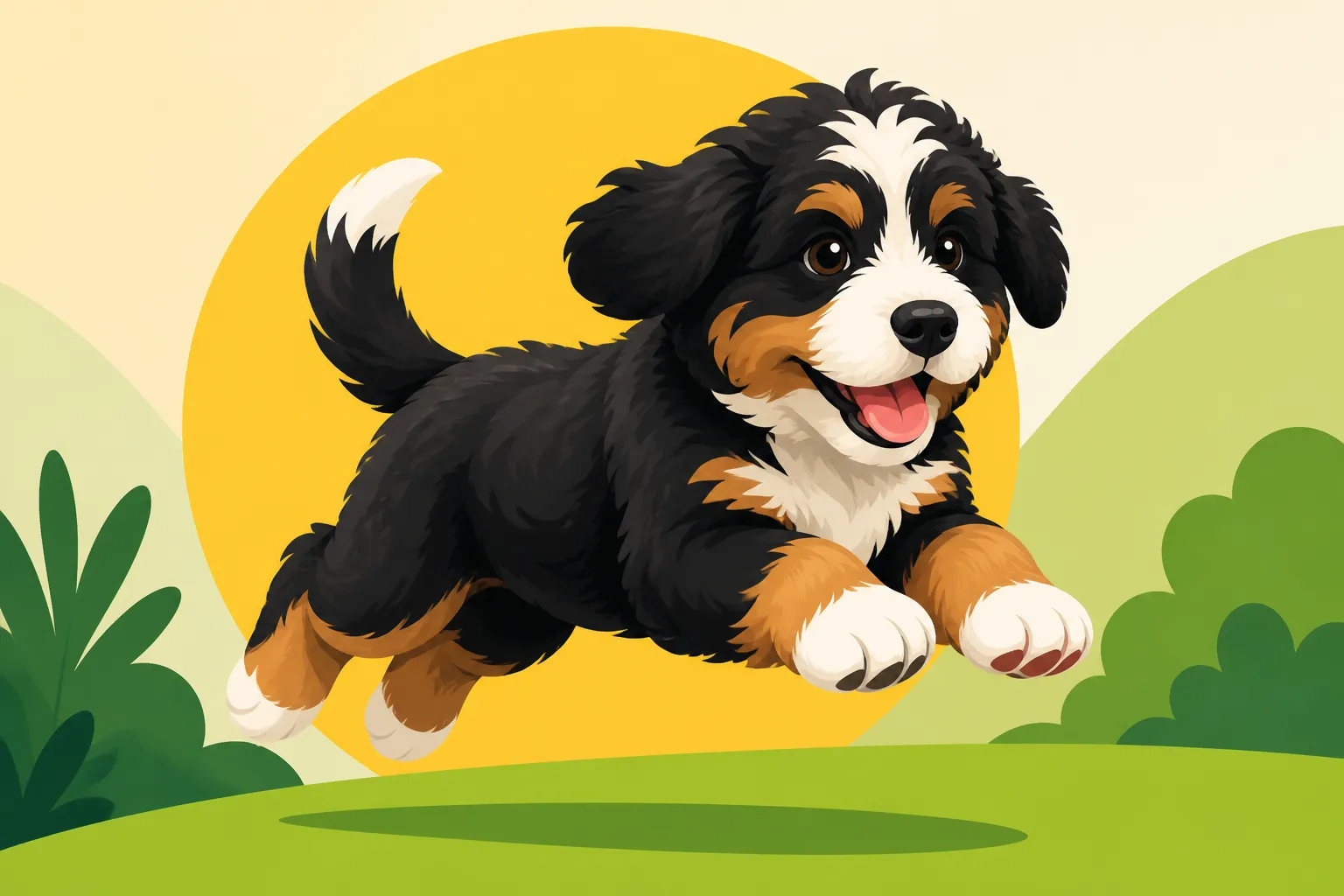
Imagine a rabbit or a kangaroo, pushing off the ground with both back legs simultaneously, rather than alternating them. That's essentially what a Bernedoodle does when it "bunny hops." Instead of the normal, fluid left-right-left-right motion of walking or running, where each hind leg moves independently, a dog that bunny hops will bring both hind legs together at the same time, lifting and lowering them as a single unit. You'll often see this during faster movements like a trot or a gallop, but it can also become noticeable during slower paces as the condition progresses. Owners might first notice it when their puppy is running across the yard with boundless energy, only to see this peculiar, synchronized movement in their rear.
Why It's a Red Flag for Bernedoodle Owners
For Bernedoodle parents, seeing this gait should immediately raise a red flag. While a brief, isolated instance of a bunny hop could be due to exuberance or playing in deep snow, consistent or recurring bunny hopping is almost universally a sign of pain or instability in the hips or lower back. Bernedoodles, inheriting genetics from both the Bernese Mountain Dog and the Poodle, are unfortunately predisposed to certain orthopedic conditions that can manifest in this exact way. This isn't just a cosmetic issue; it's your dog telling you, in the clearest way their body can, that something isn't right and they're trying to protect themselves from further pain. Ignoring it can lead to worsening conditions and long-term discomfort for your beloved pet.
The Potential Causes Behind a Bernedoodle's Bunny Hop
The most common reasons for a Bernedoodle to adopt a bunny hop gait are orthopedic, particularly conditions affecting the hips and sometimes the knees. Understanding these potential causes is the first step toward finding a solution.
Hip Dysplasia: The Most Common Culprit
Hip dysplasia is undoubtedly the most frequent and concerning reason for a young Bernedoodle to bunny hop. This inherited condition occurs when the hip joint doesn't form correctly, leading to a loose or unstable fit between the ball (femoral head) and socket (acetabulum). Instead of gliding smoothly, the joint surfaces grind against each other, causing pain, inflammation, and eventual degeneration. Both Bernese Mountain Dogs and Standard Poodles can contribute to this genetic predisposition, making it a critical concern for Bernedoodles.
A puppy with hip dysplasia will often bunny hop because it's trying to minimize the painful extension and flexion of each individual hip joint. By moving both hind legs together, they effectively reduce the amount of stress and movement on each hip, allowing their rear to move more as one stiff unit. This can be subtle at first, perhaps only when they're really pushing off for speed, but as the condition worsens, or as they tire, it becomes more pronounced. You might also notice a reluctance to jump, difficulty getting up from a lying position, or even a decrease in overall activity. For more on this, you might find our article on Loose Hips in a Growing Standard Bernedoodle insightful, as it delves deeper into how this condition develops in young dogs.
Other Orthopedic Issues to Consider
While hip dysplasia often takes the spotlight, other orthopedic problems can also contribute to a bunny hop gait or similar altered movements. It's a complex system, and discomfort in one area can easily affect another.
One such condition is Elbow Dysplasia in a Growing Bernedoodle, which, while affecting the front legs, can cause a dog to shift weight to the rear, subtly altering their gait and sometimes leading to an imbalance that could resemble a bunny hop, especially if they're trying to offload weight from the front. More directly, conditions affecting the kneecaps, known as patellar luxation or "slipping kneecaps," can also play a role. While less common in larger Bernedoodles than in their smaller "Tiny" counterparts, if a kneecap repeatedly slips out of place, the dog might try to compensate by hopping to avoid full weight-bearing on that leg, leading to a somewhat synchronized rear leg movement. Our discussion on Slipping Kneecaps in a Tiny Bernedoodle offers more context, though the principles can apply to larger dogs if the condition is present. It's crucial for your vet to rule out all possibilities.
Temporary or Non-Serious Reasons for Bunny Hopping
Sometimes, a puppy might bunny hop for reasons that aren't immediately alarming, but it's vital not to dismiss the behavior without proper veterinary assessment. For instance, an overly excited puppy might simply bound with both hind legs for a few strides during intense play, especially if they're still uncoordinated and growing into their large paws. Deep snow, thick sand, or slippery surfaces like polished hardwood can also cause a dog to use a more "together" motion for better traction or stability.
However, distinguishing these transient instances from true underlying issues is key. If your Bernedoodle consistently bunny hops, even on stable ground, or if it's accompanied by other signs of discomfort like limping, vocalizing, or reluctance to exercise, it's not simply "playfulness." Always err on the side of caution and consult your vet, as waiting too long can significantly impact treatment outcomes for serious conditions.
Getting a Diagnosis: What to Do If Your Bernedoodle Bunny Hops
Noticing a bunny hop gait can be distressing, but prompt action can make a world of difference for your Bernedoodle. The first and most crucial step is always a visit to your veterinarian.
When to Consult Your Veterinarian
If you observe your Bernedoodle bunny hopping, especially if it's frequent, consistent, or accompanied by any other signs of discomfort, don't wait. Puppyhood is a critical time for skeletal development, and early intervention for conditions like hip dysplasia can significantly improve long-term outcomes and potentially reduce the severity of arthritis later in life. You should make an appointment with your veterinarian as soon as possible. Beyond the bunny hop itself, look for other symptoms such as:
- Reluctance to climb stairs or jump into a car.
- Difficulty getting up from a lying position.
- A noticeable limp or favoring a leg.
- Decreased activity or playfulness.
- Pain response when you touch their hips or back.
- Muscle loss in the hindquarters.
Even if your Bernedoodle seems otherwise happy and energetic, a persistent bunny hop is a strong signal that their body is compensating for discomfort, and a professional evaluation is essential.
The Diagnostic Process
When you take your Bernedoodle to the vet for bunny hopping, they will perform a thorough physical examination, assessing your dog's gait, range of motion in their hips and other joints, and palpating for pain or instability. They'll likely perform specific maneuvers, such as the Ortolani test, to check for hip laxity.
The definitive diagnosis for hip dysplasia, however, comes from X-rays. Your vet will take radiographs of your dog's hips, often under sedation, to get clear, relaxed images that allow for accurate assessment of the joint structure. These X-rays can then be submitted for official evaluation by organizations like the Orthopedic Foundation for Animals (OFA) or through a procedure like PennHIP. Understanding Whether PennHIP Suits a Bernedoodle is important, as PennHIP can often give a more accurate assessment of hip laxity in younger dogs, providing predictive information earlier than OFA. These specialized evaluations help grade the severity of any dysplasia present.
Understanding Your Breeder's Role
The role of a reputable breeder cannot be overstated when it comes to preventing conditions like hip dysplasia. A responsible Bernedoodle breeder should be performing comprehensive health clearances on both parent dogs before breeding them. This includes OFA or PennHIP certifications for hips and elbows. They should be transparent about these results and willing to provide you with the official documentation and OFA numbers.
If your puppy develops a bunny hop gait due to an inherited condition like hip dysplasia, reviewing your puppy contract and contacting your breeder is a reasonable next step. Many reputable breeders offer health guarantees, especially for genetic conditions that appear early in a dog's life. This is why it's so critical to ensure your breeder published What Clearances a Bernedoodle Breeder Should Publish and provided you with that information from the outset. A breeder who health tests their breeding stock significantly reduces the likelihood of these devastating conditions appearing in their puppies, even if no guarantee can ever be 100% foolproof.
Managing and Treating Bunny Hopping Related Conditions
Once a diagnosis is made, your veterinarian will work with you to create a management and treatment plan tailored to your Bernedoodle's specific condition and its severity. The goal is always to manage pain, improve mobility, and maintain a good quality of life.
Conservative Management Strategies
For milder cases of hip dysplasia or as an initial approach for more severe cases, conservative management can be very effective. The cornerstone of this approach often includes:
- Weight Management: Keeping your Bernedoodle at a lean, healthy weight is paramount. Every extra pound puts additional stress on already compromised joints, exacerbating pain and accelerating joint degeneration. Your vet can help you determine an ideal weight and diet plan.
- Controlled Exercise: While exercise is important, it needs to be modified. High-impact activities like jumping, running on hard surfaces, or prolonged, strenuous play should be limited or avoided. Instead, focus on low-impact activities such as swimming, short, leashed walks on soft ground, or carefully managed play sessions. Our guide on Keeping a Standard Bernedoodle Sound Past Ten offers insights into joint care that begin much earlier than old age.
- Physical Therapy: Canine rehabilitation therapists can provide invaluable exercises and modalities (like hydrotherapy, laser therapy, or therapeutic massage) to strengthen supporting muscles, improve range of motion, and reduce pain.
- Joint Supplements: Many veterinarians recommend joint supplements containing ingredients like glucosamine, chondroitin, and MSM, which can help support joint health and reduce inflammation. Omega-3 fatty acids are also beneficial. Our article, Whether Joint Supplements Help a Bernedoodle, explores these options in more detail.
- Pain Management: Non-steroidal anti-inflammatory drugs (NSAIDs) prescribed by your vet can effectively manage pain and inflammation, allowing your dog to move more comfortably.
Surgical Interventions
For more severe cases of hip dysplasia, or when conservative management is no longer sufficient, surgical options may be considered. These range from procedures designed to alleviate pain to those that completely reconstruct the hip joint.
One common surgical option for young dogs is a Triple Pelvic Osteotomy (TPO), which aims to realign the hip socket. For older dogs or those with advanced disease, a Femoral Head Ostectomy (FHO) or Total Hip Replacement (THR) might be recommended. A Whether a Bernedoodle Needs a Hip Replacement article details the complexities of this decision. A Total Hip Replacement, while costly, can provide a new, pain-free joint and a dramatically improved quality of life. Be aware that these surgeries can be quite expensive, and recovery requires dedicated aftercare. Our information on What Hip Replacement Runs on a Standard Bernedoodle can help you prepare for the financial aspect. This is where having pet insurance from providers like Healthy Paws can truly be a lifesaver, helping to cover a significant portion of these substantial veterinary bills, easing the financial burden during a stressful time.
Long-term Prognosis and Quality of Life
The long-term prognosis for a Bernedoodle with a bunny hop gait depends heavily on the underlying cause, the severity of the condition, and how early and effectively it's managed. For conditions like hip dysplasia, early diagnosis and aggressive management—whether conservative or surgical—can often lead to a good quality of life. Many dogs go on to live full, happy lives with appropriate care.
However, it's important to understand that orthopedic conditions, especially those involving joint malformation, often require lifelong management. This might mean continued medication, regular physical therapy, strict weight control, and modifications to their exercise routine. Regular veterinary check-ups are crucial to monitor progression and adjust the treatment plan as needed. While conditions like hip dysplasia can be challenging, with dedicated care and the support of your veterinary team, you can ensure your Bernedoodle remains as comfortable and active as possible. Pet insurance plans, such as those offered by Healthy Paws, can also provide ongoing financial assistance for these chronic conditions, ensuring you don't have to compromise on the best care for your furry family member.
Here's a quick overview of potential causes and actions:
| Gait Observation | Possible Underlying Cause | Key Symptoms to Watch For | Recommended Action | Urgency |
|---|---|---|---|---|
| Consistent Bunny Hop Gait | Hip Dysplasia | Pain, reluctance to jump, difficulty rising, hindquarter weakness | Vet consultation, X-rays (OFA/PennHIP) | High |
| Occasional Bunny Hop | Over-excitement, slippery surfaces | Intermittent, no other pain signs, normal movement otherwise | Monitor closely, provide stable footing | Medium |
| Bunny Hop + Forelimb Issues | Elbow Dysplasia, Arthritis | Limping in front, reluctance to bear weight on front legs | Vet consultation, orthopedic exam, X-rays | High |
| Bunny Hop + Knee Giving Out | Patellar Luxation (slipping kneecap) | Intermittent limping, holding leg up, yelping when knee slips | Vet consultation, physical exam, X-rays | High |
| Bunny Hop + Back Pain | Spinal Issues, Degenerative Myelopathy | Arched back, yelping when touched, coordination issues | Vet consultation, neurological exam, advanced imaging | High |
Disclaimer
This article is intended for informational purposes only and does not constitute veterinary advice. Always consult with a qualified veterinarian for any health concerns or before making any decisions about your Bernedoodle's medical care.