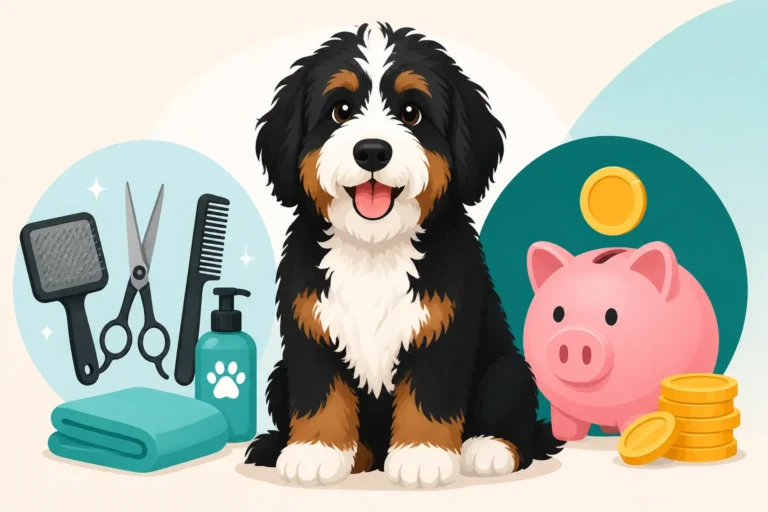
What a Phantom Bernedoodle Is Priced At
It’s easy to get swept up in the excitement of bringing a Bernedoodle home, especially when you start dreaming about all the beautiful coat possibilities! But then you stumble upon terms like "phantom" and suddenly the pricing looks… different. It can be incredibly confusing trying to understand why some color patterns seem to command a higher price tag than others. This comprehensive guide is here to unravel the mystery behind the cost of a phantom Bernedoodle, helping you understand what makes this striking coat pattern unique and what goes into its pricing.
Understanding the Phantom Pattern in Bernedoodles
When you hear "phantom Bernedoodle," it conjures up images of something mysterious and rare, and in many ways, that's exactly what it is in the world of dog coats! This isn't just a randomly colored dog; it's a specific, genetically determined pattern that creates a truly stunning visual.
What Exactly Is a Phantom Bernedoodle?
A phantom Bernedoodle is characterized by a solid base color (often black, but it can be chocolate, blue, or even sable) with distinct, lighter "points" of another color. Think of the classic markings you see on a Doberman Pinscher or a Rottweiler – those tan or cream accents are exactly what a phantom pattern replicates. These lighter points typically appear above each eye, on the sides of the muzzle, on the chest, on all four legs (sometimes referred to as "socks"), and underneath the tail. The contrast between the deep base color and the lighter points is what gives the phantom its sophisticated and eye-catching appeal. It's a truly elegant look that stands out in a crowd.
It's important to differentiate phantom from a traditional tri-color. While both have multiple colors, a tri-color Bernedoodle typically features the phantom markings plus significant white patches, often on the chest, blaze, and feet. A true phantom, by definition, lacks these large white areas, maintaining a more refined two-tone appearance. This distinction is crucial when discussing genetics and pricing, as the presence or absence of that "white spotting" gene makes a big difference.
Genetic Factors Behind Phantom Coloration
The phantom coloration isn't just luck of the draw; it's the result of specific genes at play, primarily the "A" locus gene. In simple terms, a dog needs to inherit certain recessive genes to display this pattern. While the Bernese Mountain Dog parent contributes a wealth of color possibilities, the phantom gene typically comes from the Poodle side of the lineage. Poodles are known for their wide array of colors and patterns, and phantom is one of the more sought-after ones they can carry. For a puppy to be phantom, both parents must carry the gene, or at least one parent must display the phantom pattern itself.
Breeders who consistently produce phantom Bernedoodles have a deep understanding of canine genetics. They use DNA testing on their breeding stock to confirm the presence of these specific color genes, ensuring they can predict and intentionally breed for the phantom pattern. This genetic knowledge and strategic pairing of parents is a significant part of the additional investment and effort required, which naturally translates into the puppy's price. It's not just about two dogs breeding; it's about a carefully planned lineage to achieve desired traits.
Why Phantom Is Considered a Desirable and "Designer" Trait
There's no denying that phantom Bernedoodles have a certain "wow" factor. Their striking appearance, often described as regal or aristocratic, makes them highly desirable among potential owners. The distinct contrast of colors, without the added white of a tri-color, gives them a unique elegance that many find irresistible. This aesthetic appeal positions the phantom as a "designer" coat pattern within the Bernedoodle world.
Because it’s not as commonly seen as solid black, bi-color, or even many tri-color variations, phantom carries an air of exclusivity. People are often willing to pay a premium for something that is perceived as more unique or visually impressive. This strong demand, coupled with the specialized breeding required to consistently produce phantom puppies, naturally drives up their market value. It’s similar to how certain artistic styles or fashion pieces command higher prices due to their unique craftsmanship and desirability.
Factors Influencing Bernedoodle Pricing Beyond Color
While the phantom coat certainly adds to the price, it’s crucial to remember that a puppy's cost is a culmination of many factors that speak to its health, lineage, and the breeder's dedication. Focusing solely on color can lead you to overlook other vital considerations.
Breeder Reputation and Health Testing
The reputation of a Bernedoodle breeder is paramount, and it directly influences the price of their puppies, regardless of color. Ethical, responsible breeders invest heavily in the health and well-being of their parent dogs and their litters. This includes extensive health testing for both the Bernese Mountain Dog and Poodle parents. They’ll perform screenings for orthopedic issues like hip and elbow dysplasia, which are common in larger breeds, as detailed in articles like Hips on a Ninety Pound Bernedoodle or Elbow Dysplasia in a Growing Bernedoodle. Furthermore, genetic tests for conditions such as Von Willebrand's Disease and Degenerative Myelopathy are standard practice. Reputable breeders can readily provide proof of these clearances, often through organizations like the Orthopedic Foundation for Animals (OFA) or PennHIP.
This rigorous testing and proactive health management is expensive, but it significantly reduces the risk of hereditary diseases in the puppies, saving owners potential heartbreak and massive veterinary bills down the line. A breeder who cuts corners on health testing might offer a lower price upfront, but you could end up paying far more in vet costs in the long run. When you’re asking about a phantom puppy's price, also ask about the parents' health clearances, like the results for The SOD1 Test Both Bernedoodle Parents Need or The Eye Conditions a Bernedoodle Is Tested For. It’s an investment in your puppy’s future health, and yours.
Parentage and Pedigree
The lineage of a Bernedoodle puppy also plays a significant role in its pricing. Puppies from parents with exceptional pedigrees, perhaps those who have excelled in conformation, obedience, or therapy work, may command a higher price. This isn't just about bragging rights; it often signifies a consistent temperament, structure, and health history that has been carefully preserved over generations. While Bernedoodles are a crossbreed and not recognized by organizations like the AKC, reputable breeders still keep detailed records of their parent dogs' purebred pedigrees.
Beyond purebred pedigree, the generation of the Bernedoodle (F1, F1b, Multigen) can also affect pricing. F1 Bernedoodles (first generation, Bernese x Poodle) are often a good starting point, but F1b (F1 Bernedoodle x Poodle/Bernese) or Multigen Bernedoodles are bred for more predictable traits, including coat type (less shedding) and often size. Breeding for specific sizes, especially the smaller Mini and Tiny Bernedoodles, requires careful selection and often more generations of breeding, which can increase their cost. As explored in Why a Mini Bernedoodle Costs More Than a Standard, the complexity of achieving a smaller, healthier Bernedoodle can be significant.
Size and Generation
It might seem counterintuitive, but smaller Bernedoodles – the Mini and Tiny varieties – often carry a higher price tag than their Standard counterparts. This isn't just because they're cute and compact; it's due to the intricate breeding process required to achieve these sizes safely and consistently. Creating a Mini Bernedoodle involves breeding a Standard Poodle with a Miniature Poodle or using smaller Bernese Mountain Dogs, and then carefully crossing those lines with Bernese to maintain desired traits while reducing size. This multi-generational planning and the smaller litter sizes often associated with smaller parent dogs contribute to the increased cost.
Additionally, the specific generation (F1, F1b, F2, Multigen) can impact price. F1b Bernedoodles, for example, are often sought after for their increased likelihood of a non-shedding, allergy-friendly coat, and breeders invest more to achieve these predictable results. This careful genetic planning, combined with the general demand for specific sizes and coat types, means that the desired combination of size, generation, and a unique color like phantom can drive a puppy's price higher still. Breeders who spend years refining their lines to consistently produce healthy, well-tempered dogs of a specific size and coat type have invested significant time and resources, which is reflected in their pricing.
The "Phantom Premium": Why It Costs More
Now, let's circle back to the phantom itself. It's not just a pretty coat; there are tangible reasons why breeders price phantom Bernedoodles at a premium compared to many other patterns.
Rarity and Demand
The phantom pattern, while stunning, is not as common as solid black, black and white bi-color, or even the traditional tri-color. It requires a very specific genetic combination from the parent dogs to manifest. This means that in any given litter, there might only be one or two phantom puppies, if any at all. This natural rarity immediately creates a supply-and-demand dynamic. When something is beautiful and not readily available, its desirability naturally increases. Prospective owners are often willing to pay more for a puppy that stands out and is less commonly seen.
Think of it like a rare gem – its value isn't just in its beauty, but in how infrequently it's found. Breeders know this, and they understand that there's a strong market for unique and visually appealing dogs. The phantom Bernedoodle fits squarely into this category, making it a highly sought-after aesthetic choice for families looking for something a bit special. The combination of its distinctive look and its comparative scarcity in litters creates what we often call the "phantom premium."
Breeding Expertise and Investment
Consistently breeding for a phantom coat requires more than just pairing any Bernese with any Poodle. It demands a sophisticated understanding of canine color genetics, specifically how the "A" locus (agouti series) interacts with other color genes. Ethical breeders aiming for phantom patterns will invest in genetic testing for color traits in their breeding dogs to ensure they carry the necessary genes. This is above and beyond the standard health testing, adding another layer of expense and expertise to their program. They are not simply hoping for a phantom; they are breeding for it strategically.
This deliberate and educated approach means breeders spend more time and resources on selecting appropriate parent dogs, sometimes waiting for the right pair or even importing dogs with the correct genetic makeup. The additional research, testing, and sometimes the longer wait times for suitable breeding partners contribute to the overall cost. When you're paying for a phantom Bernedoodle, you're not just paying for the color; you're paying for the breeder's investment in genetic knowledge and their commitment to producing specific, healthy traits.
Market Trends and "Designer" Appeal
The rise of "designer dogs" like the Bernedoodle has brought with it a keen interest in unique and aesthetically pleasing coat patterns. The phantom Bernedoodle, with its sophisticated and eye-catching markings, perfectly aligns with this trend. It's not just a dog; for many, it's a statement, a beautiful companion that draws compliments and admiration. The "designer" label isn't just a marketing gimmick; it reflects a genuine market demand for specific, often more elaborate, appearances.
This market-driven demand allows breeders to price these puppies higher because there is a proven willingness among buyers to pay for such distinctive traits. While the core value of any Bernedoodle lies in its temperament and health, the visual appeal of a phantom coat undeniably adds to its market desirability and, consequently, its price. It’s an intersection of genetic artistry and consumer preference that defines the "phantom premium."
Comparing Phantom Pricing to Other Bernedoodle Colors
To really understand what a phantom Bernedoodle is priced at, it helps to put it into context with other popular Bernedoodle coat patterns. Each has its own appeal and, often, its own price point.
Phantom vs. Tri-Color
The traditional tri-color Bernedoodle is arguably the most iconic and sought-after pattern, closely mirroring the classic Bernese Mountain Dog look with its black, rust, and white markings. Because of its strong association with the Bernese heritage and its undeniable beauty, tri-color Bernedoodles often command a high price, sometimes rivaling or even exceeding that of a phantom. The presence of the crisp white markings, often on the chest, paws, and as a facial blaze, adds another layer of complexity to the genetic puzzle.
When comparing phantom to tri-color, the difference lies in the white. A phantom has the black (or other base color) with tan points, but without the significant white patches. Both require specific genetic combinations, but achieving the classic tri-color often involves ensuring the "white spotting" gene is also present in a balanced way. So, while both are highly desirable and often similarly priced due to their complexity and demand, the phantom offers a different aesthetic appeal – one of striking two-tone contrast rather than three distinct colors. If you're looking for that iconic Bernese look with white, then What a Traditional Tri Color Bernedoodle Looks Like might be exactly what you're after.
Phantom vs. Merle
Merle is another complex and often highly-priced Bernedoodle coat pattern, known for its marbled or mottled appearance. Merle patterns, while undeniably beautiful and unique, carry a unique set of genetic considerations that often lead to higher prices. The merle gene can create stunning blue eyes and varied coat patterns, but if two merle dogs are bred together (known as a "double merle" breeding), it can result in puppies with severe health issues like deafness and blindness. Responsible breeders understand this risk and will never breed two merles together, making breeding merle puppies a more intricate and responsible process.
Because of the careful genetic management required to breed merle dogs safely and ethically, and their distinctive appearance, merle Bernedoodles are often priced at the higher end of the spectrum, much like phantoms. However, the phantom pattern does not carry the same inherent health risks associated with irresponsible merle breeding. This can make phantom a "safer" exotic color choice from a health perspective, provided the breeder is otherwise reputable. If you're curious about the risks, you might want to read Whether Merle Is Safe to Breed in a Bernedoodle.
Phantom vs. Solids/Bi-colors
When you compare phantom Bernedoodles to solid-colored or bi-color (like black and white) Bernedoodles, you typically see a notable price difference, with phantoms being on the higher end. Solid colors (such as solid black, solid chocolate, or solid cream) are generally the most straightforward genetically and thus more common. While still beautiful, they don't have the "designer" complexity of the patterned coats. Bi-colors, typically black and white, are also common and often less expensive than tri-colors or phantoms, though still very charming.
The reason for this price disparity boils down to the genetics and perceived rarity. It simply requires less specific genetic planning to produce a solid or bi-color puppy. There's less investment in genetic testing for complex color patterns, and these colors tend to appear more frequently in litters. While a solid black Bernedoodle can be incredibly handsome, the distinct, contrasting markings of a phantom elevate its aesthetic appeal in the market, allowing breeders to justify a higher price point.
Here's a quick comparison of general pricing tendencies for Bernedoodle coat types:
| Coat Pattern | Description | Rarity/Complexity | General Price Tendency (Relative) | Key Distinguishing Feature |
|---|---|---|---|---|
| Phantom | Solid base color with distinct lighter points (e.g., black with tan points) | Moderate to High | Higher | Two-tone, defined contrasting points, no significant white |
| Tri-Color | Black, rust/tan points, and distinct white markings | High | Highest | Three distinct colors, including white patches |
| Merle | Marbled/mottled coat pattern (e.g., blue merle, sable merle) | Moderate to High | Higher (often similar to tri) | Marbled appearance, can have blue eyes |
| Bi-Color | Two solid colors (e.g., black and white, chocolate and white) | Common | Moderate | Two distinct blocks of color |
| Solid | One uniform color (e.g., black, chocolate, cream) | Common | Lower | Single, uniform color throughout |
Note: This table represents general trends. Actual prices vary widely by breeder, location, and individual puppy traits.
What to Expect When Budgeting for a Phantom Bernedoodle
Bringing any dog into your life is a significant financial commitment, and a phantom Bernedoodle, with its higher initial purchase price, requires careful budgeting. It's truly an investment that extends far beyond the day you bring your furry friend home.
Initial Purchase Price Range
While I can't give you exact numbers that might change tomorrow, you should anticipate that a phantom Bernedoodle will typically fall into the higher end of the Bernedoodle price spectrum. This is a consistent trend across the board for unique and highly sought-after patterns, as discussed earlier. The precise figure will depend heavily on the breeder's reputation, the health testing they conduct, the parentage of the puppy, and your geographical location. Ethical breeders who invest heavily in their dogs and programs will, and should, charge more.
It's crucial to understand that a suspiciously low price for a phantom Bernedoodle should be a major red flag. Such a price often indicates a breeder cutting corners on essential health screenings, proper care, or ethical breeding practices, which could lead to significant problems and expenses down the road. Always communicate directly with breeders, ask for transparency regarding their pricing and what it includes, and be prepared for the reality that a healthy, well-bred phantom puppy is a premium acquisition.
Ongoing Costs: More Than Just the Puppy
The initial purchase price of your phantom Bernedoodle is just the beginning of your financial journey. Owning a large, active, and long-lived breed like a Bernedoodle comes with substantial ongoing costs that span its entire lifespan. First, there's food. A Standard Bernedoodle, particularly, will eat a considerable amount, and choosing a high-quality large-breed formula, whether from a well-known retailer like Chewy or a fresh food service like Ollie, is vital for their health and growth. Next up is grooming. That gorgeous phantom coat, whether wavy or curly, requires regular professional grooming to prevent matting and keep your dog comfortable and healthy. This isn't a cheap or infrequent expense; many owners budget for professional grooms every 6-8 weeks. You can gain more insight into this by looking at The Volume of Coat a Bernedoodle Owner Brushes Weekly.
Veterinary care is another major consideration. Beyond routine vaccinations and annual check-ups, Bernedoodles, like all breeds, can encounter unexpected health issues. Pet insurance from providers like Healthy Paws can be a lifesaver, helping to mitigate the costs of accidents or illnesses. Don't forget training, toys, beds, and other supplies. Over the course of their life, the total cost of ownership for a Bernedoodle can be significant. If you're curious about the full picture, you might want to explore What a Bernedoodle Costs Over Its Whole Life. It truly is a long-term commitment.
Importance of a Reputable Breeder
I cannot stress this enough: for a phantom Bernedoodle, or any Bernedoodle for that matter, choosing a reputable breeder is paramount, even if it means a higher upfront cost. A reputable breeder is transparent about their health testing, provides references, allows you to meet the puppy's parents (or at least the mother), and offers a clear health guarantee. They prioritize the health, temperament, and ethical breeding of their dogs over profit. This investment in their program ensures that your phantom puppy has the best possible start in life, with a lower likelihood of inherited health problems and a well-socialized foundation.
While it's tempting to seek out a "deal," especially when prices seem high, doing so often leads to supporting puppy mills or backyard breeders who cut corners. These operations often neglect health testing, proper socialization, and genetic screening, leading to puppies with hidden health issues, behavioral problems, and shorter lifespans. What you save on the initial purchase price, you'll likely pay tenfold in vet bills, training interventions, and emotional distress. Always look for a breeder who embodies The Five Clearances a Bernedoodle Breeder Should Have. A reputable breeder might also offer support and guidance long after you take your puppy home, proving their commitment to the dogs they bring into the world. It’s an investment in a happy, healthy companion for years to come.
Disclaimer
This article is for general informational purposes only and does not constitute professional advice. Laws, prices and regulations vary by location and change over time. Consult a qualified professional for guidance on your specific situation.