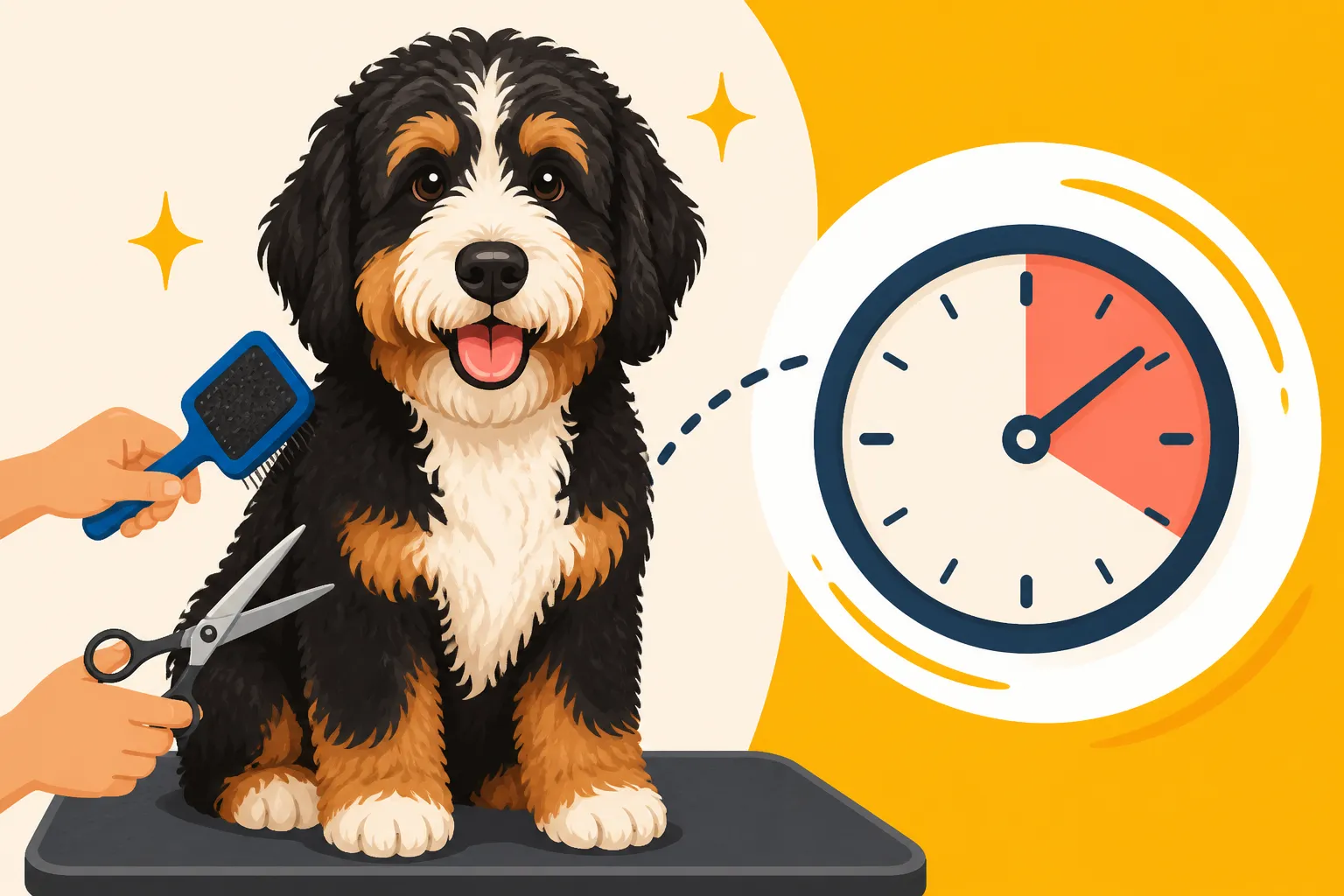
How Long a Standard Bernedoodle Takes to Groom
One of the biggest eye-openers for new Bernedoodle parents is often the sheer amount of time, effort, and cost that goes into maintaining that beautiful, fluffy coat. You might picture a quick bath and brush, but the reality for a standard-sized Bernedoodle is usually far more involved, taking several hours for a professional groom and requiring significant dedication at home. This guide will break down exactly why grooming a standard Bernedoodle is such a time commitment and how you can prepare for it.
The Factors That Determine Grooming Time for a Standard Bernedoodle
It's easy to look at a fluffy Bernedoodle and think "cute!", but underneath that adorable exterior lies a complex coat that requires consistent attention. Several key factors play into just how long a grooming session will take, whether you're tackling it at home or entrusting your furry friend to a professional. Understanding these can help set realistic expectations and manage the process more effectively.
Coat Type and Condition
Not all Bernedoodle coats are created equal, and this is perhaps the single biggest determinant of grooming time. You might have the coveted wavy "fleece" coat, or a tighter, curlier "wool" coat, or even a straighter "hair" coat that sheds more. The curlier and wavier the coat, the more prone it is to matting. Mats are dense clumps of fur that form when loose hair gets tangled with live hair and isn't brushed out. They can be incredibly painful for your dog, pulling on their skin, and are a groomer's worst nightmare.
If your Bernedoodle arrives at the groomer with significant matting, the time required skyrockets. The groomer must carefully work through these tangles, or, if they're too severe, the dog will need to be shaved down completely. Dematting is a delicate, time-consuming process that requires patience and specialized tools. It's often the longest and most stressful part of the entire groom, for both the dog and the groomer. A perfectly maintained, mat-free coat will always take less time than one that's been neglected, which is why regular home brushing is so crucial. The Volume of Coat a Bernedoodle Owner Brushes Weekly is often underestimated by new owners, but it truly makes all the difference.
Size and Cooperation
A standard Bernedoodle can easily weigh between 70 to 90 pounds, or even more. That's a lot of dog, and a lot of surface area to cover! Simply washing, rinsing, and thoroughly drying a dog of this size takes considerably longer than a smaller breed. Every inch of that large body needs careful attention, from their paws to their ears to their tail.
Beyond their physical size, a Bernedoodle's cooperation level dramatically impacts how long the groom takes. A dog that is calm, comfortable with being handled, and stands patiently for brushing, bathing, and clipping will always be quicker to groom than one who wiggles, tries to nip, or is generally uncooperative. Professional groomers are skilled at working with dogs, but even they have limits. If your Bernedoodle resists parts of the process, it requires more breaks, more gentle persuasion, and ultimately, more time. This is where early socialization and consistent positive reinforcement training at home become invaluable. Teaching a Bernedoodle to Lie Down for Three Hours of Grooming is a skill that saves both time and stress down the line.
Desired Style and Complexity
Are you looking for a simple, short "summer cut" that's practical and low-maintenance, or do you prefer a longer, fluffy look that retains more of the traditional Bernedoodle aesthetic? The complexity of the desired style directly affects grooming time. A full body shave-down or a short, even length clip is generally the quickest "haircut" portion of the groom.
However, if you're aiming for a specific breed-standard type trim (even though Bernedoodles don't have a formal standard, many owners have preferred styles), or if you want to keep a longer length, especially on the legs, head, or tail, it will require much more intricate scissoring and detailing. This fine-tuning takes considerable skill and time. Many owners opt for a practical, shorter clip, especially in warmer months, which is often referred to as The Clip a Bernedoodle Owner Should Ask For in July. This can significantly reduce the overall time spent on the styling phase of the groom.
A Typical Professional Grooming Session: What Happens and How Long It Takes
When you drop your Bernedoodle off at the groomer, it's not just a quick trim. It's a multi-stage process, each part designed to ensure your dog looks great and feels comfortable. Understanding these steps helps explain why the process is so time-intensive, especially for a large dog with a dense coat like a standard Bernedoodle.
Initial Assessment and Dematting
The moment your Bernedoodle steps into the salon, a good groomer will perform an initial assessment. They'll check the coat condition, looking for mats, tangles, skin issues, and any sensitivities your dog might have. This is where honest communication with your groomer about your dog's home care routine is vital. If mats are present, this is when the arduous task of dematting begins. Depending on the severity and location of the mats, this can involve using special detangling sprays, brushes, and combs.
For a standard Bernedoodle with a moderately matted coat, this dematting phase alone can take anywhere from 30 minutes to over an hour, even before the bath begins. If the matting is severe, it's often more humane and less stressful for the dog to opt for a full shave-down, which still requires careful work to get under the mats without nicking the skin. The saying, "a matted dog is a shaved dog," often holds true for Bernedoodles simply because of how quickly their dense coats can felt together. Whether a Matted Bernedoodle Is Painful to Handle is a serious consideration, making dematting a priority if a longer style is desired.
Bathing and Drying
Once the coat is prepped (or dematted), it's time for the bath. This isn't just a quick splash. A standard Bernedoodle needs a thorough washing with professional-grade shampoos and conditioners designed for their coat type. Getting shampoo through a dense, double-layered coat and then rinsing it out completely is a significant task. Any leftover shampoo can irritate the skin or leave the coat feeling greasy.
After the bath, the drying process begins, and this is where a huge chunk of time is spent. Bernedoodles have thick coats that can take a very long time to dry naturally, which can lead to skin issues. Professional groomers use high-velocity forced air dryers to push water out of the coat quickly and efficiently. This ensures the coat is dried right down to the skin, which is crucial for preventing mats and achieving a smooth, even cut. For a large Bernedoodle, Bathing and Drying a Ninety Pound Bernedoodle can easily take over an hour by itself, as the groomer must meticulously dry and line-brush the coat to ensure no tangles form as it dries.
Clipping, Scissoring, and Finishing Touches
With a clean, dry, and fluffy coat, the actual "haircut" can finally begin. This involves using clippers for the main body work and scissors for more detailed areas like the face, paws, and tail. The groomer will carefully sculpt the coat according to your preferences, paying attention to symmetry and style. This stage demands precision and an artistic eye, especially if you're aiming for a particular look or keeping certain areas longer.
Finally, the finishing touches include nail trims, ear cleaning, and sometimes even a spritz of cologne or a bandana for flair. While these seem minor, they are important parts of your dog's overall hygiene and comfort. Each step, from the initial clip to the careful scissoring around the eyes and paw pads, contributes to the overall time spent. The intricate work involved in Trimming Between a Bernedoodle's Pads and keeping the hair out of their eyes means these "finishing touches" aren't rushed.
Average Timeframes
So, how long does all of this actually take? For a standard Bernedoodle, you're generally looking at a significant time commitment.
| Coat Condition | Desired Length (Short/Practical) | Desired Length (Medium/Fluffy) |
|---|---|---|
| Well-Maintained (No Mats) | 2.5 – 3.5 hours | 3.5 – 5 hours |
| Minor Matting | 3.5 – 4.5 hours | 4.5 – 6+ hours |
| Severe Matting | 4 – 6+ hours (often shave-down) | Shave-down recommended; time varies significantly for dematting |
Note: These are estimates for a professional groomer working with a cooperative dog. An uncooperative dog, or one requiring Whether a Bernedoodle Needs Two Groomers due to size or temperament, could take even longer.
Strategies to Reduce Grooming Time (and Stress)
The thought of your beloved Bernedoodle spending hours at the groomer, or you spending hours battling mats at home, can be daunting. The good news is there are proactive steps you can take to significantly reduce the time, cost, and stress associated with grooming. It all comes down to prevention and preparation.
Regular Home Maintenance is Key
This cannot be stressed enough: daily or every-other-day brushing at home is the single most effective way to keep grooming times down. Bernedoodles have a coat that loves to mat, especially in high-friction areas like behind the ears, armpits, and britches. A quick 15-20 minute session with the right tools can prevent hours of dematting later. Invest in a good quality slicker brush and a metal comb that reaches down to the skin. Tools you can find on sites like Chewy.com are often professional-grade and make a huge difference.
Focus on line brushing, which means parting the hair and brushing in sections, ensuring you get right down to the skin. Just brushing the top layer of the coat is a common mistake that leaves mats forming underneath. Regular brushing also helps distribute natural oils, keeps the coat healthy, and allows you to check for any skin issues or lumps. The Brushes a Bernedoodle Owner Actually Needs are more than just a simple paddle brush; they're essential tools for preventing coat catastrophes.
Early Socialization and Training
Getting your Bernedoodle puppy accustomed to being handled and to the grooming process from a young age is incredibly beneficial. Start with short, positive sessions at home. Touch their paws, ears, tail, and face regularly. Introduce them to the sound of clippers (even if they're off) and the feel of a brush. Make it a game with lots of treats and praise.
A Bernedoodle that is calm and cooperative on the grooming table will have a much more pleasant experience, and the groomer can work more efficiently. Consider enrolling your puppy in puppy classes that include handling exercises. This early conditioning will pay dividends for years to come, not just in grooming time but also during vet visits. A dog that fights the groomer adds significant time and stress, potentially leading to additional charges for difficult dogs.
Choosing the Right Groomer
Not all groomers have extensive experience with large, thick-coated breeds like Bernedoodles. When selecting a professional groomer, ask about their experience with "doodles" or similar heavy-coated breeds. A groomer who understands the Bernedoodle coat type will be more efficient and skilled in handling its unique challenges. They can also offer advice on specific styles that might be easier to maintain for your particular dog's coat.
Don't be afraid to ask for references or to see photos of their previous Bernedoodle grooms. Establishing a good relationship with a skilled groomer is invaluable. They are your partner in keeping your Bernedoodle comfortable and healthy, and a good one will be transparent about the time and effort involved. For example, if your dog develops Skin Problems Under a Bernedoodle's Heavy Coat due to matting or other issues, a good groomer will notice it and advise you to seek veterinary attention, potentially helping you catch issues early that might later be covered by pet insurance providers like Healthy Paws.
Realistic Expectations
Finally, accept that grooming a standard Bernedoodle is never going to be a quick five-minute job. It's a commitment that requires time, whether it's your own time at home or money spent at the groomer. Embrace it as part of owning this wonderful breed. Understand that regular maintenance will save you money in the long run by avoiding dematting fees and potential veterinary bills for skin infections or hot spots caused by neglected coats. What a Standard Bernedoodle Groom Costs is a significant expense, but it's an investment in your dog's well-being.
The Trade-Offs of Grooming Frequency and Style
The decision of how often to groom your Bernedoodle and what style to choose often comes down to a balance of time, cost, and your dog's comfort. There are definitely trade-offs to consider, and what works for one Bernedoodle family might not be the best fit for another.
The Monthly vs. Quarterly Debate
Many Bernedoodle owners find that a professional groom every 4-6 weeks is ideal. This frequency prevents severe matting, keeps the coat at a manageable length, and allows the groomer to perform regular hygiene checks like ear cleaning and nail trims. While it might seem like a frequent expense, consider that A Year of Grooming Bills on a Standard Bernedoodle often shows that more frequent, shorter appointments can be cheaper overall than infrequent appointments that require extensive dematting or shave-downs.
On the other hand, some owners try to stretch grooming appointments to every 8-12 weeks. This can work if you are incredibly diligent with daily line brushing at home, keeping your Bernedoodle's coat pristine between visits. However, for many, this longer interval almost guarantees some degree of matting, which, as we've discussed, adds significant time and cost to the professional groom. If you're a busy household or new to grooming such a dense coat, aiming for more frequent professional visits might be the less stressful and ultimately more cost-effective option, preventing issues before they become major problems.
Short Clips vs. Longer Styles
The choice of haircut significantly impacts daily maintenance and grooming time. A shorter "puppy cut" or "kennel clip" (where the body hair is kept quite short, perhaps 1/2 to 1 inch) is undoubtedly the easiest to maintain. It minimizes matting, dries quickly if your dog gets wet, and allows for more time between professional grooms if you're consistent with basic brushing. This practical style is popular for active dogs or those living in warmer climates, simplifying things considerably.
Conversely, a longer, fluffier style requires a much higher level of commitment. To maintain several inches of length on a Bernedoodle, you will need to brush and comb your dog almost daily, ensuring no mats are forming right down to the skin. This beautiful, flowing look is what many people envision with a Bernedoodle, but it's important to understand the significant time investment required to prevent painful matting and keep the coat healthy. The longer the hair, the more places for tangles to hide and grow.
Health Implications of Neglected Coats
Beyond aesthetics and convenience, neglecting your Bernedoodle's coat can lead to serious health issues. Severe matting pulls on the skin, causing discomfort, pain, and even bruising. It can also hide skin infections, parasites, and hot spots that go unnoticed until they become severe. Mats restrict air circulation to the skin, creating a perfect breeding ground for bacteria and yeast, especially in damp areas.
In extreme cases, mats can even impede movement, particularly around the joints or in the armpits. If a mat is tight and large enough, it can cut off circulation. When a dog is heavily matted, a groomer's only option is often to shave the dog completely using a very short blade, which carries risks of clipper irritation or skin nicks due to the tension on the matted skin. These situations can then lead to costly vet visits, which is why preventative care through regular grooming is always the best approach. Issues like Ear Infections in a Bernedoodle's Drop Ear are also more likely if the hair in and around the ear canal is matted and neglected.
Ultimately, grooming a standard Bernedoodle is a journey. It requires dedication, the right tools, and realistic expectations. But with a consistent routine, you can keep your Bernedoodle comfortable, healthy, and looking their best, minimizing stress for both of you during those necessary grooming sessions.
Disclaimer
This article is for general informational purposes only and does not constitute professional advice. Laws, prices and regulations vary by location and change over time. Consult a qualified professional for guidance on your specific situation.