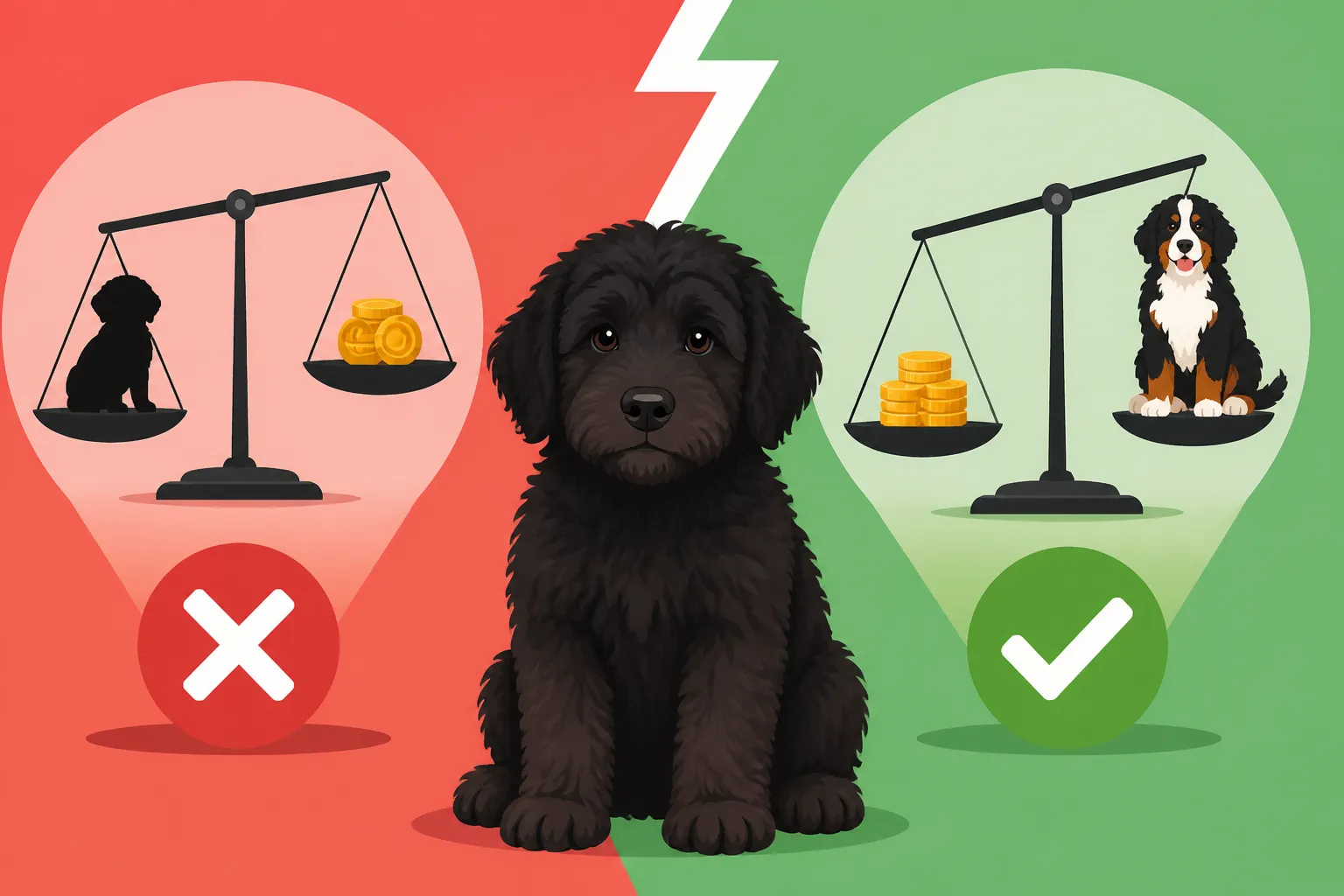
Whether a Solid Bernedoodle Is Worth Less
It's a common thought for anyone looking to bring a Bernedoodle into their family: with all the stunning variations in coat color and pattern out there, does a dog with a "solid" coat end up being less valuable? Many people get caught up in the excitement of flashy tri-color or merle markings, often wondering if a Bernedoodle that's all black, all brown, or all cream might be overlooked, or even sold for a lower price. This guide will explore whether the perceived value of a solid Bernedoodle is truly less, by diving into the factors that actually matter when it comes to bringing one of these wonderful dogs home.
Understanding Bernedoodle Coat Colors and Markings
When you look at a litter of Bernedoodle puppies, it's hard not to be captivated by the kaleidoscope of colors and patterns. You see the classic tri-color, the striking phantom, the unique merle, and then, of course, the elegant solid colors. There's a natural tendency to be drawn to what seems more elaborate or "rare," leading to questions about the perceived worth of less patterned coats.
The Spectrum of Bernedoodle Colors
Bernedoodles come in a surprising array of colors, influenced by the genetics of both the Bernese Mountain Dog and the Poodle. While the Bernese is typically tri-color (black, white, and rust), Poodles come in nearly every solid color imaginable – black, white, cream, brown, red, apricot, blue, silver, and even parti (two colors) or phantom (a specific pattern of tan points). This genetic lottery means a Bernedoodle litter can present a wide range of hues and markings.
For many, the "ideal" Bernedoodle is the traditional tri-color, echoing the Bernese parent. However, you'll find everything from bi-colors (black and white, or brown and white) to phantom patterns, sables, and the increasingly popular merle, which often features unique eye colors. Amidst all this variety, the solid-colored Bernedoodle might appear less "exotic" or distinct at first glance, but that doesn't mean they are any less beautiful or desirable to the right owner.
It's also worth noting that a Bernedoodle's coat color can sometimes change slightly as they mature. What starts as a rich black might "clear" to a blue or silver, and reds or apricots can fade. Even some tri-color markings might shift in intensity. A solid black Bernedoodle, for instance, might develop a magnificent sheen or subtle sun-kissed highlights, making their seemingly simple coat incredibly dynamic.
The Genetics Behind Solid Colors
The presence of solid colors in Bernedoodles is a direct result of their Poodle lineage. Poodles are known for their strong genetics for solid coats, and when bred with a Bernese Mountain Dog, these genes can certainly be passed down. A solid black Bernedoodle, for example, is simply expressing the dominant black gene without the specific modifiers that would create white markings (like Irish spotting from the Bernese) or tan points (like those seen in phantom or tri-color patterns).
The idea that a solid color is somehow "less pure" or indicative of a flaw is a misconception. It's simply a different genetic expression. A solid-colored Bernedoodle is just as much a Bernedoodle as a tri-color one. Their genetic makeup is still a blend of the two parent breeds, regardless of the outward appearance of their coat. These dogs carry the same potential for wonderful temperaments and health traits as their multi-colored siblings.
In fact, some breeders actively work to produce certain solid colors for clients who prefer that aesthetic. While tri-color might be the most sought-after, a perfectly solid black, chocolate, or even cream Bernedoodle can be absolutely stunning and stand out in its own right. It boils down to personal preference and what type of coat an individual buyer is looking for. The variety is part of what makes the breed so appealing.
Common Misconceptions About Solid Coats
One of the biggest misconceptions is that a solid Bernedoodle, especially a black one, somehow didn't "get" the Bernese genes, or that they will shed more. While a flat-coated Bernedoodle that sheds like a Bernese can occur, this is related to coat texture genes, not simply being a solid color. A solid black Bernedoodle with a wavy or curly Poodle-like coat is likely to be just as low-shedding as a tri-color with the same coat texture. The visual pattern has little bearing on the shedding potential.
Another common belief is that solid colors are less "rare" and therefore less valuable. While true tri-color markings can be more challenging to breed consistently, the demand for striking patterns often drives up their price. However, this doesn't mean a solid dog is inherently "worth less" in terms of intrinsic quality or the effort a breeder puts in. A well-bred solid Bernedoodle from health-tested parents and a reputable breeder should still command a price reflecting that quality, not just the absence of specific markings.
Ultimately, the beauty of a dog's coat is in the eye of the beholder. A solid black Bernedoodle might exude elegance, while a solid cream might look like a fluffy cloud. Dismissing them simply because they don't have certain markings would mean missing out on a potentially wonderful companion. It’s important to look beyond the immediate visual and understand the underlying factors that contribute to a dog’s true value and suitability as a family member.
Factors That Truly Influence a Bernedoodle's Value
When considering the "worth" of a Bernedoodle, or any puppy for that matter, focusing solely on coat color is like judging a book by its cover. There are far more critical elements that dictate a dog's long-term health, temperament, and ultimately, its real value to a family. These factors are what truly contribute to a responsible breeder's pricing structure, regardless of whether a puppy has flashy markings or a classic solid coat.
Breeder Reputation and Health Clearances
A reputable breeder is the cornerstone of a healthy, well-adjusted Bernedoodle. These breeders invest significant time, effort, and money into their breeding programs. They conduct extensive health testing on parent dogs, ensure proper socialization for puppies, and provide ongoing support to new owners. Their reputation is built on the health and quality of the puppies they produce, not on selling the trendiest colors. You can learn more about this by reading The Five Clearances a Bernedoodle Breeder Should Have.
Such breeders will transparently share health clearances for hips, elbows, eyes, and heart, as well as genetic tests for conditions common in both Bernese Mountain Dogs and Poodles, like Von Willebrand's Disease and Degenerative Myelopathy. The rigorous testing and careful selection of breeding stock are expensive and time-consuming, and this investment is reflected in the puppy's price. A puppy from a reputable breeder, whether solid or multi-colored, will naturally be priced higher than one from a backyard breeder who cuts corners on health testing and care.
It's crucial to understand that a breeder who prioritizes health and temperament over aesthetics is worth their weight in gold. They are trying to produce healthy, long-lived companions, not just pretty puppies. Never equate a lower price tag on a solid-colored Bernedoodle as an indicator of a "deal" if that breeder cannot provide proper health clearances and a strong reputation.
Health Testing of Parent Dogs
This ties directly into breeder reputation but deserves its own emphasis because it's paramount. The parent dogs of any Bernedoodle should undergo comprehensive health screenings to minimize the risk of passing on heritable conditions. This includes orthopedic evaluations for hip and elbow dysplasia, eye certifications, cardiac exams, and genetic testing for a range of diseases specific to Bernese Mountain Dogs (like Von Willebrand's Disease) and Poodles (like Progressive Retinal Atrophy and Degenerative Myelopathy). For specific tests, consider reading The SOD1 Test Both Bernedoodle Parents Need.
The cost of these tests is substantial. For instance, hip and elbow certifications through organizations like OFA (Orthopedic Foundation for Animals) or PennHIP require veterinary visits and specialized imaging. Genetic panels can screen for multiple conditions with a single cheek swab. A responsible breeder factors these costs into their puppy prices because it's an essential part of ensuring the puppy's well-being and giving you the best chance at a healthy companion.
If a breeder offers a solid-colored Bernedoodle at a significantly lower price and cannot provide verifiable health clearances for the parents, that's a huge red flag, regardless of the coat color. The potential future veterinary bills for conditions like hip dysplasia or hereditary cancers far outweigh any initial savings on a cheaper puppy. Insurance providers like Healthy Paws exist to help manage unexpected veterinary costs, but prevention through responsible breeding is always the first line of defense.
Temperament and Socialization Efforts
Beyond health, a puppy's temperament is vital. A good breeder focuses on raising puppies in an enriching environment, exposing them to various sights, sounds, textures, and people from a young age. This early socialization is critical for developing a confident, well-adjusted dog. Puppies should be handled daily, introduced to different experiences, and given a strong foundation before going to their new homes.
The effort put into early socialization impacts how well a Bernedoodle puppy adapts to its new family and environment. A solid-colored Bernedoodle from a breeder who has dedicated themselves to proper early neurological stimulation and socialization will have a far greater "value" to its new family than a multi-colored puppy raised in a neglectful environment. A stable temperament means a dog that is more likely to be calm indoors, friendly with strangers, and adaptable to various situations.
A Bernedoodle's temperament is a blend of the calm, loyal nature of the Bernese and the intelligence and sometimes goofy energy of the Poodle. Ensuring these traits are nurtured and properly developed is a hallmark of a responsible breeder, and it's a significant factor in the perceived value of any puppy from their program, regardless of its coat color. A well-socialized puppy means fewer behavioral issues down the line, saving owners stress, time, and potential training costs.
The Financial Reality: Why Color Isn't the Primary Driver of Price
When you're looking at Bernedoodle puppies, it's easy to get caught up in the "wow" factor of a unique pattern or the perceived rarity of certain colors. However, in the world of ethical and responsible dog breeding, coat color alone is rarely the primary determinant of a puppy's price. While demand for certain aesthetics can influence market trends, the true cost of a Bernedoodle is rooted in the significant investment a breeder makes in health, welfare, and genetic integrity.
The Cost of Responsible Breeding
Let's break down where a reputable breeder's costs truly lie. It starts long before the puppies are even conceived. There's the expense of acquiring healthy, well-tempered breeding stock – often involving purchasing dogs from other reputable breeders, which itself can be a substantial investment. Then comes the extensive health testing for both parent dogs, including hip and elbow evaluations, eye certifications, cardiac screenings, and a comprehensive genetic panel. These tests are not cheap, and they are repeated for each breeding dog over their lifetime. You can expect to pay more for a puppy whose parents have all their clearances, and rightly so. Knowing Whether a Bernedoodle Breeder Should Show OFA Numbers can help you verify this.
Beyond health testing, there's the cost of stud fees if the breeder doesn't own the male, high-quality nutrition for the pregnant mother, and exceptional veterinary care throughout gestation and delivery. Once the puppies arrive, the costs continue: vaccinations, deworming, microchipping, early socialization, premium puppy food (like options from Ollie or high-quality kibble from Chewy), and constant supervision. Factor in the time commitment – 24/7 care for weeks on end – and it's clear that responsible breeding is a labor of love, not a quick money-making scheme. These foundational costs apply equally to a litter producing solids, tri-colors, or merles.
Therefore, while a "rare" color might fetch a slight premium due to market demand, a solid Bernedoodle from a truly responsible breeder who has invested in all these areas will still have a price reflecting that extensive care and health assurance. Any price difference between a solid and a multi-colored puppy from the same quality breeder will likely be marginal, simply reflecting current aesthetic demand rather than a difference in the dog's inherent quality or the cost of producing it.
Market Demand Versus Intrinsic Value
It's true that certain Bernedoodle coat patterns, particularly the traditional tri-color and the more exotic merle, often experience higher market demand. This demand can, in turn, lead some breeders to price these puppies at the higher end of the spectrum. People are willing to pay a premium for a specific look they've fallen in love with, and breeders, like any business, respond to market forces. However, this increased price doesn't necessarily mean the dog itself has more "intrinsic value" in terms of health, temperament, or longevity.
Intrinsic value, in the context of a companion animal, comes from the dog's health, its sound temperament, and the ethical breeding practices that brought it into the world. A solid black Bernedoodle with excellent health clearances, a fantastic temperament, and a clear bill of health from a responsible breeder holds immense intrinsic value. This value far outweighs the fleeting aesthetic appeal of a specific pattern. The puppy will be a loving, healthy companion for many years, which is the real measure of "worth."
It's a common trap to confuse popularity with quality. While a merle Bernedoodle might draw more "likes" on social media, a solid-colored Bernedoodle from a health-tested line is arguably a more valuable long-term companion if their health and temperament are prioritized. Don't let trends dictate your decision; focus on what truly matters for a happy life with your dog.
Long-Term Costs Beyond the Purchase Price
The initial purchase price of a Bernedoodle, whether solid or multi-colored, is just the tip of the iceberg when it comes to the true cost of ownership. Over the typical The Twelve to Fifteen Years a Bernedoodle Is Sold On of their life, you will spend far more on food, grooming, veterinary care, training, and supplies than you did on the puppy itself. This is why focusing on a healthy, well-bred dog, regardless of color, is a smarter financial decision in the long run.
Consider ongoing expenses: premium large-breed dog food (which you can find readily on Chewy), regular grooming every 6-8 weeks (which can run hundreds a year), annual vet check-ups, vaccinations, and preventatives. Then there are unexpected costs: an emergency vet visit, treatment for an illness, or even specialized training if behavioral issues arise. The lifetime cost of a Bernedoodle is substantial, as explored in articles like The Full Cost of Twelve Years With a Bernedoodle and What a Bernedoodle Costs Over Its Whole Life.
A puppy from questionable breeding, regardless of its color, is much more likely to incur significant veterinary expenses later in life due to inherited health issues like hip dysplasia or certain cancers. These potential costs can quickly dwarf any initial savings from buying a cheaper puppy. Investing in a healthy Bernedoodle from a reputable breeder, even if it has a less "flashy" solid coat, is a far more economically sound decision when you consider the entirety of the dog's life. Pet insurance, like policies from Healthy Paws, can help mitigate these risks, but it's always better to start with the healthiest possible foundation.
Making an Informed Choice: Prioritizing Beyond Color
When the time comes to choose your Bernedoodle, it’s easy to be swayed by stunning photographs of rare coat patterns or the latest trends. However, seasoned dog owners and reputable breeders will tell you that appearance, while lovely, should never be the primary decision-maker. The real joy and longevity of your relationship with your Bernedoodle will come from their health, temperament, and how well they integrate into your family life. A solid Bernedoodle, just like any other, has the potential to be the perfect companion if you focus on what truly counts.
Focusing on Health and Longevity
The single most important factor for any potential Bernedoodle owner should be the health of the puppy and its lineage. A dog's health directly impacts its quality of life, its lifespan, and your emotional and financial investment over the years. This means doing your homework on the breeder and ensuring that both parent dogs have undergone rigorous health testing for conditions common in Bernese Mountain Dogs and Poodles. Questions about cancer in the Bernese line, for instance, are very important, and you might find useful information in Asking a Breeder About Cancer in the Bernese Line.
Choosing a Bernedoodle that comes from parents with excellent health clearances significantly reduces the risk of heartbreaking and expensive genetic health issues down the road. Whether your puppy is solid black, tri-color, or merle, the commitment to health by the breeder should be your top priority. A healthy solid-colored Bernedoodle is undeniably "worth more" than a sickly multi-colored one. This foundation of health is what ensures you get to enjoy your companion for as many years as possible, truly making them a priceless member of your family.
Don't be afraid to ask for proof of health clearances, such as OFA certificates for hips and elbows, or genetic test results. A transparent breeder will be happy to provide these. Remember that some health conditions, if ignored by a breeder, can significantly impact a Bernedoodle's lifespan, as discussed in What Bernedoodles Are Most Often Put to Sleep For.
Temperament Matching Your Lifestyle
After health, temperament is king. A Bernedoodle's personality, intelligence, and energy levels are what you will live with every single day. Do you want a goofy, playful companion, or a calmer, more reserved dog? Do you have young children, other pets, or a quiet household? These lifestyle factors should guide your choice far more than a specific coat color. A well-bred Bernedoodle, regardless of its coat, should embody the best traits of its parent breeds: the loyal, affectionate, and sometimes goofy nature of the Bernese, combined with the intelligent, social, and trainable qualities of the Poodle.
A responsible breeder will spend time getting to know their puppies' individual personalities and will help match you with a puppy whose temperament aligns with your family and lifestyle. They understand that a good match leads to a happy home for both the dog and the owner. For example, some Bernedoodles might be more energetic and require extensive exercise, while others are content with moderate activity and plenty of cuddle time, embodying the desire for Whether a Bernedoodle Is Calm Indoors.
A solid Bernedoodle with a perfect temperament for your family is invaluable. If you're looking for a therapy dog or a hiking buddy, temperament is paramount. A dog that fits seamlessly into your life will bring you far more joy and fulfillment than one chosen purely for its looks. Sometimes, the puppy with the least flashy coat is the one with the most compatible personality.
The Beauty in Every Bernedoodle
Ultimately, true beauty in a Bernedoodle extends far beyond its coat pattern or color. It's in their soulful eyes, their wagging tails, their quirky personalities, and the unconditional love they offer. A solid Bernedoodle, whether it's a rich black, a warm chocolate, or a creamy white, possesses all the charm, intelligence, and affection that make this hybrid breed so beloved. Their lack of complex markings often highlights their elegant structure and expressive faces in a unique way.
Many owners who have chosen solid-colored Bernedoodles find themselves completely smitten with their dog's unique appeal. They often appreciate the simplicity and classic elegance of the solid coat, recognizing that true beauty lies beneath the surface. You'll soon realize that once your Bernedoodle is part of your family, their color becomes just one small detail of the magnificent companion they are. The bond you form, the memories you create, and the love you share are truly priceless.
Choosing a Bernedoodle is about finding a companion for life, not a fashion accessory. Prioritizing health, temperament, and responsible breeding practices ensures you bring home a dog that is truly "worth" its weight in gold, regardless of whether its coat is solid or boasts an intricate pattern.
| Factor | Impact on "Value" (Real) | Impact on "Value" (Perceived by Some) | Relevance to Coat Color |
|---|---|---|---|
| Breeder Reputation | High: Ensures ethical practices, support | Low: Not directly visible on puppy | None |
| Health Clearances of Parents | Very High: Minimizes future vet costs, ensures longevity | Low: Requires asking for documentation | None |
| Temperament & Socialization | High: Ensures a well-adjusted, compatible pet | Low: Not immediately obvious | None |
| Puppy Health & Vet Care | High: Crucial for early development | Low: Assumed if breeder is good | None |
| Coat Color/Pattern | Low: Purely aesthetic preference | High: Often drives initial attraction/price | Direct |
| Genetic Health Guarantees | High: Provides assurance and recourse | Medium: Depends on what's covered | Indirect (covers conditions regardless of color) |
| Purchase Price | Low: Initial cost is small part of lifetime expense | High: Immediate financial outlay | Influenced by demand for color |
Disclaimer
This article is for general informational purposes only and does not constitute professional advice. Laws, prices and regulations vary by location and change over time. Consult a qualified professional for guidance on your specific situation.