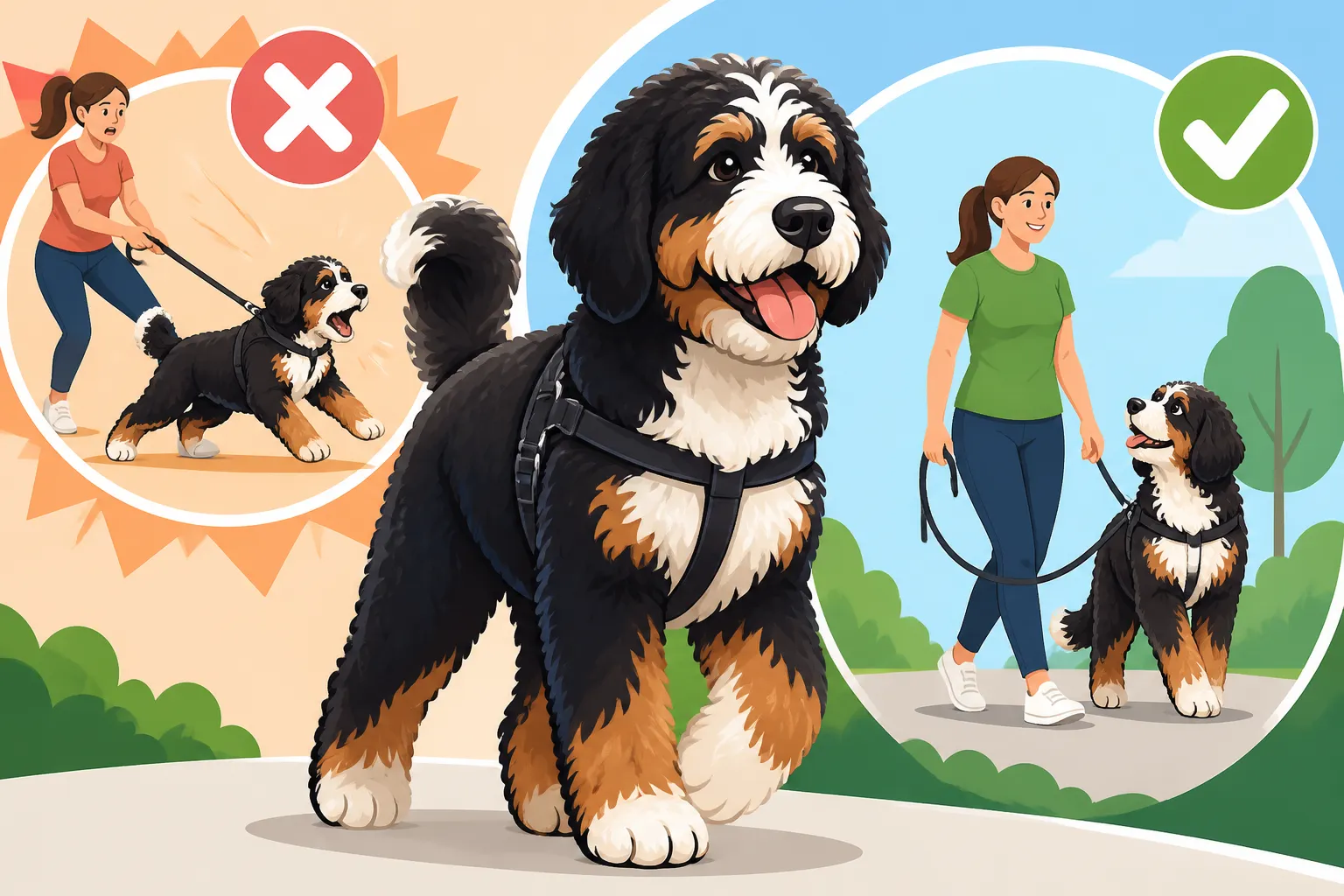
Leash Manners on a Bernedoodle Heading for Ninety Pounds
One of the biggest joys of owning a Bernedoodle is taking them out for a walk, but let's be honest, that joy can quickly turn into a wrestling match when your adorable, fluffy puppy grows into a ninety-pound powerhouse determined to sniff every blade of grass at full speed. Many of us find ourselves dragged down the street, our shoulders aching, wondering how to teach polite leash manners to such a strong, enthusiastic companion. This comprehensive guide will walk you through everything you need to know to transform those frustrating tug-of-war sessions into enjoyable, loose-leash strolls with your big Bernedoodle.
Understanding the Bernedoodle's Unique Leash Challenges
Bringing a Bernedoodle into your life means embracing their unique blend of Bernese Mountain Dog charm and Poodle intelligence. However, this combination also brings a distinct set of challenges when it comes to leash manners, especially once they reach their impressive adult size. It's not just about their sheer strength; it's also about their natural instincts and developmental stages.
The Power and Enthusiasm of a Growing Bernedoodle
Imagine trying to hold back a small sled dog, and you're getting close to the feeling of walking an untrained, full-grown Bernedoodle. These dogs are robust, built with a strong frame and often possessing the Bernese drive to pull or lean into pressure. When they're young, their pulling might seem cute or manageable, but as they pack on the pounds—easily hitting seventy, eighty, or even ninety pounds—that playful tug quickly becomes a serious hazard. They're often just so excited about the world, wanting to greet every person and dog, or explore every interesting scent, that they genuinely don't understand the physical impact of their enthusiasm on the other end of the leash. Their excitement translates into forward momentum, and if not guided properly, that momentum quickly overcomes any handler not prepared for it.
What often starts as a minor annoyance with a twenty-pound puppy can escalate into a real safety concern for both dog and owner. A sudden lunge for a squirrel or a friendly jump to greet a passerby can easily pull an adult off balance, leading to falls or injuries. For older owners, or those with children, this physical challenge becomes even more pronounced. It's a classic situation where a dog's natural exuberance clashes with our human need for controlled, safe walks, highlighting why early intervention and consistent training are so crucial with this breed.
Bernedoodle Temperament and Trainability
Bernedoodles are generally intelligent dogs, inheriting the Poodle's smarts and the Bernese's desire to please, making them quite trainable in many aspects. However, they can also possess a "goofy" streak and, sometimes, a touch of Bernese stubbornness that can make leash training feel like a slow dance. They might understand "heel" perfectly in the living room, but the moment you step outside, with all the exciting smells and sights, that indoor focus can vanish quicker than a treat in their mouth. It's not usually malicious defiance; it's often an overwhelmed or overstimulated mind that simply can't process commands when the world is calling.
This means that while they can learn quickly, applying that learning in real-world, highly distracting environments takes patience and a thoughtful approach. You might find your Bernedoodle is Whether a Bernedoodle Is Stubborn or Just Slow at times, processing new information at their own pace. Their affectionate nature, which makes them such wonderful companions, can also contribute to pulling if they see a person they want to greet, leading to a lunge fueled by pure, unadulterated friendliness. Understanding this balance of intelligence, exuberance, and occasional stubbornness is key to tailoring your training methods for success.
Starting Early: Puppy Leash Training Fundamentals
The best time to start teaching polite leash manners is the moment your Bernedoodle puppy comes home, even before they've had all their vaccinations and are ready for long walks in public. Establishing good habits early, when they're small and easily managed, sets the foundation for a lifetime of enjoyable walks.
Introducing the Collar or Harness
From day one, get your Bernedoodle puppy comfortable with wearing a collar or a lightweight harness. Start with very short periods, just a few minutes at a time, always associating it with positive experiences like mealtime, playtime, or cuddles. Let them wear it while they eat their breakfast, or during a quick play session in the living room. The goal is for them to see the collar or harness as a normal, even pleasant, part of their routine, not something restrictive or annoying. You want them to barely notice it's there.
Gradually increase the time they wear it, always keeping an eye out for any discomfort or irritation. If they start scratching at it or looking stressed, remove it and try again later for a shorter period. This early positive association is vital. Avoid letting them just wear it unsupervised at first, especially if they are trying to chew it off. Once they are accustomed to the feeling, it's time to attach a leash.
First Leash Sessions: Short and Sweet
Once your puppy is happy wearing their gear, attach a lightweight leash and let them drag it around the house under supervision for a few minutes. Again, associate this with positive things. This teaches them that the leash is nothing to be feared. When you actually pick up the leash, your first "walks" should be incredibly short sessions inside your home or a secure yard, lasting only a minute or two. Don't worry about perfect heeling yet; the goal is simply to teach them that the leash means walking with you, not pulling away from you.
Use positive reinforcement heavily. Every time they take a step or two without pulling, mark that moment with a "yes!" or a click, and immediately give them a high-value treat. If they pull, simply stop moving. The moment the leash goes slack, even for a second, praise and reward, then start walking again. This simple "stop-start" method teaches them that pulling gets them nowhere, while a loose leash moves them forward. These early, low-pressure sessions are critical for building a positive association with the leash and setting the stage for more formal training later on. Remember, Socializing a Bernedoodle Before Twelve Weeks is also crucial, and getting them comfortable on leash will aid in safe socialization outside the home.
Essential Tools for Leash Training a Large Bernedoodle
While training techniques are paramount, having the right equipment can make a world of difference when you're working with a powerful Bernedoodle. The goal is control and comfort, not pain or punishment.
Collars, Harnesses, and Head Halters
When it comes to choosing equipment for a Bernedoodle, you've got a few options, each with its pros and cons. A standard flat buckle collar is great for holding ID tags and can be used for light leash work once your dog has impeccable manners, but it offers very little control over a strong puller and can put pressure on their trachea. For a growing Bernedoodle, this often isn't enough.
Front-clip harnesses are a popular choice for many large breeds, and for good reason. Instead of attaching the leash at the back, which can encourage a dog to pull like a sled dog, the leash clips to the front of their chest. When your Bernedoodle tries to pull, the harness gently redirects them to the side, turning their body back towards you and making it difficult to lean into the pull. This provides more control without causing discomfort to their throat. The Harness That Holds a Ninety Pound Bernedoodle will be one specifically designed for strong, large dogs, often with durable materials and good padding.
Head halters, sometimes called head collars, are another excellent option, especially for very strong pullers or those whose handlers need maximum control due to physical limitations. These work similarly to a horse's halter, giving you control over the dog's head, and where the head goes, the body often follows. They allow for very precise guidance and can quickly interrupt pulling or lunging. Many owners find that Whether a Head Halter Controls an Eighty Pound Bernedoodle is a definitive "yes," and it can be a game-changer for control. It's important to introduce head halters very gradually and positively, as some dogs initially resist them. Pair it with treats and praise, making it a comfortable experience.
| Equipment Type | How it Works | Pros | Cons | Ideal For |
|---|---|---|---|---|
| Flat Collar | Leash attaches to a ring around the neck. | Simple, inexpensive, good for ID tags. | Little control over pullers, can injure trachea. | Dogs with excellent leash manners, carrying ID. |
| Back-Clip Harness | Leash attaches to a ring on the dog's back. | Comfortable, no neck pressure, secure. | Can encourage pulling (like a sled harness), less steering control. | Dogs with good leash manners, protecting neck/throat. |
| Front-Clip Harness | Leash attaches to a ring on the dog's chest. | Redirects pulling, good control, distributes pressure evenly. | Can sometimes tangle legs if not fitted correctly. | Most Bernedoodles learning loose-leash, strong pullers. |
| Head Halter | Fits over snout and behind ears, controls head direction. | Excellent control, prevents pulling and lunging effectively. | Requires careful introduction, some dogs dislike the feel. | Very strong pullers, reactive dogs, handlers needing max control. |
Leashes and Other Aids
Beyond the primary restraint, your choice of leash matters too. A standard six-foot nylon or leather leash is usually ideal. Avoid retractable leashes for training a large Bernedoodle; they teach a dog that pulling extends their roaming distance, which is the opposite of what you want, and they offer very little control over a suddenly lunging heavy dog. They can also snap or cause rope burns, posing a risk to both dog and handler. For a Bernedoodle, a sturdy, comfortable leash that won't slip out of your hand is essential. Leather leashes offer a good grip and durability, while high-quality nylon is also a strong contender.
Consider a leash with a comfortable handle, perhaps padded, as you'll be holding onto it quite a bit! For an even better grip and less strain, some handlers use a leash that can be worn around the waist, freeing up their hands. This can be particularly useful when you're trying to manage other things or if you have a dog that truly tests your arm strength. Remember, the right tools are there to assist your training efforts, not replace them. They make it easier for you to communicate your expectations to your dog and reinforce the desired behavior.
Mastering the Loose-Leash Walk: Techniques and Strategies
Teaching your Bernedoodle to walk politely on a loose leash is a process that requires consistency, patience, and positive reinforcement. It's not about forcing them into position, but about teaching them that staying near you, without tension on the leash, is the most rewarding choice.
The "Stop and Go" Method
This is a foundational technique that works wonderfully for teaching a Bernedoodle that pulling gets them nowhere. Here’s how it works:
- Start Walking: Begin walking at a brisk pace.
- Monitor the Leash: As soon as you feel any tension on the leash – even a slight tightening – immediately stop dead in your tracks. Don't say anything, don't pull back, just stop.
- Wait for Slack: Stand still until your Bernedoodle looks back at you, or the leash goes completely slack. They might sit, they might sniff, but the key is that they release the tension.
- Reward and Resume: The instant the leash is loose, mark it with a verbal cue ("Yes!" or "Good!") and reward them with a high-value treat right at your hip, the position you want them to be in. Then, immediately start walking again.
Repeat this every single time they pull. It might feel like you're stopping every two steps at first, and your walks might be very slow, but consistency is critical. Your Bernedoodle will quickly learn that a tight leash means a halt to their forward progress, while a loose leash means they get to keep moving and get rewarded. This simple method helps them connect their action (pulling) with a consequence (stopping) and the desired action (loose leash) with a reward (moving forward and a treat). It is one of the most effective ways to teach Teaching a Bernedoodle to Walk Beside You.
Changing Direction and Pace
To prevent your Bernedoodle from becoming reliant on pulling in a straight line, incorporate changes of direction and pace into your walks. This keeps them paying attention to you and anticipating your next move, rather than forging ahead mindlessly.
- Sudden Turns: When your dog starts to pull, instead of stopping, make an abrupt turn in the opposite direction. Your Bernedoodle will have to quickly reorient themselves and catch up. As they do, and the leash goes slack, praise and reward.
- Varying Speed: Change your pace frequently. Go from a brisk walk to a slow saunter, then speed up again. This teaches your dog to watch your body language and adjust to your rhythm, rather than setting their own.
- Zig-Zagging: Instead of walking in a straight line, try walking in a zig-zag pattern. This makes them less able to predict your movement and encourages them to stay close and attentive.
These techniques break the pattern of constant forward motion and force your Bernedoodle to engage their brain and focus on you. They learn that you are the leader of the walk, not the other way around. Over time, this builds a stronger bond and better communication on the leash.
Positive Reinforcement and Lure-and-Reward
Positive reinforcement is the cornerstone of successful Bernedoodle leash training. You want your dog to want to walk nicely, not to be afraid of consequences. Use high-value treats – small, soft, irresistible bits of cheese, cooked chicken, or liver – as your primary reward. Verbal praise and gentle petting are also important, but treats are often the fastest way to convey "yes, that's exactly what I want!" to a food-motivated Bernedoodle. What a Bernedoodle Will Work For is often a delicious treat!
The lure-and-reward method is particularly useful for establishing the "heel" position or a comfortable side-by-side walk.
- Start Position: Stand with your Bernedoodle at your side, in the position you want them to walk in.
- Lure: Hold a treat near their nose and guide them into the heel position.
- Step Forward: Take one or two steps, keeping the treat at their nose level, luring them to stay by your side.
- Reward: After those steps, if they've maintained the position and the leash is loose, immediately give them the treat and praise.
- Increase Steps: Gradually increase the number of steps you take before rewarding, always ensuring the leash remains loose.
This method helps them understand the desired body position and the feeling of walking without pulling. Combine this with the "stop and go" and directional changes, and you'll be building a solid foundation for a lifetime of enjoyable walks.
Addressing Common Leash Reactivity and Pulling
Sometimes, pulling isn't just about over-enthusiasm; it can stem from anxiety, frustration, or overstimulation, which can manifest as reactivity. A Bernedoodle, being a large and strong dog, can make these situations feel overwhelming, even dangerous, if not managed properly.
Managing Environmental Triggers
The first step in addressing severe pulling or reactivity is to manage the environment. If your Bernedoodle lunges, barks, or pulls excessively at other dogs, people, or cars, you need to identify their triggers and work to keep them under their threshold. Their threshold is the point at which they can no longer focus on you and react instead.
This might mean:
- Changing Walk Routes: Avoid busy parks or sidewalks during peak hours. Opt for quieter streets or times when there are fewer distractions.
- Creating Distance: If you see a trigger (like another dog) approaching, cross the street or duck behind a parked car or bush to increase the distance between your Bernedoodle and the trigger. The more distance, the less intense the trigger, and the more likely your dog can remain calm.
- Shortening Walks: If your dog becomes overstimulated quickly, keep walks shorter and more focused, gradually increasing duration as they improve.
Managing the environment isn't about avoiding the problem forever; it's about setting your Bernedoodle up for success by reducing the intensity of triggers, allowing you to train them calmly and effectively. Without this management, every walk can become a negative, reinforcing experience for both of you.
Counter-Conditioning and Desensitization
For Bernedoodles that exhibit reactivity (barking, lunging, growling) towards specific triggers, counter-conditioning and desensitization are powerful techniques. This essentially means changing your dog's emotional response to a trigger from negative (fear, frustration) to positive (excitement for treats).
- Identify the Trigger: Pinpoint exactly what your Bernedoodle reacts to (e.g., other dogs, children, bicycles).
- Find the Threshold: Determine the distance at which your Bernedoodle notices the trigger but doesn't react negatively. This is their threshold.
- "Look at That" Game: When you're at or just below their threshold, and your Bernedoodle spots the trigger (e.g., another dog), immediately say "Yes!" and give them a super high-value treat. Repeat this every time they look at the trigger without reacting.
- Move Away: If they start to react, you've gone too far. Immediately increase the distance or move them away from the trigger, and try again when they are calmer.
The goal is for your Bernedoodle to associate the sight of the trigger with delicious treats from you, rather than feeling anxious or needing to react. Over time, this positive association can replace the negative one. This often works hand-in-hand with Teaching a Bernedoodle Not to Pull at Eighty Pounds, as a reactive dog is almost always a pulling dog.
Dealing with Leash Lunging and Barking
Leash lunging and barking are often outward signs of an internal struggle—whether it's fear, frustration, or over-excitement. For a large Bernedoodle, this can be incredibly challenging.
- Be a Tree: If your Bernedoodle lunges and barks, stop immediately and stand still, like a tree. Wait for them to calm down, even for a split second, and the leash to go slack. Then, calmly move on or redirect their attention. Pulling back or yelling often makes the situation worse by adding to their stress.
- Interrupters: Teach a strong "look at me" command indoors first. Practice it in low-distraction environments until your Bernedoodle reliably makes eye contact for a treat. Then, when you see a trigger approaching on a walk, use your "look at me" command before they react, and reward heavily for compliance. This redirects their focus to you.
- Desensitize Gradually: As mentioned, work at distances where your Bernedoodle can succeed. Don't rush into close encounters. Celebrate small victories, like seeing a trigger without a full-blown reaction.
Remember, addressing reactivity is a marathon, not a sprint. It takes immense patience and consistency. It’s about building confidence in your Bernedoodle and teaching them that you are their reliable guide, capable of handling challenging situations. If you're finding it difficult, this is definitely a time when Putting a Bernedoodle Through a Group Class or consulting a certified professional dog trainer can be incredibly beneficial.
Consistency and Patience: The Long-Term Commitment
Training a large, strong dog like a Bernedoodle, especially when it comes to leash manners, isn't a one-and-done deal. It's a continuous journey that demands unwavering consistency and a deep well of patience from you, the handler.
Daily Practice and Reinforcement
Think of leash training as a skill your Bernedoodle needs to practice daily, just like a musician practices their instrument. Every single time you attach the leash, even for a quick trip to the mailbox or a potty break in the yard, it's an opportunity to reinforce good manners. Don't just save your training for structured walks; make every interaction count.
- Short, Frequent Sessions: Instead of one long, overwhelming training walk, incorporate several short, focused sessions throughout the day. Even five minutes of intentional loose-leash practice can be more effective than thirty minutes of frustration.
- Random Rewards: Don't make rewards predictable. Sometimes reward after three steps, sometimes after ten, sometimes just for a moment of sustained loose-leash walking. This keeps your Bernedoodle engaged and hopeful for the next treat.
- Vary Environments: Once your Bernedoodle is doing well in low-distraction areas, gradually introduce them to slightly more challenging environments. Start with the quietest time of day in a new location, then slowly increase the level of distraction. This is how you proof their training.
The more consistently you apply your training techniques and reward desired behaviors, the faster your Bernedoodle will generalize these skills across different situations. It helps them understand that "loose leash" is the expectation, no matter where they are or what exciting things are happening around them.
The Handler's Role: Body Language and Energy
Dogs are masters at reading our body language and energy. If you're tense, frustrated, or anxious on the leash, your Bernedoodle will pick up on that and often mirror it. Your demeanor is a huge part of your dog's success.
- Stay Calm and Confident: Project calm confidence. If you feel your frustration rising, take a deep breath. A relaxed handler makes for a more relaxed dog.
- Clear Cues: Use clear, consistent verbal cues and hand signals. Avoid repeating commands endlessly; say it once, wait for a response, and then guide or prompt if needed.
- Loose Grip: Hold the leash with a loose, relaxed grip, allowing it to hang freely. A tight grip communicates tension to your dog, even before they've pulled. Your hands should be guiding, not yanking.
- Be Engaging: Make yourself more interesting than the environment. Use enthusiastic praise, exciting treats, and a playful tone to keep your Bernedoodle's attention on you. If you're boring, they'll look for entertainment elsewhere.
Remember that Whether a Bernedoodle Pulls Its Owner Over is a very real concern, and your ability to stay calm and assertive, yet positive, is crucial for maintaining control and building a positive relationship. Your Bernedoodle looks to you for guidance, and being a steady, reliable leader is the best gift you can give them.
Advanced Leash Skills and Public Etiquette
Once your Bernedoodle has a solid grasp of loose-leash walking in familiar, low-distraction environments, it's time to level up. Taking a ninety-pound dog into new, stimulating situations requires additional preparation and focus to ensure continued success and polite public behavior.
Proofing Training in Distracting Environments
"Proofing" training means practicing commands and behaviors in increasingly challenging environments until your Bernedoodle can perform them reliably, no matter what's going on around them. This is where the real test of your consistent training comes in.
- Gradual Exposure: Don't jump from your quiet neighborhood street to a bustling farmers' market overnight. Gradually increase the level of distraction. Start with a slightly busier street, then perhaps a park during a less crowded time.
- High-Value Rewards: In highly distracting environments, you'll need even higher-value treats to capture and maintain your Bernedoodle's attention. That dry kibble might work at home, but on a busy trail, you might need bits of hot dog or cheese.
- Short Bursts of Success: Aim for short periods of successful loose-leash walking. Even if you only manage twenty feet perfectly before your Bernedoodle gets distracted, reward that success heavily and then reset. Over time, those twenty-foot stretches will become longer.
- Practice "Watch Me": Reinforce your "watch me" or "look at me" command diligently in these environments. It's your ultimate tool for redirecting their attention from a distraction back to you.
Remember, your Bernedoodle isn't being "stubborn" if they struggle in a new, stimulating environment; they're simply responding to overwhelming input. Your job is to help them navigate it successfully by setting them up for wins.
Handling Greetings and Public Interactions
A friendly Bernedoodle is usually a popular Bernedoodle, but their size means you need to be in control of all public interactions. You don't want your large dog knocking over a child or an elderly person out of sheer exuberance. A Bernedoodle That Jumps on People is a common problem, and it's essential to manage this from the leash.
- "Four on the Floor" Rule: Teach your Bernedoodle that all greetings, with both people and other dogs, must happen with all four paws on the ground. If they jump, immediately turn your back, say "off," and walk away. Only re-engage when they are calm and standing.
- Ask Permission: Always ask people if it's okay for your Bernedoodle to greet them. Not everyone is comfortable with a large dog, no matter how friendly. If the answer is no, politely guide your Bernedoodle past.
- Controlled Greetings: When permission is granted, keep the greeting short and sweet. Keep your Bernedoodle on a loose leash, rewarding them for polite behavior. If they get too excited, interrupt the greeting and calmly move on.
- Dog-to-Dog Etiquette: For dog-to-dog greetings, ensure both dogs are calm and on loose leashes. If either dog shows signs of tension or over-excitement, calmly separate them and move on. Many quick greetings, especially with excited large dogs, can quickly escalate. It’s often better to do a parallel walk first, where dogs walk alongside each other at a distance, rather than going directly into a nose-to-nose greeting.
Being a responsible Bernedoodle owner means advocating for your dog's space and ensuring their interactions are positive and safe for everyone involved. The Height and Weight of a Standard Bernedoodle means that any uncontrolled interaction can be a serious issue.
When to Seek Professional Help
Despite our best efforts, sometimes we hit a wall with training, or specific behavioral issues arise that feel beyond our capabilities. There's absolutely no shame in seeking professional help; in fact, it's a sign of a responsible and dedicated owner.
Recognizing Persistent Challenges
You might find yourself in a situation where your Bernedoodle's pulling isn't improving, or perhaps new, more challenging behaviors are emerging. This isn't a failure on your part, but rather an indication that it might be time for expert guidance.
- Unmanageable Pulling: If your Bernedoodle is consistently dragging you around, making walks unenjoyable or unsafe, even after diligent practice of the techniques above, it's a sign you need professional input. You shouldn't dread walking your own dog, especially one that could Whether a Bernedoodle Pulls Its Owner Over.
- Leash Reactivity Escalation: If your Bernedoodle's barking, lunging, or growling towards triggers is intensifying, or becoming more frequent, a professional can help diagnose the root cause (fear, frustration, aggression) and develop a tailored modification plan. This is particularly crucial for a large breed where uncontrolled reactivity can be dangerous.
- Lack of Progress: If you feel like you're putting in consistent effort but seeing no real improvement over weeks or months, a fresh pair of eyes from a professional trainer can identify what might be missing or suggest alternative approaches that resonate better with your specific Bernedoodle.
- Personal Safety Concerns: If you are genuinely worried about your ability to control your Bernedoodle on a leash, especially if they are getting to be ninety pounds, and you're feeling physically vulnerable, immediate professional intervention is necessary. Your safety, and the safety of others, is paramount.
Don't wait until the problem becomes insurmountable. Addressing issues early can prevent them from becoming deeply ingrained habits that are much harder to change later on.
Finding a Qualified Dog Trainer or Behaviorist
Finding the right professional is key. Look for trainers who use positive reinforcement, force-free, and science-based methods. Avoid anyone who suggests using harsh corrections, prong collars (which can cause physical harm and exacerbate fear), or shock collars. These methods can damage your relationship with your Bernedoodle and often suppress symptoms without addressing the underlying emotional issues, potentially leading to more severe problems down the line.
Here’s what to look for:
- Certifications: Look for trainers certified by reputable organizations, such as the Certification Council for Professional Dog Trainers (CCPDT), the Karen Pryor Academy (KPA), or the International Association of Animal Behavior Consultants (IAABC). These certifications indicate a commitment to ethical, effective training practices.
- Experience with Large Breeds: Ask about their experience with large, powerful breeds like Bernedoodles.
- Observation: Ask if you can observe a class or a session before committing. This gives you a feel for their training style.
- References: Don't hesitate to ask for client references.
- Clear Communication: A good trainer should be able to clearly explain why they are using certain techniques and how they will help your Bernedoodle.
Many trainers offer private sessions, which can be invaluable for addressing specific leash-related issues in your Bernedoodle, or they might recommend a group class like Putting a Bernedoodle Through a Group Class for structured learning in a controlled environment. Online resources, like those offered by BAXTER & Bella, can also provide guidance and support between in-person sessions, allowing you to access expert advice from the comfort of your home. Remember, investing in professional training is investing in a happier, safer relationship with your Bernedoodle for years to come.
Daily Routine and Exercise for a Well-Mannered Bernedoodle
A well-exercised Bernedoodle is generally a more well-behaved Bernedoodle, especially when it comes to leash manners. Pent-up energy often translates directly into pulling, lunging, and general lack of focus. Understanding your Bernedoodle's daily needs is crucial for successful training.
Meeting Exercise Requirements
Bernedoodles are an active breed, especially the standard size. They're not content to be couch potatoes all day, and expecting a dog bursting with energy to walk calmly on a leash is often an uphill battle. The Exercise a Standard Bernedoodle Needs Daily is significant, often requiring at least 60-90 minutes of dedicated activity.
- Variety is Key: Don't just rely on leash walks. Incorporate off-leash play in a secure, fenced area, fetch sessions, swimming (if your Bernedoodle enjoys it), or even dog sports like agility or nose work. Engaging both their body and mind is important.
- Mental Stimulation: Beyond physical exercise, Bernedoodles, with their Poodle intelligence, thrive on mental stimulation. Puzzle toys, training sessions, and interactive games can tire them out just as effectively as a physical walk. A mentally exhausted dog is less likely to be overstimulated on a walk.
- Consistency: Try to establish a consistent daily routine for exercise. Dogs thrive on predictability, and knowing when their exercise time is coming can help them settle during other parts of the day.
If your Bernedoodle is constantly pulling or acting wild on walks, take a moment to honestly assess if their exercise and mental stimulation needs are truly being met. Often, increasing appropriate outlets for their energy can dramatically improve leash behavior.
Incorporating Training into Everyday Life
Leash manners shouldn't be confined to specific "training sessions." Every moment you spend with your Bernedoodle is an opportunity to reinforce desired behaviors and build a stronger relationship.
- "Say Please" for Everything: Teach your Bernedoodle to offer a calm "sit" or "stay" before getting anything they want – before meals, before going out the door, before greeting you. This teaches impulse control, a vital skill for a calm leash walker.
- Doorway Manners: Practice polite entries and exits through doors. Your Bernedoodle should learn to wait calmly until you give the "okay" cue. This directly translates to not bolting out the door on a walk.
- Around the House Leash Practice: Even in the house, occasionally clip on the leash and practice short bursts of loose-leash walking, especially near distractions like family members or toys. This helps generalize the behavior.
- Grooming Patience: As a Bernedoodle owner, you'll spend a lot of time on grooming. Use these sessions to practice patience and stillness, which can indirectly help with focus on walks. Teaching them to relax and stay for grooming helps build their overall ability to settle and listen to you.
The more these positive behaviors become integrated into their daily life, the more naturally they will extend to your walks. A well-trained Bernedoodle, whose energy needs are met and who understands boundaries in various contexts, is far more likely to be a joy to walk on leash, rather than a ninety-pound challenge.
Disclaimer
This article is for general informational purposes only and does not constitute professional advice. Laws, prices and regulations vary by location and change over time. Consult a qualified professional for guidance on your specific situation.