Redirecting a Bernedoodle That Grabs Clothing
It's incredibly frustrating when your sweet Bernedoodle, who you love dearly, develops a habit of grabbing your clothes. One minute you're enjoying a quiet moment, the next they're tugging on your pant leg or playfully mouthing your sleeve, and it can quickly escalate to torn fabric, or worse, an accidental nip. This guide is here to walk you through understanding why your Bernedoodle might be grabbing your clothing and, most importantly, provide actionable strategies to redirect this behavior, transforming those frustrating moments into calm, polite interactions.
Understanding Why Your Bernedoodle Grabs Clothing
When your Bernedoodle starts to use your clothing as a chew toy or a tug-of-war rope, it’s natural to feel a mix of annoyance and confusion. After all, they’re not trying to hurt you, right? Usually, you’re correct. This behavior, while unwelcome, typically stems from a few very common and understandable canine instincts and learned behaviors. Digging into the "why" can often illuminate the best path forward for addressing the "how."
Puppy Teething and Exploration
Let's start with the basics: puppies explore the world with their mouths, and Bernedoodle puppies are no exception. Just like human babies, they go through a teething phase where their gums are sore, and chewing provides relief. Your pant leg, shirt sleeve, or even a flowing skirt can seem like the perfect texture to gnaw on.
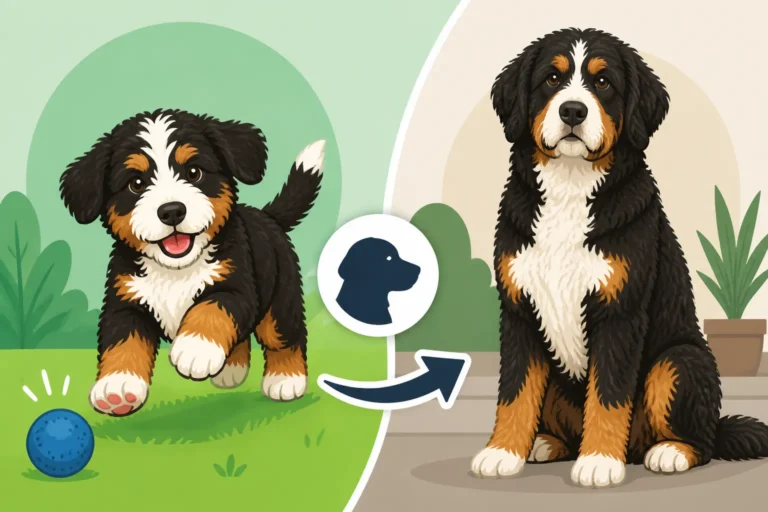
When your Bernedoodle was a tiny fluffball, those sharp puppy teeth might have barely scratched the surface, but as they grow, their jaws strengthen, and those nips become much more noticeable and potentially damaging. What starts as an innocent exploration can quickly become an ingrained habit if not properly redirected. They don't inherently understand that your favorite sweater isn't a chew toy, especially if it smells like you and moves in an exciting way. It's up to us to teach them the difference.
Consider the energetic greetings when you come home; a young Bernedoodle might jump up, mouth your clothes in excitement, and accidentally snag fabric. This isn't malice; it's often just an overabundance of youthful exuberance combined with a lack of understanding about appropriate ways to express joy. They are just interacting in the way that feels natural to them.
Attention-Seeking Behavior
Bernedoodles are incredibly intelligent and keenly observant dogs, and they learn very quickly what gets a reaction from their humans. If grabbing your clothing, even for a moment, causes you to stop what you're doing, look at them, or speak to them, then they've just achieved their goal: they've got your attention. This is a classic example of operant conditioning, where a behavior is reinforced by the consequence.
Even if your reaction is a frustrated "No!" or pushing them away, that's still attention. To your Bernedoodle, any attention is often better than no attention, especially if they're feeling a bit bored or lonely. Picture this: you're engrossed in a book, and your Bernedoodle saunters over, nudges your hand, and when that doesn't work, gives your sleeve a gentle tug. You sigh, put down the book, and tell them to stop. Bingo! They've successfully interrupted your activity and engaged you. This pattern, repeated over time, solidifies the clothing grab as a reliable way to get you to respond.
This behavior can become particularly pronounced in adolescent Bernedoodles, who are often still learning about boundaries and appropriate social interactions. They are smart enough to figure out the cause and effect, even if the effect isn't what we'd prefer. This also ties into Why a Bernedoodle Matures Slower Than It Grows, where their physical size outpaces their emotional and behavioral maturity.
Over-Excitement and Lack of Impulse Control
Another significant factor, especially in growing and adolescent Bernedoodles, is simply being over-excited and lacking good impulse control. Bernedoodles inherit a wonderful zest for life and often have boundless energy, particularly as puppies and young adults. When they get a sudden burst of energy, or when a highly stimulating event occurs – like a new person walking through the door, or you grabbing their leash for a walk – their emotional state can overwhelm their ability to think calmly and rationally.
In these moments, they might revert to instinctual behaviors like mouthing and grabbing. Their desire to play, interact, or simply express their enthusiasm can manifest as grabbing at whatever is closest and most engaging – which often happens to be your clothes. This isn't aggressive behavior; it's typically just a poorly managed expression of high energy and excitement. Because Bernedoodles can grow to be quite large, even their playful grabs can feel intense or even scary, leading to torn garments or accidental skin contact. It's a reminder that even when well-intentioned, their size and strength require careful management.
Learning to manage this exuberance is a key part of their training, especially for a dog that can quickly reach Teaching a Bernedoodle Not to Pull at Eighty Pounds. The Poodle intelligence means they can learn, but the Bernese goofiness means they might need a bit more guidance in the impulse control department.
Immediate Strategies for Stopping the Grab
So, you understand why your Bernedoodle is grabbing your clothes. Now, what do you do in the heat of the moment? The key here is to have a few reliable, immediate strategies that interrupt the behavior and teach your dog that clothing is not for mouthing or grabbing. Consistency is paramount; every time they grab, you need to respond in the same way.
The "Be a Tree" Method
One of the most effective and widely recommended strategies for curbing unwanted mouthing and grabbing, especially in puppies and adolescents, is the "Be a Tree" method. It's simple, requires no tools, and directly addresses the attention-seeking aspect of the behavior. The concept is straightforward: if your Bernedoodle grabs your clothing, you immediately become utterly boring and unresponsive, like a tree.
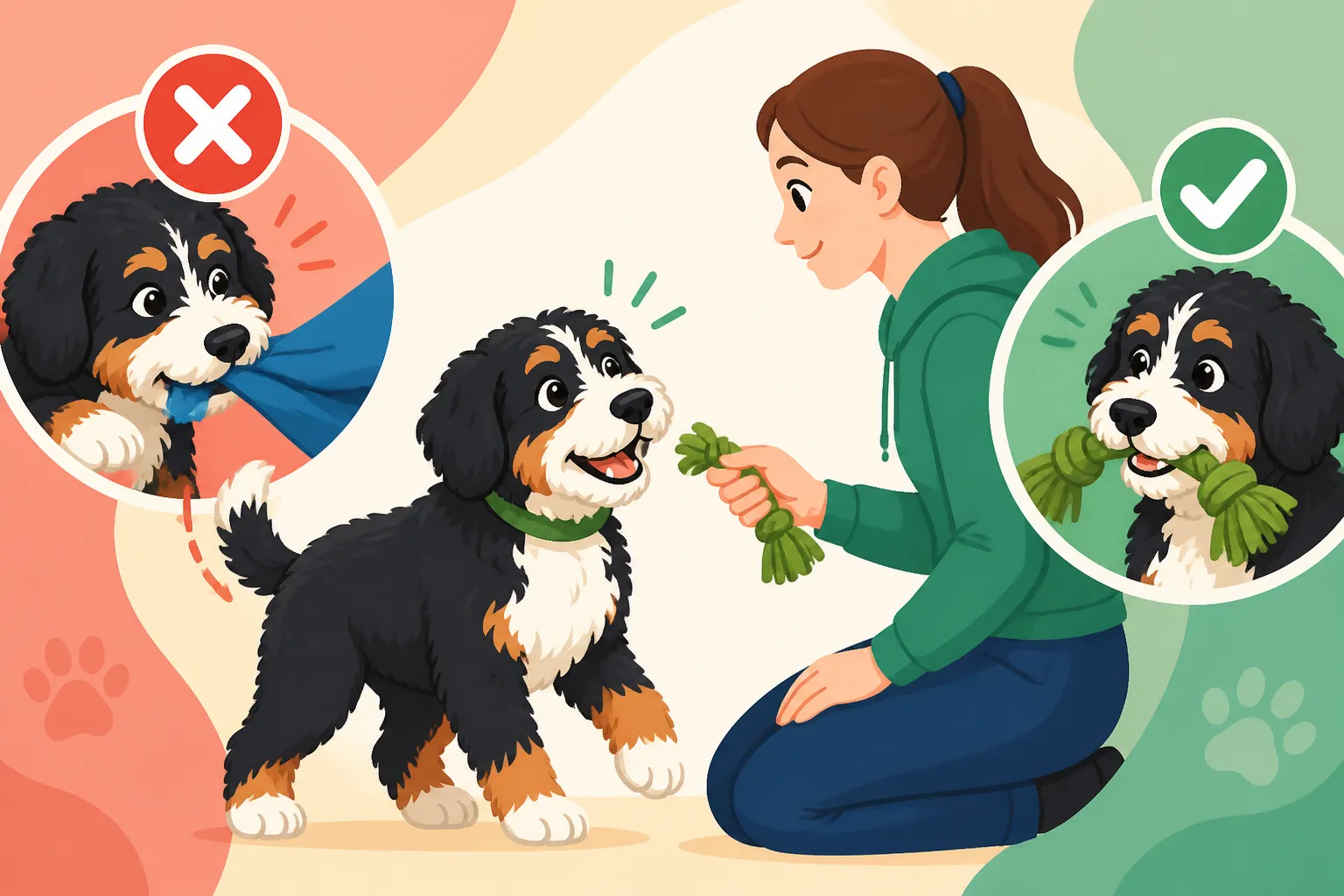
Here's how it works: the moment your Bernedoodle’s mouth makes contact with your clothing, immediately stop all movement. Cross your arms over your chest, turn your head away from them, and avoid all eye contact. Stand completely still and silent. The goal is to make yourself utterly uninteresting. Your Bernedoodle wants a reaction, and by giving none, you remove the reinforcement. As soon as they release your clothing and move away, then you can calmly resume what you were doing or, even better, redirect them to an appropriate toy with praise. This teaches them that grabbing clothing makes all the fun stop, while releasing it makes good things happen.
This method requires immense patience, especially with a persistent Bernedoodle who might try a few more tugs to see if they can coax a reaction out of you. Remember, a Bernedoodle’s stubborn streak can sometimes be a challenge, so stick with it! The payoff for this consistency is a dog who learns that polite behavior is the only way to earn your engagement.
Redirection with Appropriate Chew Toys
While "Be a Tree" is great for stopping the behavior, redirection is crucial for teaching your Bernedoodle what is acceptable to chew or grab. Always, and I mean always, have appropriate chew toys readily available within arm's reach. This is your secret weapon.
The moment your Bernedoodle tries to grab your clothing, use a clear, calm verbal interrupter like "Uh-oh," "No thank you," or "Off." Then, immediately present a highly desirable, appropriate chew toy. It could be a sturdy rope toy for tugging (just make sure you initiate and end the tug game), a durable rubber chew, or a dental bone. The key is to make the toy far more appealing than your clothes. If they grab the toy, lavish them with praise and positive reinforcement. This teaches them, "Not my clothes, but this toy is fantastic!"
Think about what your Bernedoodle loves. Do they enjoy a good chew? Head over to Amazon to find a range of durable toys, from those designed for heavy chewers to interactive puzzle toys that can keep them engaged. Having a variety helps keep things interesting. This consistent redirection is vital for a growing Bernedoodle, especially since Whether a Bernedoodle Puppy Bites Hard is a real concern if not managed. You’re not just stopping a bad habit; you’re building good habits in its place.
Managing the Environment
Prevention is often the easiest solution. You can significantly reduce instances of clothing grabbing by simply managing your Bernedoodle's environment and your own habits. This is about making it harder for them to practice the unwanted behavior, which gives you more opportunities to reinforce the desired one.
If you know your Bernedoodle is prone to grabbing when you first come home, consider changing into old clothes or house clothes before you greet them enthusiastically. Keep delicate fabrics or favorite outfits out of their reach. During periods when they are particularly energetic or prone to mouthiness, such as around feeding times or when visitors arrive, you might consider having them on a leash indoors. This allows you to step on the leash if they try to jump and grab, immediately preventing the behavior without much fanfare.
Another simple environmental tweak is to ensure they have plenty of their own designated chew items. A strategically placed basket of their favorite toys can be a game-changer. This proactive approach minimizes the chances of your Bernedoodle making the "mistake" of grabbing your clothes, allowing you to focus on rewarding them for choosing their own toys. This management is especially helpful during the puppy and adolescent phases, as The Age a Bernedoodle Stops Acting Like a Puppy can vary, and consistency is needed throughout.
Long-Term Training for a Polite Bernedoodle
While immediate strategies are crucial for stopping the behavior in the moment, sustained training is what truly transforms your Bernedoodle into a polite companion who respects boundaries. This isn't just about stopping a specific problem; it's about building a foundation of good manners and impulse control that will benefit both of you for years to come.
Teaching a Solid "Leave It" Command
The "leave it" command is an absolute game-changer, not just for preventing clothing grabs but for overall safety and good manners. It teaches your Bernedoodle to disengage from something tempting and redirect their attention to you. Mastering this command provides you with a powerful tool to interrupt unwanted behaviors from a distance.
Start training "leave it" in a quiet, distraction-free environment with low-value items. Place a treat on the floor, cover it with your hand, and say "Leave it!" When your Bernedoodle looks away from the treat, even for a second, immediately praise them ("Yes!") and reward them with a different, higher-value treat from your other hand. Gradually increase the difficulty: uncovered treats, then less-desirable items, then high-value items, eventually working up to having them ignore your clothes. The key is to reward them for choosing to disengage, not for being forced.
Once your Bernedoodle has a solid "leave it," you can use it proactively. See them eyeing your scarf? "Leave it!" This command is incredibly valuable for a large, intelligent dog, as it gives them a clear instruction to ignore something they might otherwise want to investigate with their mouth. Consistent practice, even for a few minutes each day, will build a reliable response.
Practicing Calm Greetings and Attention
Many clothing grabs happen during excited greetings or when your Bernedoodle is seeking attention. Therefore, teaching calm greetings and how to politely ask for attention is fundamental. This training focuses on rewarding the absence of the unwanted behavior, rather than just reacting to it.
When you arrive home, instead of immediately engaging with your excited Bernedoodle, ignore them until they offer a calm behavior – perhaps sitting, standing quietly, or lying down. The moment they do, even for a second, calmly reward them with praise and gentle pets. If they get too excited and start jumping or mouthing, immediately turn your back, "Be a Tree," and wait for them to settle again. Repeat this process until they learn that calm behavior gets them what they want – your attention. You can also apply this to visitors coming to your home; ask guests to wait for four paws on the floor before giving any attention.
For general attention-seeking, teach them an alternate behavior. Instead of grabbing your clothes, perhaps they can bring you a toy and sit politely. Reward this desired behavior consistently. Online training resources, such as those offered by BAXTER & Bella, often provide structured modules specifically for teaching polite greetings and managing attention-seeking, which can be incredibly helpful for maintaining consistency. Remember, What a Bernedoodle Will Work For is usually your praise and a tasty treat, so use it often!
Providing Ample Mental and Physical Stimulation
A bored Bernedoodle is a mischievous Bernedoodle, and lack of adequate mental and physical stimulation is a huge driver of unwanted behaviors, including clothing grabs. Bernedoodles are smart, active dogs who thrive on having a "job" to do, even if that job is just figuring out a puzzle toy.
Ensure your Bernedoodle gets sufficient physical exercise every day. For a standard Bernedoodle, this means regular walks, playtime in a securely fenced yard, or even trips to a dog park. Remember, The Exercise a Standard Bernedoodle Needs Daily is significant, and they need more than just a quick trot around the block. Beyond physical activity, mental stimulation is equally important. Engage their intelligent Poodle side with short, fun training sessions, puzzle feeders, snuffle mats, or hide-and-seek games with treats or toys. Rotate their toys to keep them interesting, and consider new enrichment items you can find on Amazon to keep their minds engaged.
When a Bernedoodle's needs for exercise and mental engagement are met, they are far less likely to invent their own "games" that involve your clothing. A tired and mentally satisfied Bernedoodle is a well-behaved Bernedoodle, less prone to destructive behaviors like chewing or grabbing. This holistic approach to their well-being is often the most effective long-term solution. A Bernedoodle that is left alone and bored is more likely to engage in What a Bernedoodle Wrecks When Left Alone.
When to Seek Professional Help and What to Expect
While many Bernedoodle owners can successfully manage and redirect clothing-grabbing with consistent training, there are times when seeking professional guidance is the best course of action. It's important to recognize when the behavior is escalating or when your efforts at home aren't quite hitting the mark.
Recognizing When Behavior Becomes Problematic
Most puppy mouthing and clothing grabs are normal, albeit annoying, puppy behaviors. However, there are signs that indicate the behavior might be escalating into something more concerning or simply becoming too difficult to manage on your own. If the grabs are becoming harder to interrupt, or if your Bernedoodle is becoming increasingly intense, possessive, or even growling when you try to remove your clothing from their mouth, it’s time to take note.
Also, consider the frequency and intensity. Is it happening multiple times a day, despite your consistent efforts? Are the nips accidentally breaking skin or causing significant damage to clothes regularly? Given their potential size and strength, even "playful" nips from an adult Bernedoodle can be quite painful and carry the risk of serious injury. If you feel fearful or frustrated rather than just annoyed, or if the behavior seems driven by something more than just play or attention-seeking, it's a good indicator that a professional eye might be needed. This is especially true if the issue goes beyond simple mouthing and becomes more like aggression or resource guarding.
Consulting a Certified Professional Dog Trainer
If you've tried consistent "Be a Tree" methods, redirection, and environmental management, but your Bernedoodle is still persistently grabbing clothing, it's a perfect time to consult a certified professional dog trainer. These experts have a wealth of knowledge and experience in canine behavior and can offer personalized assessment and guidance that general advice simply can't.
A good trainer will observe your Bernedoodle's behavior in your home environment, identify triggers you might be missing, and help you develop a tailored behavior modification plan. They can teach you new handling skills, refine your timing, and help you build a stronger communication system with your dog. Look for trainers who use positive reinforcement methods and are certified by reputable organizations. They can provide hands-on demonstrations and coach you through the process, ensuring both you and your Bernedoodle are learning effectively. Sometimes, having an objective third party observe your interactions can make all the difference, pinpointing small adjustments that lead to big improvements.
What a Behaviorist Might Explore
In some cases, especially if the clothing grabbing is accompanied by other concerning behaviors like growling, resource guarding, or generalized anxiety, a veterinary behaviorist might be the most appropriate professional to consult. A veterinary behaviorist is a veterinarian with specialized training in animal behavior, meaning they can diagnose and treat behavioral issues from both a medical and behavioral perspective.
They will conduct a thorough assessment, which may include reviewing your Bernedoodle's medical history, diet, and daily routine, as well as observing their behavior in various contexts. They can rule out any underlying medical conditions that might be contributing to the behavior and, if necessary, prescribe medication as part of a comprehensive behavior modification plan. Sometimes, persistent or intense mouthing and grabbing can be a symptom of underlying anxiety or stress, and addressing these root causes is essential for long-term success. They can explore whether there's a deeper emotional component, perhaps related to previous experiences or an innate predisposition, which is crucial for managing the behavior effectively and kindly.
| Behavior Type | Common Reasons | Immediate Action | Long-Term Solution | When to Seek Help |
|---|---|---|---|---|
| Puppy Mouthing | Teething, exploration, playful interaction | "Be a Tree," redirect | Provide ample appropriate chews, consistent training | If escalating, causing injury, or difficult to interrupt after 6-8 months |
| Attention-Seeking | Learned behavior, desire for owner interaction | "Be a Tree," ignore | Reward calm attention, teach "leave it" and polite requests | If constant, disruptive, and home methods fail after several weeks of consistency |
| Over-Excitement | Lack of impulse control, high energy | Redirect, calm demeanor | Increase mental/physical stimulation, structured greetings | If unmanageable, causing damage, or affecting quality of life for dog/owner |
| Stress/Anxiety | Underlying emotional issues, fear, past trauma | Calm environment | Professional behaviorist, vet consultation | If accompanied by growling, guarding, or general anxiety symptoms |
Disclaimer
This article is for general informational purposes only and does not constitute professional advice. Laws, prices and regulations vary by location and change over time. Consult a qualified professional for guidance on your specific situation.