Where to Take a Bernedoodle Puppy to Meet People
Bringing home a Bernedoodle puppy is an absolute joy, but it quickly brings up a common worry: how do you make sure your sweet, fluffy companion grows up to be a well-adjusted, confident adult dog without putting their health at risk? It’s a real tightrope walk, wanting to expose them to the world while also protecting them from potential illnesses before they're fully vaccinated. This guide is here to walk you through the best and safest places to take your Bernedoodle puppy to meet new people and experiences, ensuring they develop into the happy, outgoing dog you envision.
The Critical Window for Bernedoodle Socialization
You’ve probably heard it a million times, but it bears repeating: early socialization is everything for a Bernedoodle puppy. These aren't just cute photo ops; these early experiences lay the foundation for their entire adult life. Missing this crucial period can lead to shyness, fear, or even reactivity later on, which nobody wants with a large, strong dog.
Why Early Exposure Matters So Much
The period between approximately 3 and 16 weeks of age is a golden window for puppy development, often referred to as the primary socialization period. During this time, your Bernedoodle puppy's brain is like a sponge, soaking up every new sight, sound, smell, person, and other animal as a normal, non-threatening part of their world. If they don't encounter a wide variety of these things in a positive, gentle way during this time, they might later perceive novel experiences as scary or dangerous. This can manifest as anything from a nervous bark at a stranger to a full-blown fear of new environments.
Think about it: a Bernedoodle puppy is going to grow into a substantial dog, often seventy pounds or more. You want that big, lovable fluffball to be calm and happy when meeting new people, not cowering or barking. A Bernedoodle can be naturally reserved, a trait that often comes from the Bernese Mountain Dog side, so proactive socialization is especially important to help them develop confidence and friendliness. This early exposure helps them learn to process new information without becoming overwhelmed, fostering resilience and adaptability. It’s about building a positive emotional library of experiences that they can draw upon for the rest of their lives.
Balancing Socialization with Vaccination Protocols
This is the big one, isn't it? It’s the dilemma every new puppy parent faces: you know you need to socialize, but you're terrified of exposing your unvaccinated puppy to diseases like parvovirus or distemper. It’s a valid concern, and navigating it requires a careful, thoughtful approach. The key is controlled, low-risk exposure rather than complete isolation. Veterinarians generally recommend keeping puppies away from public dog parks and areas with high dog traffic until they've completed their full vaccination series, which is typically around 16 weeks. However, this doesn't mean your puppy has to be a hermit until then.
The risk of poor socialization leading to behavioral issues often outweighs the carefully managed risk of disease exposure in controlled environments. The mental health of your puppy is just as vital as their physical health. The trick is to be intentional about where and how you introduce them to the world. Focus on places where you can control the interactions, where the other dogs are known to be healthy and vaccinated, and where you won't encounter unknown pet waste. This balance is crucial; don't let fear of illness prevent you from giving your Bernedoodle puppy the vital social foundation they need.
Safe and Controlled Environments for Puppy Meet-and-Greets
The goal is quality over quantity. Instead of throwing your Bernedoodle puppy into every situation imaginable, focus on positive, calm interactions in safe settings. This builds confidence, not fear.
Puppy Classes and Structured Playdates
Hands down, one of the best places to start socializing your Bernedoodle puppy is in a well-run puppy class. These classes are specifically designed for young puppies who haven't completed their full vaccine series. The facilities are typically sanitized, and all participating puppies are required to be up-to-date on their age-appropriate vaccinations and parasite control. This provides a wonderfully safe environment for your Bernedoodle to interact with other puppies of similar size and energy levels, learn basic manners, and get comfortable with new people (the instructors and other owners). Many trainers also incorporate exposure to different sounds, surfaces, and gentle handling. Look for classes that focus on positive reinforcement and make sure the play is supervised to prevent any single puppy from being overwhelmed or bullying others. A good class will teach you how to read your puppy’s body language and facilitate healthy interactions. Getting a Bernedoodle Puppy Clean Indoors or What a Bernedoodle Puppy Should Learn First are topics often covered in these classes, providing a solid foundation.
Structured playdates are another excellent option. If you have friends or family with fully vaccinated, gentle, adult dogs (or even other puppies from a similar litter who you know are healthy), arranging controlled play sessions in a clean, private yard can be incredibly beneficial. These aren't free-for-alls; they're supervised interactions where you can ensure positive experiences. The goal is to let your Bernedoodle puppy learn appropriate dog-to-dog communication in a safe space. This also exposes them to different sizes and breeds of dogs, which is important for their development.
Trusted Friends and Family Homes
Your friends and family can be invaluable resources for socialization, especially during those early weeks. Inviting over a small number of calm, dog-savvy individuals to your home can help your Bernedoodle puppy get used to strangers entering their territory in a positive way. Ask your guests to sit on the floor, offer high-value treats (ensure they know what your puppy can and cannot have), and let your puppy approach them on their own terms. Avoid having too many people over at once, as this can be overwhelming for a young pup. Encourage gentle handling and praise. Similarly, taking your puppy to a trusted friend's or family member's home, particularly one without other pets or with known, vaccinated pets, exposes them to new environments, sights, sounds, and smells in a controlled and safe manner. It helps them learn that new places can be fun and not scary. Just be sure to bring your own water bowl and avoid letting them eat anything off the floor that could be questionable.
Pet-Friendly Stores and Low-Traffic Public Spaces
Once your Bernedoodle puppy has had at least their second round of vaccinations, and your vet gives the okay, you can start cautiously expanding their world to certain public spaces. Pet-friendly stores, like local pet supply shops, are often a great choice. They are usually clean, and people who work there or shop there are generally dog lovers. The floors are typically easy to sanitize, and there's often less of a risk of encountering unknown pet waste compared to an outdoor park. Keep your puppy in a cart or carry them if you're concerned about them walking on the floor, especially in the earliest stages. What a standard Bernedoodle should know before it hits sixty pounds is crucial before taking them to busy stores.
Low-traffic public spaces can also be beneficial, but again, exercise caution. Think about places like quiet park benches where you can simply sit and observe the world go by, or walk on pavement far from grassy areas where other dogs might relieve themselves. The goal here isn't necessarily interaction, but exposure to new sounds (cars, bikes, talking people), sights (strollers, different outfits, hats), and environments. Keep these outings short and positive, always ending on a good note. A sturdy, comfortable carrier for a mini or tiny Bernedoodle, or a wagon for a standard, can be incredibly useful here to ensure they aren't forced to walk where you're unsure of the cleanliness. For training on how to navigate these environments confidently, resources like the BAXTER & Bella online puppy school can provide structured guidance and exercises you can practice at home before venturing out.
Expanding Your Bernedoodle's Social Circle Responsibly
Socialization isn't just a one-and-done event; it's an ongoing process. As your Bernedoodle puppy matures, you'll want to continue broadening their experiences, always prioritizing positive reinforcement and safety.
Gradual Introductions to Different Types of People
The world is full of all kinds of people, and your Bernedoodle puppy needs to learn that they're all okay! This includes people of different ages, genders, ethnicities, and appearances. Think about people wearing hats, glasses, or uniforms. People with beards, people using wheelchairs, people walking with canes, or even people with unusual gaits. Each encounter should be positive. Keep treats handy and reward calm, curious behavior. For example, if you see someone approaching who looks a bit different, gently expose your puppy from a distance, give them a treat, and praise their calm demeanor. If the person is agreeable, ask them to toss a treat to your puppy rather than reaching down immediately, which can be intimidating.
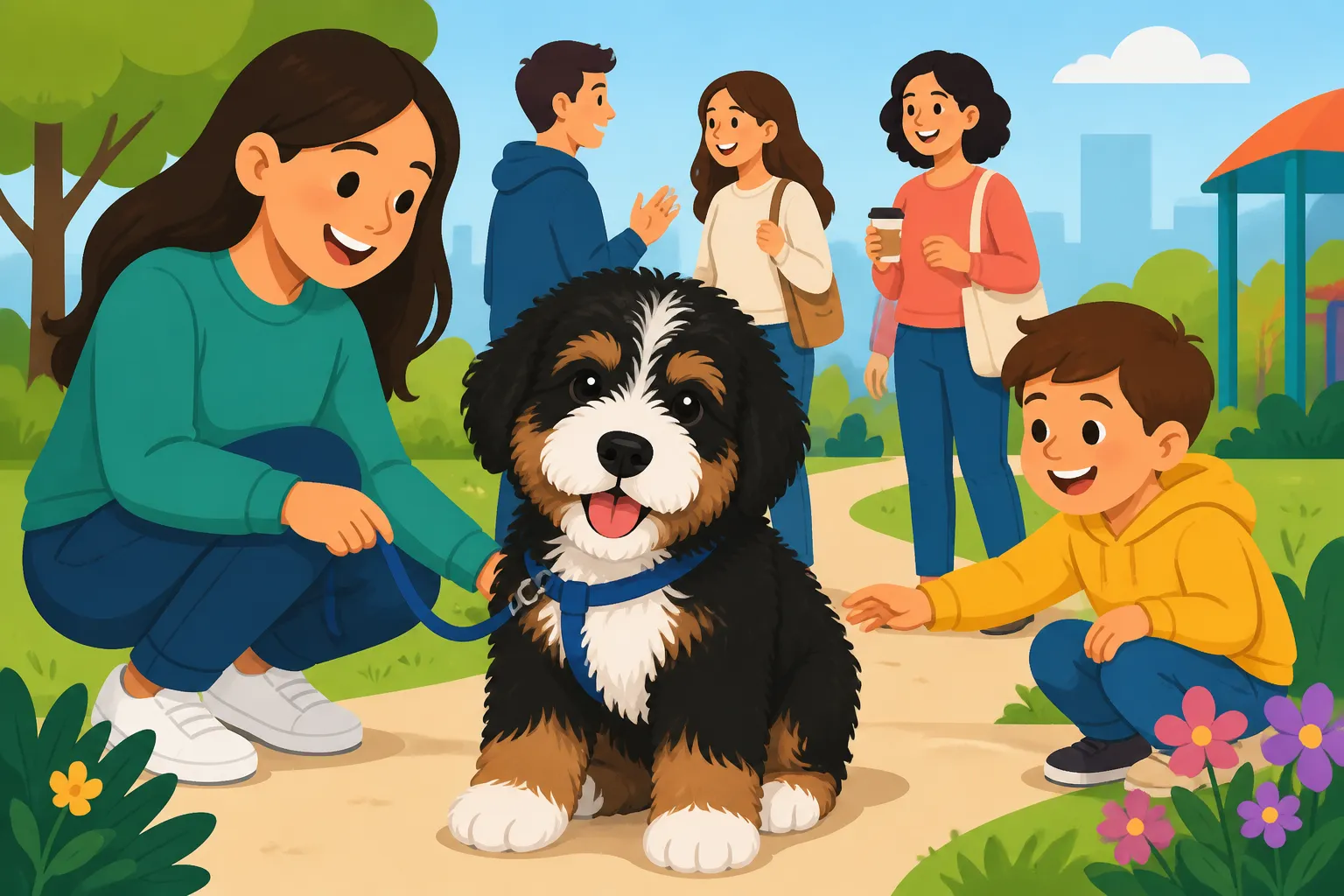
It's also essential to introduce them to children, but always under strict supervision. Many Bernedoodles are known to be wonderful family dogs, but even the gentlest giants can accidentally knock over a small child, or a child can inadvertently scare a puppy. Teach children how to interact respectfully with dogs – no pulling ears or tails, no sudden loud noises, and always approaching gently. Explain to your Bernedoodle puppy that children are not scary by creating positive associations. Short, supervised play sessions where both child and puppy are calm and happy are ideal.
Meeting Other Well-Behaved, Vaccinated Dogs
As your Bernedoodle puppy gets older and has completed their vaccinations, you can start introducing them to a wider variety of dogs. However, "dog park" is still generally not the recommended first step, especially for an adolescent Bernedoodle. Instead, continue with structured playdates with known, friendly adult dogs. These older dogs can be wonderful teachers, demonstrating appropriate social cues and gently correcting overly boisterous puppy behavior.
Look for dog-friendly cafes with outdoor seating, or quiet walking trails where you might encounter a single dog on a leash. Maintain control of your Bernedoodle and observe both dogs' body language carefully. A quick, polite sniff and then moving on is often better than a prolonged, intense interaction. The goal is positive, brief encounters, not extended wrestling matches, especially while they're still growing. Remember, The Age a Bernedoodle Reaches Full Height doesn't mean their joints are fully developed for rough play. Keep it gentle.
Exposure to New Sights, Sounds, and Textures
Socialization isn't just about people and other dogs; it's also about environmental enrichment. Expose your Bernedoodle puppy to different surfaces – grass, concrete, gravel, carpet, tile. Let them hear different sounds – doorbells, vacuum cleaners, traffic, construction noises (from a distance), music, children playing. Introduce them to various objects like umbrellas, bicycles, skateboards, and even strange-looking statues. The key is to do this gradually and positively. If your puppy seems hesitant, keep your distance, offer praise and a treat, and slowly get closer over time.
For example, when the vacuum comes out, don’t just turn it on and expect your puppy to be fine. Start by having it in the room, then turn it on for a second, then off, rewarding calm behavior. Gradually increase the duration. This process desensitizes them and teaches them that these novel stimuli are not dangerous. You can find excellent training resources, often available on platforms like Amazon, for desensitization sounds and clicker training tools that can aid in these exercises. The more positive experiences your Bernedoodle puppy has with the world around them, the more confident and adaptable they will become.
What to Avoid When Socializing Your Bernedoodle Puppy
Just as important as knowing what to do is knowing what not to do. Negative experiences can be far more impactful and detrimental during the critical socialization period than positive ones, sometimes taking months or even years to undo.
Overwhelming Situations and Negative Experiences
Never force your Bernedoodle puppy into a situation they're clearly uncomfortable with. If they’re cowering, shaking, flattening themselves to the ground, or trying to hide, they're telling you they're overwhelmed. Picking them up and removing them from the situation is always the right choice. Forcing them to "face their fears" can actually backfire, creating a lasting negative association. A bad experience with an overly boisterous dog, a rough child, or a scary sound can lead to long-term fear or aggression.
Instead, manage the environment. If you're at a gathering, create a quiet retreat for your puppy with a comfy bed and a chew toy. Use a leash and harness to gently guide them away from overwhelming situations. Keep interactions short and sweet, always ending on a positive note, even if it means cutting an outing short. Remember, quality of experience trumps quantity. Building Confidence in a Timid Bernedoodle often means respecting their boundaries and slowly expanding their comfort zone.
Unsupervised Interactions with Unknown Dogs or Children
This is a big no-no, especially for a Bernedoodle puppy. While socialization with other dogs and children is vital, it must always be supervised and controlled. You can't trust that every unknown dog at a public park is friendly, vaccinated, or well-socialized. An aggressive or overly dominant dog could easily traumatize your puppy. Similarly, well-meaning children who don't understand canine body language can inadvertently provoke a puppy or get nipped if they're too rough.
Avoid dog parks until your Bernedoodle is fully vaccinated, older (at least 6-12 months), and you are confident in their social skills and recall. Even then, many trainers advise against dog parks due to the unpredictable nature of the interactions. Stick to known, friendly dogs in controlled environments. When children are involved, always have an adult actively supervising and guiding the interactions, teaching both the child and the puppy how to be respectful and safe. If you're struggling with interactions between your Bernedoodle and children, consider seeking guidance from a certified professional dog trainer. A Standard Bernedoodle and a Small Child highlights the importance of careful management.
High-Risk Public Areas Before Full Vaccination
Until your Bernedoodle puppy has had all their core vaccinations (usually around 16 weeks) and your veterinarian gives you the all-clear, completely avoid areas with high concentrations of unknown dogs and their waste. This includes public dog parks, rest stops, popular walking trails, and common grassy areas outside vet clinics or pet stores. These places are hotbeds for infectious diseases, and even seemingly clean areas can harbor viruses for weeks.
While the desire to show off your cute Bernedoodle puppy is strong, their health comes first. Stick to carrying your puppy in a sling or cart in public places, or ensure they are walking on paved surfaces that are less likely to be contaminated. If you must put them down, ensure it’s on a clean, controlled surface, and pick them up immediately if you see any signs of other dog waste. It's a temporary sacrifice for long-term health and happiness. The structured online training from BAXTER & Bella can be a fantastic way to continue their education and exposure to new concepts from the safety of your home during this critical vaccination period.
Conclusion
Socializing your Bernedoodle puppy is one of the most important jobs you'll have as a new dog parent, and it doesn't have to be a minefield of anxiety. By focusing on controlled, positive, and varied experiences in safe environments, you can help your Bernedoodle grow into a confident, friendly, and well-adjusted companion. Remember to balance exposure with health precautions, always prioritize your puppy's comfort, and celebrate every small step they take towards becoming a well-rounded member of your family. It's an ongoing journey, but one that will pay dividends in a lifetime of joy with your beloved Bernedoodle.
| Socialization Environment | Risk Level for Unvaccinated Puppy | Best Practices |
|---|---|---|
| Puppy Classes | Low | Essential! Ensure classes require age-appropriate vaccines, are run by certified trainers, and facilities are sanitized. Focus on positive, supervised play. |
| Trusted Friends/Family Homes | Low | Invite calm, dog-savvy guests to your home. Visit homes with known, fully vaccinated, gentle dogs (or no pets). Supervise all interactions. |
| Pet-Friendly Stores | Moderate (can be managed) | Carry your puppy or use a cart. Only allow walking on clean, paved surfaces, if cleared by your vet. Focus on exposure to sights/sounds, not interactions with unknown dogs. |
| Quiet Park Benches/Paved Trails | Moderate (can be managed) | Sit and observe from a distance. Walk only on pavement, away from grassy areas with potential dog waste. Avoid high-traffic times. |
| Public Dog Parks | High | AVOID entirely until fully vaccinated, older, and well-socialized. High risk of disease and negative dog-dog interactions. |
| Rest Stops/High-Traffic Grassy Areas | High | AVOID entirely until fully vaccinated. High risk of disease transmission from unknown dog waste. |
Disclaimer
This article is for general informational purposes only and does not constitute professional advice. Laws, prices and regulations vary by location and change over time. Consult a qualified professional for guidance on your specific situation.