Caring for a Bernedoodle Past Eight
Senior Bernedoodle care instructions explain how to manage aging mobility, changing appetites, and weight as dogs reach eight years.
The daily stuff, done right.
Feeding amounts by life stage, coat and skin routines, dental and nail care, exercise needs, and what changes as they age.

Senior Bernedoodle care instructions explain how to manage aging mobility, changing appetites, and weight as dogs reach eight years.

Bernedoodle winter care requires understanding the mixed genetic influences of Bernese Mountain Dogs and Poodles on coat types.

Bernedoodle daily exercise requirements, age-based routines, and mental stimulation methods for puppies, adults, and seniors.
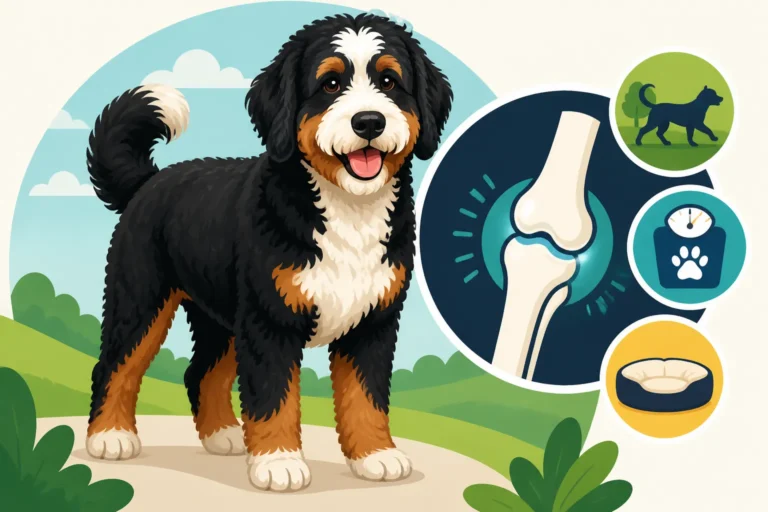
Ninety-pound Bernedoodle joint health depends on understanding genetic hip and elbow dysplasia risks from parent breeds.

Bernedoodle summer shaves disrupt a natural insulation system that regulates temperature and protects skin from sunburn.

Weekly brushing time for Bernedoodles depends on coat density, curl patterns, and trapped hair from Poodle and Bernese genetics.

Proper nutrition and controlled growth rates help ninety-pound Bernedoodle puppies develop strong joints and healthy bones.
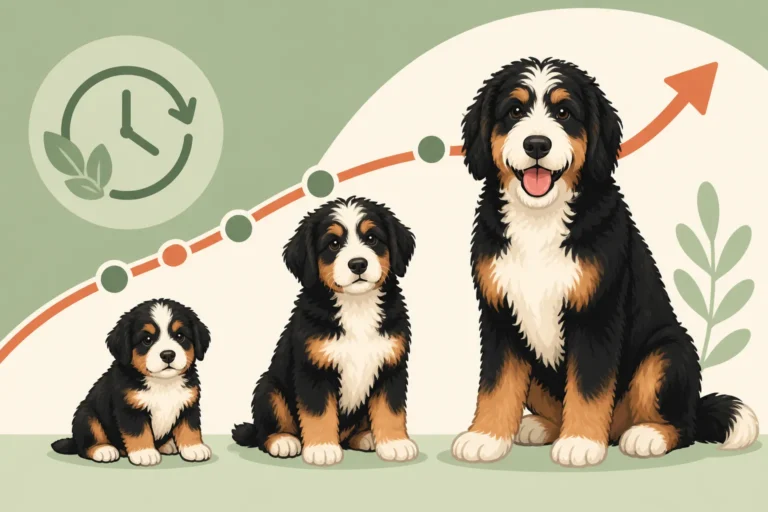
Standard Bernedoodle slow growth protects vulnerable epiphyseal plates and mitigates inherited orthopedic risks like hip dysplasia.

Bernedoodle heat sensitivity stems from alpine ancestry and thick coats, explaining why these hybrid dogs struggle in warm weather.

Bernedoodle coat genetics, inherited from Bernese Mountain Dog and Poodle parents, determine the specific shedding and grooming needs of puppies.