Whether a Bernedoodle Tolerates Chemotherapy Well
Bernedoodle chemotherapy focuses on remission and preserving life quality, using lower doses to minimize debilitating side effects.
Know what to watch for.
Breed-specific conditions, screening and DNA tests, what surgery actually costs, and the daily habits that stretch a healthy lifespan.

Bernedoodle chemotherapy focuses on remission and preserving life quality, using lower doses to minimize debilitating side effects.

Canine chemotherapy targets cancer cells in Bernedoodles to induce remission, manage symptoms, and extend a good quality of life.

Malignant histiocytosis risks in Bernedoodles, including the inherited genetic markers from Bernese Mountain Dog parents and aggressive organ spread.

Bernedoodle osteosarcoma risk, warning signs, and aggressive bone cancer development in large dog breeds explained clearly.

Mast cell tumors hiding in thick Bernedoodle coats require careful checking for skin lumps and urgent veterinary attention.

Bernedoodle skin growths and lumps require veterinary fine needle aspiration procedures to diagnose cancer risks and determine treatments.
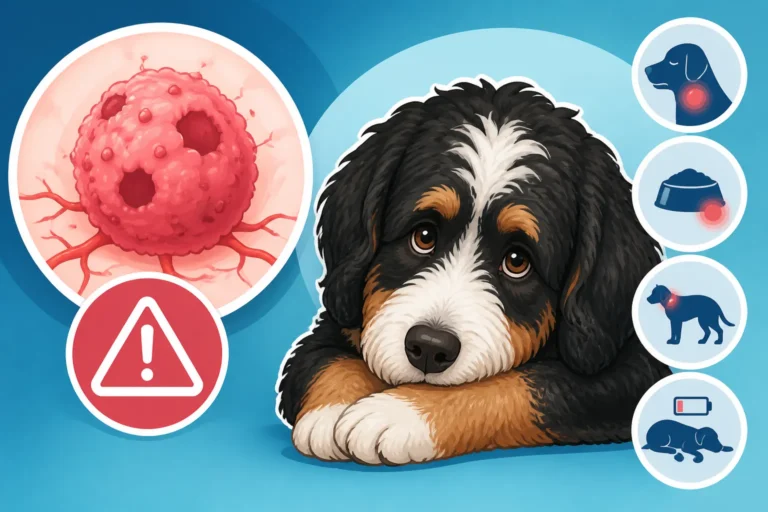
Bernedoodle cancer signs include inherited genetic risks, the importance of early detection, and subtle physical changes to monitor.

Questions for a Bernedoodle breeder regarding histiocytic sarcoma, cancer risks, and the Bernese Mountain Dog health lineage.

Bernedoodle cancer risks stem from Bernese Mountain Dog and Poodle genetics, including histiocytic sarcoma and family lines.

Canine genetic testing cannot predict cancer in Bernedoodles because the disease involves many complex genes and environmental factors.