Whether Stairs Hurt a Standard Bernedoodle Puppy
Standard Bernedoodle puppy growth plates and joints are vulnerable to injury, making stair management crucial for health.
Know what to watch for.
Breed-specific conditions, screening and DNA tests, what surgery actually costs, and the daily habits that stretch a healthy lifespan.
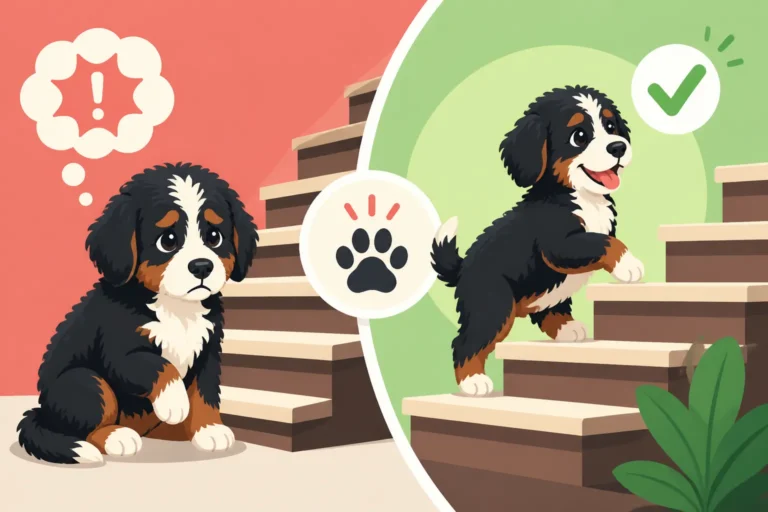
Standard Bernedoodle puppy growth plates and joints are vulnerable to injury, making stair management crucial for health.
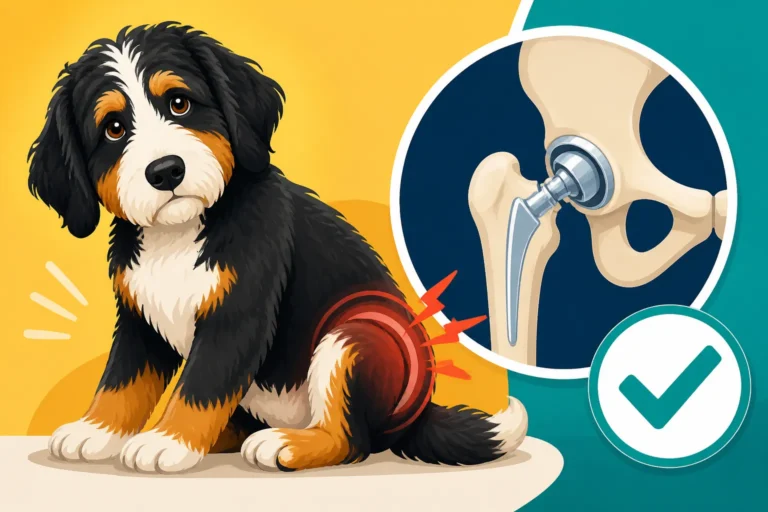
Bernedoodle hip dysplasia signs, genetic causes, and joint health care help owners identify when surgery becomes necessary.

The bunny hop gait in young Bernedoodles indicates hip dysplasia and other painful orthopedic joint issues affecting the hind legs.

PennHIP evaluation for Bernedoodles helps assess hip dysplasia risks, joint laxity, and early detection options for large dogs.
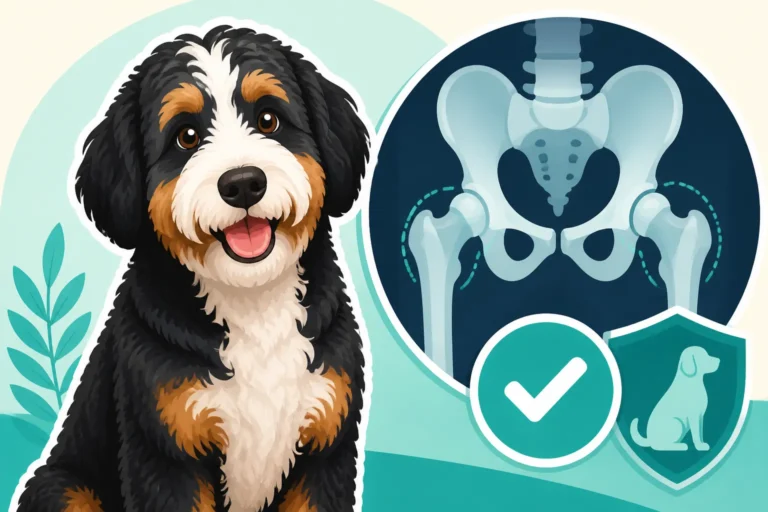
Bernedoodle hip certification timing and methods explain how to screen dogs for dysplasia and protect long-term mobility.
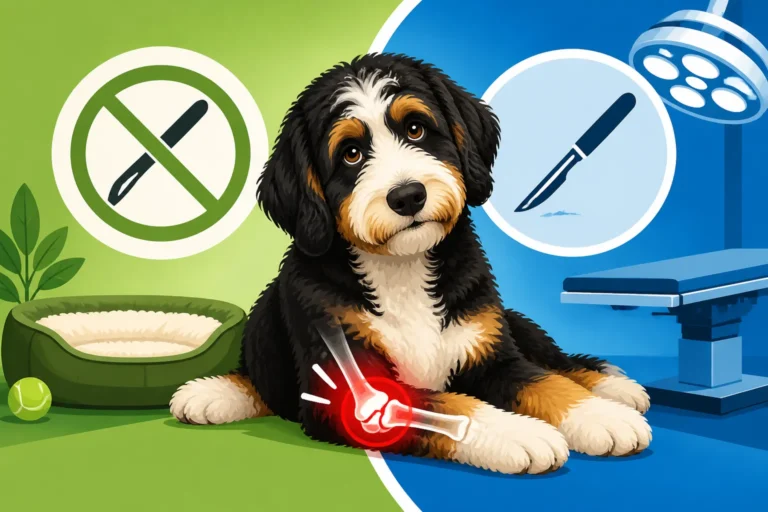
Elbow dysplasia in Bernedoodles causes joint pain and lameness, explaining when surgical treatment and specific joint abnormalities become necessary.
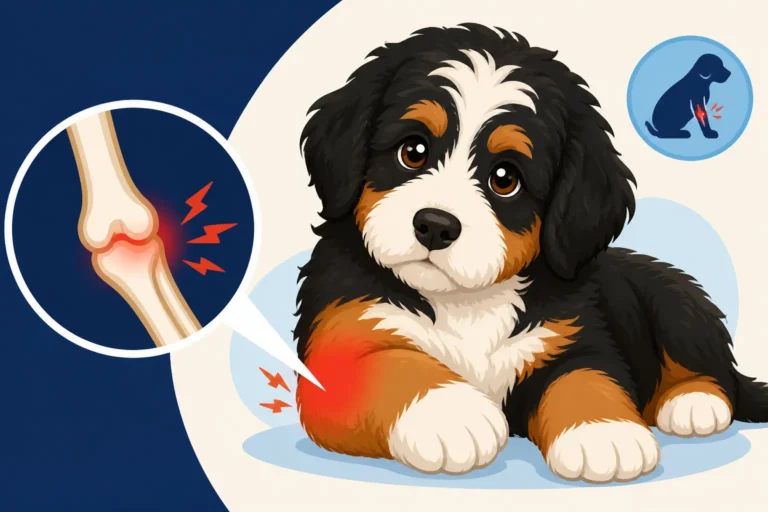
Bernedoodle puppy elbow pain indicators include limping, developmental abnormalities, and growth plate injuries requiring veterinary diagnosis.
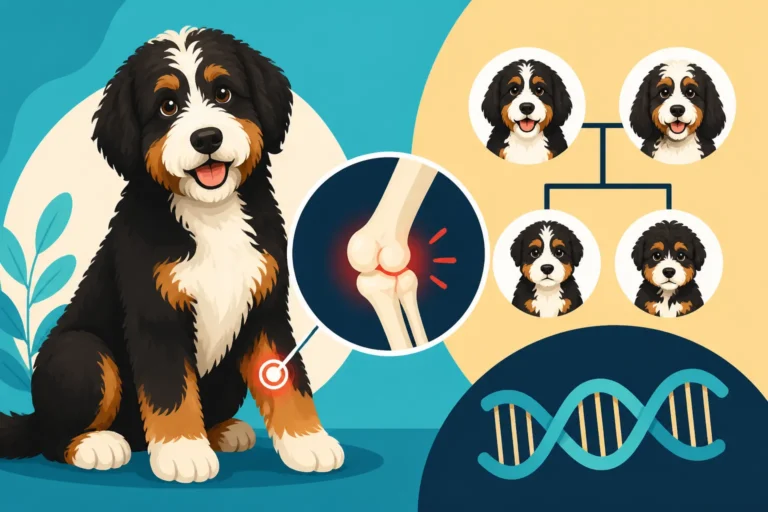
Elbow dysplasia heritability in Bernedoodles stems from genetic traits inherited from Bernese Mountain Dogs and Poodles.
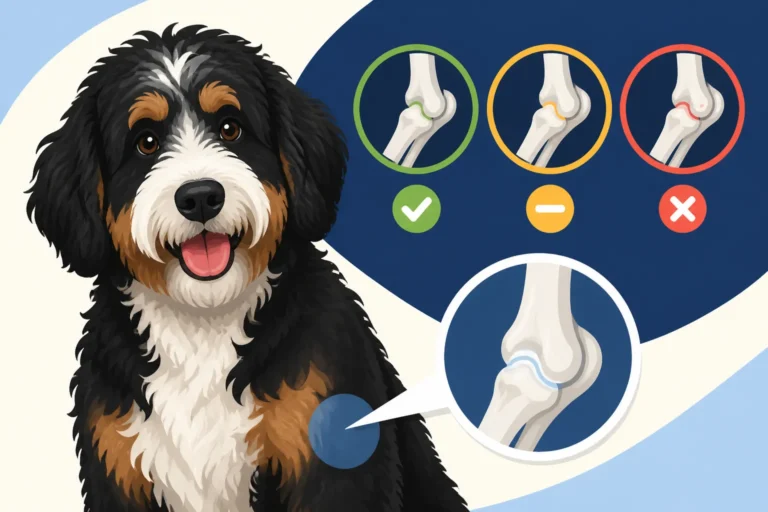
OFA elbow grades on a Bernedoodle explain inherited joint health risks, developmental bone abnormalities, and canine elbow dysplasia.
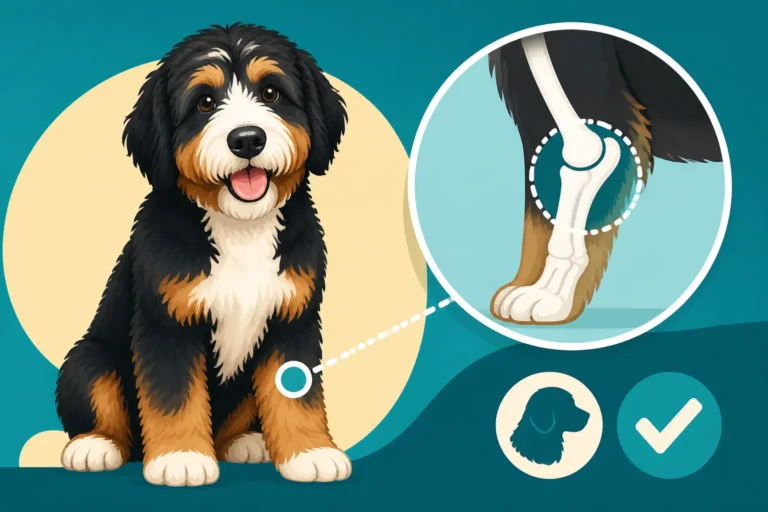
Official elbow grading for a Bernedoodle requires dogs to be at least twenty-four months old to ensure accurate skeletal maturity.