Whether a Bernedoodle Is Easier Than a Bernese
A Bernedoodle may seem easier than a Bernese Mountain Dog because the Poodle influence can bring a different coat, build, or temperament—but it does not guarantee a simpler dog. Grooming can take more work, and size, energy, and health needs vary widely. This guide compares the two so you can judge which one is more manageable for your home and routine.
What “easier” means with these dogs
Temperament and daily companionship
Bernese Mountain Dogs are often affectionate, people-oriented companions. Many enjoy being close to their family and can be gentle and patient, though individual dogs differ. A Bernedoodle may share that sociable nature, but it is a cross rather than a predictable recipe: one dog may be laid-back and cuddly, while another is more alert, busy, or quick to react to what is happening around it.
That variation matters when you are picturing everyday life. A Bernese might follow you from room to room and settle nearby; a Bernedoodle might do the same, or may need more activities and training to feel content. Neither breed is automatically independent or easy to leave alone for long stretches. If your household is away most of the day, think about how the dog will get company, exercise, and bathroom breaks—not just which breed has the calmer reputation. Whether a Bernedoodle Suits a Household That Works
It also helps to look beyond breed labels and meet adult dogs. Ask a breeder or rescue how the individual dog behaves around visitors, children, other dogs, and ordinary household noise. For a Bernedoodle, ask about the temperaments of both parents, not only the Poodle side. The Bernese influence can remain prominent in a cross, including in a dog that looks more like a Poodle. What the Bernese Contributes to a Bernedoodle
Training, exercise, and size
Both dogs need regular activity and basic training. A Bernese is a large, strong dog, so loose-leash walking and polite greetings matter even if the dog is gentle. A Bernedoodle can also grow very large, and a friendly dog that pulls or jumps can still be difficult to manage. A smaller Bernedoodle may be easier to physically handle, but “mini” does not necessarily mean calmer, less energetic, or easier to train.
A Poodle’s influence may bring attentiveness and quick learning, but that is not a guarantee that a Bernedoodle will be easier to teach. Some pick up cues quickly; others are distractible, sensitive, or persistent when something else seems more interesting. Short, consistent practice and rewards that your dog values are more useful than assuming either breed will simply “know” what to do. For a large dog, start leash manners, recall, and calm greetings early, before the dog’s adult size makes those habits harder to manage.
Think about the physical demands of your own routine, too. A Bernese can be heavy and cumbersome to lift or help into a car. A Standard Bernedoodle may be just as substantial, while a Mini or Tiny Bernedoodle can be easier to transport but still needs walks, training, and enrichment. Size categories are estimates, not a promise of a particular adult weight. The Three Bernedoodle Sizes and What Sets Them
| Day-to-day consideration | Bernese Mountain Dog | Bernedoodle |
|---|---|---|
| Adult size | Large, with a substantial build | Ranges from small to very large depending on size and breeding |
| Temperament predictability | More consistent breed tendencies, though individual personalities vary | Can vary considerably between dogs and across generations |
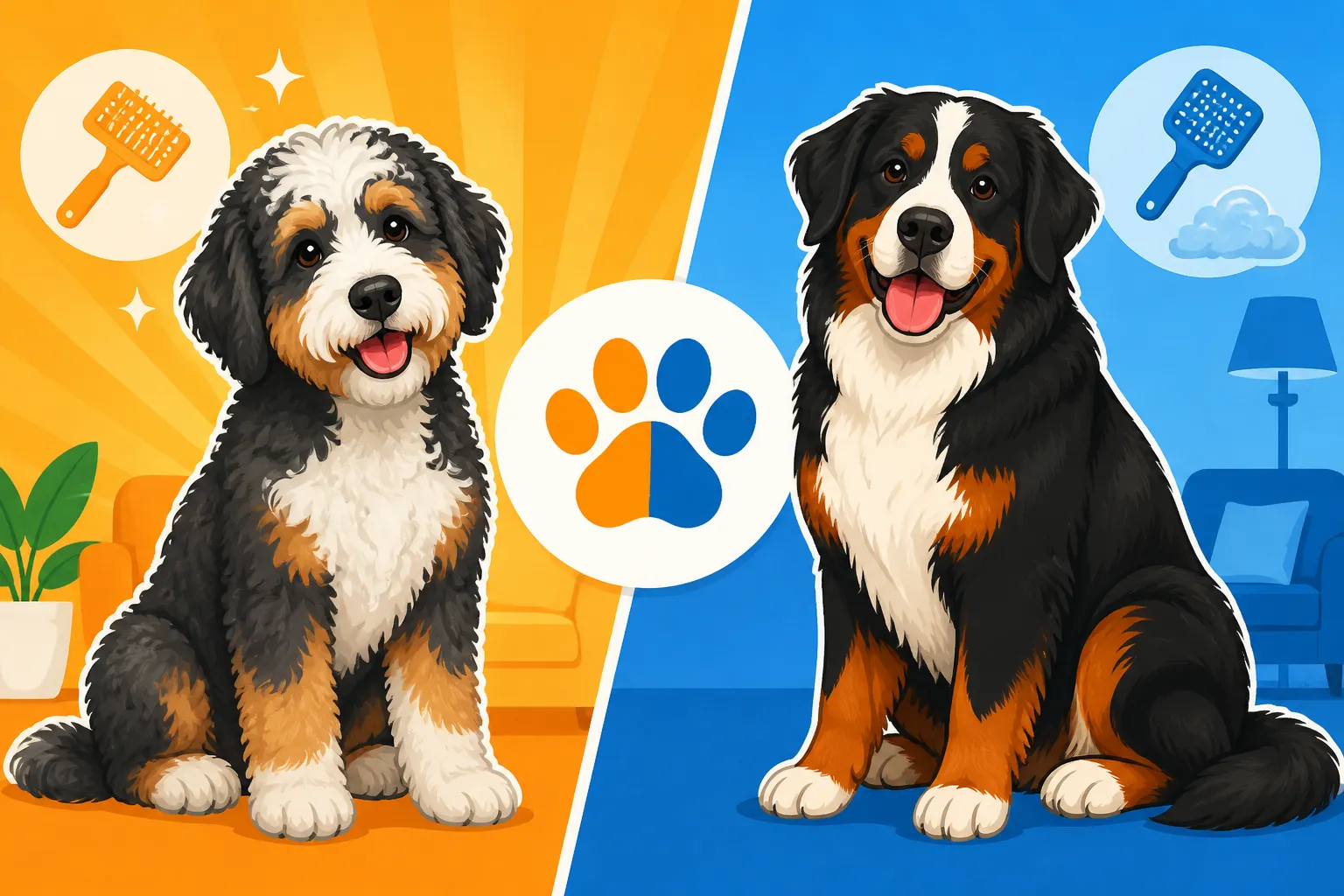
| Coat care | Regular brushing, with seasonal shedding | Coat may shed or mat; often needs frequent brushing and professional grooming |
| Training needs | Early leash manners and socialization are important for a powerful dog | Similar foundations matter, especially for a large, energetic individual |
| Best fit depends on | Comfort with a large dog, shedding, and warm-weather care | Comfort with variation in size, coat, and grooming demands |
Coat care can make a Bernedoodle harder
Less shedding does not mean less grooming
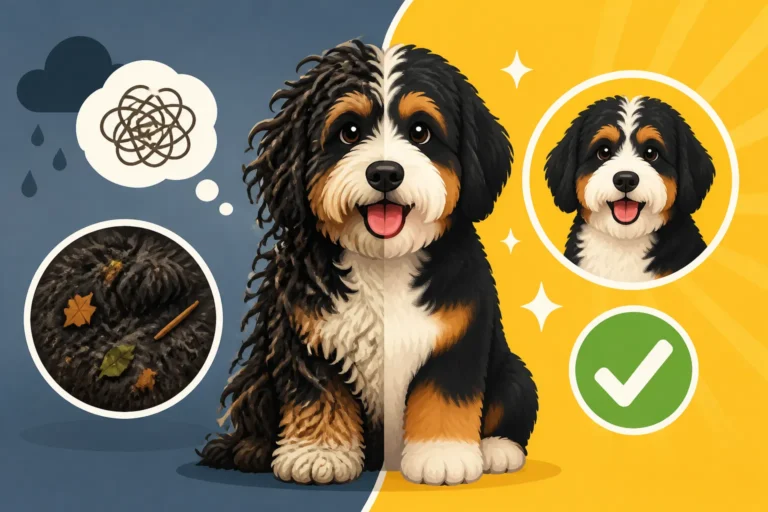
People often expect a Bernedoodle to be easier because some have coats that shed less than a Bernese Mountain Dog’s. That can be appealing if loose hair on furniture and clothing is your main frustration. But low visible shedding does not mean low maintenance. Hair that remains in a wavy or curly coat can tangle and mat, especially where the coat rubs: behind the ears, under the collar, in the armpits, and around the legs.
A Bernese coat also needs attention, but the work is different. Brushing helps remove loose hair and keep the coat comfortable. A Bernedoodle may need careful brushing all the way to the skin, plus regular clipping to keep the coat at a manageable length. If brushing only skims the surface, mats can form underneath while the top still looks fluffy. Whether a Bernedoodle Sheds Less Than a Bernese
Before choosing, be honest about the routine you can sustain. If you are already struggling to fit brushing into the week, a coat that requires methodical line brushing may not feel easier, even if it leaves less hair around the house. A slicker brush and metal comb are common grooming tools for doodle coats; if a local shop does not carry the tools your groomer recommends, Chewy is one place owners may check for basic supplies. The important part is using them consistently and learning how to reach the skin without scraping or irritating it.
Coat type and grooming appointments
Bernedoodle coats can be straight, wavy, or curly, and the coat may change as a puppy matures. A curlier coat can hold loose hair and may need especially careful detangling. A straighter coat may shed more and behave more like a Bernese coat. No coat type removes the need for regular care, and the puppy’s appearance is not always a reliable forecast of the adult coat. The Coat a Bernedoodle Gets From Two Heavy Coated Parents
Professional grooming is another practical difference. Many Bernedoodle owners schedule regular trims, bathing, drying, and coat maintenance. A thick, tangled coat can take longer to work through, and a severely matted dog may need a short clip for comfort rather than a longer style. Keep grooming appointments in your budget and schedule, and ask a groomer what coat length and home-care routine are realistic for your particular dog. The Curly Coat Bernedoodle and Its Upkeep
When comparing costs or convenience, do not rely on a general promise that a Bernedoodle is “low shedding.” Ask what the breeder knows about the parents’ coats, how often similar dogs need grooming, and what brushing routine the dog will require. Chewy may be useful for replacing everyday items such as combs, brushes, and ear-care supplies, but buying the right tool is only one part of the job: technique and regular handling matter just as much. For more on the commitment, see Whether a Bernedoodle Is Worth the Grooming.
Health, weather, and the realities of ownership
Neither dog is maintenance-free
A Bernedoodle is not automatically healthier or easier to care for than a Bernese Mountain Dog. A cross may inherit traits and health risks from either parent, and individual health depends on many factors, including breeding, care, and chance. Responsible breeders should be willing to discuss health screening for both parents and provide documentation rather than relying on a broad claim that mixed-breed dogs avoid inherited problems.
A Bernese is a large, heavy-coated dog, and its size and coat affect daily care. Bernedoodles can also be large and thick-coated, so they may share practical challenges such as keeping comfortable in warm weather and protecting joints as they grow. Ask the veterinarian how to support appropriate growth, maintain a healthy weight, and choose exercise that suits your dog’s age and body. A young, growing dog should not be pushed into repetitive high-impact activity simply because it seems energetic.
Lifespan is another reason to avoid treating the cross as a guaranteed upgrade. A Bernedoodle’s expected lifespan can vary with size, genetics, and individual health; the Poodle cross does not promise a particular number of years. If longevity is a major part of your decision, ask breeders about the ages and health histories of relatives on both sides, while remembering that family history cannot predict an individual dog with certainty. The Seven Year Bernese Lifespan Behind the Cross
Matching the dog to your climate and home
Both dogs can struggle in hot conditions, particularly if they have dense coats. A Bernedoodle is not automatically a better warm-weather choice just because its coat is curly or clipped. Plan walks for cooler parts of the day, provide shade and water, and pay attention to signs that your dog is overheating. A groomer can help choose a practical coat length, but a haircut is not a substitute for limiting heat exposure.
Home layout can matter as much as breed. A large dog needs room to turn around comfortably, a safe resting area, and access to outdoor exercise. Slippery floors may make it harder for a heavy dog to get traction, while stairs can become a challenge for a puppy, an older dog, or one with mobility problems. If you are considering a Standard Bernedoodle, picture the adult dog—not the puppy—moving through your hallway, getting into your car, and settling beside the sofa.
The daily workload also includes routine care, not just walks. Food, veterinary appointments, training, grooming, and cleaning up after a big, muddy dog can add up. If you are comparing specific food options, check the dog’s nutritional needs with your veterinarian; retailers such as Chewy can be a convenient place to source an appropriate product once you know what you need. Convenience does not replace choosing food that suits the individual dog.
How to decide which dog is easier for you
Compare the actual dog and your routine
Instead of asking only whether a Bernedoodle is easier than a Bernese, list the tasks you most want to avoid. Is it loose hair, brushing, grooming appointments, leash pulling, lifting a heavy dog, or managing a high-energy companion? The answer may point in different directions. A Bernedoodle with a low-shedding coat could reduce visible hair while adding more brushing and clipping. A Bernese may have a more familiar coat-care routine but shed heavily and still require diligent brushing.
Ask to meet the parents when possible, and observe how they respond to people and ordinary activity. Ask what adult sizes the breeder’s previous puppies reached, what coat types they developed, and what grooming owners report. For a rescue, ask about the dog’s current behavior, medical history, and tolerance for brushing or handling. An individual dog’s known needs are more useful than assumptions based on a label.
Also consider whether you want predictability. A purebred Bernese has recognizable breed tendencies, though no individual is guaranteed to match them. A Bernedoodle can be a wonderful companion, but its size, coat, shedding, and temperament may be harder to forecast. Meet adult Bernedoodles if you can, not just puppies with soft coats and oversized paws. The Bernedoodle Against a Purebred Bernese
Make a realistic commitment checklist
Before bringing either dog home, walk through a typical week. Set aside time for exercise, training, brushing, and companionship. Think about who will handle the dog if you are sick, traveling, or working late. If a Standard Bernedoodle or Bernese becomes difficult to lift, who can help with transport or veterinary visits? If the coat mats, are you prepared to book a professional appointment and adjust home care?
For a Bernedoodle, make coat care a specific part of your plan. Ask a groomer what maintenance the likely coat type calls for, and begin gentle brushing and handling practice early. Chewy may help with routine supply shopping, but a dog that dislikes having its feet, ears, or face handled will need patient training, not just more grooming products.
For a Bernese, prepare for a large dog with a thick coat and substantial shedding. For either choice, confirm that the dog’s size and activity level fit your home, climate, budget, and ability to provide daily care. A Bernedoodle may be easier for one owner because it sheds less or comes in a smaller size; another owner may find the coat upkeep and uncertainty more demanding than caring for a Bernese. The best match is the dog whose needs you can meet consistently—not the one advertised as easiest.
Disclaimer
This article is for general informational purposes only and does not constitute professional advice. Laws, prices and regulations vary by location and change over time. Consult a qualified professional for guidance on your specific situation.