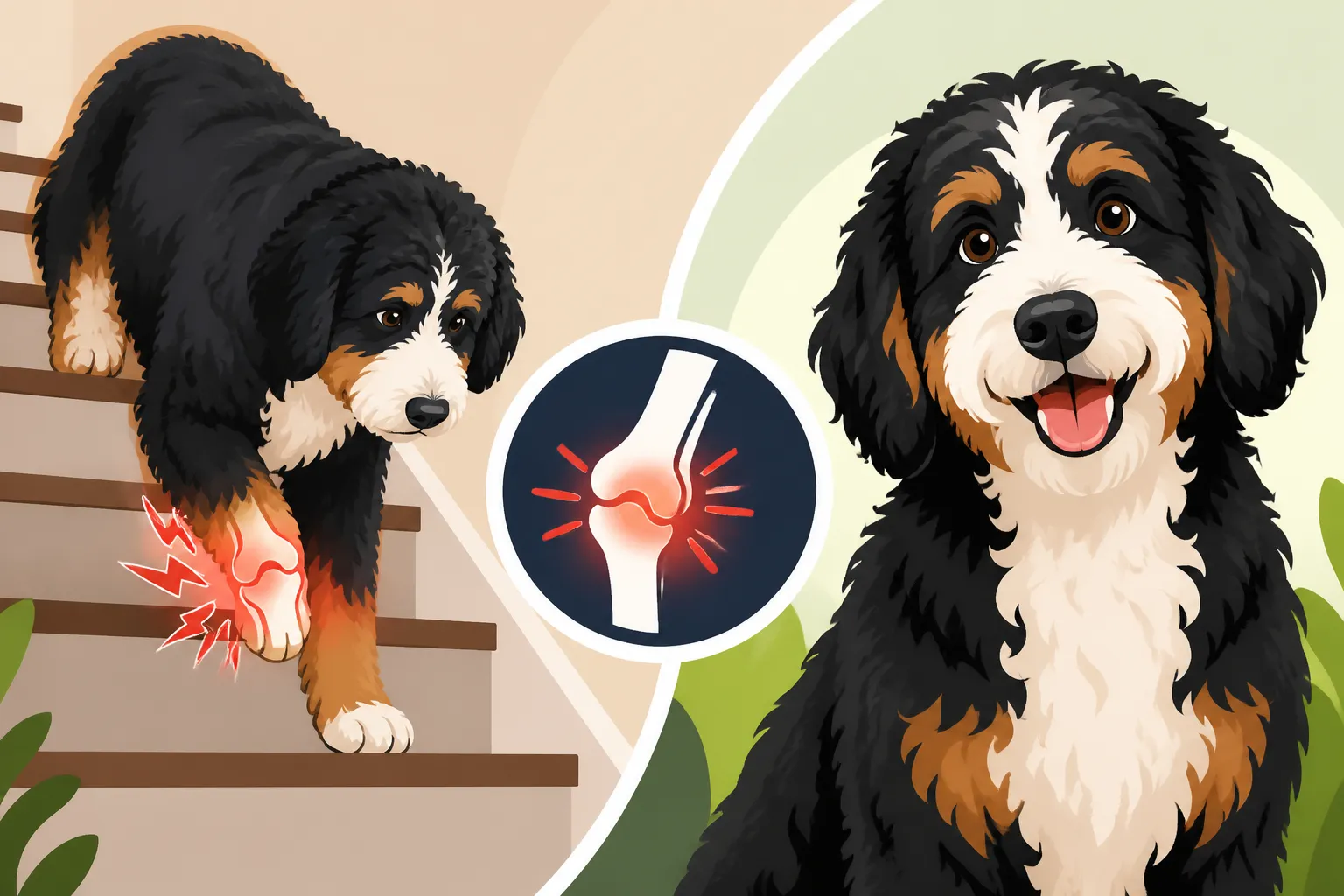
Whether Daily Stairs Wear a Bernedoodle’s Joints
It’s a common worry for us Bernedoodle parents: you look at your fast-growing, sometimes clumsy pup, and then you look at that intimidating flight of stairs, and your heart sinks a little. You know these magnificent dogs, with their Bernese Mountain Dog lineage, are prone to joint issues, and the thought of daily wear and tear on their developing bodies can be genuinely anxiety-inducing. This guide is here to unravel that concern, offering realistic advice on how to navigate stairs safely with your Bernedoodle throughout their life stages, from bouncy puppy to dignified senior.
The Real Impact of Stairs on Growing Bernedoodle Joints
Let's get straight to the heart of the matter: those stairs can be a real concern for a developing Bernedoodle. These are large, rapidly growing dogs, and their bones, joints, and soft tissues are quite vulnerable during their formative months. Understanding why this is a concern, rather than just panicking, helps us make informed decisions.
Vulnerable Growth Plates and Developing Cartilage
When your Bernedoodle is a puppy, their bones aren't fully fused. They have what are called "growth plates" at the ends of their long bones. These plates are made of cartilage and are softer than mature bone, which means they're susceptible to injury. Too much repetitive impact or sudden jarring motions, like those experienced when bounding up or down stairs, can damage these delicate growth plates. An injury here, even a seemingly minor one, can lead to abnormal bone growth, potentially causing lifelong lameness or exacerbating conditions like Elbow Dysplasia in a Growing Bernedoodle or hip issues. It's not just the bones either; the cartilage that cushions their joints is also still developing, not yet as robust as it will be in adulthood. High-impact activities can wear on this soft cartilage, contributing to future problems.
Imagine a construction site where the concrete hasn't fully set. You wouldn't drive heavy machinery over it, right? It's similar for a Bernedoodle puppy's joints. Their skeletal system is literally building itself, and we need to provide an environment that supports strong, healthy development, not one that stresses it.
Breed Predisposition to Joint Issues
Unfortunately, both parent breeds of the Bernedoodle – the Bernese Mountain Dog and the Poodle – can carry genetic predispositions to certain orthopedic conditions. Hip and elbow dysplasia are probably the most well-known. Hips on a Ninety Pound Bernedoodle are a serious consideration for any owner. While responsible breeding involves health testing to minimize these risks, the genetic dice are still somewhat loaded. Introducing high-impact activities like daily stair climbing and descending, especially for a young dog, can act as an environmental trigger that exacerbates these latent genetic weaknesses.
Think of it this way: if your dog already has a genetic tendency for a certain joint issue, adding physical stress is like pouring gasoline on a small ember. It dramatically increases the chances of that ember flaring into a full-blown fire. The goal is always to reduce the environmental factors that contribute to the expression of these genetic conditions, giving your Bernedoodle the best possible chance at healthy, sound joints for life. This isn't about wrapping them in cotton wool, but about smart, controlled exercise and preventing undue stress during critical growth periods.
Age-Appropriate Stair Management for Your Bernedoodle
Navigating stairs safely with a Bernedoodle isn't a one-size-fits-all approach. What's appropriate for a tiny eight-week-old puppy is vastly different from what an adult or senior dog can handle. It's all about understanding their physical development and adapting your approach accordingly.
Puppy Stages: Carrying, Blocking, and Gradual Introduction
When your Bernedoodle is a tiny fluffball, usually up to around 4-5 months of age, the best policy is simple: carry them up and down the stairs. Yes, even if they're getting heavy! This is the most crucial period for growth plate and joint development. Every jump, every jarring step, every slip on the stairs can have an outsized impact on their delicate structure. It’s inconvenient, I know, especially as they rapidly gain weight, but it's an investment in their long-term soundness. If you have multiple flights or very steep stairs, consider baby gates to block access entirely, at least temporarily. You might even create a safe, puppy-proofed zone on one floor to minimize the need for stair travel.
As they approach 5-6 months and their growth plates start to close, you can very gradually begin supervised introductions. Start with just a few steps. Put them on a leash and guide them, one step at a time, with lots of encouragement and treats. The key is slow, controlled movements. Avoid letting them bound up or race down. Descending stairs is actually harder on the joints due to the increased impact, so focus on teaching a slow, deliberate pace for going down first. Remember, this isn't about speed; it's about building muscle and coordination in a controlled manner. Don't push it if they seem hesitant or awkward. Patience is truly a virtue here.
Adolescent and Adult Bernedoodles: Controlled Movements and Assessment
Once your Bernedoodle is past their primary growth phase, typically after 12-18 months, their growth plates will have largely closed, and their skeletal system will be more mature. At this point, daily stair use becomes less of a critical concern, but it's still worth monitoring. The focus shifts to controlled movements and ongoing assessment. Don't let them barrel down the stairs like a runaway freight train. Encourage them to take it easy, perhaps walking beside you on the leash if they're prone to racing.
For adult Bernedoodles, the main risks are still impact and slips. If you have particularly slippery wooden or tiled stairs, consider adding non-slip treads. These can be purchased from places like Amazon or Chewy and make a huge difference in preventing awkward falls that could lead to sprains, strains, or even more serious injuries like Torn Cruciates in a Heavy Bernedoodle. Always observe your dog. Are they hesitating at the stairs? Do they move differently after going up or down? Are they showing any subtle signs of pain or stiffness? Any changes in gait or reluctance to use stairs should prompt a conversation with your vet. Regular, moderate exercise, like that suggested in The Five Minute Rule on a Bernedoodle Puppy's Walks (though applied differently for adults), and maintaining a healthy weight are also crucial for joint health at this stage.
Senior Bernedoodles: Prioritizing Comfort and Support
As your Bernedoodle enters their golden years – often considered around age eight, though it can vary – joint health becomes a renewed priority. What Changes in a Bernedoodle After Eight often includes increased stiffness and the onset of arthritis. For senior Bernedoodles, stairs can become genuinely challenging and even painful. Their joints may ache, their muscles might be weaker, and their coordination might not be what it once was.
For senior dogs, we want to prioritize comfort and minimize strain. If they're struggling, even a little, it's time to re-evaluate daily stair usage. You might need to carry them again for some or all trips, invest in ramps, or consider restricting their access to certain floors. Non-slip treads are even more critical for seniors, as a fall can be devastating. Supportive bedding, a healthy diet, and appropriate joint supplements (you can find a wide range of these on Chewy or Amazon, often with different ingredient profiles) can all help manage arthritis and make movement easier. Discuss pain management options with your vet, including anti-inflammatories or other therapies. The goal is to keep them mobile and pain-free, even if that means making adjustments to their daily routine.
Here's a quick overview of stair guidelines by age:
| Age of Bernedoodle | Primary Concern | Recommended Stair Management | Potential Tools/Aids |
|---|---|---|---|
| 0-4 Months (Puppy) | Delicate growth plates, high injury risk | Carry up/down stairs always. Block access. | Baby gates, arms |
| 5-12 Months (Adolescent) | Closing growth plates, developing coordination | Gradual, supervised introduction. Teach slow, controlled ascent/descent. | Leash guidance, non-slip treads |
| 1-7 Years (Adult) | Impact, slips, genetic predisposition | Controlled movements. Encourage caution. Monitor for discomfort. | Non-slip treads, observant owner |
| 8+ Years (Senior) | Arthritis, stiffness, reduced mobility, fall risk | Minimize use. Carry if struggling. Ramps or alternative living space. | Ramps, non-slip treads, supportive beds, veterinary consultation for pain management |
Minimizing Stair Risk for All Bernedoodles
Beyond age-specific guidelines, there are universal strategies you can employ to make stairs safer for your Bernedoodle at any stage of their life.
Environmental Adjustments: Treads, Ramps, and Gates
The environment itself plays a huge role in stair safety. If your stairs are hard, slick surfaces like polished wood, tile, or even uncarpeted concrete, they pose a significant slip hazard. This is especially true for large, heavy dogs like Bernedoodles, who can struggle to gain purchase, leading to slips, strains, or even falls. The simple solution? Non-slip stair treads. These can be peel-and-stick options or more substantial carpet runners that you install. They provide crucial traction, reducing the risk of your dog losing their footing. You can find many varieties on online retailers like Amazon, offering different styles and levels of grip.
For homes with very steep stairs, or for a Bernedoodle that needs constant access to multiple levels but is physically compromised (whether due to age, injury, or severe dysplasia), a dog ramp might be a game-changer. These can be custom-built or purchased, providing a gradual incline that eliminates the impact of stairs entirely. Consider where a ramp would fit and whether it's a practical solution for your home. And don't forget those trusty baby gates. While essential for puppies, they can also be invaluable for adult or senior dogs if you need to restrict their access to stairs for a period, perhaps during recovery from an injury or if they're having a particularly stiff day.
Training for Safe Stair Navigation
Beyond physical aids, proactive training is key. You can teach your Bernedoodle how to use stairs safely, which is often more about restraint and control than anything else.
"Slow" and "Wait" Commands
One of the most valuable commands for stair safety is "slow" or "easy." Start practicing this on flat ground, rewarding your dog for walking at a measured pace. Then, transition it to the stairs. With your dog on a leash, ask for "slow" as they approach the stairs. Encourage them to take each step deliberately, rewarding them for each careful placement of their paws. The "wait" command is also incredibly useful. Teach them to pause at the top or bottom of the stairs until you give the release cue. This prevents them from rushing ahead, especially when going down, which is the most impactful direction. These commands empower you to guide their movement, preventing reckless bounding that can strain joints. Consistency and positive reinforcement are crucial here.
Avoiding Jumping and Racing
Bernedoodles, especially when young and exuberant, can be incredibly clumsy and eager. Their large size often means they don't quite realize their own strength or momentum. Allowing them to race up and down stairs, jumping over steps or taking them two at a time, is a recipe for disaster. This puts immense, unnecessary strain on their joints, particularly their elbows and hips. Teach them from a young age that stairs are for walking, not for playing or rushing. Use the "slow" and "wait" commands consistently. If they start to get too excited, stop them, regain their focus, and restart the process. It's far better to spend a few extra minutes on controlled stair use than to face years of vet bills or discomfort for your beloved companion.
Health and Lifestyle: Weight Management and Joint Support
Maintaining your Bernedoodle's overall health and lifestyle significantly impacts their joint resilience, regardless of stair use.
The Crucial Role of Healthy Weight
This cannot be stressed enough: keeping your Bernedoodle at a lean, healthy weight is one of the single most important things you can do for their joint health. Every extra pound puts additional stress on their hips, elbows, knees, and spine. This increased load accelerates wear and tear on cartilage, exacerbates existing conditions like arthritis, and makes recovery from injury harder. Talk to your vet about your Bernedoodle's ideal weight and body condition score. It can be hard to tell under all that beautiful Bernedoodle coat, but feeling for their ribs and checking their waistline is crucial. Adjust their diet and exercise as needed. Many high-quality large breed dog foods focus on controlled calorie intake to support healthy weight, and brands like Ollie offer fresh food options tailored to specific caloric needs.
If your Bernedoodle is overweight, even slightly, it's time to act. Gradual weight loss through portion control and appropriate exercise can make a dramatic difference in their comfort and mobility, especially when navigating stairs. Whether an Overweight Bernedoodle Loses Years is a definite 'yes' when it comes to joint health, among other things.
Incorporating Joint Supplements
While diet and exercise are foundational, targeted joint supplements can offer additional support, especially as your Bernedoodle ages or if they have known predispositions to joint issues. Common ingredients include:
- Glucosamine and Chondroitin: These are natural compounds found in healthy cartilage and are thought to help support its repair and maintenance.
- MSM (Methylsulfonylmethane): An organic sulfur compound that may help reduce inflammation and pain.
- Omega-3 Fatty Acids (EPA/DHA): Often sourced from fish oil, these have anti-inflammatory properties that can benefit overall joint health and reduce stiffness.
- Green-lipped Mussel: A natural source of glucosamine, chondroitin, and omega-3s, known for its anti-inflammatory effects.
You can find a wide array of these supplements from reputable retailers like Chewy and Amazon. It's always best to discuss with your veterinarian which supplements, if any, are most appropriate for your individual Bernedoodle, considering their age, health status, and any existing conditions. Starting a joint supplement regime early, as discussed in Whether a Bernedoodle Needs Joint Supplements From Young, might be a proactive step for some owners. Remember, supplements are not a cure-all but can be a valuable part of a comprehensive joint care strategy.
Long-Term Joint Health Beyond Stairs
While stairs are a significant point of discussion, a Bernedoodle's joint health is influenced by a much broader range of factors throughout their life. Thinking holistically about their care will yield the best results for their comfort and longevity.
Controlled Exercise and Activity Levels
It's tempting to want to play endlessly with your energetic Bernedoodle, but especially during puppyhood, controlled exercise is paramount. Over-exercising a young Bernedoodle can be just as detrimental as too many stairs. Intense, repetitive activities like long-distance running, extensive fetch sessions with quick stops and turns, or prolonged vigorous play with other dogs can put excessive strain on their developing joints. Focus on shorter, more frequent walks on soft surfaces like grass, and controlled playtime. Keeping a Standard Bernedoodle Sound Past Ten starts with careful management in their younger years. As they mature, they can handle more, but still be mindful of their size and potential for high-impact movements. Swimming is a fantastic, low-impact exercise option that builds muscle without stressing joints.
For adults, maintaining a consistent exercise routine helps keep muscles strong, which in turn supports joint stability. However, avoid sudden bursts of activity after long periods of rest, as this can lead to injury. Listen to your dog's cues; if they're lagging, limping, or stiff after a walk, it might be time to scale back or consult your vet.
Regular Veterinary Care and Screenings
Proactive veterinary care is your best friend when it comes to managing a large breed dog with potential joint issues. Regular check-ups allow your vet to monitor your Bernedoodle's gait, assess their joint mobility, and catch any subtle signs of discomfort or developing problems early. Don't wait until your dog is clearly limping or in pain.
For Bernedoodles, especially, early screenings can be incredibly valuable. Many breeders conduct preliminary x-rays for hip and elbow dysplasia in parent dogs. For your own puppy, discussing baseline x-rays around a year old, or sooner if concerns arise, can give you a clearer picture of their joint health. This allows you to implement preventative strategies or early interventions if needed. Your vet can also advise on appropriate preventative measures, such as specific diets, supplements, or physical therapy exercises. Identifying issues early means you can implement management strategies sooner, potentially slowing the progression of conditions like arthritis and improving your Bernedoodle's quality of life. The Screening a Bernedoodle Should Have Yearly covers many of these essential checks.
Supportive Environments and Living Spaces
Beyond stairs, consider your Bernedoodle's entire living environment. Hard, slippery floors throughout your home can be challenging for any dog, but especially for large, heavy breeds. They can slip and slide, which can lead to muscle strains, ligament tears, and increased wear on joints. Lay down area rugs or runners in high-traffic areas to provide better traction. This is particularly important around beds, food bowls, and entryways.
Furthermore, ensure your Bernedoodle has supportive bedding. A good orthopedic dog bed provides firm support that cushions their joints and helps distribute their weight evenly, preventing pressure points and providing comfort, especially for older dogs or those with arthritis. This is one area where investing in quality truly pays off. You can find excellent orthopedic beds on Amazon or Chewy designed specifically for large breeds. Make sure it's big enough for them to stretch out comfortably. A well-designed, supportive living space, free of constant slipping hazards, contributes significantly to their overall joint health and comfort over their lifetime.
Disclaimer
This article is for general informational purposes only and does not constitute professional advice. Laws, prices and regulations vary by location and change over time. Consult a qualified professional for guidance on your specific situation.