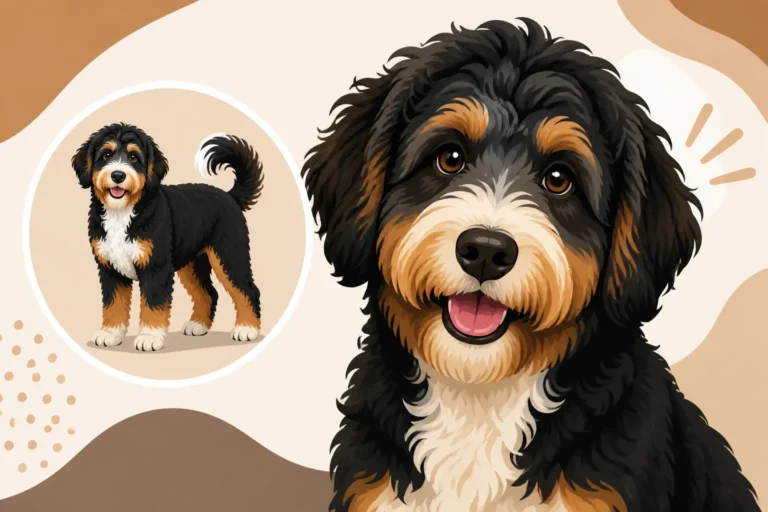
What a Traditional Tri Color Bernedoodle Looks Like
Bringing home a Bernedoodle is an exciting journey, but if you've set your heart on a specific look, like the classic tri-color, you might find yourself navigating a sea of pictures and descriptions that can be downright confusing. Many hopeful owners struggle to understand what truly constitutes a "traditional tri-color" Bernedoodle, often mistaking phantom or bi-color patterns for the real deal, leading to disappointment or unexpected surprises when their puppy grows. This comprehensive guide is here to demystify the traditional tri-color Bernedoodle, breaking down its distinctive features and helping you understand exactly what to look for, so you can confidently appreciate this beloved coat pattern.
Decoding the Traditional Tri-Color Bernedoodle: What Does It Really Mean?
When you hear "traditional tri-color Bernedoodle," it’s not just a fancy term breeders use; it refers to a very specific and highly recognizable pattern that pulls directly from the Bernese Mountain Dog side of the family. This isn't just about having three colors on a dog; it's about where those three colors are placed and how they interact on the coat. It’s the quintessential look that many people envision when they think of a Bernedoodle, especially one with strong Bernese heritage.
The Core Definition of Traditional Tri-Color
At its heart, a traditional tri-color Bernedoodle boasts three distinct colors: a dominant black, crisp white markings, and warm rust or tan points. The key here is the pattern in which these colors appear. It’s not just a random smattering. Think of it as a uniform, a classic ensemble that is genetically coded and has been passed down through generations of Bernese Mountain Dogs. These aren't just any black, white, and rust; they are strategically placed in areas that define the breed's iconic appearance. This particular color combination and placement are what differentiate it from other patterns that might seem tri-colored but are actually genetically distinct, like a "phantom" Bernedoodle, which we'll discuss later. Understanding this core definition is your first step to truly appreciating the beauty and heritage of this specific Bernedoodle type.
Why "Traditional" Matters for Bernedoodles
The word "traditional" is incredibly important when describing a tri-color Bernedoodle. It signifies that the color pattern is inherited directly from the Bernese Mountain Dog, adhering to the standard markings of that purebred parent. In the world of Bernedoodles, where a vast array of colors and patterns can emerge from the Poodle's diverse genetic palette, "traditional" anchors the Bernedoodle back to its Bernese roots. It means the black is deep and true, the white is bright and usually found in specific "blaze" or "collar" patterns, and the rust or tan points are rich and perfectly positioned. Without this traditional aspect, you might end up with a dog that has three colors, but they might be arranged differently, or the shades might be softer, or they might lack the distinct Bernese "pop" that so many owners adore. It's the difference between a meticulously painted portrait and an abstract piece – both beautiful, but distinctly different in their adherence to a classic form.
The Signature Black, White, and Rust Palette: Where the Colors Fall
Let's dive into the specifics of where these three glorious colors typically manifest on a traditional tri-color Bernedoodle. This isn't an arbitrary distribution; there's a predictable layout that makes these dogs so instantly recognizable and charming. It's like a detailed blueprint that their Bernese ancestors passed down, ensuring a consistent and admired appearance across the traditional tri-color spectrum.
The Dominant Black Body and Its Richness
The foundation of a traditional tri-color Bernedoodle is its stunning black coat. This isn't just a dark shade; it's usually a deep, rich, jet black that covers the majority of the dog's body. Think of it as the canvas upon which the other colors are painted. This dominant black typically extends over the back, sides, and much of the legs, providing a striking contrast to the white and rust markings. The quality of this black can vary slightly, with some Bernedoodles having an incredibly intense, almost velvety black, while others might have a slightly softer, still very dark, shade. It should be consistent, without any significant fading or patches of lighter black, which could indicate a different color pattern or genetic influence. This solid black body is crucial for the "traditional" look, giving the dog its sturdy, substantial appearance that hearkens back to the majestic Bernese. The Coat a Bernedoodle Gets From Two Heavy Coated Parents often means this black is dense and luxurious.
The Iconic White Markings: Blaze, Chest, and Paws
The white markings are arguably the most eye-catching feature of a traditional tri-color Bernedoodle, adding elegance and definition. These aren't just random splashes; they follow a very specific pattern:
- The Blaze: One of the most defining white markings is the "blaze," a strip of white that runs up the center of the face, usually starting between the eyes and potentially extending up the forehead. This blaze often gives the Bernedoodle a sweet, expressive look, framing their dark eyes. It can be thin, wide, perfectly straight, or slightly asymmetrical – each adding to the individual charm.
- The Chest and Collar: A prominent white chest is another hallmark, often forming a broad shield-like shape. From there, the white can extend up the neck, sometimes forming a partial or full "collar" around the back of the neck. This collar, when complete, is particularly prized, creating a stunning contrast with the black body.
- The Paws (or "Stockings"): Traditional tri-colors typically have white "socks" or "stockings" on their paws, extending part-way up their legs. These can be short and neat, or reach higher, almost like elegant white boots. The presence of these white feet, along with the blaze and chest, truly completes the traditional picture.
- Tail Tip: Many traditional tri-colors will also have a white tip on their tail, a small but charming detail that adds to the overall balanced look.
These white markings are what give the Bernedoodle that "flash" and distinct Bernese appeal, making them stand out in a crowd.
The "Rust" or "Tan" Points: Crucial Tri-Color Details
And finally, the third color that completes the tri-color magic: the rust or tan points. These are the warm, rich accents that truly bring the entire pattern together, providing depth and warmth against the dominant black and crisp white. These points are not random; they appear in very specific locations on the dog's body, consistent with the Bernese Mountain Dog standard.
You'll typically find these rust or tan points in a few key areas:
- Above the Eyes: Often referred to as "eyebrows," these small, distinct rust patches above each eye add an incredibly expressive quality to the Bernedoodle's face. They can make the dog look perpetually thoughtful or even slightly concerned, adding to their endearing charm.
- On the Cheeks: Just below the eyes and on the cheeks, you'll see more rust coloring, framing the face beautifully and connecting to the rust on the legs.
- Under the Tail: Flip up a traditional tri-color Bernedoodle's tail, and you'll usually find rust coloring underneath, extending towards the base.
- Inside the Ears: Sometimes, you'll also catch a glimpse of rust inside the ears, though this can be less prominent depending on the ear set and grooming.
- On the Legs: This is a crucial area. The rust coloring typically appears on the front legs, above the white "socks," forming a distinct band. You'll also see it on the hind legs, often on the inner thighs and around the hocks, blending into the black.
These rust points are critical for the "tri" in "tri-color." Without them, a Bernedoodle would be considered a "bi-color" (black and white). The intensity of the rust can vary from a deep, almost mahogany red to a lighter, golden tan, but it should always be clearly discernible as a separate color. The Rust and White Markings a Tri Bernedoodle Carries are truly what make the traditional pattern so special.
Beyond the Basics: Nuances and Variations in Tri-Color Markings
While the classic description of a traditional tri-color is quite specific, it's important to remember that nature loves variety! Even within the "traditional tri-color" umbrella, there can be subtle differences and individual quirks that make each Bernedoodle unique. These variations don't make a dog "less" of a tri-color, but they do add character and demonstrate the beautiful genetic tapestry at play.
Understanding Fading and "Bleaching" Over Time
One aspect that often surprises new Bernedoodle owners is how a puppy's coat can evolve. It's not uncommon for the black and rust colors in a tri-color Bernedoodle to soften or "bleach" over time. This isn't a defect, but a natural process that can be influenced by genetics, sun exposure, and even diet. The deep black puppy coat might mature into a softer, charcoal black, especially if the Poodle parent carried a "fading" gene. Similarly, the vibrant rust points might become a lighter tan. This doesn't mean your dog isn't a traditional tri-color, it just means their coat is maturing. It's part of the charming journey of watching your Bernedoodle grow, and many owners find the softer, aged look equally appealing. Regular grooming and specific shampoos can sometimes help maintain color vibrancy, but embracing the natural evolution of their coat is often the best approach.
The Impact of Coat Type on Tri-Color Appearance
The Bernedoodle's coat type also plays a significant role in how the tri-color pattern is perceived. Bernedoodles can have wavy, curly, or even straighter coats, each affecting the visual impact of their markings.
- Wavy Coat: This is often considered the "ideal" Bernedoodle coat and provides a beautiful medium for the tri-color pattern. The waves allow the distinct blocks of black, white, and rust to be clearly seen, while still offering that soft, fluffy doodle texture. The length and movement of the waves can add a lovely dimension to the colors.
- Curly Coat: A Bernedoodle with a curlier, Poodle-like coat will still have all the traditional tri-color markings, but the tight curls can sometimes make the distinctions between the colors appear a little softer or more blended from a distance. Up close, the distinct patches are still evident, but the texture gives a different overall impression. The curls can also make the coat appear denser, which can sometimes mute the crispness of the white markings slightly.
- Straight Coat: While less common for the classic "doodle" look and more prone to shedding, a straight-coated Bernedoodle will display its tri-color markings with sharp definition, much like a Bernese Mountain Dog. The smooth texture allows for very clear lines between the black, white, and rust, emphasizing the traditional aspect.
Regardless of the coat type, if the placement of the black, white, and rust colors follows the Bernese pattern, it's a traditional tri-color. However, maintenance for each coat type will differ, and you might find yourself browsing Chewy for specific brushes designed for a curly coat versus a wavy one! The Wavy Coat Most Bernedoodles Carry is a popular topic for a reason.
When Markings Are "Broken" or Asymmetrical
It's rare for any dog, purebred or cross, to have perfectly symmetrical markings. Even in traditional tri-color Bernedoodles, you'll often see what are called "broken" or asymmetrical markings, particularly with the white.
- Broken Blaze: Instead of a single, continuous white blaze, some Bernedoodles might have a blaze that is interrupted by a small patch of black or rust, or perhaps one side of the face has more white than the other.
- Incomplete Collar: The coveted white collar might not fully encircle the neck, appearing only as a patch on the chest and extending partially up the sides of the neck.
- Uneven Paws: The white "socks" might be higher on one leg than another, or perhaps one paw has a small patch of black or rust within the white.
- "Smudged" Rust Points: Sometimes the rust points above the eyes might be very small, or blend slightly more into the black than a perfectly crisp marking.
These variations are perfectly normal and simply add to the individual character of your Bernedoodle. They don't detract from the fact that the dog is genetically a traditional tri-color. A responsible breeder will be transparent about these kinds of unique characteristics when you are choosing your puppy. Whether a Bernedoodle's Face Markings Are Symmetrical is a common question, and the answer is often "not perfectly!"
Tri-Color vs. Other Bernedoodle Patterns: A Clear Distinction
The world of Bernedoodle colors can be incredibly rich and varied, thanks to the Poodle's diverse genetic contributions. This can sometimes lead to confusion, as patterns like phantom or bi-color might, at first glance, appear similar to a traditional tri-color. However, understanding the distinctions is key to truly appreciating the traditional pattern and ensuring you know what you're getting.
Distinguishing Tri-Color from Phantom and Bi-Color
Let's clear up some common confusions:
- Traditional Tri-Color vs. Phantom: This is perhaps the most frequent point of confusion. A phantom Bernedoodle also has three colors, or at least two colors plus tan points, but the pattern is different. A phantom pattern refers to a dog that is predominantly one solid color (often black, brown, or silver) with lighter "points" of another color (usually tan or cream) appearing in the same specific locations as the rust points on a traditional tri-color (above the eyes, on the muzzle, chest, legs, and under the tail). The key difference is the absence of significant white markings in the phantom pattern, especially the prominent white blaze, chest, and paw markings of a traditional tri-color. A "phantom tri-color" would technically mean a black-and-tan phantom with additional white markings not in the traditional Bernese locations, or a lighter base coat with tan points and white. But a traditional tri-color has the specific Bernese pattern. What a Phantom Bernedoodle Looks Like is a great resource if you want to dive deeper into that particular pattern.
- Traditional Tri-Color vs. Bi-Color: This distinction is simpler. A bi-color Bernedoodle has only two colors, typically black and white. It would have the dominant black body with white markings on the face (blaze), chest, and paws, much like a traditional tri-color, but it would lack the rust/tan points above the eyes, on the cheeks, and on the legs. So, if you see a Bernedoodle that is beautifully marked in black and white, but without any warm tan accents, you're likely looking at a bi-color. It's still a striking pattern, but it's not a tri-color.
Understanding these subtle but significant differences is crucial for anyone with a specific vision for their Bernedoodle's appearance.
Why Merle Tri-Color is a Different Category
Then there's the merle pattern, which adds another layer of complexity. A "merle tri-color" Bernedoodle, while visually stunning, is genetically distinct from a traditional tri-color. Merle refers to a dilution gene that creates mottled patches of lighter color (often gray or liver) throughout the dog's base coat, along with potential blue or heterochromatic eyes.
- Visual Difference: A traditional tri-color has solid black, white, and rust patches. A merle tri-color would have a black (or blue, or chocolate) base coat with patches of lighter gray or mottled color, plus the white and rust/tan points. The merle gene fundamentally changes the appearance of the black areas, making them appear "marbled" or "splattered" with lighter shades.
- Genetic Origin: Merle comes from the Poodle side of the lineage, or sometimes from outcrosses to other breeds like Australian Shepherds (though a pure Bernedoodle should only be Bernese and Poodle). The traditional tri-color pattern comes from the Bernese Mountain Dog.
- Health Considerations: It's important to note that the merle gene carries specific health considerations, especially if two merle dogs are bred together (a "double merle" breeding), which can lead to serious health issues like deafness and blindness. For this reason, many responsible breeders avoid merle, or breed it with extreme caution and genetic testing.
While a merle tri-color can be beautiful, it's not what is meant by a "traditional" tri-color Bernedoodle, which is defined by its Bernese-derived, solid black, white, and rust pattern without the merle gene. What a Merle Bernedoodle Looks Like provides more detail on this captivating but genetically distinct pattern.
The Importance of Breeder Transparency on Color Genetics
Given the intricacies of Bernedoodle coat colors, choosing a reputable breeder is paramount. A good breeder will understand the genetics behind these patterns and be completely transparent about what you can expect from a puppy, both in terms of appearance and potential health implications.
- Genetic Testing: Breeders should be able to provide genetic testing results for their parent dogs, which can confirm the presence (or absence) of certain color genes. This helps predict what colors and patterns are likely in a litter.
- Clear Definitions: A reputable breeder will use accurate terminology when describing their puppies. They won't market a phantom as a "traditional tri-color" or try to confuse buyers. They should be able to explain the differences clearly and show you examples.
- Expected Outcome vs. Guarantee: While breeders can predict color patterns with reasonable accuracy, especially with genetic testing, nature always has its own way. A good breeder will communicate what's expected rather than offering a 100% guarantee on every minute detail of marking placement, especially since puppy coats can change slightly.
Don't hesitate to ask questions, review parent dog photos, and seek clarification. Your understanding of these distinctions, combined with a breeder's honesty, will help you find the Bernedoodle of your dreams. Asking a Breeder About Cancer in the Bernese Line (or coat genetics!) is always a good idea.
Why the Traditional Tri-Color Bernedoodle Captivates So Many Hearts
There's no denying the immense popularity of the traditional tri-color Bernedoodle. This specific look holds a special place in the hearts of many dog lovers, and for good reason. It’s more than just a pretty coat; it represents a blend of beauty, character, and often, a nod to the beloved Bernese Mountain Dog heritage.
The Aesthetic Appeal and Desirability
The traditional tri-color Bernedoodle is simply stunning to look at. The contrast of deep black, crisp white, and warm rust creates a visually striking dog that turns heads wherever it goes. It’s a classic, timeless pattern that embodies much of the appeal of the Bernese Mountain Dog, combined with the often-desired low-shedding qualities and intelligence of the Poodle.
- Classic Beauty: This color combination evokes a sense of tradition and natural beauty. It's a palette that feels both earthy and elegant, appealing to a wide range of aesthetic preferences. The sharp delineation between colors gives the coat a polished, almost artistic quality.
- Uniqueness within Familiarity: While many doodles exist, the traditional tri-color offers a distinct look that stands out. It's recognizable enough to be familiar, yet each dog has its own unique variations in markings, making them truly one-of-a-kind.
- Photogenic Qualities: Let's be honest, these dogs are incredibly photogenic! Their striking colors and patterns photograph beautifully, making them social media darlings and perfect companions for capturing memories.
This strong aesthetic appeal contributes significantly to the desirability of traditional tri-color Bernedoodles. Many people specifically seek out this color pattern, willing to wait for a litter or pay a premium to secure a puppy with these classic markings. The Tri Color Markings People Buy a Bernedoodle For truly resonate with people.
Linking Appearance to Perceived Temperament (and Reality)
It’s interesting how often people associate certain looks with perceived temperaments. With the traditional tri-color Bernedoodle, many owners feel a stronger connection to the Bernese Mountain Dog's gentle, loyal, and somewhat goofy nature. There's a subconscious belief that a Bernedoodle with more pronounced Bernese markings will embody more of that calm, devoted Bernese personality.
- The Bernese Connection: The traditional tri-color pattern is such a strong visual cue for the Bernese Mountain Dog. People who adore the Bernese often feel that this color pattern in a Bernedoodle means they are getting the best of both worlds – the beloved look with potentially less shedding and a longer lifespan. This visual link often fosters an expectation of a classic, sweet, and family-oriented disposition.
- No Scientific Basis for Color-Temperament Link: It’s crucial to understand that a dog's coat color or pattern has absolutely no scientific correlation with its temperament. A Bernedoodle's personality is a complex mix of genetics from both parent breeds and, perhaps even more significantly, early socialization, training, and individual experiences. A solid black Bernedoodle can be just as sweet and goofy as a traditional tri-color, and a phantom can be just as protective.
- Focus on Individual Dog: While the traditional tri-color look might draw you in, always prioritize getting to know the individual puppy or adult dog. Observe their behavior, ask the breeder about the parent's temperaments, and focus on the character traits you desire, not just the coat pattern. Your dog's personality will be far more impactful on your daily life than the exact shade of rust above their eyes. What a Bernedoodle Keeps of the Bernese Temperament is a much more reliable indicator.
The Long-Term Commitment to a Beautiful Coat
Owning a traditional tri-color Bernedoodle, with its often dense and wavy or curly coat, comes with a significant commitment to grooming. The beauty of their markings is undeniable, but maintaining that beauty requires consistent effort.
- Regular Grooming is Essential: Whether your tri-color has a wavy or curly coat, it will require regular brushing – often daily or every other day – to prevent matting, especially in areas like the armpits, behind the ears, and in the "britches" (the feathering on their hind legs). Mats can quickly obscure those lovely markings and become painful for your dog. You'll find a wide array of brushes and combs at retailers like Chewy designed specifically for doodle coats.
- Professional Grooming Schedule: In addition to home brushing, professional grooming every 6-8 weeks is typically necessary to keep their coat healthy, tangle-free, and to maintain their desired trim. This ensures those beautiful tri-color markings remain visible and don't get lost in an overgrown, matted coat. Six Hundred to Twelve Hundred a Year Grooming a Bernedoodle gives you an idea of the financial commitment.
- Protecting Their Coat: Their dense coat, while beautiful, also means they can struggle in warmer climates or during intense exercise. Protecting them from overheating and keeping their coat clean and dry is vital. After a muddy walk, ensuring their white paws are cleaned will keep them looking their best. You might consider specific shampoos or detangling sprays, readily available on platforms like Chewy, to keep their tri-color coat in pristine condition.
The traditional tri-color Bernedoodle is a visually stunning dog, and for many, its aesthetic appeal is a huge draw. However, true appreciation comes from understanding not just what they look like, but also the genetics, variations, and ongoing care required to keep them healthy and happy.
| Trait / Pattern | Traditional Tri-Color | Phantom | Bi-Color | Merle Tri-Color |
|---|---|---|---|---|
| Main Colors | Black, White, Rust/Tan | Solid Base (e.g., Black, Brown), Tan/Cream Points | Black, White | Merle (Mottled/Diluted Base), White, Rust/Tan |
| White Markings | Prominent blaze, chest, paws, tail tip, sometimes collar. | Generally absent or minimal; not in Bernese pattern. | Prominent blaze, chest, paws, tail tip, sometimes collar. | Present, similar to traditional, but combined with merle base. |
| Rust/Tan Points | Present in specific Bernese locations (eyebrows, cheeks, legs, under tail). | Present in specific locations, defining the "phantom" look. | Absent. | Present, similar to traditional, but on a merle base. |
| Dominant Look | Classic Bernese pattern. | Solid body with distinct lighter points. | Two-tone, strong contrast. | Mottled, marbled effect with points and white. |
| Genetic Origin | Bernese Mountain Dog. | Poodle. | Bernese Mountain Dog or Poodle. | Poodle (or other merle-carrying breed). |
| Key Difference | Specific placement of three distinct colors, including strong white markings. | Lack of prominent white Bernese markings. | Lack of rust/tan points. | Mottled base color (merle gene) combined with tri-color pattern. |
Disclaimer
This article is for general informational purposes only and does not constitute professional advice. Laws, prices and regulations vary by location and change over time. Consult a qualified professional for guidance on your specific situation.