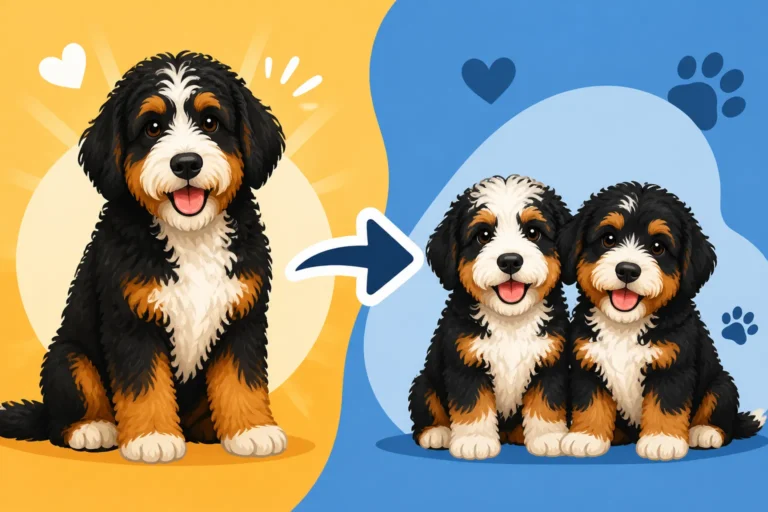
The Merle Bernedoodle and the Argument Around It
When you're dreaming of bringing a Bernedoodle into your home, you're likely picturing that classic tri-color or perhaps a beautiful bi-color coat. But then you stumble upon images of a "Merle Bernedoodle," with its striking dappled, mottled, or patched appearance, often paired with captivating blue eyes, and suddenly a new desire takes hold. While undeniably stunning, the merle pattern in Bernedoodles, as with many breeds, comes with a significant and often heated discussion surrounding its genetic implications and ethical breeding practices. This guide aims to unpack the controversy, helping you understand the allure, the risks, and what to look for if your heart is set on one of these unique dogs.
Understanding the Merle Pattern in Bernedoodles
The merle pattern is a showstopper, there’s no denying it. Its distinctive swirling patches of lighter and darker colors, often with areas of solid color, can make each dog look like a living work of art. But this beauty isn't just skin deep; it's intricately tied to a specific gene that carries both aesthetic appeal and potential health risks, especially when mishandled.
What Exactly is Merle?
At its core, merle is a genetic modifier that dilutes random areas of a dog's base coat color. If a dog has a black base, the merle gene might create patches of gray, while a brown base could result in lighter fawn or tan patches. The pattern can manifest in various ways: a "blue merle" (black dog with grey patches), a "red merle" (brown dog with lighter brown/red patches), or even "sable merle" where the merle pattern is more subtle due to the sable genes. What makes it particularly striking in some dogs is the potential for iridescent blue eyes, or even heterochromia (one blue eye, one brown), and pink-pigmented noses or paw pads.
It's this unpredictable, artistic quality that makes merle Bernedoodles so highly sought after. Unlike a standard tri-color or bi-color, no two merle patterns are ever truly identical, making each dog feel incredibly unique. However, the gene responsible for this beauty, known as the M allele, is also what necessitates careful consideration and responsible breeding. It's not just about a pretty coat; it's about the underlying genetics and how they impact a dog's health.
Where Does Merle Come From in a Bernedoodle?
This is where the discussion often gets lively. The Bernese Mountain Dog, one half of the Bernedoodle cross, does not naturally carry the merle gene. Their traditional colors are tricolor (black, rust, and white) or bi-color (black and white). Therefore, if you see a merle Bernedoodle, that merle gene must have come from the Poodle parent. While merle is not a recognized color in purebred Poodles by the American Kennel Club (AKC), it does exist in the Poodle gene pool, having been introduced through outcrosses at some point in their history.
This introduction of the merle gene into Poodles, and subsequently into Bernedoodles, is part of the "argument around it" mentioned in our title. Some purists in both the Poodle and Bernese communities view the merle pattern in Bernedoodles as a deviation from the traditional look and an unnecessary genetic risk if not bred carefully. They argue that introducing genes not native to the foundation breeds can bring unforeseen complications. However, for those who appreciate the unique aesthetics, the origin is less important than ensuring the health and ethical breeding practices are upheld. Understanding that the merle comes from the Poodle side helps prospective owners recognize that the Bernese parent should never be merle, and if a breeder claims otherwise, it's a major red flag.
The Appeal of the Merle Bernedoodle
It’s easy to see why merle Bernedoodles capture so many hearts. There’s an undeniable "wow" factor that sets them apart from their more traditionally marked siblings. This distinctiveness contributes significantly to their popularity and often, their price tag.
The Unique Aesthetic and Demand
Imagine a canvas of black, white, and rust, but then splashed and dappled with shades of grey, creating an almost camouflage-like effect. That's the visual magic of a merle Bernedoodle. Some will have intense blue eyes that seem to pierce right through you, while others might have one blue and one brown, adding to their exotic appeal. This vibrant, unpredictable patterning, combined with the Bernedoodle's signature fluffy, often wavy or curly coat, creates a truly unforgettable look.
This unique aesthetic drives high demand. Many prospective owners are specifically seeking out merle Bernedoodles because they want something truly special and visually striking. Social media, in particular, plays a huge role here, with countless photos and videos showcasing these beautiful dogs, further fueling their desirability. People fall in love with the look online and then actively search for breeders who offer merle puppies. The idea of having a dog that looks unlike any other can be incredibly compelling.
Perceived Rarity and Value
Because the merle gene isn't uniformly present in all Poodle lines, and certainly not in Bernese Mountain Dogs, merle Bernedoodles are often perceived as rarer than their solid or tri-color counterparts. This perception of rarity, whether truly accurate or not, often translates directly into a higher price point. Breeders know there's a strong market for these unique dogs, and they price them accordingly. You might find that What a Merle Bernedoodle Costs is significantly higher than a standard black and white or even a traditional tri-color Bernedoodle.
It’s crucial for potential buyers to understand that "rare" doesn't necessarily mean "better" or "healthier." Often, the premium pricing is simply a reflection of market demand for a particular aesthetic, rather than an indicator of superior health or temperament. It’s also worth noting that the merle gene itself isn’t rare, but careful, ethical breeding of it requires specific knowledge and testing. Unfortunately, some less scrupulous breeders might exploit this demand, charging exorbitant fees without prioritizing the health screenings essential for responsible merle breeding.
The Health Concerns: The Heart of the Argument
Here's where the conversation gets serious and the "argument around it" really takes shape. While a single merle gene can produce a stunning coat with minimal risk, the real danger lies in what happens when a dog inherits two copies of the merle gene, a condition known as "double merle."
The Single Merle Gene and Potential Risks
When a Bernedoodle inherits just one copy of the merle gene (often denoted as M/m or Mm), they are called a "single merle." These dogs typically display the beautiful, dappled coat pattern we adore. For the most part, a single merle dog, ethically bred, is usually healthy. Their risk of merle-related health issues is relatively low, though not entirely non-existent.
Some single merles might have slightly diluted eye color or ear pigmentation, but severe vision or hearing problems are uncommon. Responsible breeders will ensure that even single merle puppies are thoroughly checked by a veterinarian. The primary concern with a single merle dog, from a breeding perspective, is that they carry the gene and could pass it on. This means they should never be bred with another merle dog, as that pairing carries a high risk of producing double merle offspring. This is why Whether Merle Is Safe to Breed in a Bernedoodle is such a critical question, and the answer hinges entirely on the pairing.
The Dangers of Double Merle
This is the big one, the core of the ethical debate. A "double merle" dog (M/M or MM genotype) results from breeding two merle-patterned dogs together. When a puppy inherits two copies of the merle gene, the dilution effect is significantly amplified, often leading to stark white or mostly white coats, and, more importantly, severe health defects. These defects primarily affect the eyes and ears because the merle gene impacts the cells responsible for pigment and sensory organ development.
Double merle Bernedoodles are at a significantly higher risk for:
- Ocular Defects: This can range from mild vision impairment to complete blindness. Issues can include microphthalmia (abnormally small eyes), colobomas (holes in parts of the eye), starburst pupils, or underdeveloped optic nerves. Their eyes often appear pale blue or mismatched.
- Auditory Defects: Deafness, either partial or complete, is also common. The gene can cause degeneration of the structures in the inner ear, leading to hearing loss.
It's heartbreaking to imagine a puppy born blind and deaf, or severely impaired, simply because of irresponsible breeding choices. These dogs require immense dedication, specialized training, and often lifelong care. This is precisely why reputable breeders emphatically state that Whether a Double Merle Bernedoodle Should Be Sold is not the question; the question is whether they should even be bred in the first place. The answer, from an ethical standpoint, is a resounding no.
Genetic Testing: A Crucial Step
Given the serious health implications of the merle gene, genetic testing is absolutely non-negotiable for any breeder considering a merle breeding program. Before any Poodle or Bernedoodle is bred, they should undergo a DNA test to determine their merle status.
This test will identify whether a dog is:
- m/m (non-merle): Does not carry the merle gene.
- M/m (single merle): Carries one copy of the merle gene and expresses the merle pattern.
- M/M (double merle): Carries two copies of the merle gene. (These dogs should never be bred).
Knowing the merle status of both parent dogs allows a breeder to make informed decisions and prevent the creation of double merle puppies. For instance, a single merle dog (M/m) can be safely bred with a non-merle dog (m/m) to produce a litter that will be a mix of single merle and non-merle puppies, eliminating the risk of double merle offspring. Any breeder who cannot or will not provide proof of merle genetic testing for their breeding dogs should be avoided. This is as important as asking for The Five Clearances a Bernedoodle Breeder Should Have for hips, elbows, and other breed-specific concerns.
Ethical Breeding Practices and the Merle Gene
The existence of merle Bernedoodles doesn't inherently mean they are unhealthy or that breeding them is unethical. It all boils down to the integrity and knowledge of the breeder. Responsible breeding is paramount, especially with genes like merle.
Responsible Breeding Protocols
Truly ethical Bernedoodle breeders who choose to incorporate the merle gene into their lines follow strict protocols to ensure the health and well-being of their puppies. Their first and most critical rule is: never breed two merles together. This means if they have a merle Poodle or a merle Bernedoodle in their breeding program, they will only ever pair that dog with a non-merle dog. This completely eliminates the possibility of producing double merle puppies.
Responsible breeders will also perform comprehensive genetic health testing on all their breeding stock, not just for merle, but for other conditions common to Bernese Mountain Dogs and Poodles, such as hip and elbow dysplasia, Degenerative Myelopathy Both Bernedoodle Parents Can Carry, and eye conditions. They understand that a beautiful coat means nothing if the dog is riddled with preventable health issues. They'll be transparent about their testing results, happy to discuss the genetics of their dogs, and focused on breeding for health, temperament, and structure above all else, with color being a secondary consideration. You might even find them discussing Whether Color Affects a Bernedoodle's Health in their literature, emphasizing that it should never be prioritized over genetic soundness.
The Role of Buyer Education
As a prospective Bernedoodle owner, your role in supporting ethical breeding is immense. By educating yourself, you become an informed consumer who won't unwittingly contribute to the problem of irresponsible breeding. Don't be swayed solely by a pretty picture or a "rare" label. Ask questions, and lots of them. A good breeder will welcome your inquiries and provide clear, verifiable answers.
Beyond merle-specific questions, consider how the breeder selects their pairings. Do they prioritize health testing? Do they have a clear understanding of the genetic contributions of both the Poodle and Bernese sides? Whether an Untested Bernedoodle Litter Is Worth Buying is a resounding no, especially when dealing with specific genes like merle. Reputable breeders often offer health guarantees, but it's important to understand What a Bernedoodle Health Guarantee Covers and how it applies to genetic conditions. Your diligence helps weed out backyard breeders and puppy mills who are simply chasing a trend without regard for animal welfare.
Navigating the Controversy as a Prospective Owner
It's natural to feel conflicted when something so beautiful comes with such a weighty ethical debate. But with the right knowledge, you can confidently navigate the world of merle Bernedoodles and make a responsible choice.
Questions to Ask a Merle Bernedoodle Breeder
When you're speaking with a breeder who offers merle Bernedoodles, arm yourself with a list of specific questions. This isn't about being confrontational; it's about ensuring you're making a responsible decision and getting a healthy puppy.
Here’s a table of essential questions to ask:
| Question | Why it's Important | Red Flag If… |
|---|---|---|
| "Can I see the genetic test results for merle on both parent dogs?" | Crucial to confirm their merle status (M/m or m/m) and ensure no M/M pairing. | Breeder is evasive, doesn't test, or claims results aren't available. |
| "Are both parent dogs merle? If so, why?" | A responsible breeder will never breed two merle dogs. | Breeder admits to breeding two merles, or dismisses concerns about double merle. |
| "What other health clearances have been done on the parents (hips, elbows, eyes, vWD, DM)?" | Shows a commitment to overall health beyond just the merle gene. | Breeder only focuses on merle or lacks other standard clearances. |
| "What are your policies for puppies that develop merle-related health issues (e.g., blindness, deafness)?" | Indicates the breeder's responsibility and support if problems arise. | Breeder denies any risks or offers no support for affected puppies. |
| "Where did the merle gene come from in your Poodle line?" | A transparent breeder will know and be open about their Poodle's genetic background. | Breeder doesn't know, makes up a story, or acts defensive. |
A truly ethical breeder will appreciate your thoroughness. They understand that you want a healthy, well-adjusted dog, and they're proud of their efforts to ensure that. They should readily provide documentation and discuss their breeding philosophy with confidence. When you're searching online, consider reputable sites like Chewy that promote responsible pet ownership and often feature articles on finding ethical breeders.
Supporting a Merle Bernedoodle with Special Needs
In the unfortunate event that a double merle Bernedoodle is born, or if a single merle develops unforeseen health issues, the commitment of the owner becomes paramount. These dogs can live full, happy lives, but they often require specialized care and understanding.
For a blind or deaf Bernedoodle, training methods will need to be adapted. This might involve using touch signals for a deaf dog or scent work and consistent verbal cues for a blind dog. Their environment needs to be carefully managed to prevent injuries and reduce anxiety. Ramps, consistent furniture placement, and safety gates become even more crucial. While a large dog like a Bernedoodle can be challenging with special needs, their loving and adaptable nature often shines through. Finding support groups or specialized trainers for dogs with disabilities can be incredibly beneficial. Resources on sites like Chewy can provide helpful products and advice for caring for dogs with unique needs, from special harnesses to calming aids. Ultimately, supporting a merle Bernedoodle with special needs is a profound act of love and commitment, highlighting the importance of preventing such outcomes through responsible breeding.
Disclaimer
This article is for general informational purposes only and does not constitute professional advice. Laws, prices and regulations vary by location and change over time. Consult a qualified professional for guidance on your specific situation.