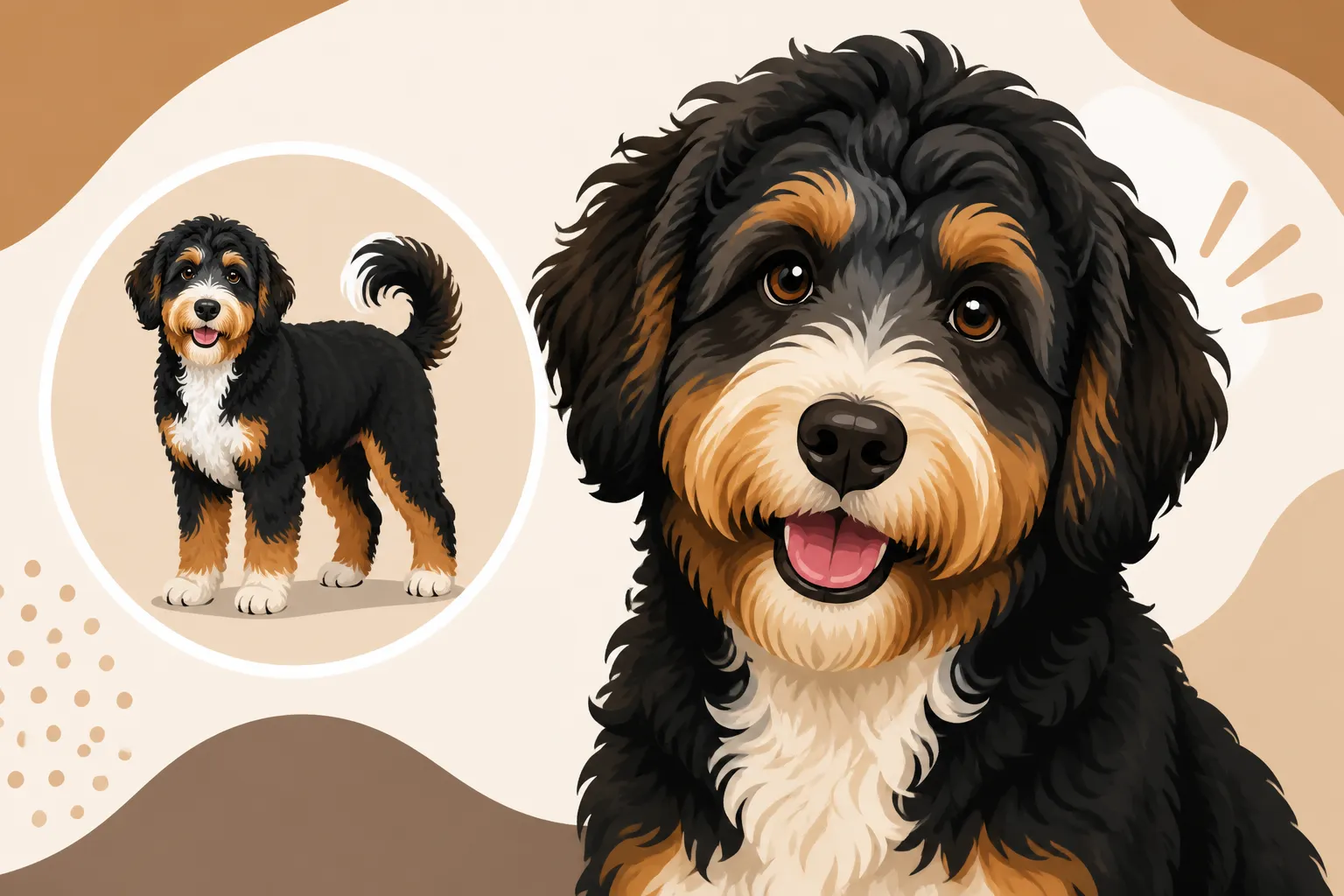
What a Sable Bernedoodle Looks Like
Navigating the wonderful world of Bernedoodle coat colors can feel like trying to solve a puzzle, especially when you encounter terms like "sable." Many prospective owners are absolutely captivated by the unique charm of these dogs, but get a bit lost in the nuances of their diverse genetics and what that means for how their furry friend will actually look. This guide is here to shed some light on the captivating appearance of a sable Bernedoodle, helping you understand its distinct features and how its coat might evolve over time.
Deciphering the Sable Bernedoodle's Unique Appearance
When we talk about a "sable" coat in the dog world, we're referring to a very specific genetic pattern that creates a beautiful, shaded effect. It’s not just one solid color, nor is it a patchwork of distinct spots. Instead, it’s a delicate interplay of light and dark on each individual strand of hair, resulting in a truly distinctive look.
The Tell-Tale Shading of a Sable Coat
At its core, a sable coat is defined by hair shafts that are lighter at the base and have darker tips. Imagine taking a paintbrush, dipping just the very end into a darker color, and lightly brushing it over a lighter canvas – that's the kind of effect sable creates. For a Bernedoodle, this typically means a base color that can range from a pale cream or rich gold to a warm tan or even a reddish hue, with the tips of the hairs being black or dark brown. This dark tipping gives the coat a wonderfully shaded, almost smoky or dusty appearance, rather than a uniform, flat color.
The intensity of this shading can vary dramatically. Some sable Bernedoodles might have a very subtle, almost ethereal shading, where the darker tips are barely noticeable unless you look closely or the light catches them just right. Others can have very dramatic, distinct black tips that give their coat a much richer, almost grizzled look, especially on their back, ears, and tail. This variance is one of the many reasons why sable Bernedoodles are so endlessly fascinating – no two seem to be exactly alike, each possessing their own unique pattern of light and shadow. The way the light hits their coat can completely change its perceived color, revealing hidden depths of shading.
Sable vs. Other Bernedoodle Colors: A Visual Comparison
Understanding what a sable Bernedoodle looks like is often easiest when you compare it to the other common coat patterns you might encounter. It's easy to get phantom, merle, or even a very dark traditional tri-color confused with sable, especially in puppies. However, each has its own distinct characteristics that set it apart.
A solid Bernedoodle, as the name suggests, is one uniform color all over, like a pure black or a deep chocolate. There's no shading, no lighter base with darker tips; every hair strives to be the same shade. Then there's the phantom pattern, which is incredibly striking. A phantom Bernedoodle has a primary darker body color, often black or brown, with very distinct, solid patches of a lighter color (like tan or apricot) on specific areas: above the eyes (like eyebrows), on the sides of the muzzle, across the chest, on the lower legs, and under the tail. The key here is solid patches, with clear, crisp lines between the colors, unlike the blended, shaded look of a sable. You can learn more about this distinct pattern by reading What a Phantom Bernedoodle Looks Like.
Merle is another complex and visually stunning pattern, but again, very different from sable. Merle Bernedoodles have irregular patches of diluted color, often described as mottled or marbled, on a base coat. For example, a blue merle might have patches of diluted black (grey) on a black or brown base. These patches are distinct and often have torn or jagged edges, which is a far cry from the hair-by-hair shading of a sable. A tri-color Bernedoodle, often considered the classic Bernedoodle look, combines a black or brown base with white markings (on the face, chest, paws) and distinct tan points (like those of a phantom, but typically richer and more uniform tan). While the tan points add another color, they are solid patches, not the tipped, shaded appearance of sable. The difference truly comes down to how the colors are distributed on each individual hair and across the body.
Here's a quick comparison to help visualize the differences:
| Coat Pattern | Description | Key Difference from Sable |
|---|---|---|
| Sable | Lighter base color with dark tips (often black or brown) on individual hairs, creating a soft, blended, shaded appearance across the body. | Characterized by the tipping on individual hairs, leading to a gradient or shaded effect, rather than distinct, solid blocks or patches of color. |
| Phantom | A primary solid body color (e.g., black) with distinct, solid lighter markings (e.g., tan, apricot) on specific "points": eyebrows, muzzle, chest, legs, and under the tail. | Has clearly defined, solid blocks of color for its markings, with sharp transitions between colors, not a shaded blending. |
| Tri-color | A base color (typically black or chocolate) with white markings (chest, blaze, paws) AND distinct, solid tan points in the phantom pattern areas. | Combines solid white and solid tan markings, with the tan points being uniform and not shaded or tipped like sable. |
| Merle | Irregular patches of diluted color (e.g., grey/blue or liver/red) on a solid or parti-colored base. Often creates a marbled or mottled effect. | Features patches of diluted color with often uneven or torn edges, which is a structural difference from the hair-by-hair shading of sable. |
| Solid | A uniform, single color across the entire coat, with no markings, tipping, or patches of any other color. | Lacks any color variation, tipping, or markings. The coat is consistently one shade from root to tip across all hairs. |
The Evolution of a Sable Bernedoodle's Coat
One of the most exciting, and sometimes perplexing, aspects of owning a Bernedoodle, particularly a sable one, is witnessing the transformation of their coat from puppyhood into adulthood. What you see in that adorable eight-week-old fluff ball might not be exactly what you have lounging on your couch a year or two later.
Puppy Sable to Adult Sable: The Fading Effect
It's incredibly common, almost expected, for a sable Bernedoodle puppy's coat to "fade" or "clear" as they mature. This isn't a flaw; it's just how the genetics work! A sable puppy often starts with very dark, prominent tipping that gives them a rich, almost smoky appearance. Their little faces might seem quite dark, and their backs incredibly shaded. However, as they shed their soft, dense puppy fluff and their coarser, more substantial adult coat grows in, that intense dark tipping often diminishes.
What you're left with is usually a stunning adult coat that might be significantly lighter than their puppy self. The deep black tips might soften to a charcoal, or even a faded brown. The lighter base color, whether it was cream or tan, will typically become more dominant, with the dark tipping becoming more subtle, sometimes concentrated only on the ears, tail, or down the spine. It's a bit like a beautiful piece of art that slowly reveals different textures and nuances over time. You might still have those dark guard hairs, but the overall effect is softer and more blended. This change can be quite dramatic, leading many new owners to wonder if their puppy's color is changing drastically. Rest assured, this clearing is a normal and beautiful part of the sable journey. You can read more about these changes in Whether a Bernedoodle's Color Changes After the Puppy Coat.
Factors Influencing Sable Appearance: Genetics and Grooming
The specific look of a sable Bernedoodle is a fascinating tapestry woven by a number of genetic factors. The sable pattern itself comes from a specific allele on the agouti gene series, which controls the distribution of black and red pigments along the hair shaft. But it's not just that one gene at play! Other modifying genes, like those on the K-locus (which determines if sable is expressed or masked by solid black) and various dilution genes, can all influence the final intensity and hue of the sable pattern. This is why you can see such a wide spectrum, from a very light cream sable with just a hint of dark tipping to a very rich, almost red sable with heavy black overlays.
Beyond genetics, how you maintain your Bernedoodle's coat can also affect its perceived appearance. The length you keep their coat clipped, for instance, can significantly alter how the sable pattern presents. A longer coat will show the full length of the hairs, allowing the lighter bases and darker tips to blend more softly, creating a rich, flowing shaded look. However, if you opt for a much shorter clip, you might trim away much of the dark tipping, making the coat appear much lighter and less distinctly sable. Regular grooming, including brushing and bathing with quality products (you can find a fantastic array of shampoos and conditioners on Chewy), helps maintain coat health, which in turn allows the natural beauty of the sable pattern to shine through.
Common Markings and Variations on a Sable Bernedoodle
While the sable pattern itself is a specific way the color is distributed on the hair shaft, it doesn't exist in a vacuum. Bernedoodles are known for their incredible variety, and sable can combine with other genetic factors to create even more complex and stunning appearances.
White and Tan Points on a Sable Base
It might sound contradictory, but a sable Bernedoodle can absolutely have white markings or even what are traditionally considered "tan points." When a sable dog also carries the gene for white markings, you'll see those familiar patches of white on the chest, paws, and often a blaze on the face. These white areas will be stark against the shaded sable, creating a truly unique contrast. Imagine a beautifully shaded dog with bright white "socks" and a snowy chest; it's quite eye-catching!
Even more complex is the "sable phantom" or "sable tri" Bernedoodle. In this case, the dog has the genetic markers for phantom points, but instead of those points being a solid tan or apricot, they are expressed as a sable version of those points. So, instead of solid tan eyebrows, the eyebrows would be shaded sable, as would the patches on the muzzle, chest, and legs. This creates an even more intricate pattern, where the shading of the sable interacts with the placement of the phantom markings. It adds another layer of depth and visual interest to an already unique coat.
Texture and Shedding in a Sable Coat
It's crucial to remember that coat color and pattern are genetically distinct from coat texture and shedding properties. A sable Bernedoodle can have any of the typical Bernedoodle coat types: wavy, curly, or even a straighter coat. The "wavy fleece" coat is perhaps the most common and often desired, as it has that characteristic shaggy, soft look with minimal shedding. You can learn more about this by exploring The Wavy Coat Most Bernedoodles Carry.
Regardless of whether your Bernedoodle is sable, phantom, or solid, its shedding level will primarily be determined by the Poodle genes it inherited. The goal of many Bernedoodle breeders is to reduce the shedding common to the Bernese Mountain Dog side, but it's not a guarantee. Some sable Bernedoodles might shed very little, while others, particularly those with straighter, more Bernese-like coats, could shed more. The presence of the sable pattern itself doesn't make a dog more or less prone to shedding. If you're particularly concerned about shedding, you might want to ask a breeder about coat tests, though even these aren't always 100% predictive of future shedding levels. Generally, if they have inherited more of the Poodle's coat traits, a sable Bernedoodle will likely be low-shedding, but they will still require significant grooming to prevent matting. For true non-shedding, you might want to look into Whether Any Bernedoodle Is Truly Non Shedding.
Living with a Sable Bernedoodle: What to Expect
Bringing a Bernedoodle into your life, regardless of their captivating coat color, is an adventure filled with joy, laughter, and a fair bit of commitment. A sable Bernedoodle is, first and foremost, a Bernedoodle, with all the wonderful traits and needs that come with this hybrid breed.
Grooming Needs for a Sable Bernedoodle
The stunning sable coat, like all Bernedoodle coats, demands regular attention to keep it healthy and beautiful. Those beautiful waves and curls, especially with the intricate shading of sable, can become a matted mess if neglected. You absolutely need to commit to a consistent grooming schedule, which typically involves brushing several times a week, if not daily, especially during coat changes or if your dog has a particularly dense or curly coat. This isn't just about aesthetics; matting can be painful for your dog, leading to skin issues and discomfort. For instance, the sheer Volume of Coat a Bernedoodle Owner Brushes Weekly can be surprising for new owners!
Professional grooming every 6-8 weeks is usually a necessity. A good groomer will be able to manage their coat length, trim around sensitive areas, and ensure they stay mat-free. When discussing clips with your groomer, you can talk about styles that might enhance or soften the look of your sable's shading. For home grooming, investing in quality tools is paramount. A sturdy slicker brush, a metal comb, and a good detangling spray are essential. You can find all these and more high-quality grooming essentials on Chewy, making it easy to keep your sable Bernedoodle looking their best.
Temperament and Health: Is Sable Different?
Let's be absolutely clear: a sable coat has absolutely no bearing on your Bernedoodle's temperament or health. The color and pattern genes are entirely separate from the genes that influence personality, intelligence, or predisposition to certain health conditions. Your sable Bernedoodle will exhibit the same wonderful blend of traits that all Bernedoodles are known for: the goofy charm of the Bernese combined with the intelligence and quick learning ability of the Poodle. They are generally loyal, affectionate, and enjoy being a central part of the family, though individual personalities can certainly vary. Some might be more reserved, others total clowns. To understand the spectrum of their personalities, you might be interested in Whether a Bernedoodle Is Goofy or Serious.
When it comes to health, sable Bernedoodles face the same potential genetic predispositions as any other Bernedoodle. This means breeders should be diligently screening for conditions common to both Bernese Mountain Dogs and Poodles, such as hip and elbow dysplasia, certain eye conditions, and genetic markers for things like Von Willebrand's Disease or Degenerative Myelopathy. The color of their coat offers no protective or detrimental qualities in this regard. Always choose a breeder who performs all recommended health clearances for both parent breeds. You should always ask about The Five Clearances a Bernedoodle Breeder Should Have before committing to a puppy. Ensuring your Bernedoodle, regardless of color, receives a high-quality diet (which you can also explore on Chewy) and regular veterinary care is key to a long, happy, and healthy life.
Sable Bernedoodles are truly a sight to behold, with their unique shaded coats offering a departure from the more common solid or tri-color patterns. While their appearance may change as they grow, their charming personality and loving nature remain constant. Understanding the nuances of their coat, from its genetic origins to its grooming needs, will help you appreciate the special beauty of these wonderful dogs even more.
Disclaimer
This article is for general informational purposes only and does not constitute professional advice. Laws, prices and regulations vary by location and change over time. Consult a qualified professional for guidance on your specific situation.