Torn Cruciates in a Heavy Bernedoodle
There’s nothing quite as heartbreaking as seeing your usually robust and energetic Bernedoodle suddenly favoring a leg, or worse, struggling to put any weight on it at all. When you have a big, strong dog, any lameness is alarming, and it can leave you feeling completely helpless, wondering what happened and what comes next. One of the most common and significant orthopedic injuries we see in larger breeds, including our beloved Bernedoodles, is a torn cranial cruciate ligament (CCL), often referred to by humans as an ACL tear. This guide is here to walk you through understanding this challenging injury, from recognizing the signs to navigating treatment and recovery, so you can feel more prepared to help your furry friend.
Understanding Torn Cruciates in Bernedoodles
When your big, goofy Bernedoodle bounds around the yard, jumps off the couch, or takes a sudden turn during a game of fetch, there’s a complex system of bones, muscles, and ligaments working together to keep them stable. The knee joint, in particular, is a marvel of engineering, but it’s also one of the most vulnerable.
What is the Cranial Cruciate Ligament CCL?
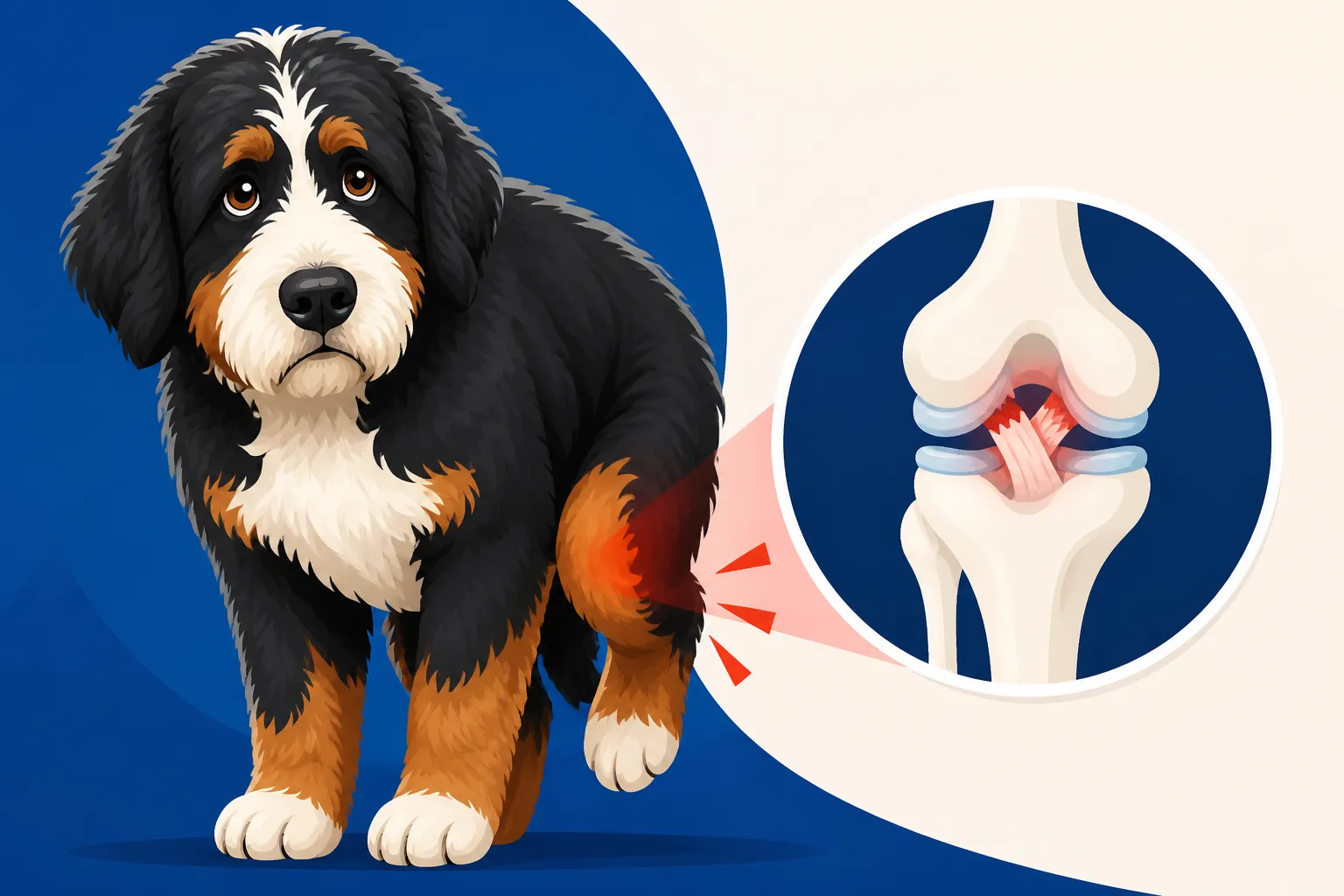
Let's break down what we mean by a "torn cruciate." In dogs, the ligament that’s most often injured in the knee is called the cranial cruciate ligament (CCL). Think of it like a strong, rope-like structure inside your Bernedoodle’s knee, connecting the thigh bone (femur) to the shin bone (tibia). Its main job is to prevent the tibia from sliding forward relative to the femur and to limit internal rotation of the joint. It’s absolutely critical for stabilizing the knee.
When this ligament is torn, it can be either a partial tear, where some fibers are still intact, or a complete rupture, where the ligament is fully severed. Regardless of the severity, a tear instantly destabilizes the knee. Imagine trying to walk with a wobbly knee — it’s painful, precarious, and something you wouldn’t want your big Bernedoodle to experience for long. The instability causes pain, inflammation, and can quickly lead to secondary issues like arthritis if not addressed.
Why Bernedoodles Are Prone to CCL Tears
It feels unfair, doesn't it? Our Bernedoodles, with their wonderful temperaments and zest for life, seem to face a higher risk for certain health challenges. Unfortunately, torn cruciates are one of those issues that larger, active breeds often contend with, and Bernedoodles inherit predispositions from both their parent breeds.
The Bernese Mountain Dog side brings a propensity for orthopedic issues, including joint problems. While Poodles are generally robust, the sheer size and active nature of a standard Bernedoodle, which can easily reach 70 to 90 pounds, puts significant stress on their joints. Consider the mechanics: a large dog moving at speed, making quick stops, or twisting can exert immense force on those knee ligaments. Over time, or with a single misstep, that force can overwhelm the CCL.
It's not always a dramatic, acute injury, either. Often, the ligament undergoes a slow, degenerative process, weakening over months or even years before a seemingly minor activity causes the final tear. This degeneration can be influenced by genetics, chronic inflammation, obesity, and even the dog's conformation (how their bones and joints are structured). We often see that if one CCL tears, there's a significant chance the other will follow suit within a year or two, highlighting the systemic nature of the problem rather than just a freak accident. Keeping your Bernedoodle at a healthy weight is paramount in reducing this strain, as even an extra five to ten pounds can make a huge difference to their joint health. For more on joint development, consider reading about The Five Minute Rule on a Bernedoodle Puppy's Walks.
Recognizing the Signs of a Torn CCL
Spotting a torn cruciate can be tricky because the symptoms can vary, especially with partial versus complete tears. You know your Bernedoodle best, so pay close attention to any changes in their gait or behavior.
Sudden Onset vs. Gradual Degeneration
A torn CCL can manifest in a couple of ways, making it sometimes difficult for owners to pinpoint the exact moment of injury.
Sudden Onset: This is often what people picture – your Bernedoodle is running full tilt, takes a bad step, lets out a yelp, and suddenly can't put weight on the leg. You might see them holding the leg up, reluctant to touch it to the ground, or walking with a severe limp. This acute injury usually means a complete rupture of the ligament. The initial pain is intense, and the instability is immediate and obvious. You'll likely see swelling around the knee and your dog will be visibly uncomfortable.
Gradual Degeneration: More commonly, especially in large breeds like Bernedoodles, the CCL weakens over time. It's like a frayed rope slowly unraveling. In these cases, the symptoms might be intermittent or progress slowly. You might notice a subtle lameness after exercise that improves with rest, or perhaps your Bernedoodle seems stiff after getting up from a nap. They might shift weight more to one side, or struggle a bit more going up or down stairs. This can be particularly frustrating because it's hard to tell if it's just "getting old" or something more serious. A seemingly minor misstep can then be the final straw, turning a partial tear into a complete one, making the lameness much more pronounced. This slow deterioration can also contribute to Arthritis in a Bernedoodle at Eight.
Common Symptoms and What to Look For
Here’s a more detailed list of what you might observe if your Bernedoodle has a torn CCL:
- Limping/Lameness: This is the most obvious sign. Your dog might be reluctant to put weight on the affected leg, or they might take very short, guarded steps. In severe cases, they might carry the leg entirely.
- "Toe-Touching" or "Non-Weight Bearing": Instead of a full weight-bearing step, your Bernedoodle might just touch their toes to the ground for balance, or avoid putting any weight on the leg at all.
- Bunny Hopping: When running or trying to accelerate, your Bernedoodle might use both hind legs simultaneously, lifting them off the ground together, rather than using them independently. This is a common strategy to avoid putting stress on one painful knee.
- Difficulty Rising or Lying Down: Getting up from a lying position or settling down can become a slow, painful process. They might groan or hesitate.
- Reluctance to Jump or Play: Activities they once loved, like jumping into the car, onto the couch, or playing fetch, become difficult or avoided entirely.
- Swelling Around the Knee: You might feel a subtle swelling or thickening around the knee joint. This is due to inflammation and fluid buildup.
- Muscle Atrophy: If the injury has been present for a while, you might notice that the thigh muscles on the affected leg are smaller and less developed compared to the healthy leg, as the dog has been favoring it.
- Stiffness After Rest: This is particularly noticeable after a nap or in the morning. Your Bernedoodle might walk gingerly for a few minutes before loosening up.
It's important to remember that these symptoms can also be indicative of other orthopedic issues, such as Loose Hips in a Growing Standard Bernedoodle or even some forms of cancer. This is why a prompt veterinary visit is absolutely essential for an accurate diagnosis.
Diagnosing a CCL Tear in a Large Breed
When you bring your limping Bernedoodle to the vet, they’ll go through a systematic process to figure out what’s going on. Diagnosing a CCL tear, especially in a large, sometimes stoic Bernedoodle, requires a skilled hand and sometimes advanced imaging.
The Vet Examination and Physical Palpation
Your veterinarian will start with a thorough physical examination. They’ll watch your Bernedoodle walk, noting any lameness, how they bear weight, and their overall posture. Then comes the hands-on part, which is crucial for diagnosing a CCL tear.
The vet will carefully palpate (feel) your dog's knee joint, checking for swelling, pain, and any abnormal movement. The two classic tests for a torn CCL are:
- Cranial Drawer Sign: This test involves the veterinarian stabilizing the femur with one hand and attempting to slide the tibia forward with the other. If the CCL is torn, the tibia will slide forward like a drawer opening, which is an abnormal movement. This test is usually quite definitive for a complete tear. However, in some large, heavily muscled, or tense Bernedoodles, it can be difficult to illicit, sometimes requiring sedation.
- Tibial Thrust Test: For this test, the vet will flex the ankle joint and apply pressure to the bottom of the foot, which causes the tibia to "thrust" forward if the CCL is compromised. This test can sometimes be easier to perform on an awake dog than the cranial drawer test.
Both these tests are designed to assess the stability of the knee. Your vet might also compare the affected knee to the healthy one to gauge differences in muscle tone, range of motion, and any joint thickening.
Imaging Techniques: X-rays and Beyond
While the physical exam is often highly suggestive, X-rays are typically the next step. It's a common misconception that X-rays directly show the ligament, but ligaments are soft tissues and don't show up on standard radiographs. So, why do we take them?
- Ruling Out Other Issues: X-rays are invaluable for ruling out other potential causes of lameness, such as fractures, bone tumors (Whether a Bernedoodle Gets Osteosarcoma), or severe hip dysplasia.
- Assessing Secondary Changes: Even if the ligament isn't visible, X-rays can show secondary signs of a CCL tear, such as fluid buildup in the joint, displacement of the tibia relative to the femur, and, most importantly, early signs of degenerative joint disease (arthritis). Arthritis is a common consequence of long-term instability in the knee.
- Surgical Planning: If surgery is deemed necessary, X-rays are critical for precise measurements needed to plan procedures like TPLO (Tibial Plateau Leveling Osteotomy) or TTA (Tibial Tuberosity Advancement).
In some challenging cases, especially if a partial tear is suspected or if the physical exam is inconclusive, your vet might recommend further imaging. This could include a sedated exam to get a better cranial drawer sign, or a referral for advanced diagnostics like MRI (Magnetic Resonance Imaging) or arthroscopy (a minimally invasive surgical procedure where a tiny camera is inserted into the joint). These advanced techniques allow for direct visualization of the ligament and other soft tissues within the knee.
Treatment Options for a Heavy Bernedoodle
Once a CCL tear is diagnosed, the big question becomes: what’s the best way to fix it? For a heavy Bernedoodle, the decision usually leans heavily towards surgical intervention, but it’s still good to understand all the options.
Conservative Management: When It's an Option (and When It's Not)
Conservative management, which involves rest, medication, and physical therapy without surgery, can be a tempting thought, especially given the cost and recovery time associated with surgery. However, for large and heavy breeds like Bernedoodles, it's rarely a successful long-term solution for a complete CCL tear.
- What it involves: Conservative treatment typically includes strict crate rest or leash restriction for several weeks, often combined with non-steroidal anti-inflammatory drugs (NSAIDs) to manage pain and inflammation. Joint supplements like glucosamine and chondroitin may also be recommended to support cartilage health. Weight management is crucial, as any excess weight puts more stress on the compromised joint. Low-impact physical therapy exercises might be introduced later to help maintain muscle mass and range of motion.
- Why it's limited for large dogs: While some very small, inactive dogs or those with minor partial tears might see some improvement with conservative management, a Bernedoodle's size and weight make it incredibly difficult for the knee to stabilize on its own. The persistent instability causes ongoing pain, progressive arthritis, and significantly increases the risk of meniscal tears (damage to the cartilage pads in the knee), which are incredibly painful. Ultimately, most large dogs treated conservatively will continue to be lame and eventually require surgery anyway, often with more advanced arthritis than if surgery had been performed earlier.
Surgical Interventions: The Gold Standard
For a heavy Bernedoodle with a CCL tear, surgery is almost always recommended as the best course of action. The goal of surgery isn't to repair the torn ligament itself (which doesn't heal well), but rather to stabilize the knee joint mechanically, allowing your dog to walk without pain and minimizing the progression of arthritis.
There are several surgical techniques, but for large breeds, the most effective and commonly recommended procedures are osteotomies, which involve cutting and repositioning bone.
- Tibial Plateau Leveling Osteotomy (TPLO): This is one of the most popular and successful procedures for large dogs. The surgeon cuts the top part of the tibia (the tibial plateau) and rotates it to change the angle of the joint. This eliminates the "tibial thrust" – the force that causes the tibia to slide forward – making the joint stable without needing the CCL. It's a biomechanical solution that neutralizes the forces that caused the tear in the first place. TPLO has a high success rate, often allowing dogs to return to full activity.
- Tibial Tuberosity Advancement (TTA): Similar to TPLO, TTA also modifies the biomechanics of the knee. The front part of the tibia (tibial tuberosity) is cut and advanced forward, changing the angle of the quadriceps muscle pull. This effectively prevents the tibia from thrusting forward. TTA can be a good option for some dogs, but individual cases are best evaluated by a specialist.
- Lateral Fabellar Suture (Extracapsular Repair): This technique involves placing a strong suture material outside the joint to mimic the function of the torn CCL. While less invasive and less costly, it creates temporary stability and is generally less effective for very large or active dogs. The suture can stretch or break, and it doesn't address the underlying biomechanical forces that led to the tear. It might be considered for smaller, less active dogs, but for a Bernedoodle weighing 70-90 pounds, TPLO or TTA are typically preferred for superior long-term outcomes.
Choosing the right surgery will depend on several factors, including your Bernedoodle's size, age, activity level, the extent of the injury, and the surgeon's expertise. A board-certified veterinary surgeon will discuss these options with you in detail.
Here's a quick comparison of the primary surgical options for Bernedoodles:
| Surgical Option | Primary Mechanism | Ideal for | Pros | Cons |
|---|---|---|---|---|
| Tibial Plateau Leveling Osteotomy (TPLO) | Changes the angle of the tibial plateau to neutralize tibial thrust. | Most large, active dogs; considered gold standard for many Bernedoodles. | Highly stable, excellent long-term function, faster return to full activity compared to extracapsular. | More invasive, higher cost, requires specialized equipment and training, potential for complications like infection. |
| Tibial Tuberosity Advancement (TTA) | Advances the tibial tuberosity to alter quadriceps pull and prevent tibial thrust. | Often a good alternative to TPLO for appropriate knee anatomy. | Good stability, similar success rates to TPLO, slightly less invasive for some cases. | Similar invasiveness, cost, and complication risks to TPLO. |
| Lateral Fabellar Suture (Extracapsular) | Places artificial suture outside the joint to mimic CCL function. | Smaller, less active dogs; sometimes used if osteotomy isn't feasible. | Less invasive, lower cost. | Less stable for large/active dogs, higher risk of re-injury or stretching, slower recovery of full function. |
Recovery and Rehabilitation After Surgery
The surgery is a big step, but the journey to full recovery is a marathon, not a sprint. The success of any CCL surgery hinges significantly on diligent post-operative care and rehabilitation. For a heavy Bernedoodle, this means patience, commitment, and a structured plan.
The Immediate Post-Operative Period
Right after surgery, your Bernedoodle will be coming home with specific instructions for their care, and it’s critical to follow them precisely. This period is all about managing pain and preventing complications.
- Pain Management: Your vet will prescribe pain medications, which might include NSAIDs, opioids, and other adjunct medications. Administering these on schedule is crucial to keep your Bernedoodle comfortable and allow them to start using the leg gently.
- Wound Care: You’ll need to monitor the incision site daily for any signs of redness, swelling, discharge, or opening. Keep it clean and dry. Most dogs will have sutures or staples that need to be removed in 10-14 days. An E-collar (the "cone of shame") will be your Bernedoodle's constant companion to prevent them from licking or chewing the incision. Trust me, it’s worth the temporary annoyance to prevent a serious infection.
- Restricted Activity: This is perhaps the most challenging part for an active Bernedoodle. For the first 6-8 weeks, strict rest is non-negotiable. This means crate rest or a small, confined space, and only short, leashed walks for potty breaks. No running, jumping, playing, or stairs. This controlled environment allows the bone to heal (in the case of TPLO/TTA) and prevents stress on the healing joint. It can feel like forever, but patience here prevents setbacks that could prolong recovery or even necessitate another surgery. This stage is vital for a smooth transition back to mobility, and helps prevent further joint deterioration, similar to how early care is critical for preventing Elbow Dysplasia in a Growing Bernedoodle.
Long-Term Rehabilitation and Physical Therapy
Once the initial healing phase is complete, typically around 6-8 weeks post-op, the focus shifts to regaining strength, flexibility, and full function. This is where physical therapy (often called "physiotherapy" or "rehab") truly shines.
- Importance of Physical Therapy: While your Bernedoodle might look and feel better, the muscles around the knee will have atrophied from disuse, and the joint might be stiff. Physical therapy, ideally guided by a certified canine rehabilitation therapist, is essential for a complete recovery. It prevents muscle loss, improves range of motion, builds strength, and retrains proprioception (the body's awareness of its position in space).
- Common Rehab Modalities:
- Controlled Exercise: Gradual increases in leash walks, starting slow and building duration and intensity.
- Therapeutic Exercises: Specific exercises like passive range of motion, weight-shifting exercises, balance board work, and sit-to-stands.
- Hydrotherapy: Underwater treadmill or swimming can be incredibly beneficial. The buoyancy of the water reduces weight-bearing stress on the joint, allowing for early, low-impact muscle strengthening. Many Bernedoodles love to swim, making this a great option.
- Massage and Manual Therapy: To reduce muscle tension and improve circulation.
- Laser Therapy or Acupuncture: Can help with pain management and accelerating healing.
Rehabilitation can take anywhere from 3 to 6 months, sometimes longer, depending on your Bernedoodle and the specific procedure. Consistency is key, and working closely with your vet and rehabilitation therapist will ensure the best possible outcome.
Preventing Future Tears
The hard truth about CCL tears is that if one knee goes, there’s a significant chance the other one will follow. Studies show that up to 50% of dogs who tear one CCL will tear the other within 1-2 years. While you can't eliminate the risk entirely, there are important steps you can take to minimize it.
- Maintain a Healthy Weight: This cannot be stressed enough. Excess weight puts incredible strain on all joints, including the knees. Work with your vet to establish an ideal weight for your Bernedoodle and stick to a diet and exercise plan to maintain it. This proactive measure can help keep your Bernedoodle sound for longer, as discussed in Whether an Overweight Bernedoodle Loses Years.
- Controlled Exercise: While Bernedoodles are active and need regular exercise, avoid high-impact, sudden, twisting movements, especially during their recovery phase and if they have a history of joint issues. Consistent, moderate exercise like brisk walks and swimming is better than sporadic, intense bursts of activity.
- Joint Supplements: Glucosamine, chondroitin, MSM, and Omega-3 fatty acids can support joint health. While not a cure or preventative for acute tears, they can help maintain cartilage health and reduce inflammation, which might delay degenerative changes. For more information, see Whether Joint Supplements Help a Bernedoodle.
- Strengthening Core Muscles: A strong core and good hind end musculature help stabilize the entire body, including the knee joints. Targeted exercises as part of a rehab program can help build and maintain this strength.
- Regular Vet Check-ups: Regular veterinary visits allow your vet to monitor your Bernedoodle's gait, joint health, and overall condition. Early detection of any subtle lameness or instability can lead to earlier intervention.
Living with a Bernedoodle Post-CCL Injury
Even after a successful surgery and rehabilitation, life with a Bernedoodle who has recovered from a torn cruciate ligament might require some ongoing considerations and adjustments to ensure their long-term comfort and mobility.
Adjustments for a Large, Active Dog
Bringing a large, recovering Bernedoodle home means thinking about your environment and daily routines.
- Home Environment: Consider using ramps for getting in and out of cars or onto furniture (if you allow it). Non-slip rugs on slick floors can prevent slips and falls, which could re-injure the knee or strain the other one. A supportive orthopedic bed is a must, especially for a heavy dog, to alleviate pressure on joints and provide comfort.
- Exercise Modifications: While your Bernedoodle may eventually return to most activities, it’s wise to be mindful of high-impact sports or excessive twisting motions that could put undue stress on their knees. Opt for activities like hiking on soft trails, swimming, or long, brisk walks. Always warm up your Bernedoodle with a gentle walk before more vigorous activity and cool them down afterward. Listen to your dog; if they seem stiff or sore, scale back.
- Continued Joint Support: Many owners choose to keep their Bernedoodle on joint supplements indefinitely. Regular physical therapy exercises, even simple ones at home, can help maintain strength and flexibility. Weight management remains critical throughout your Bernedoodle’s life.
Remember, the goal is not to restrict their life entirely, but to provide an environment and lifestyle that supports their joint health, ensuring they can continue to enjoy a good quality of life. For older Bernedoodles, special considerations might be needed, as discussed in Supporting an Old Bernedoodle That Cannot Rise.
Financial Considerations and Insurance
Let's be real, a major surgery like a TPLO or TTA for a heavy Bernedoodle is a significant financial commitment. The cost can vary widely depending on your geographic location, the veterinary surgeon's fees, the complexity of the case, and the extent of post-operative care and rehabilitation required.
- Cost Breakdown: You're not just paying for the surgery itself. The bill typically includes pre-surgical blood work, X-rays, anesthesia, the surgical procedure, hospitalization, post-operative medications, and follow-up appointments. Rehabilitation, if you opt for professional sessions, is an additional but crucial investment. A single TPLO surgery can easily range from $3,000 to $6,000 or even more. Given that the other knee often tears, you could potentially face these costs twice.
- Pet Insurance: This is where pet insurance can be an absolute lifesaver. Many owners realize too late the value of a good policy. Companies like Healthy Paws offer comprehensive coverage that can help significantly offset the costs of accidents and illnesses, including major orthopedic surgeries like CCL repair. If you have pet insurance, be sure to understand your policy's deductible, reimbursement percentage, and any waiting periods for orthopedic conditions. Enrolling your Bernedoodle in pet insurance when they are young and healthy is ideal, as pre-existing conditions are typically not covered.
- Budgeting for the Unexpected: Even with insurance, you'll still have out-of-pocket expenses. It's always a good idea to have an emergency fund for your Bernedoodle's health needs. Planning for the possibility of a second CCL tear can help alleviate some of the stress if it does occur. Major veterinary bills are a reality for many owners, as seen in topics like What Cancer Treatment Costs a Bernedoodle Owner.
While the financial aspect is daunting, the relief of seeing your Bernedoodle regain their mobility and joy in life makes the investment worthwhile for many families.
Disclaimer
This article is intended for informational purposes only and does not constitute veterinary medical advice. Always consult with a qualified veterinarian for any health concerns or before making any decisions about your Bernedoodle's medical care.