The Eye Conditions a Bernedoodle Is Tested For
It's incredibly worrying when you notice something off with your beloved Bernedoodle's eyes. These gentle giants, with their expressive gazes, can suffer from a range of eye conditions, some inherited and some acquired, that can impact their vision and quality of life. Navigating the world of canine ophthalmology, understanding the risks, and knowing what tests are available can feel overwhelming, but this guide is here to break it all down for you, helping you protect your furry family member's precious sight.
Understanding Bernedoodle Eye Health Challenges
Bringing a Bernedoodle into your life means embracing a dog that carries the genetic legacy of two distinct breeds: the Bernese Mountain Dog and the Poodle. While this crossbreed often boasts hybrid vigor, it's not a magical shield against all health concerns. When it comes to eye health, your Bernedoodle can inherit predispositions from either side of their family tree, making it crucial to be informed and proactive. It's a bit like having a complex genetic puzzle, where both pieces contribute to the overall picture of their potential eye issues.
The Genetic Blend of Poodle and Bernese Eyes
Both the Poodle and the Bernese Mountain Dog have their own set of inherited eye conditions that can, unfortunately, be passed down to their Bernedoodle offspring. From the Poodle side, we often see concerns like Progressive Retinal Atrophy (PRA) and certain types of cataracts. Poodles are known for their intelligence and vitality, but selective breeding in some lines has also, inadvertently, propagated these genetic vulnerabilities.
On the Bernese Mountain Dog side, conditions such as entropion (inward-rolling eyelids) and ectropion (outward-rolling eyelids) can be more prevalent. While these issues might seem more structural, they can lead to significant irritation, pain, and even secondary infections if left unaddressed. It's not uncommon for a Bernedoodle to inherit a mix of these predispositions, which is precisely why responsible breeding practices that include thorough health testing are so vital. Understanding this genetic tapestry is the first step in ensuring your Bernedoodle has the best possible chance at clear, healthy vision throughout their life.
Why Eye Testing is Crucial for Bernedoodle Breeders
For any conscientious Bernedoodle breeder, comprehensive eye testing isn't just a suggestion; it's an absolute necessity. Without proper screening of the parent dogs, a breeder risks unknowingly passing on debilitating eye conditions to an entire litter of puppies. Imagine the heartbreak for a family who adopts a seemingly healthy puppy, only to find out a few years later that their beloved companion is going blind due to an inherited condition that could have been screened for.
The goal of responsible breeding isn't just to produce cute puppies; it's to produce healthy, long-lived companions. This means utilizing available genetic tests and regular ophthalmic examinations by board-certified veterinary ophthalmologists. These tests provide invaluable information, allowing breeders to make informed decisions about which dogs to breed, thereby reducing the prevalence of these conditions in future generations. As an owner, when you're looking for a Bernedoodle puppy, always ask about the eye clearances of both parents. This transparency is a hallmark of a breeder who genuinely cares about the long-term health and well-being of their dogs, helping you avoid unforeseen medical costs and emotional distress down the line. It really pays to do your homework and understand The Five Clearances a Bernedoodle Breeder Should Have before committing to a puppy.
Common Inherited Eye Conditions in Bernedoodles
It can feel overwhelming to consider all the potential health issues your Bernedoodle might face, and eye conditions are no exception. But being prepared and knowledgeable is half the battle. Let's delve into some of the more common inherited eye conditions you might encounter or hear about when researching Bernedoodle health.
Progressive Retinal Atrophy PRA
Progressive Retinal Atrophy, often simply called PRA, is a group of degenerative diseases affecting the retina, the light-sensitive tissue at the back of the eye. In simple terms, the cells in the retina slowly break down over time, leading to gradual vision loss and, eventually, blindness. This condition is most often inherited from the Poodle side of the Bernedoodle family, and unfortunately, there's no cure.
The signs often start with night blindness. You might notice your Bernedoodle bumping into furniture in dim light or being hesitant to go outside after sunset. As the disease progresses, their daytime vision will also worsen. A hallmark sign that many owners observe is an increased reflectivity in their dog's eyes when light catches them, often described as a "green glow," due to the tapetum lucidum (a reflective layer behind the retina) being more exposed as the retina thins. Your vet might also notice dilated pupils as the dog tries to let more light in. Diagnosis typically involves an ophthalmic exam by a specialist, including an electroretinogram (ERG) which measures the electrical activity of the retinal cells. While there's no treatment to restore vision, managing the condition involves creating a safe and predictable environment for your dog. It's a tough diagnosis to receive, but dogs are incredibly adaptable, and many blind Bernedoodles live full, happy lives with supportive owners. Knowing Whether a Bernedoodle Inherits PRA From the Poodle can help you understand the genetic risks from the outset.
Cataracts in Bernedoodles
Cataracts are another prevalent eye condition in Bernedoodles, characterized by cloudiness in the lens of the eye. Imagine looking through a frosted window – that's essentially what your dog experiences. While cataracts can occur at any age and for various reasons (like injury or diabetes), inherited cataracts are a significant concern in Bernedoodles. These can appear as "juvenile cataracts" in young dogs or develop later in life.
The cloudy appearance can range from a small, almost imperceptible spot to a complete opacification of the lens, severely impairing vision. You might notice your dog having trouble seeing in different lighting conditions, or their eyes might look distinctly milky or bluish-white. Unlike PRA, which is purely degenerative, cataracts can often be treated. If the cataract is significant enough to impair vision and the dog is otherwise healthy, surgical removal of the cataract is often an option. This procedure, performed by a veterinary ophthalmologist, can restore vision and significantly improve a dog's quality of life. However, it's an expensive and specialized surgery, so it's wise to consider pet insurance, like plans offered by Healthy Paws, early in your Bernedoodle's life to help manage potential costs for such complex procedures. Regular veterinary check-ups, including thorough eye exams as part of The Screening a Bernedoodle Should Have Yearly, are key to early detection. Understanding Cataracts in an Older Bernedoodle is especially important as they age, as this can be a common part of the aging process, not just a genetic issue.
Entropion and Ectropion
These conditions relate to the eyelids and can cause chronic discomfort and potentially serious eye problems.
Entropion: This is where the eyelid rolls inward, causing the eyelashes and fur to rub against the cornea (the clear front surface of the eye). Think about having an eyelash constantly poking your eye – it's incredibly irritating! For a Bernedoodle, especially those with looser skin or thick coats around their eyes, entropion can lead to constant tearing, eye discharge, pain, corneal ulcers, and even scarring, which can impair vision over time. You might notice your dog squinting, holding one or both eyes partially closed, or rubbing their face frequently.
Ectropion: The opposite of entropion, ectropion occurs when the eyelid rolls outward, exposing the delicate conjunctiva (the pink tissue lining the eyelids) to the air and environmental irritants. This exposed tissue can become dry, inflamed, and prone to infections. While less painful than entropion, it can still cause chronic irritation, tearing, and discharge. Breeds with loose facial skin, which can include Bernedoodles, can be more susceptible.
Both entropion and ectropion are typically diagnosed during a routine veterinary examination. Mild cases might be managed with lubricating eye drops and keeping the area clean, but often, surgical correction is the most effective and permanent solution. This involves a relatively straightforward procedure to reshape the eyelids to their correct position, relieving discomfort and preventing further damage. It's important to address these issues promptly to prevent long-term complications. For a deeper dive into this specific issue, you can read more about Entropion in a Bernedoodle's Eyelids.
Less Common But Important Eye Issues to Watch For
While PRA and cataracts often get a lot of attention, there are other, perhaps less common, but equally serious eye conditions that Bernedoodle owners should be aware of. Catching these early can make a significant difference in treatment success and your dog's comfort.
Glaucoma in Bernedoodles
Glaucoma is a painful and sight-threatening condition caused by increased pressure within the eye. Imagine a balloon being overinflated – that's essentially what happens to the eye. This elevated intraocular pressure can rapidly damage the optic nerve, leading to irreversible blindness within hours or days if not treated immediately. It's often referred to as "the silent thief of sight" because early signs can be subtle.
There are two main types: primary glaucoma, which is inherited, and secondary glaucoma, which results from another eye condition like injury, inflammation, or advanced cataracts. In Bernedoodles, primary glaucoma can occur, often showing up in middle-aged dogs. Signs to watch for include a red eye, cloudy cornea (the clear front of the eye), a dilated pupil that doesn't react to light, squinting, increased tearing, and most importantly, pain. Your dog might be lethargic, lose appetite, or simply rub at their face. Glaucoma is a veterinary emergency. If you suspect your Bernedoodle has glaucoma, get them to an emergency vet immediately. Treatment involves medications to reduce eye pressure, and sometimes surgery is needed. Early intervention is paramount for preserving any remaining vision.
Distichiasis and Ectopic Cilia
These are conditions involving abnormal eyelashes that can cause chronic irritation and pain.
Distichiasis: This occurs when extra eyelashes grow from abnormal locations along the eyelid margin, often from the oil glands within the eyelid itself. These extra hairs can rub directly against the cornea with every blink, acting like tiny irritants. Depending on their number, thickness, and location, they can cause mild irritation or lead to corneal ulcers and scarring. You might notice your Bernedoodle tearing excessively, squinting, or showing general eye discomfort.
Ectopic Cilia: This is a more severe form of abnormal eyelash growth, where a single or multiple hairs grow through the conjunctiva (the pink tissue lining the eyelid) and rub directly onto the cornea. Because these hairs are often stiff and pointed, they can cause intense pain and lead to severe corneal ulcers very quickly.
Both conditions are typically diagnosed during a careful ophthalmic examination, often requiring magnification. Treatment usually involves permanent removal of the offending eyelashes, which can be done through cryosurgery (freezing the hair follicles) or surgical excision. This relief can be immediate and profound for your dog, preventing ongoing damage to their eyes.
Cherry Eye and Other Eyelid Gland Prolapses
"Cherry Eye" is a common term for a prolapse of the nictitating membrane gland, often called the third eyelid gland. Dogs have a third eyelid (nictitating membrane) located in the inner corner of their eye, which contains a tear-producing gland. Normally, this gland is tucked away and out of sight. When the connective tissue holding it in place weakens or tears, the gland pops out and becomes visible as a red, swollen mass, resembling a small cherry, hence the name.
While not typically painful initially, a prolapsed gland can become irritated, inflamed, and lead to dry eye if left untreated, as it's responsible for a significant portion of a dog's tear production. You'll notice a distinct red lump in the corner of your Bernedoodle's eye. While often seen in younger dogs, it can occur at any age. Treatment almost always involves surgical repositioning of the gland back into its normal pocket, rather than removal. Removing the gland can lead to chronic dry eye later in life, which requires lifelong medication. A skilled veterinary surgeon or ophthalmologist can perform this delicate procedure.
The Eye Examinations and Genetic Tests Bernedoodles Need
As a responsible Bernedoodle owner, understanding the specific tests and clearances available can empower you to ensure your dog's eye health. It’s not just about addressing problems as they arise, but actively seeking out information and preventative care.
The CAER Exam (OFA Eye Certification)
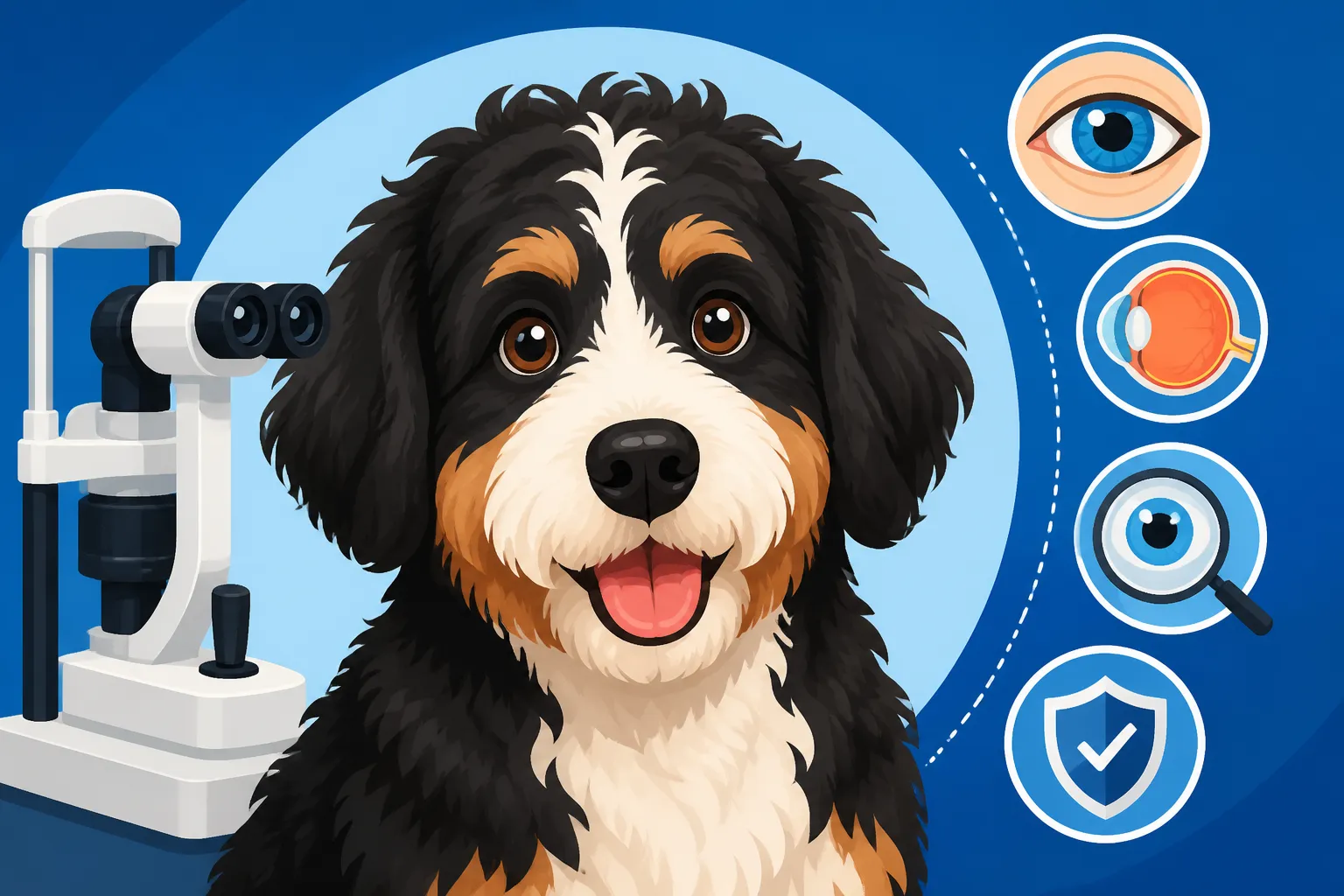
One of the most important annual screenings your Bernedoodle should undergo is the Companion Animal Eye Registry (CAER) exam, formerly known as CERF. This is an official eye certification performed by a board-certified veterinary ophthalmologist, often referred to as an ACVO diplomate. During this comprehensive examination, the specialist will thoroughly examine your dog's eyes, looking for any evidence of inherited eye diseases, such as PRA, cataracts, glaucoma, distichiasis, or retinal dysplasia, among others.
The CAER exam isn't a one-time thing, especially for breeding dogs. It should ideally be performed yearly, or at least every other year, throughout a dog's life, as some conditions develop or worsen with age. The ophthalmologist will record their findings and submit them to the Orthopedic Foundation for Animals (OFA) database. A "clear" result means no observable signs of inherited eye disease were present at the time of the exam. This certification is incredibly valuable for breeders to prove the eye health of their breeding stock and for prospective puppy buyers to verify the health claims of a breeder. Many owners continue this screening for their pets too, as it provides a baseline and can catch emerging issues early. It really underscores why Whether a Bernedoodle Needs a CAER Exam Each Year is a question worth exploring with your vet.
Genetic DNA Testing for PRA and Other Conditions
Beyond physical examinations, advancements in veterinary medicine have given us powerful tools in the form of genetic DNA tests. For Bernedoodles, these tests are particularly important because they can identify carriers or affected individuals for certain inherited eye diseases even before any physical symptoms appear. The most notable of these for Bernedoodles is the genetic test for Progressive Retinal Atrophy (PRA). Specifically, there are DNA tests for PRCD-PRA (progressive rod-cone degeneration), a common form of PRA found in Poodles.
A simple cheek swab or blood sample can be sent to a specialized lab, such as those run by Embark or Optimal Selection. The results will typically categorize your dog as "Clear" (not carrying the mutation), "Carrier" (carrying one copy of the mutation, but usually not affected themselves), or "Affected" (carrying two copies of the mutation and likely to develop the disease). For breeders, knowing the genetic status of their dogs is critical to prevent breeding two carriers together, which would produce affected puppies. For pet owners, knowing your Bernedoodle's PRA status can help you prepare for potential vision loss if they are affected, or simply offer peace of mind if they are clear. It's an investment that pays dividends in understanding your dog's long-term health prospects.
Understanding Eye Health Clearances
When you're looking for a Bernedoodle puppy, or simply reviewing your current dog's health records, understanding eye health clearances can feel like deciphering a foreign language. But it's essential. A reputable breeder will provide documentation of their breeding dogs' health testing, including eye clearances from an ACVO specialist and genetic DNA test results.
Don't just take a breeder's word for it when they say their dogs are "clear" or "health tested." Ask to see the actual certificates. These typically include the dog's registered name, breed, date of birth, and the results of the specific tests. For CAER exams, there will be an OFA number associated with the certification. For genetic tests, you'll see results from the laboratory indicating clear, carrier, or affected status. If a breeder is evasive or can't provide these documents, it should be a major red flag. This transparency is crucial because Whether an Untested Bernedoodle Litter Is Worth Buying truly depends on the risks you're willing to take, both emotionally and financially. Reputable breeders are proud to share their health clearances because it demonstrates their commitment to producing healthy, happy Bernedoodles, and it can save you significant expense in the future when considering What a Bernedoodle Costs Over Its Whole Life.
Lifelong Eye Care and What Owners Can Do
Beyond the important genetic screenings and veterinary exams, there's a lot you can do at home to support your Bernedoodle's eye health. Daily care and vigilance are key components in preventing problems and catching issues early before they become severe.
Daily Vigilance and At-Home Eye Checks
Just like you notice if your Bernedoodle isn't eating or is limping, their eyes warrant a quick check every single day. Make it part of your routine. Look at their eyes in good light. Are they clear and bright? Is there any excessive tearing, redness, or discharge? Is the surrounding fur matted or stained? The whites of their eyes (sclera) should be white, not yellow or bloodshot. Their pupils should be equal in size and react to light.
Pay attention to your Bernedoodle's behavior. Are they squinting, rubbing their eyes, or blinking excessively? Are they bumping into things they usually wouldn't? Even subtle changes can indicate a problem. If your Bernedoodle has longer facial hair, especially around the eyes, make sure it’s trimmed to prevent irritation. You can gently wipe away any normal eye boogers with a clean, damp cloth (use a different part of the cloth for each eye to prevent cross-contamination). Never use harsh chemicals or human eye drops on your dog without veterinary guidance. Early detection of issues like a foreign object, early signs of infection, or changes related to conditions like Whether Blue Eyed Bernedoodles Have Eye Problems (though blue eyes themselves aren't problematic, they can be associated with merle patterning which can have eye issues if bred improperly) can make a huge difference in treatment success and prevent more serious complications.
When to See Your Veterinarian
Knowing when to seek professional veterinary attention for your Bernedoodle's eyes is critical. Some issues, like a minor tear stain, might be managed at home, but others require immediate intervention. Here’s a general guide:
See your vet immediately if you notice:
- Sudden onset of redness, swelling, or pain (squinting, pawing at the eye).
- Thick, colored discharge (yellow, green), especially if accompanied by redness or swelling.
- A cloudy appearance in the eye, especially if it appears suddenly.
- Visible injury to the eye, such as a scratch, puncture, or foreign object.
- One pupil being larger or smaller than the other, or not reacting to light.
- Any sudden loss of vision (e.g., bumping into furniture).
Schedule a non-urgent vet visit if you notice:
- Chronic mild tearing or clear discharge.
- Minor redness that persists for more than a day or two.
- New or worsening cloudiness in the lens that is not painful.
- A persistent cherry eye (while not always an emergency, it should be addressed).
- Any lumps or bumps on the eyelid.
It’s always better to be safe than sorry when it comes to eye health. If you're ever in doubt, a quick call to your veterinarian or a visit to their office is the best course of action. This is where having pet insurance, such as policies from Healthy Paws, can be incredibly beneficial, as it can help cover the costs of unexpected veterinary visits and specialist consultations without you having to stress over every dollar.
Supporting Eye Health Through Diet and Environment
While genetics play a huge role in many eye conditions, you can still support your Bernedoodle's overall eye health through good nutrition and a safe environment. A high-quality diet, appropriate for a large breed like the Bernedoodle, provides essential vitamins and antioxidants that contribute to overall health, including ocular health. Some vets might recommend specific supplements like Omega-3 fatty acids (found in fish oil), lutein, or zeaxanthin, particularly for aging dogs or those with certain predispositions, but always consult your veterinarian before adding any supplements to your dog’s diet.
Beyond diet, ensuring a safe living environment is crucial. If your Bernedoodle is prone to running through brush or tall grass, which can cause eye injuries, consider protective eyewear if they’re engaged in activities like hunting or extensive outdoor exploration. Keep their living areas clean and free of dust and irritants that could get into their eyes. Regular grooming, especially trimming the hair around their eyes, prevents irritation and matting that can lead to infections. Lastly, remember that any systemic illness can impact eye health, so maintaining your Bernedoodle's overall well-being with regular vet check-ups and a healthy lifestyle is indirectly a powerful way to protect their vision. After all, ensuring your Bernedoodle's health, from nose to tail and including those beautiful eyes, is a lifelong commitment. Pet insurance plans, like those offered by Healthy Paws, can certainly help provide a financial safety net for comprehensive care throughout their lives.
| Eye Condition | Common Signs | Potential Impact on Vision | Treatment Options |
|---|---|---|---|
| Progressive Retinal Atrophy (PRA) | Night blindness, dilated pupils, gradual day blindness, increased eye shine. | Leads to eventual blindness. | No cure; supportive care. |
| Cataracts | Cloudiness in the lens, milky/bluish-white eye appearance. | Partial to complete vision loss. | Surgical removal for severe cases; vision can be restored. |
| Entropion | Eyelid rolls inward, squinting, excessive tearing, redness, corneal ulcers. | Pain, corneal damage, potential vision loss from scarring. | Surgical correction. |
| Ectropion | Eyelid rolls outward, exposed conjunctiva, chronic irritation, discharge. | Dry eye, inflammation, prone to infection. | Surgical correction for severe cases; lubrication for mild. |
| Glaucoma | Red eye, cloudy cornea, dilated pupil, pain, squinting, vision loss. | Rapid, irreversible blindness if untreated. | Emergency medical treatment; surgery to reduce pressure. |
| Distichiasis/Ectopic Cilia | Excessive tearing, squinting, corneal ulcers, pain. | Corneal damage, potential vision loss from scarring. | Surgical/cryosurgical removal of abnormal eyelashes. |
| Cherry Eye | Red, swollen mass in the inner corner of the eye. | Can lead to dry eye if untreated; otherwise, minimal direct impact. | Surgical repositioning of the gland. |
Disclaimer
This article is for general informational purposes only and does not constitute professional advice. Laws, prices and regulations vary by location and change over time. Consult a qualified professional for guidance on your specific situation.