Whether an F1b Bernedoodle Lives Longer Than an F1
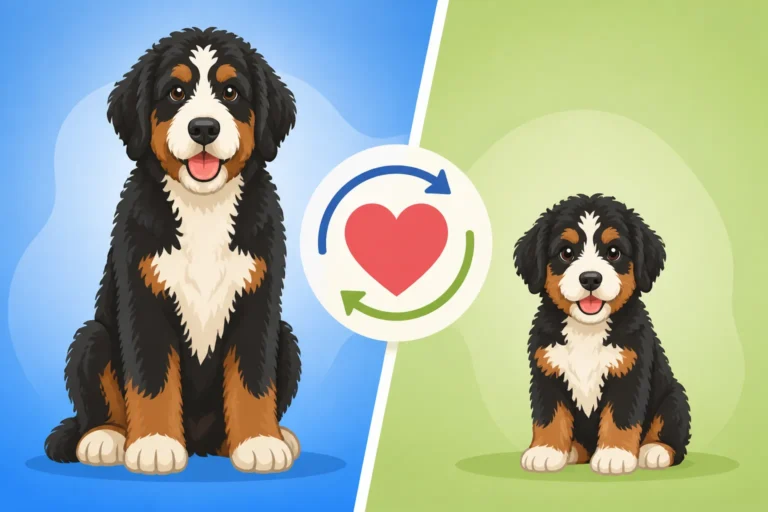
It's completely understandable to wonder if you're making the "right" choice when bringing a Bernedoodle into your life, especially when you hear so many different things about their lifespans and the subtle differences between generations. We all want our furry family members to be with us as long as humanly possible, soaking up every moment of joy they bring. The question of whether an F1b Bernedoodle truly lives longer than an F1 is a really common one, and it touches on deeply held hopes for our pets' health. Let's really dig into the genetics, the concept of hybrid vigor, and all the other factors that genuinely make a difference in how many precious years you get with your beloved Bernedoodle.
Unpacking Bernedoodle Generations: F1, F1b, and Beyond
Before we can even begin to talk about lifespan differences, it's absolutely crucial to understand what these F-numbers actually mean. When you're looking for a Bernedoodle, you're looking at a crossbreed, a delightful mix of a Bernese Mountain Dog and a Poodle. The generation designation simply tells you the specific genetic composition of your puppy. It's not just a fancy label breeders use; it tells a story about the lineage and the potential genetic traits your dog carries.
The Original Mix: What is an F1 Bernedoodle?
An F1 Bernedoodle is what we call a "first-generation" cross. This means you have one purebred Bernese Mountain Dog parent and one purebred Poodle parent. It's a 50/50 split right down the middle, genetically speaking. Think of it as the ultimate blend, where you get an equal contribution from both sides.
This generation is often celebrated for something called "hybrid vigor," which we'll dive into more deeply in a moment. With an F1, you're getting a fresh genetic mix, which can sometimes lead to a healthier dog overall simply because of the increased genetic diversity. However, because both parents contribute equally, the traits can be a bit more unpredictable. You might get a coat that's more Bernese-like, shedding more, or one that leans towards the Poodle's curl and lower-shedding qualities. The size, temperament, and even health predispositions are a true roll of the dice in terms of which parent's traits will be more dominant in any given puppy.
The Backcross: What is an F1b Bernedoodle?
Now, an F1b Bernedoodle introduces a second step in the breeding process, and this is where things get interesting for lifespan discussions. An F1b is a "backcross," meaning one parent is an F1 Bernedoodle, and the other parent is a purebred Poodle (or, less commonly, a purebred Bernese Mountain Dog, though this is rare for health and coat reasons).
The most common F1b pairing results in a dog that is approximately 75% Poodle and 25% Bernese Mountain Dog. This intentional breeding is often done for specific reasons. Primarily, breeders aim for a coat that is even more hypoallergenic and non-shedding than an F1, as the increased Poodle genetics usually bring a tighter curl. From a health perspective, this shift in percentages is what sparks the debate about lifespan. Because the Poodle typically has a longer average lifespan than the Bernese Mountain Dog, the theory is that by increasing the Poodle percentage, you might inherently shift the genetic predisposition towards greater longevity. It's a strategic move to try and mitigate some of the known health challenges and shorter lifespans associated with the Bernese side.
| Feature | F1 Bernedoodle (50% Bernese, 50% Poodle) | F1b Bernedoodle (25% Bernese, 75% Poodle) |
|---|---|---|
| Parentage | Purebred Bernese x Purebred Poodle | F1 Bernedoodle x Purebred Poodle |
| Genetic Mix | 50/50 split from each purebred parent | Approx. 25% Bernese, 75% Poodle |
| Hybrid Vigor | Often considered highest due to first-cross | Still significant, but may be slightly reduced |
| Typical Coat | Wavy, can vary in shedding (moderate) | More curly, generally less shedding (more hypoallergenic) |
| Poodle Influence | Moderate (50%) | Stronger (75%) |
| Bernese Influence | Moderate (50%) | Weaker (25%) |
| Predictability | More variability in traits (coat, size) | More predictable coat (curlier) |
| Lifespan Theory | Benefits from general hybrid vigor | Potentially longer due to higher Poodle genetics |
The Role of Hybrid Vigor in Bernedoodle Longevity
The term "hybrid vigor," also known as heterosis, is a cornerstone of the argument for why crossbreeds, like Bernedoodles, often tend to be healthier and potentially live longer than their purebred counterparts. It's a fascinating biological phenomenon, and it's particularly relevant when discussing the F1 versus F1b lifespan question.
What is Hybrid Vigor?
In simple terms, hybrid vigor describes the increased strength, health, and vitality seen in offspring that result from crossing two genetically distinct parents. Purebred dogs, while beautiful and bred for specific traits, often come from a more limited gene pool. Over generations of selective breeding for certain looks or characteristics, undesirable recessive genes that carry genetic health issues can become more prevalent within a breed.
When you cross two different purebreds, like a Bernese Mountain Dog and a Poodle, you introduce a much broader range of genetic material. This genetic diversity essentially "covers up" or reduces the likelihood of expressing those recessive genes that might cause health problems. The idea is that if one parent carries a gene for a specific disease, the other parent is less likely to carry that exact same gene, thus preventing the offspring from inheriting two copies of the problematic gene and expressing the disease. This is why many people believe a Bernedoodle beats its Bernese parent's lifespan.
Hybrid Vigor in F1 vs. F1b Generations
So, how does this play out between an F1 and an F1b Bernedoodle?
-
F1 Bernedoodles: These are the first-generation crosses, a direct 50/50 blend. They typically exhibit the strongest hybrid vigor because they are the immediate product of two completely distinct genetic lines. The initial "dilution" of undesirable recessive genes is at its peak here, potentially leading to a robust, healthy dog with fewer inherited conditions common to either parent breed. Many believe this is the generation where you see the most significant boost in overall health.
-
F1b Bernedoodles: When you backcross an F1 Bernedoodle to a purebred Poodle, you're essentially reintroducing a higher concentration of Poodle genetics. While there is still significant hybrid vigor present, it's generally accepted that the peak hybrid vigor occurs in the F1 generation. Does this mean an F1b is less healthy? Not necessarily. It just means that the genetic diversity, while still high compared to a purebred, might be slightly less than that of an F1. However, the benefit of the F1b lies in the deliberate shift towards the Poodle's often longer lifespan and different set of breed-specific health concerns, which can be seen as an intentional attempt to bypass some of the Bernese's more serious predispositions, like the high incidence of cancer. The discussion about whether hybrid vigor fades in later Bernedoodle generations is a complex one, but it definitely plays a role in these calculations.
Ultimately, while F1s might technically harness the most hybrid vigor, the F1b strategy isn't about losing hybrid vigor entirely, but rather about leveraging specific genetic contributions to potentially improve overall health outcomes, particularly regarding some of the more serious diseases prevalent in the Bernese line.
Health Predispositions: Bernese vs. Poodle Influence
Understanding the health predispositions of each parent breed is critical to evaluating the lifespan potential of F1 and F1b Bernedoodles. Both Bernese Mountain Dogs and Poodles are magnificent breeds, but they come with their own unique sets of genetic vulnerabilities.
The Bernese Mountain Dog's Health Landscape
Bernese Mountain Dogs are known for their sweet, gentle nature, but sadly, they also have a notoriously short average lifespan, often around 7-10 years. The primary reason for this shortened longevity is a high incidence of certain cancers. Histiocytic sarcoma is particularly devastating and common in the breed. Beyond cancer, Bernese can also be prone to orthopedic issues like hip and elbow dysplasia, as well as conditions like Von Willebrand's disease, a bleeding disorder. When considering the average age a Bernedoodle reaches, these Bernese health concerns are often the biggest worry for prospective owners. It really highlights why the creation of the Bernedoodle was such a compelling idea in the first place.
The Poodle's Health Profile
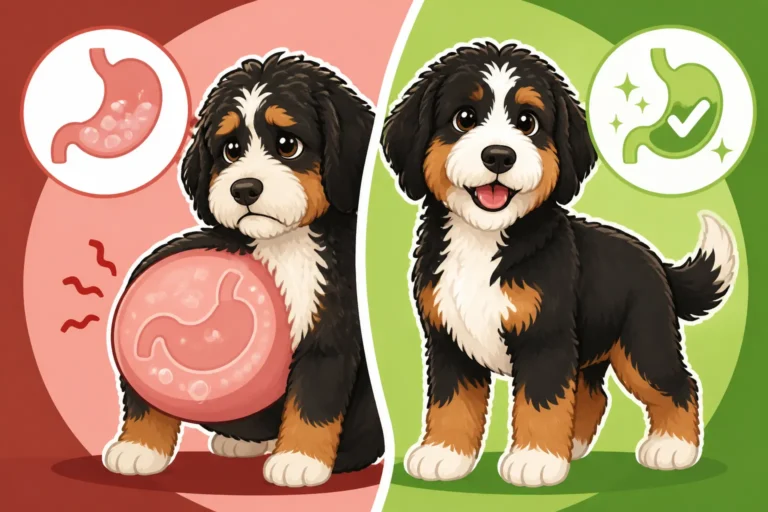
Standard Poodles, on the other hand, typically enjoy a much longer lifespan, often between 10-18 years. They are generally robust dogs but do have their own set of health concerns. These can include bloat (gastric dilatation-volvulus), Addison's disease, epilepsy, and various eye conditions such as progressive retinal atrophy. While these are serious, they often have better prognoses or are less universally fatal than the cancers common in Bernese.
How F1 and F1b Generations Inherit These Risks
This is where the genetic percentages really start to matter in the F1 vs. F1b debate:
-
F1 Bernedoodle (50% Bernese, 50% Poodle): With a 50/50 genetic split, an F1 Bernedoodle inherits a balanced mix of predispositions from both parents. The hope with hybrid vigor is that the Poodle's genes might "dilute" or mask some of the more severe Bernese health issues, especially the aggressive cancers. However, they are still carrying 50% of the Bernese genetic blueprint, meaning the risk of inheriting conditions like histiocytic sarcoma, while reduced, is still present. Similarly, they carry 50% of the Poodle's genetic load for conditions like Addison's or bloat. The challenge here is the unpredictability; you can get a puppy that leans more heavily towards the Poodle's health, or one that unfortunately draws more from the Bernese side. This is why it's vital to choose a breeder who performs all recommended health screenings on both parent dogs.
-
F1b Bernedoodle (75% Poodle, 25% Bernese): By breeding an F1 Bernedoodle back to a purebred Poodle, the genetic balance shifts significantly. With 75% Poodle genetics, the F1b theoretically has a lower statistical chance of inheriting the more severe Bernese-specific conditions. The thinking is that by reducing the Bernese genetic contribution, you also reduce the likelihood of inheriting that breed's predisposition to certain cancers and orthopedic issues. This makes the F1b particularly appealing to those who are deeply concerned about the shorter lifespan and cancer rates associated with the Bernese Mountain Dog. However, this also means an F1b has a higher predisposition to Poodle-specific health issues. For example, the risk of bloat in a standard Bernedoodle's deep chest, which is common in Poodles, might be slightly elevated compared to an F1. Also, conditions like Addison's disease might see a slight increase in likelihood.
It’s important to note that while the genetic percentages offer a theoretical advantage for F1bs in terms of potentially avoiding Bernese cancer, there are no guarantees. Cancer is still the leading cause in Bernedoodles, and it's a complex disease that isn't always entirely preventable by breeding alone. However, the intentional shift in genetic makeup is designed to tilt the odds in favor of a longer, healthier life by minimizing exposure to the most detrimental genes of the shorter-lived parent.
Factors Beyond Genetics That Drive Lifespan
While the F1 versus F1b genetic debate is interesting and has some theoretical basis, it's crucial to understand that genetics are only one piece of the puzzle when it comes to a Bernedoodle's overall lifespan. So many other factors, entirely within our control as responsible pet parents, play an equally, if not more, significant role in how long and how well our furry companions live. These elements often outweigh the subtle genetic differences between generations.
The Power of Responsible Breeding and Health Clearances
This cannot be stressed enough: the single most impactful factor in a Bernedoodle's health and longevity, regardless of whether it's an F1 or F1b, comes from the choices made by the breeder. A truly responsible breeder will perform comprehensive health clearances on both parent dogs. This means screening for conditions known to affect Bernese Mountain Dogs and Poodles, such as hip and elbow dysplasia, various eye conditions, heart problems, and genetic diseases like Von Willebrand's Disease in a Bernedoodle and Degenerative Myelopathy Both Bernedoodle Parents Can Carry.
If a breeder can show you OFA (Orthopedic Foundation for Animals) or PennHIP certifications for hips and elbows, eye clearances from a veterinary ophthalmologist (CAER exam), and genetic testing results, you are starting with a much stronger foundation. These tests help ensure that the parents are as healthy as possible and are less likely to pass on inheritable diseases to their puppies. Don't be afraid to ask a breeder about cancer in the Bernese line or for proof of these screenings; it’s your right and your dog’s future. An untested Bernedoodle litter is always a gamble, and the consequences can be heartbreakingly expensive and emotionally draining down the line.
Nutrition and Weight Management: Fueling a Long Life
What you feed your Bernedoodle matters immensely. High-quality dog food, appropriate for their age, size, and activity level, provides the essential nutrients for growth, energy, and overall health. For a standard Bernedoodle that will reach ninety pounds, feeding a Bernedoodle that will reach ninety pounds correctly from puppyhood, growing them slowly on purpose, can prevent orthopedic issues later in life.
Equally important is maintaining a healthy weight. An overweight Bernedoodle loses years off its life. Excess weight puts incredible strain on joints, exacerbates conditions like arthritis in a Bernedoodle at eight, and increases the risk of numerous other health problems, including diabetes and heart disease. Regularly checking your dog's body condition and adjusting their food and exercise is paramount. Even under all that beautiful Bernedoodle coat, you should be able to feel their ribs without pressing hard.
Exercise and Mental Stimulation: A Happy, Healthy Hound
Bernedoodles are intelligent, active dogs that thrive on regular exercise and mental engagement. While the specific exercise a standard Bernedoodle needs daily will vary, consistent physical activity helps maintain muscle mass, supports joint health, and prevents obesity. Beyond physical exercise, mental stimulation through training, puzzle toys, and new experiences keeps their minds sharp and can contribute to a more contented disposition. A bored or under-exercised Bernedoodle can develop destructive behaviors and stress, which indirectly impacts their well-being.
Regular Veterinary Care and Preventative Measures
From those initial puppy shots to yearly check-ups, consistent veterinary care is non-negotiable for maximizing your Bernedoodle's lifespan. Routine examinations allow your vet to catch potential issues early, perform necessary vaccinations, and provide preventative treatments for parasites. As your Bernedoodle gets older, regular screenings can become even more crucial, identifying conditions like kidney disease or thyroid issues before they become severe.
This is also where considering pet insurance comes into play. Having a robust pet insurance plan, like those offered by Healthy Paws, can really alleviate the stress when unexpected health issues arise, allowing you to focus on getting your dog the best possible care without being crippled by costs. Many owners find peace of mind with providers like Healthy Paws, knowing they have support for their pet's health journey. Early detection and intervention for issues like skin tumors a Bernedoodle develops can make a world of difference. Understanding what a Bernedoodle costs over its whole life truly factors in these kinds of medical expenses.
Environmental Factors and Safety
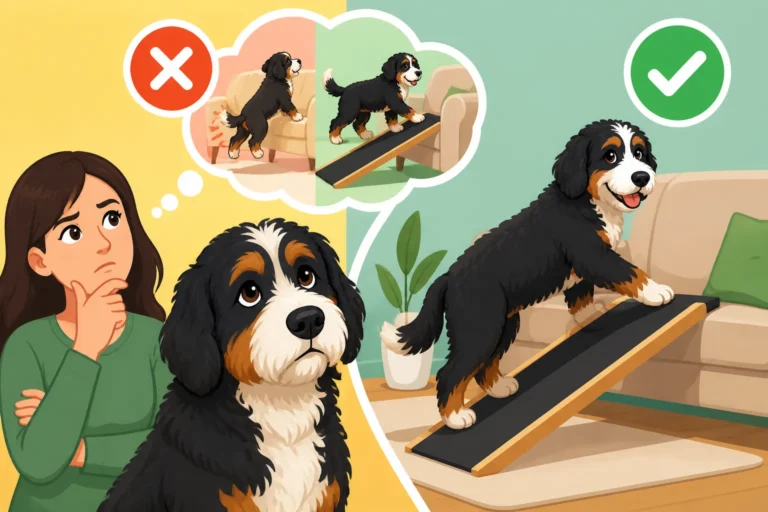
Your Bernedoodle's living environment also plays a role. Keeping them safe from household toxins, providing a secure yard, and protecting them from extreme weather conditions, especially understanding why a black tri Bernedoodle overheats, all contribute to their longevity. For large, heavy breeds like Bernedoodles, preventing injuries from jumping off furniture or running on hard, slippery surfaces when young can protect their developing joints.
In the end, while the F1 versus F1b debate has its merits in terms of genetic predisposition, the overarching message is clear: responsible ownership, from selecting a reputable breeder to providing exceptional daily care, is the ultimate determinant of your Bernedoodle's health and how many wonderful years you'll share together. Whether a Bernedoodle really lives fifteen years often comes down to the dedicated care they receive throughout their lives.
Disclaimer
The information provided in this article is for general informational purposes only and is not intended as a substitute for professional veterinary advice. Always consult with a qualified veterinarian for any health concerns or before making any decisions related to your pet's health and treatment.