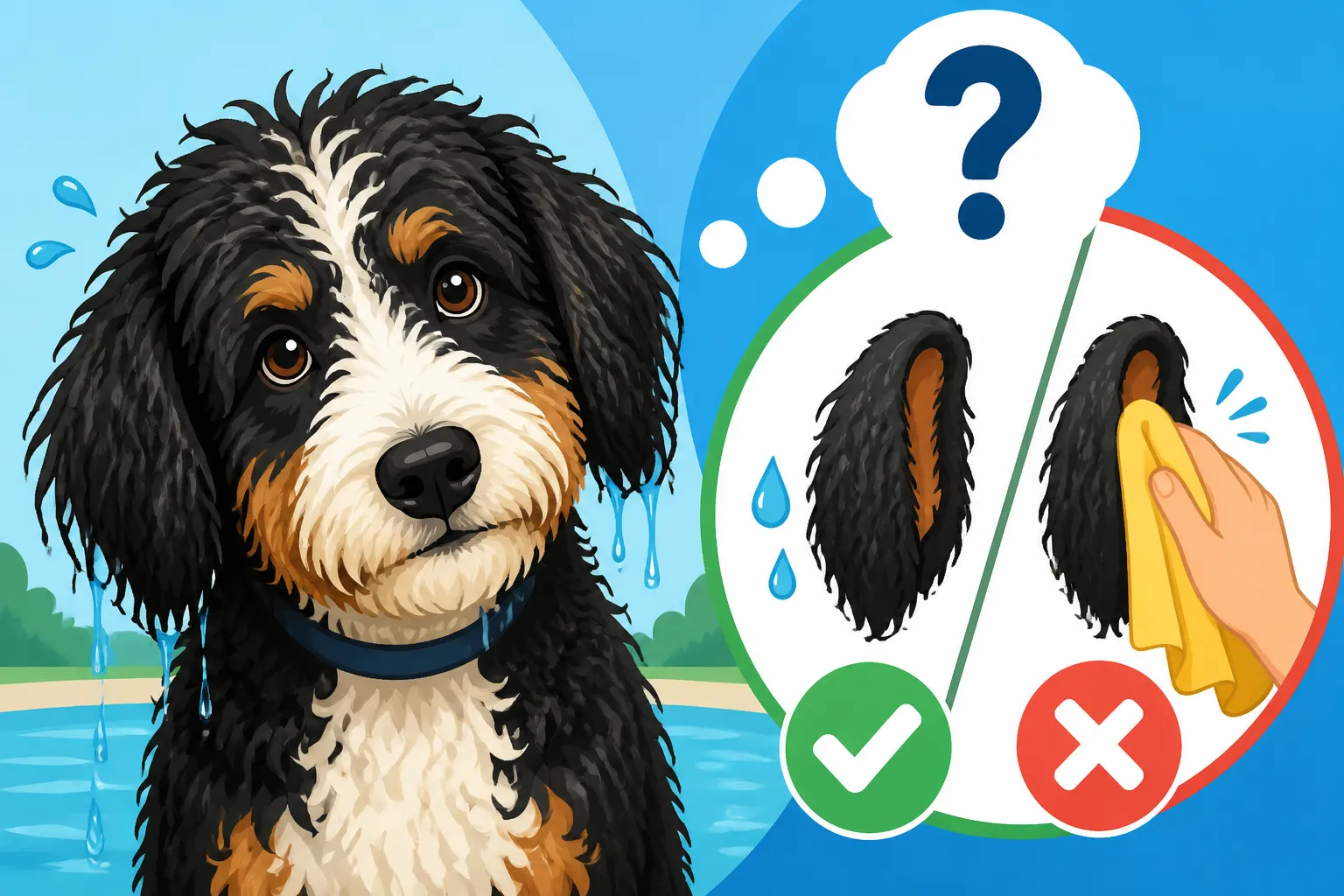
Whether a Bernedoodle’s Ears Need Drying After Swimming
It's a common joy to see our Bernedoodles splash around, whether it's in a lake, a pool, or even just a backyard sprinkler. But as soon as they shake off that water, a little anxiety often creeps in: do their floppy, furry ears need special attention? This guide is going to dive deep into why your Bernedoodle's ears are uniquely susceptible to issues after getting wet and exactly how to prevent those uncomfortable, painful ear infections.
Why Your Bernedoodle's Ears Are a Hotbed for Trouble
Those adorable, floppy ears that frame your Bernedoodle's sweet face are, unfortunately, a perfect storm for ear problems, especially when they get wet. It's not just a casual concern; it’s a design flaw, if you will, inherited from both the Bernese Mountain Dog and the Poodle sides of their family tree. Understanding this anatomy is the first step to truly protecting them.
The Bernese Influence: Heavy, Droopy Flaps
From their Bernese Mountain Dog parent, Bernedoodles often inherit thick, heavy ear flaps that lie close to the head. Unlike dogs with upright, open ears like a German Shepherd, these floppy ears act like little sound-proof, moisture-proof chambers. They significantly reduce air circulation to the ear canal, creating a warm, humid environment. When water gets trapped in there, it doesn't evaporate easily. Think of it like a tiny, damp greenhouse inside your dog's head, perfect for growing things you definitely don't want. This lack of ventilation is a primary culprit behind many of the ear issues we see in Bernedoodles.
The Poodle Influence: Hair, Hair Everywhere
Now, add in the Poodle's genetic contribution: lots of hair. Poodles are known for their dense, often curly coats, and this hair extends right down into their ear canals. Many Bernedoodles inherit this trait, meaning their ear canals aren't just covered by a floppy flap; they're also lined and sometimes even clogged with fine hair. This hair traps moisture, debris, and wax, acting like a net that catches everything and holds it tight against the delicate skin of the ear canal. When this hairy canal gets wet from swimming, bathing, or even just a humid day, that moisture is held captive, setting the stage for bacterial and yeast overgrowth. It's a double-whammy: poor air circulation and trapped moisture. If you want to learn more about Ear Infections in a Bernedoodle's Drop Ear, it’s a really common issue owners face.
The Risks of Trapped Moisture and Neglect
Leaving your Bernedoodle's ears wet after a swim isn't just a minor oversight; it opens the door to a whole host of painful and potentially serious health problems. These aren't just "ouchie" moments; they can lead to chronic conditions that impact your dog's quality of life and your wallet.
Breeding Ground for Bacteria and Yeast
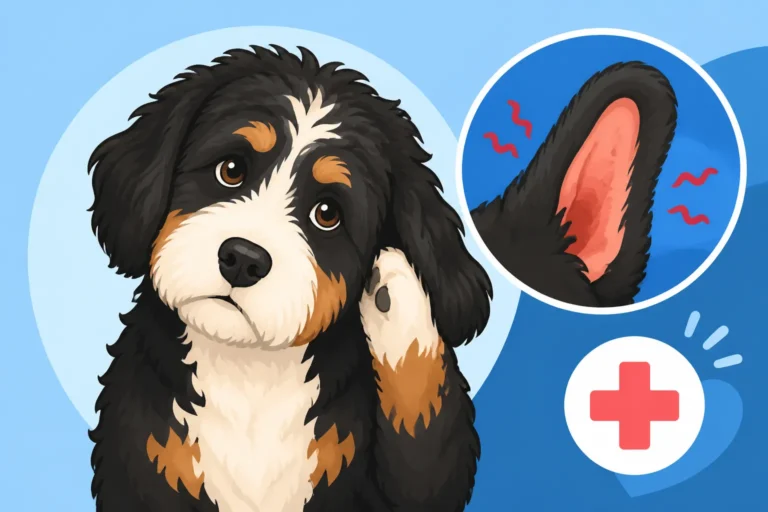
The warm, moist, dark environment created by wet, floppy, hairy ears is the absolute ideal breeding ground for opportunistic bacteria and yeast. Yeast, particularly Malassezia, is a fungus naturally present on a dog's skin, but in humid conditions, it can multiply rapidly, leading to a nasty, itchy, smelly infection. Bacterial infections, often caused by Staphylococci or Pseudomonas, are equally common and incredibly uncomfortable. Both can cause intense itching, redness, inflammation, and discharge. Your Bernedoodle might constantly shake their head or paw at their ears, clearly distressed. This cycle of infection can be relentless and frustrating for both of you.
Chronic Ear Infections and Their Consequences
One ear infection can lead to another, creating a frustrating cycle of chronic otitis (ear inflammation). Repeated infections can cause changes in the ear canal itself, such as thickening of the ear canal lining (hyperplasia), which further narrows the passage and makes future infections even more likely and harder to treat. In severe, untreated cases, infections can spread deeper into the middle or inner ear, leading to more serious issues like vestibular disease (affecting balance), hearing loss, facial nerve paralysis, or even rupture of the eardrum. The pain can be excruciating, affecting your dog's mood, appetite, and willingness to engage. Dealing with Skin Problems Under a Bernedoodle's Heavy Coat can often feel like a related battle, as moisture can exacerbate issues elsewhere too.
Hematomas and Surgical Intervention
The intense itching and head-shaking that accompany ear infections can lead to another painful complication: an aural hematoma. This happens when repeated forceful head shaking causes blood vessels within the ear flap to burst, leading to a blood-filled swelling between the cartilage and skin of the ear flap. It looks like a big, squishy balloon on their ear. Hematomas are incredibly painful and almost always require surgical intervention to drain and repair, followed by a period of recovery, often involving uncomfortable bandages or an Elizabethan collar. This is one of those situations where prevention truly is worth a pound of cure, especially considering the potential cost and recovery time. While prevention is paramount, the cost of treating chronic ear issues and potential surgeries can be a concern. Many owners find that pet insurance, such as a policy from Healthy Paws, can provide significant financial relief for these unexpected veterinary expenses.
How to Properly Dry and Clean Your Bernedoodle's Ears After Swimming
Given the unique vulnerabilities of a Bernedoodle's ears, a proactive approach to drying and cleaning after any water exposure is non-negotiable. This isn't just about comfort; it's about safeguarding their health and preventing needless pain.
Step-by-Step Drying Techniques
Immediately after your Bernedoodle has enjoyed a swim or bath, the first priority is to get those ears dry. Don't wait!
- Towel Dry Thoroughly: Gently but firmly blot the outer ear flap and the visible parts of the ear canal with a clean, soft towel. Don't rub too vigorously, as this can irritate the skin. The goal is to absorb as much surface water as possible.
- Cotton Ball Magic: For the inner ear folds and the opening of the ear canal, use soft cotton balls or gauze pads. Never use cotton swabs (Q-tips) beyond the parts of the ear you can clearly see. Cotton swabs can push debris further into the ear canal or even damage the eardrum. Just gently wipe the accessible curves and crevices.
- Air Circulation is Key: Once you've manually dried the ears, try to encourage air circulation. You can gently hold the ear flap up for a few minutes, or if your dog tolerates it, use a low-setting hairdryer (on cool, never hot) held at a safe distance, continuously moving it to avoid heat spots. This helps evaporate any remaining moisture. A short period of activity, like a gentle walk or play, can also encourage air movement as their head moves.
- Consider an Ear Drying Solution: Many vets recommend using a veterinarian-approved ear drying solution or cleaner after water exposure. These solutions are formulated to safely dry out the ear canal and often contain ingredients that help prevent bacterial and yeast growth. Always choose a product specifically designed for dogs and consult your vet for their recommendation, especially regarding Whether a Bernedoodle's Ear Canal Needs Clearing.
Regular Cleaning and Maintenance
Beyond post-swim care, regular ear cleaning is a crucial part of your Bernedoodle's overall health routine.
- Frequency: The frequency of cleaning depends on your individual dog, their activity level, and their ear anatomy. Some Bernedoodles might need their ears cleaned weekly, especially if they are prone to infections or swim often. Others might only need it every few weeks. Your vet is the best resource to determine an appropriate schedule for your dog.
- Choosing the Right Cleaner: Again, always use a vet-approved ear cleaner. These cleaners are balanced for a dog's ear pH and contain ingredients that break down wax and debris without causing irritation. Avoid homemade solutions or products not specifically designed for canine ears.
- The Cleaning Process:
- Warm the Solution (Optional): If the cleaner is cold, you can warm it slightly by placing the bottle in warm water for a few minutes. This makes the experience more comfortable for your dog.
- Apply Generously: Hold the ear flap up and squirt a generous amount of the cleaner directly into the ear canal until it's visibly full.
- Massage the Base: Gently massage the base of your Bernedoodle's ear for about 30 seconds. You should hear a squishing sound, which means the cleaner is working its way down the canal.
- Let Them Shake: Stand back and let your dog shake their head. This helps dislodge debris and bring it up to the surface.
- Wipe Away: Use cotton balls or gauze to wipe away any excess cleaner and debris from the visible parts of the ear. Remember, never use cotton swabs deep in the ear canal.
- Reward: Always end with praise and a treat to make ear cleaning a positive experience.
- Hair Trimming/Plucking: Many Bernedoodles benefit from having the excess hair inside their ear canals trimmed or plucked. This can be done by a professional groomer or your veterinarian. Removing this hair significantly improves air circulation and reduces moisture retention. Discuss this with your groomer or vet to see if it's recommended for your Bernedoodle. Some
The Grooming a Bernedoodle Owner Should Ask For in Julyadvice often includes ear maintenance.
Here's a quick comparison of healthy vs. infected ears:
| Feature | Healthy Bernedoodle Ear | Infected Bernedoodle Ear |
|---|---|---|
| Smell | Neutral or slightly waxy, no strong odor | Foul, yeasty, or sweet smell; often overpowering |
| Appearance | Pale pink, clean, minimal wax | Redness, inflammation, swelling, dark discharge (brown/black or yellow/green) |
| Discharge | Minimal, light brown wax | Excessive, dark brown, yellow, green, or black, often crusty |
| Behavior | No pawing, scratching, or head shaking | Frequent head shaking, scratching, rubbing ears on furniture, whimpering when ear is touched |
| Pain/Discomfort | None | Sensitive to touch, painful when handled, may become withdrawn |
| Sound | No unusual sounds | Squishing sounds, clicking, or reduced hearing |
When to Seek Veterinary Care for Ear Problems
Even with the most diligent preventative care, ear infections can still crop up. It’s crucial to know the signs that warrant a trip to the vet because early intervention can prevent minor issues from becoming major health crises. The Screening a Bernedoodle Should Have Yearly your vet performs will always include an ear check.
Recognizing the Warning Signs
Your Bernedoodle can't tell you in words that their ear hurts, so it's up to you to be observant. Look for a combination of these symptoms:
- Excessive Head Shaking: This is often the first and most obvious sign. They might shake their head vigorously, as if trying to dislodge something.
- Persistent Scratching: Your Bernedoodle might constantly paw at their ear, rub it against furniture, or scoot their head along the carpet.
- Redness and Swelling: Gently lift the ear flap and look inside. If the skin is noticeably red, inflamed, or swollen, that's a red flag.
- Discharge: Any unusual discharge – brown, black, yellow, or greenish – is a sign of infection. It might be watery, thick, or waxy, and often has a strong, unpleasant odor.
- Foul Odor: A healthy ear has a mild, almost neutral scent. A strong, sweet, yeasty, or putrid smell coming from the ear is a clear indicator of trouble.
- Pain or Sensitivity: If your Bernedoodle cries out, pulls away, or becomes aggressive when you touch their ear, they are likely in pain.
- Changes in Ear Position: An infected ear might be held lower or at an unusual angle.
- Lethargy or Loss of Appetite: In severe cases, the pain and discomfort can affect their overall well-being.
- Rubbing Face on Ground: Some dogs will rub one side of their face along the carpet or furniture in an attempt to relieve the itch or discomfort.
Why You Can't "Wait and See"
While it might be tempting to see if it clears up on its own, ear infections rarely resolve without proper veterinary treatment. Over-the-counter remedies might offer temporary relief but often fail to address the underlying cause and can even make diagnosis harder for your vet. Delaying treatment allows the infection to worsen, causing more pain for your dog and potentially leading to more complex, expensive, and prolonged treatment. Untreated infections can spread deeper, causing irreversible damage to the ear structures or hearing loss. This is especially true given The Average Age a Bernedoodle Reaches, you want those precious years to be comfortable.
When you notice any of these signs, contact your veterinarian promptly. They will examine your Bernedoodle's ear, possibly take a swab to look for bacteria or yeast under a microscope, and prescribe the appropriate medication, which could include topical drops, oral antibiotics, or anti-inflammatories. Remember, What a Bernedoodle Costs Over Its Whole Life includes these unexpected health issues, and being prepared can make all the difference. Many Bernedoodle owners find immense value in pet insurance, like plans offered by Healthy Paws, which can help cover the costs of diagnostics, medications, and even surgery if a severe ear infection leads to further complications. It offers peace of mind knowing you can provide the best care without financial strain.
Your Bernedoodle brings so much joy into your life, and taking these simple, yet vital, steps to care for their ears ensures they can keep splashing and playing without the burden of painful infections.
Disclaimer
The information provided in this article is for general informational purposes only and is not a substitute for professional veterinary advice. Always consult with a qualified veterinarian for any health concerns or before making any decisions related to your Bernedoodle's health or treatment.