Why a Mini Bernedoodle Costs More Than a Standard
It’s a common moment for prospective Bernedoodle parents: you’re dreaming of that fluffy, affectionate companion, you start researching prices, and then BAM! You notice something unexpected. Those adorable mini Bernedoodles, often smaller and seemingly less "dog" to care for, frequently come with a heftier price tag than their larger, standard-sized counterparts. It can feel counterintuitive, right? Like you’re paying more for less. But there's a good reason for this pricing phenomenon, and understanding it can help you make an informed decision about which size Bernedoodle is truly the best fit for your home and budget.
The Intricate Genetics Behind Size and Cost
When you're looking at Bernedoodles, you're essentially looking at a designer dog created by crossing a Bernese Mountain Dog with a Poodle. The magic (and complexity) happens when breeders start trying to influence size. It's not as simple as just breeding a small Poodle with a Bernese and hoping for the best. There’s a lot of careful planning, genetics, and sometimes, several generations involved, which all contribute to that higher initial price for the minis.
Understanding Bernedoodle Generations and Size Reduction
The Bernedoodle world talks a lot about "generations" – F1, F1b, F2, Multigen – and these terms are crucial when discussing size. An F1 Bernedoodle is a direct cross between a purebred Bernese Mountain Dog and a purebred Poodle. While this offers the most hybrid vigor, predicting their size can be a bit of a crapshoot, especially if you're aiming for a specific weight range. A Bernese can be a pretty big dog, often reaching 70-115 pounds, and even a Standard Poodle can easily hit 40-70 pounds. So, an F1 can be quite variable.
To get a mini Bernedoodle, breeders typically need to incorporate smaller Poodle genetics more deliberately. This often means using a miniature or toy Poodle in the mix, or breeding an F1 Bernedoodle back to a Poodle (creating an F1b). Each step in this process is about carefully selecting parent dogs with the right genetic makeup to achieve consistent size reduction while maintaining other desirable traits like coat type and temperament. This involves extensive genetic testing of the parents to ensure they don't carry genes for health issues that might be magnified by repeated back-crosses or line breeding for size. It's a much more involved process than simply breeding two large dogs and expecting large offspring. This nuanced breeding is a significant part of why breeders overstate a Bernedoodle's lifespan, hoping to attract buyers to these carefully bred lines.
The Role of the Poodle Parent in Miniaturization
The Poodle half of the Bernedoodle equation is where the size variation truly comes from. Poodles come in three recognized sizes: Standard, Miniature, and Toy.
- Standard Poodles are used to create Standard Bernedoodles.
- Miniature Poodles (typically 10-15 inches tall and 10-15 pounds) are the key to producing mini Bernedoodles.
- Toy Poodles (under 10 inches tall and under 10 pounds) are used for tiny or micro Bernedoodles.
The smaller the Poodle parent, the greater the genetic influence needed to consistently reduce the size of the offspring, especially when crossing with a Bernese. This isn't just about finding a small Poodle; it's about finding a healthy, well-tempered Poodle from excellent lines that also carries the desired genetic traits for coat and color. Reputable breeders invest heavily in sourcing top-quality Miniature and Toy Poodles, often from champion lines, to ensure both health and conformity. These smaller Poodles themselves often command higher prices due to their specialized breeding. You can imagine the increased complexity and cost involved when trying to miniaturize a large breed like the Bernese Mountain Dog, while still aiming for that perfect blend of both breeds' best qualities. The goal is to produce a dog that retains the charming traits, such as those often associated with a sable Bernedoodle, but in a more compact size.
Genetic Testing and Predictability of Size
Predicting the exact adult size of a Bernedoodle puppy is one of the breeder's biggest challenges. While parent size is a significant indicator, genetics are complex. Even with two mini-sized parents, you can sometimes get an "outlier" puppy that grows larger than expected. To minimize this, ethical breeders utilize genetic testing beyond basic health clearances. They may use genetic markers associated with size to help predict growth more accurately, although it's not foolproof.
These tests add to the breeder's expenses. Furthermore, maintaining clear health records and performing comprehensive genetic screening on both the Bernese and Poodle lines is paramount, especially when breeding smaller dogs. This ensures they’re not inadvertently passing on genetic predispositions to issues commonly found in smaller breeds, while also screening for conditions like Von Willebrand's Disease in a Bernedoodle which can come from the Bernese side. The more precise the breeding, the more investment in time, expertise, and testing, which naturally inflates the price of the resulting puppies.
Breeding Challenges for Mini Bernedoodles
It's not just the genetic theory that makes mini Bernedoodles more expensive; the actual process of breeding them presents unique, practical challenges that add significant cost and risk for breeders. Breeding smaller dogs, especially when one parent is a much larger breed or the lineage is being downsized, requires extra care and often incurs higher veterinary expenses.
Smaller Dams and Litter Sizes
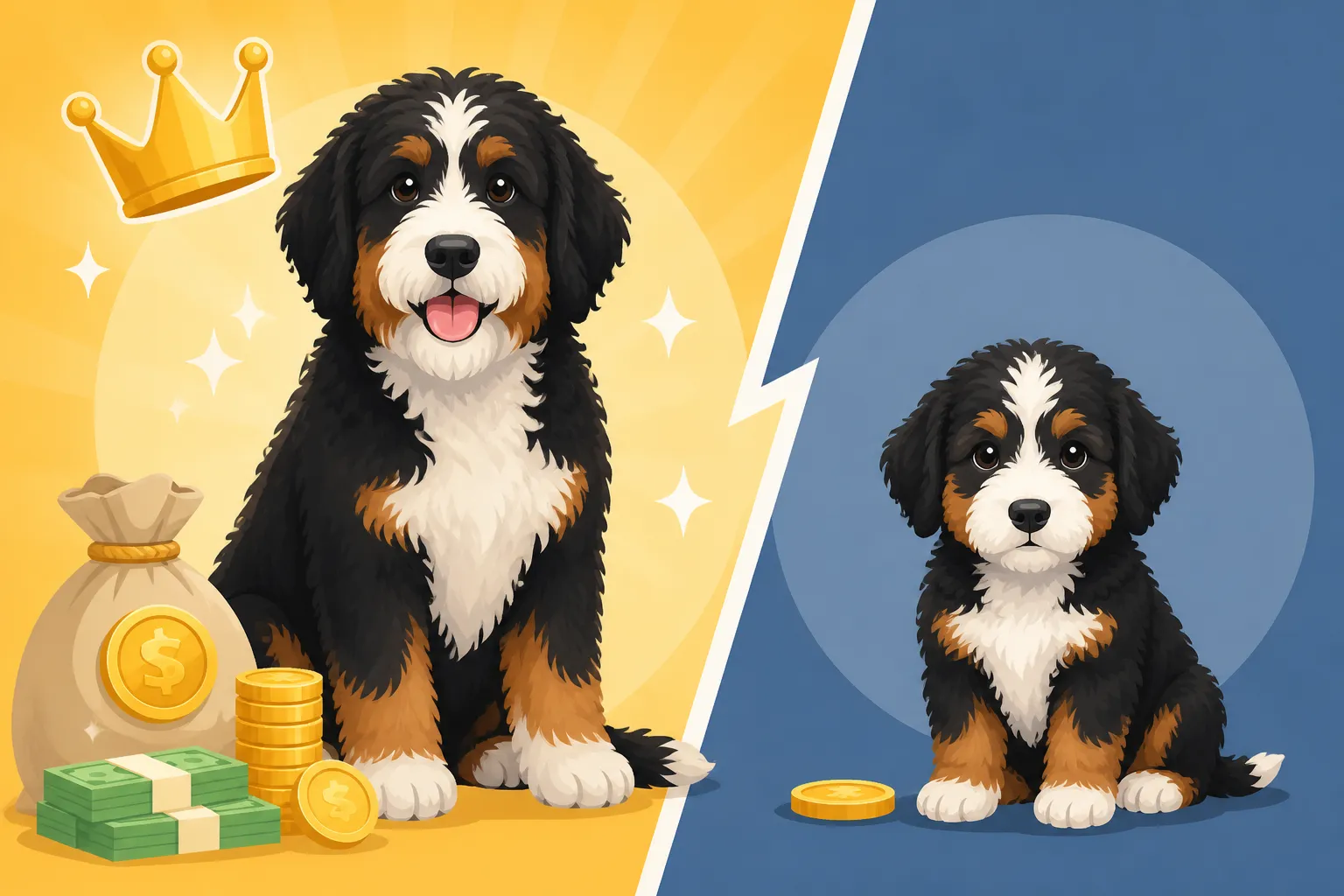
One of the most impactful factors on price is the size of the dam (mother dog). To produce mini Bernedoodles, breeders often use a Miniature Poodle female, or a smaller F1 Bernedoodle female. These smaller dams naturally have smaller litters compared to a Standard Poodle or Bernese Mountain Dog. While a Bernese might have a litter of 8-11 puppies, a Miniature Poodle might only have 3-6. This directly affects the supply side of the equation. Fewer puppies mean each individual puppy carries a larger portion of the overall breeding cost.
Furthermore, smaller dams require more careful monitoring during pregnancy and whelping. Their smaller stature can mean a higher risk of complications during labor, potentially necessitating emergency veterinary intervention, like C-sections. These are incredibly costly procedures, often running into thousands of dollars, and contribute directly to the higher price point of a mini Bernedoodle puppy. Breeders need to be prepared for these possibilities, which translates into higher operating costs.
Potential Health Complications During Breeding and Whelping
Beyond smaller litter sizes, the act of breeding two dogs of different sizes, or even two smaller dogs, can introduce health considerations. For instance, if a larger male is bred to a smaller female (even within reasonable limits for safety), there can be increased risks. Reputable breeders prioritize the health of their breeding animals above all else, which means choosing pairings carefully and being ready for any eventuality. This might mean having veterinary staff on call, specialized equipment for monitoring, and specific nutritional plans for the pregnant dam.
Puppies from smaller litters also sometimes require more individual care. If a puppy is born weaker or smaller, the breeder dedicates more intensive care, often involving round-the-clock feeding, temperature regulation, and monitoring. This labor-intensive care during the crucial first few weeks is a significant investment of a breeder's time and resources. Ensuring proper development, especially for conditions like Elbow Dysplasia in a Growing Bernedoodle or hip issues, is critical from day one, even if symptoms don't show up until later. The rigorous screening a Bernedoodle should have yearly starts with the responsible breeder's efforts.
Ensuring Temperament and Conformation in Smaller Sizes
Breeding for size is one thing, but maintaining the desired temperament and physical conformation is another challenge altogether. The goal isn't just a small Bernedoodle, but one that embodies the best traits of both breeds: the calm, affectionate nature of the Bernese and the intelligence and trainability of the Poodle, all wrapped up in a healthy, well-structured package. Breeding smaller often means using more Poodle genetics, which can sometimes lead to a more energetic or "poodle-like" temperament if not carefully managed.
Breeders must select parents not just for size but for their proven temperaments and excellent health clearances. This involves researching pedigrees, observing parent dogs' behavior, and sometimes waiting longer to breed until a dog's temperament is fully mature and health clearances are complete. They're trying to avoid common pitfalls like a shy Bernedoodle that backs away from strangers or one that inherits too much of the Bernese's natural reserve, especially in a smaller dog that might feel more vulnerable. The careful selection process to ensure that your puppy inherits the best of both worlds adds considerable time and cost.
Demand and Market Dynamics for Smaller Doodles
It's no secret that "doodle" breeds have exploded in popularity, and mini versions of these beloved crosses often find themselves in incredibly high demand. This surge in popularity, coupled with the inherent limitations in supply, creates a classic economic scenario where prices naturally climb. People want these dogs, and they're willing to pay a premium for them.
The Appeal of a Smaller Footprint in Modern Homes
Let's be honest: while we adore the majestic size of a Standard Bernedoodle, a ninety-pound dog isn't feasible for every living situation. Many modern homes, apartments, or condos simply don't have the space for a giant dog bed, or the yard for a large dog to run around in comfortably. Mini Bernedoodles offer the best of both worlds: that adorable, fluffy Bernedoodle look and temperament, but in a size that's much more manageable for urban living or smaller spaces.
The idea of a "compact" doodle is incredibly attractive. They fit better in cars, are easier to travel with, and generally take up less room. This practicality makes them highly sought after by individuals and families who desire a dog but might be hesitant about the sheer scale of a standard-sized Bernedoodle. This convenience factor drives up demand significantly, contributing to why a mini Bernedoodle sells for more than its larger kin.
Perceived Manageability and Portability
Beyond just physical space, there's a perceived ease of management with a smaller dog. While a mini Bernedoodle still requires plenty of exercise and training, many people assume they're "easier" to handle than a ninety-pound Bernedoodle. They can be walked by children more easily, picked up if needed, and are generally less intimidating to guests. This also extends to portability; a mini Bernedoodle can often travel in a carrier on planes, or comfortably in a smaller car, expanding options for owners who love to take their furry friends everywhere.
This desire for a more manageable and portable companion means that the market for mini Bernedoodles is incredibly competitive. People are often willing to pay a premium for a dog that slots seamlessly into their lifestyle, offering the desired breed traits without the larger commitment of a very big dog. This perceived benefit of manageability directly contributes to the higher price point.
Limited Supply Meeting High Demand
As we touched on earlier, mini Bernedoodles come from smaller litters. This means there are simply fewer of them available compared to standard Bernedoodles. When you combine this limited supply with the skyrocketing demand from people seeking a compact, intelligent, and affectionate companion, the price naturally increases. It's a simple case of supply and demand economics.
Ethical breeders who invest in health testing, genetic screening, and careful breeding practices to produce healthy, well-socialized mini Bernedoodles will always have a waiting list. They can afford to charge more because the demand far outstrips their ability to produce puppies responsibly. This is also why you might hear about Bernedoodle waitlists running for quite some time, as people patiently wait for a quality mini. The effort required to get a mini Bernedoodle from a tested breeder who focuses on quality over quantity is a substantial investment, reflecting the true cost of these sought-after companions.
The Cost of Health Testing and Guarantees
Any responsible Bernedoodle breeder, regardless of the size of the dog they're producing, invests significantly in health testing their breeding stock. However, when you're specifically breeding for mini Bernedoodles, the health considerations can become even more intricate, requiring additional layers of screening and commitment from the breeder, which naturally adds to the final price tag.
Comprehensive Health Clearances for Both Parents
A reputable Bernedoodle breeder will ensure both parent dogs undergo a battery of health clearances before they are ever bred. This includes screenings for hip and elbow dysplasia, common in larger breeds like the Bernese Mountain Dog, as well as eye exams (CAER) and cardiac evaluations. For the Poodle parent, especially the smaller varieties, additional checks for patellar luxation (slipping kneecaps), specific eye conditions like Progressive Retinal Atrophy (PRA), and thyroid function are standard. These tests are not cheap. Each clearance can cost hundreds of dollars, and they need to be performed on both the sire and dam.
For mini Bernedoodles, there's an added layer of scrutiny because you're blending two distinct size categories. Breeders are working to ensure that the genetic strengths of both breeds are passed down, while mitigating any potential weaknesses. This meticulous approach is vital to preventing heartache down the road for families who might otherwise face significant vet bills for preventable conditions. This commitment to health is why a high-quality mini Bernedoodle will always be more expensive upfront.
Additional Genetic Panels Specific to Poodle Lines
Beyond the standard physical clearances, genetic testing has become a cornerstone of ethical breeding. For Bernedoodles, this often includes DNA tests for conditions like Von Willebrand's Disease (a bleeding disorder often found in Bernese Mountain Dogs), and Degenerative Myelopathy (DM), a neurological condition found in both Bernese and Poodles. Both parents should be clear of these conditions to ensure puppies are not affected or at-risk carriers.
When breeding mini Bernedoodles, breeders often delve into even more specific genetic panels tailored to Miniature and Toy Poodle lines. This might include tests for conditions like osteochondrodysplasia or other dwarfism-related genes if the mini sizing is achieved through specific methods, ensuring genetic diversity and health. These advanced DNA panels add another layer of expense, but they provide invaluable insight into the genetic health of the lineage. This level of thoroughness is a hallmark of breeders who care deeply about the long-term health of their puppies, setting them apart from those who might sell an untested Bernedoodle litter that could lead to unforeseen problems. This is especially important for Degenerative Myelopathy Both Bernedoodle Parents Can Carry.
Breeder Guarantees and Veterinary Care for Puppies
A higher price often comes with a more comprehensive health guarantee from the breeder. This guarantee typically covers genetic health issues for a certain period, usually 1-2 years, providing peace of mind to the new owner. Reputable breeders stand behind the health of their puppies because they've invested so much in the parentage and early care. This commitment means they're not just selling a puppy; they're offering a promise of responsible breeding.
Furthermore, the initial veterinary care for a litter of puppies is significant. This includes multiple dewormings, vaccinations, microchipping, and a thorough health check by a veterinarian before they go to their new homes. For mini Bernedoodles, given their potentially smaller size at birth, breeders might provide even more intensive early-life care and monitoring. All of these costs, from initial health clearances to puppy vaccinations and the security of a health guarantee, are factored into the price, ensuring you receive a healthy, well-started puppy. When considering the cost of insuring a Bernedoodle against the Bernese half, remember that a good health guarantee from your breeder is the first line of defense.
Grooming and Ongoing Care Considerations
While the initial purchase price is a big part of the conversation, it's worth noting that the long-term costs of owning a Bernedoodle also play a role, and sometimes, those costs can subtly differ between a mini and a standard, even if not always in the way you might expect. These ongoing expenses contribute to the overall financial picture and can influence perceived value.
Professional Grooming Frequency and Expense
Bernedoodles, regardless of size, are known for their beautiful, often wavy to curly, low-shedding coats. This amazing coat, however, comes with a significant grooming commitment. For both mini and standard Bernedoodles, professional grooming every 6-8 weeks is typically necessary to prevent matting and keep their coat healthy. The idea that a smaller dog will always be cheaper to groom can be a bit misleading. While a groomer might charge slightly less for a mini Bernedoodle than for a standard, the difference isn't always proportionate to the size difference.
The time and skill involved in properly line-brushing, bathing, drying, and clipping a curly or wavy coat remain similar per square inch of dog. A groomer's hourly rate and the specialized tools required are largely consistent. So, while you might save a little, don't expect the grooming bill for a mini Bernedoodle to be half that of a standard, even if the dog is half the size. Regular home brushing is essential for all Bernedoodles to minimize professional grooming costs and prevent painful matting, which can lead to higher fees if a groomer has to demat or shave down a coat. Knowing What a Matted Bernedoodle Costs to Shave can be a rude awakening for new owners.
Feeding a Mini Bernedoodle vs. a Standard
Here's one area where a mini Bernedoodle will almost certainly cost less over its lifetime: food. A smaller dog simply requires fewer calories and less food than a ninety-pound standard Bernedoodle. While quality dog food can be expensive, especially for large breeds that consume many cups a day, a mini Bernedoodle's portion sizes will be significantly smaller. This is a tangible long-term saving.
However, choosing the right food is critical for dogs of all sizes. For Bernedoodle puppies, especially the rapidly growing standard ones, a large-breed specific puppy food is often recommended to support slow, healthy growth and prevent joint issues. For mini Bernedoodles, a high-quality small-to-medium breed formula will suffice. When you compare How Many Meals a Bernedoodle Puppy Needs Daily and the volume per meal, the difference in consumption, and therefore cost, becomes clear very quickly. While monthly food bills will be lower for a mini, responsible owners will still invest in premium nutrition.
Veterinary Costs Over a Potentially Longer Lifespan
Interestingly, while mini Bernedoodles cost more upfront, they might offer some long-term savings in veterinary care simply by virtue of potentially living longer. Smaller dogs generally have longer lifespans than larger dogs. A Standard Bernedoodle might live 10-12 years, but a mini Bernedoodle, with its stronger Poodle genetics and smaller size, often lives 12-15 years, and sometimes even longer. This is why many people ask Whether a Mini Bernedoodle Outlives a Standard.
However, even with a longer life, dogs still need regular vet check-ups, vaccinations, parasite prevention, and unexpected medical care can arise at any time. The initial purchase price is a one-time expense, but routine and emergency vet care is an ongoing commitment. While a longer lifespan means more years of love, it also means more years of potential vet visits, senior care, and general maintenance costs. That said, the types of ailments can differ. Large dogs are more prone to certain joint issues and bloat, while smaller dogs might face dental problems more frequently. Pet insurance, like that offered by Healthy Paws, can be a lifesaver for unexpected health issues, regardless of your Bernedoodle's size, covering things that can pop up over a long life.
The Time and Labor Investment from Breeders
Bringing healthy, well-socialized puppies into the world is an immense undertaking, and for mini Bernedoodles, that investment of time and labor is often even greater. This isn't just about the physical care of the dogs; it's about the deep knowledge, strategic planning, and continuous effort required to consistently produce quality miniature versions of a beloved crossbreed.
Extended Breeding Timelines for Smaller Lines
Breeding for specific traits like size takes time, and often, more generations of selective breeding. A breeder doesn't simply decide to make a mini Bernedoodle overnight; it's a multi-year project. They need to acquire healthy breeding stock with the desired genetic traits for miniaturization, which might involve importing dogs or waiting for specific lines to mature. This process of establishing a strong, healthy mini Bernedoodle line can take several years of careful planning, breeding, and evaluating offspring.
Each generation involves waiting for dogs to mature, undergoing all the necessary health clearances, and then evaluating their offspring to ensure they are on the right track for size, health, and temperament. This extended timeline means a breeder's initial investment in their breeding program is tied up for longer, and the "return" on that investment is delayed. The patience and long-term vision required for this type of selective breeding are significant, and they are reflected in the price. This commitment is part of why a mini Bernedoodle takes more generations to breed.
Intensive Puppy Rearing and Socialization
Once puppies are born, especially mini Bernedoodles who might be more delicate due to their smaller size, the first eight weeks are incredibly demanding. Ethical breeders provide round-the-clock care, often sleeping near the whelping box, to ensure every puppy thrives. This includes careful monitoring of weight gain, individualized feeding schedules if needed, and early neurological stimulation exercises.
Beyond basic care, the crucial period of socialization begins. Puppies are exposed to various sights, sounds, textures, and people. They begin crate training, potty training fundamentals, and learn bite inhibition. For mini Bernedoodles, ensuring they are well-socialized and confident, despite their smaller size, is paramount. This intensive, hands-on rearing by the breeder is priceless in shaping a well-adjusted adult dog. It's a huge commitment of time and energy, much like preparing a dog for public access, to ensure they can thrive in any new home.
Marketing, Client Communication, and Placement
Even with adorable puppies, a reputable breeder invests considerable time in matching the right puppy with the right family. This involves extensive communication with prospective buyers, answering countless questions, vetting potential homes, and often providing lifelong support and advice. Breeders spend hours on phone calls, emails, and video chats, guiding families through the process.
This customer service aspect, from the initial inquiry to post-placement support, is an integral part of the breeder's labor. They're not just selling a dog; they're facilitating a new family member. For example, brands like Ollie that provide fresh dog food often emphasize tailored nutrition based on breed and size, and a good breeder can help new owners navigate these choices. This level of dedication, ensuring a successful match and offering continued guidance, is a significant part of the value proposition and justifies the higher cost of a mini Bernedoodle from a responsible source.
Demand for Specific Colors and Markings
While size is a primary driver for cost, the visual appeal of certain colors and markings also plays a significant role in the pricing of Bernedoodles, especially minis. The classic tri-color pattern, which strongly resembles the Bernese Mountain Dog, is highly sought after and often commands a premium, further driving up the cost of smaller dogs with these desirable traits.
The Allure of Traditional Tri-Color Markings
The traditional tri-color Bernedoodle, with its distinct black, white, and rust markings, is often considered the "holy grail" for many prospective owners. This pattern is directly inherited from the Bernese Mountain Dog and is what many people envision when they think of a Bernedoodle. It evokes that classic, beloved look in a compact, low-shedding package. The aesthetic appeal of these specific markings is incredibly powerful.
Because the tri-color pattern is recessive, breeding for it consistently requires careful genetic planning. It's not guaranteed in every litter, even from tri-color parents. When you add the complexity of breeding for a smaller size and specific markings like tri-color, the challenge (and therefore the price) escalates. People often gravitate towards the visual resemblance to the Bernese, even in a mini, and are willing to pay more for it. This is What a Traditional Tri Color Bernedoodle Costs and why it's at the higher end.
Rarer Color Variations and Their Price Impact
Beyond the traditional tri-color, other color variations also influence the price, especially in mini Bernedoodles. Phantom, sable, or even merle Bernedoodles can carry a higher price tag due to their unique appearance and the specific genetics required to produce them. Merle, in particular, often comes with a significant premium, although ethical breeders take great care to avoid breeding merle to merle due to associated health risks like vision and hearing problems.
These rarer color combinations add another layer of complexity to the breeding program. Breeders may need to acquire specific genetic lines, conduct additional genetic testing for color panels, and carefully plan pairings to achieve these desired aesthetics while maintaining health and temperament. The uniqueness and visual distinctiveness of these rarer colors, combined with the smaller size, create a niche market where buyers are prepared to pay extra for that one-of-a-kind look.
The Ethical Considerations of Breeding for Color
It's important to remember that while certain colors and patterns are beautiful, responsible breeders always prioritize health and temperament over aesthetics. Some color genes can be linked to health issues, and ethical breeders will always screen for these risks. For instance, while blue eyes can be stunning, especially in a merle Bernedoodle, breeders should ensure there are no associated vision problems.
The demand for specific colors and the associated higher prices can sometimes attract less scrupulous breeders who prioritize profit over health. This is why it's crucial to choose a breeder who performs all recommended health clearances, regardless of the puppy's color or size. A reputable breeder will always be transparent about the genetics behind their puppies' colors and their commitment to health first. When looking for that perfect [Black Tri Bernedoodle], ensure you're asking about the health clearances too.
Comparing Mini vs. Standard Bernedoodle Overall Value
Ultimately, deciding between a mini and a standard Bernedoodle comes down to more than just the initial price tag. It's about aligning the dog's characteristics with your lifestyle, understanding the long-term financial commitment, and recognizing the unique joys each size brings. While mini Bernedoodles have a higher upfront cost, their value proposition extends beyond that initial expense.
| Feature | Mini Bernedoodle (Approx. 25-50 lbs) | Standard Bernedoodle (Approx. 70-90+ lbs) |
|---|---|---|
| Initial Cost | Higher (often $4,000-$6,500+) | Lower (often $3,000-$5,000) |
| Breeding Complexity | High (multi-generational effort for size consistency, smaller litters) | Moderate (direct F1 crosses, larger litters) |
| Litter Size | Smaller (3-6 puppies common) | Larger (8-11 puppies common) |
| Lifespan | Potentially longer (12-15+ years) | Shorter (10-12 years) |
| Food Costs | Lower (consumes less food daily) | Higher (consumes more food daily) |
| Grooming Costs | Similar to Standard, perhaps slightly less (still requires professional grooming every 6-8 weeks) | High (larger surface area, more coat to maintain) |
| Living Space | Adaptable to apartments, smaller homes, easier travel | Best suited for larger homes, yards, more challenging travel |
| Manageability | Perceived as more manageable for many owners, easier for children to walk | Requires more strength to manage on leash, can be intimidating to some |
| Health Risks | May have some risks associated with smaller breeds (e.g., patellar luxation), but often fewer joint issues | Risks for hip/elbow dysplasia, bloat, and certain cancers (e.g., Histiocytic Sarcoma and Whether a Bernedoodle Escapes It) |
Long-Term Financial Commitment
When considering the cost of a Bernedoodle, it’s vital to look beyond just the purchase price and factor in the Full Cost of Twelve Years With a Bernedoodle. While a mini might cost more upfront, the ongoing expenses like food, certain veterinary procedures (as smaller dogs generally have fewer severe orthopedic issues like hip or elbow replacements, though they might be prone to other issues like dental disease), and sometimes even pet insurance premiums can balance out over their potentially longer lifespan.
It’s about balancing that initial investment with the day-to-day and year-to-year costs. For some families, the higher upfront cost of a mini is worth it for the savings in food and perhaps the reduced risk of certain large-breed specific health issues down the line. For others, the lower initial cost of a standard might be more appealing, and they're prepared for the larger ongoing expenses. Companies like Chewy offer subscription services for food and supplies, which can help manage these ongoing costs for any size Bernedoodle.
Lifestyle Compatibility and Daily Costs
The ultimate value of your Bernedoodle largely comes down to how well it fits into your life. A mini Bernedoodle truly excels in adaptability. If you live in an apartment in Portland, love to travel, or have smaller children where a giant dog might be overwhelming, the mini offers incredible lifestyle compatibility. Their smaller size means they’re often easier to transport, whether in the car for a trip to the local dog park or a longer journey.
A standard Bernedoodle, while equally loving, requires more space, more robust training to manage their strength (like Leash Manners on a Bernedoodle Heading for Ninety Pounds), and generally a lifestyle that can accommodate a large, active dog. While they still thrive in a family environment, their sheer size means more consideration for things like car space, furniture, and even simply walking them. The daily practicalities can significantly influence which size offers the most "value" for your specific situation.
The Emotional Return on Investment
Regardless of size, the emotional return on investment from a Bernedoodle is immeasurable. These dogs are celebrated for their affectionate, goofy, and loyal personalities. They make incredible family companions, often bonding deeply with their humans. Whether you choose a mini or a standard, you're gaining a loving, intelligent member of your family who will bring years of joy, laughter, and companionship.
The extra cost for a mini Bernedoodle isn't just for a smaller dog; it's an investment in the extensive, responsible breeding practices required to consistently produce a healthy, well-tempered companion in a desirable, compact size. It's paying for the breeder's expertise, time, and dedication to their dogs. Ultimately, the "value" is subjective and tied to what you prioritize in your canine companion. Both mini and standard Bernedoodles offer immense love; it's simply a matter of finding the perfect fit for your home and heart.
Disclaimer
This article is intended for informational purposes only and does not constitute professional veterinary advice. Always consult with a qualified veterinarian or professional dog breeder for specific advice regarding your Bernedoodle's health, care, or suitability for your home.