Whether Two Tri Parents Guarantee a Tri Bernedoodle
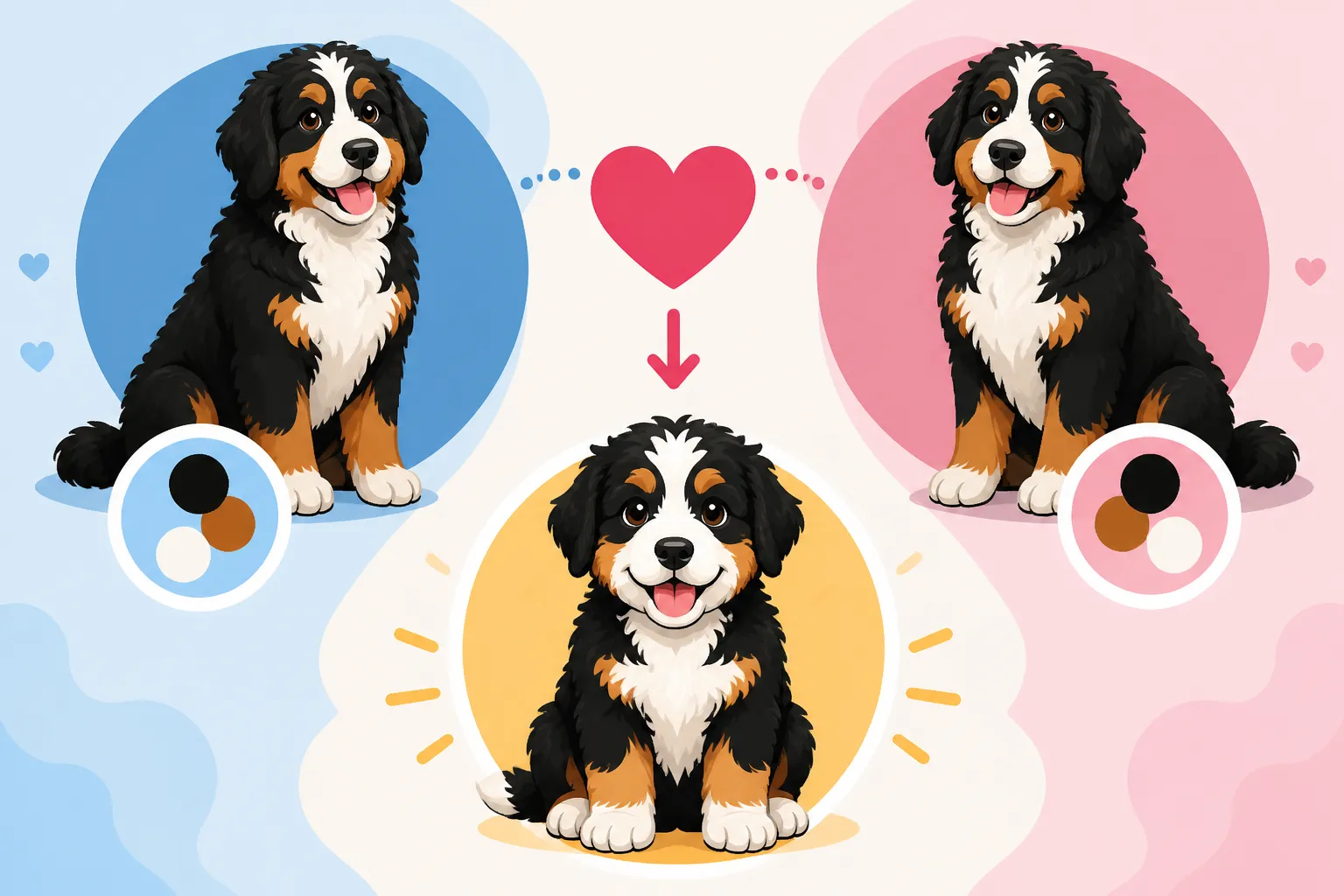
It’s a truly understandable dream to picture a litter of fluffy Bernedoodle puppies, each one sporting those iconic tri-color markings that make them look like miniature Bernese Mountain Dogs. Many aspiring owners, and even some newer breeders, assume that if you breed two tri-color Bernedoodles together, you’re guaranteed a litter of equally stunning tri-color pups. The reality, however, is often a bit more complex and, frankly, a little unpredictable, which can be a real disappointment if you're set on a specific look. This guide will walk you through the fascinating (and sometimes frustrating) world of Bernedoodle color genetics and explain why two tri-color parents don't always guarantee a tri-color outcome.
Unraveling Bernedoodle Coat Color Genetics
To really get a grip on why coat colors can be such a wild card, we need to dive a little into the basic genetics at play. Think of it like a giant puzzle where each parent contributes half the pieces. With Bernedoodles, you've got two very different genetic backgrounds – the Bernese Mountain Dog, typically with a very consistent tri-color pattern, and the Poodle, which comes in a vast array of solid colors and patterns. When these two distinct genetic libraries combine, the possibilities multiply.
The Tri-Color Gene from the Bernese Mountain Dog
The beloved tri-color pattern of the Bernese Mountain Dog, characterized by black, rust, and white markings, isn't just a random splash of color. It's dictated by specific genetic loci, or locations on a chromosome, and the alleles (versions of a gene) present at those locations. For a dog to express the traditional tri-color pattern, it generally needs to inherit specific recessive alleles for tan points (at/at) and the piebald or Irish spotting gene (s/sp or s/s) for the white markings, along with the dominant black gene (K/K or K/k) to ensure the black base. The Bernese Mountain Dog breed has been carefully bred for generations to consistently produce this pattern, meaning most Bernese carry these specific genetic combinations. This is why you rarely see a Bernese in a solid color or a different pattern—their genetic blueprint for color is very uniform. The Tri Color Markings People Buy a Bernedoodle For are a huge part of their appeal, and understanding their genetic origin is key.
Poodle Color Genes and Patterns
Now, let's bring the Poodle into the picture. Poodles are renowned for their incredible variety of coat colors and patterns. They can be solid black, white, cream, apricot, red, brown, silver, and even blue. Beyond solid colors, Poodles can also carry genes for patterns like phantom (which looks very similar to tri-color, with tan points on a solid base), sable (where each hair is shaded with multiple colors), and parti (large patches of white with another color). The Poodle's genetic contribution adds a layer of complexity because they often carry dominant genes that can "hide" or modify the tri-color pattern. For instance, a Poodle might carry a gene for a solid coat that, when passed on, can override the expression of the tan points or white markings from the Bernese side. This genetic diversity is a big reason why Bernedoodle litters can be such a mixed bag when it comes to color.
Why Two Tri-Color Parents Don't Guarantee Tri-Color Puppies
This is where the rubber meets the road and often leaves prospective puppy parents scratching their heads. You’d think it would be straightforward, right? Tri-color parent plus tri-color parent equals tri-color puppies. But biology, especially in a hybrid breed, doesn't always work like simple addition. The key lies in understanding how genes are passed down and the concept of "carrier" status.
The Role of Recessive Genes and Carriers
Remember how we mentioned the specific recessive alleles needed for the Bernese tri-color pattern? Both Bernedoodle parents might appear tri-color, meaning they express the tri-color phenotype. However, because they are a hybrid, they might also carry hidden recessive genes from their Poodle lineage or even from their Bernese ancestors if those lines weren't purely tri-color dominant. For example, a Poodle parent might have been a solid color, but also a carrier for genes that could produce tan points if paired with the right partner. When this Poodle is bred to a Bernese, their Bernedoodle offspring might look tri-color, but genetically, they might also carry a solid gene from the Poodle that wasn't expressed in them.
Imagine two tri-color Bernedoodles who each inherited one "tri-color" gene and one "solid" gene (that didn't express itself in them because the tri-color gene was dominant enough or other genes masked it). When these two dogs breed, there's a statistical chance that some puppies will inherit two "solid" genes, resulting in a solid-colored puppy. This is a classic example of how recessive traits can pop up unexpectedly, even when both parents outwardly display a different trait. It's why The Genetics Behind a Bernedoodle's Tri Markings are so intricate.
The Impact of Multiple Genes in Play
It’s not just about one or two genes deciding color. Canine coat color is governed by a complex interplay of multiple gene loci, each with its own set of alleles. These genes can interact in epistatic ways, meaning one gene can influence or even completely mask the expression of another. For instance, there's a gene that dictates if a dog will even have black pigment. Then there are genes for diluting colors, genes for white spotting, genes for tan points, and genes for patterns like sable or phantom.
A Bernedoodle might look tri-color, but perhaps it carries a hidden sable gene from its Poodle side. If bred to another tri-color Bernedoodle that also carries that hidden sable gene, you could suddenly see sable-patterned puppies in the litter. The complexity means that even if both parents are stunning tri-colors, the combination of their entire genetic blueprint can produce a kaleidoscope of possibilities in their offspring. This is often the frustration for those hoping for a predictable litter, highlighting why Whether an F1 Bernedoodle Can Be Tri Color depends on the specific Poodle parent's genetics.
Unpredictability in Hybrid Breeding
One of the defining characteristics of hybrid breeding, like with Bernedoodles, is the increased genetic diversity compared to purebred dogs. While purebred breeders aim for consistency within their lines, hybrid breeders are intentionally mixing distinct genetic pools. This hybrid vigor brings many benefits, but predictability in traits like coat color can be sacrificed. You're essentially shuffling a much larger deck of cards. Even with two tri-color parents, the genetic lottery is very much in play. This unpredictability extends to other traits too, which is why Whether a Multigen Bernedoodle Keeps the Lifespan Gain can also be a more nuanced question than it seems.
What to Expect from a Tri-Color to Tri-Color Breeding
So, if a 100% guarantee is off the table, what can you expect? The good news is that breeding two tri-color Bernedoodles does significantly increase the likelihood of producing tri-color puppies compared to breeding a tri-color to a solid-colored Bernedoodle. It's just not an absolute certainty.
The Odds of Tri-Color Puppies
When both parents are visibly tri-color, it suggests they possess the necessary genes to express that pattern. If these genes are dominant or homozygous (meaning they have two copies of the same gene) for the tri-color pattern at all relevant loci, then the chances of tri-color puppies are indeed very high. However, if either parent is heterozygous (meaning they have one copy of the tri-color gene and one copy of another color/pattern gene) for any of the critical color genes, then the odds shift.
Consider a simplified example:
| Parent 1 (Tri-color) | Parent 2 (Tri-color) | Potential Offspring | Outcome |
|---|---|---|---|
| AA (Tri) | AA (Tri) | AA | Tri-color (100%) |
| Aa (Tri, carries solid) | Aa (Tri, carries solid) | AA, Aa, aA, aa | 75% Tri-color, 25% Solid |
| Aa (Tri, carries solid) | AA (Tri) | AA, Aa | 100% Tri-color (but 50% carry solid) |
This table, while simplified, illustrates how a "carrier" gene (represented by 'a') can lead to an unexpected outcome. Most reputable breeders will use genetic testing to understand these possibilities. It's not just about what you see, but what's in the genetic code.
Other Patterns and Colors You Might See
Even with two tri-color parents, you might still see other colors and patterns emerge in a litter. This is part of the fun (or frustration!) of Bernedoodle genetics. You could see:
- Solid Black, Brown, or Other Colors: If a recessive solid gene is carried by both parents, a puppy could inherit two copies of it and be solid.
- Bi-color: A dog might express tan points but lack the white markings. This often presents as black and rust, similar to a Rottweiler pattern.
- Phantom: Very similar to bi-color, often seen in Poodles, where tan points appear on a solid base. Sometimes this is mistaken for tri-color if white isn't present.
- Sable: This pattern can sometimes mask other colors, appearing as a gradient where the tips of the hair are darker than the base. If a sable gene is hidden and then expressed, it can significantly alter the look of a "tri-color" puppy.
- Merle: While typically not desired in Bernedoodles (as it usually comes from introducing another breed like an Australian Shepherd), if a Merle gene was present in the Poodle ancestry and was bred through, it could theoretically emerge. However, this is far less common in traditional Bernedoodle lines.
It’s important to remember that these variations don't make a puppy any less of a Bernedoodle or any less lovable. They simply showcase the incredible genetic diversity within the breed. When purchasing a puppy, sometimes Whether Color Should Change What You Pay for a Bernedoodle becomes a question, and while some colors command a premium, health and temperament should always be the priority.
How a Breeder Manages Color Expectations
A truly responsible and knowledgeable Bernedoodle breeder will be very upfront about the possibilities of coat colors in a litter, even when breeding two tri-color parents. They won't promise a 100% tri-color litter unless they have done extensive genetic testing on their breeding dogs and understand their lines intimately. Here’s what good breeders do:
- Genetic Health and Color Testing: They invest in comprehensive DNA testing for their breeding dogs, which includes panels for coat color and pattern genes. This allows them to predict the probabilities of different colors appearing in a litter.
- Transparency: They will share these genetic test results with prospective buyers and explain what colors and patterns are possible from a specific pairing.
- Focus on Health and Temperament: While color is appealing, a good breeder prioritizes health, temperament, and structural soundness above all else. They understand that a healthy, well-adjusted puppy, regardless of its exact color, is what truly matters.
- Education: They will educate buyers on the nuances of Bernedoodle genetics and help manage expectations, explaining that while a high percentage of tri-colors is likely, other patterns can still emerge. When you're Asking a Breeder About Cancer in the Bernese Line or about genetic diseases, it’s also a great opportunity to ask about their genetic testing for coat color too.
Genetic Testing for Bernedoodle Coat Color
For anyone serious about understanding the potential colors of a Bernedoodle litter, whether you're a breeder or a prospective owner with a strong preference, genetic testing is an invaluable tool. It takes the guesswork out of some aspects of breeding and can give you a much clearer picture of what to expect. There are several reputable companies that offer canine DNA testing services that include coat color panels. Many kits are even available for at-home use through retailers like Chewy.
Understanding Color Panels
A canine coat color panel typically tests for a variety of genes at different loci that are known to influence coat color and pattern. Some of the common ones include:
- K Locus (Dominant Black/Brindle/Recessive Black): This determines if a dog is solid black, brindle, or can express other colors.
- A Locus (Agouti – Sable, Tan Points, Recessive Black): This is crucial for patterns like tan points (which are part of the tri-color look) and sable.
- B Locus (Brown/Liver): Determines if the black pigment is expressed as black or brown.
- E Locus (Extension – Red/Yellow, Mask): Influences whether a dog is red/yellow or has a black mask.
- S Locus (White Spotting/Piebald): Critical for determining the extent of white markings.
- M Locus (Merle): Identifies if a dog carries the Merle gene.
By testing both parents for these genes, breeders can predict the statistical probability of each color and pattern appearing in their litter. This doesn't mean you'll get exactly that percentage in a single litter, but over many litters, the probabilities tend to hold true.
The Value for Buyers and Breeders
For breeders, genetic testing is a crucial part of responsible breeding. It allows them to:
- Make informed breeding decisions: They can select pairings that are more likely to produce desired colors while also ensuring genetic diversity and health.
- Avoid health risks: For example, responsible breeders never breed two Merle dogs together due to the severe health risks associated with double Merle puppies. Color panels help identify Merle carriers.
- Manage expectations: They can provide accurate information to potential buyers about the likelihood of specific colors, preventing disappointment.
For buyers, especially those with a strong preference for a specific look like tri-color, asking to see the genetic color panel results for both parents can be incredibly reassuring. It gives you confidence that the breeder truly understands their dogs' genetics and isn't just guessing. While a puppy's color is only one aspect of its charm, knowing that the breeder has invested in these tests speaks volumes about their overall commitment to responsible breeding practices. Sometimes, this foresight also extends to health clearances, which can make all the difference, making pet insurance providers like Healthy Paws even more appealing for unexpected issues. What a Bernedoodle breeder should publish usually includes these health clearances, and increasingly, color panels too.
Ultimately, while the dream of a guaranteed tri-color litter from two tri-color Bernedoodle parents is appealing, the reality of canine genetics is a bit more nuanced. Embrace the wonderful unpredictability of this charming hybrid, and remember that a healthy, well-socialized puppy with a great temperament is always the best color of all. And don't forget the practicalities too; ensuring your new companion has access to quality food, whether through a service like Ollie or a trusted brand from Chewy, is just as important as knowing their potential coat color.
Disclaimer
This article is for general informational purposes only and does not constitute professional advice. Laws, prices and regulations vary by location and change over time. Consult a qualified professional for guidance on your specific situation.