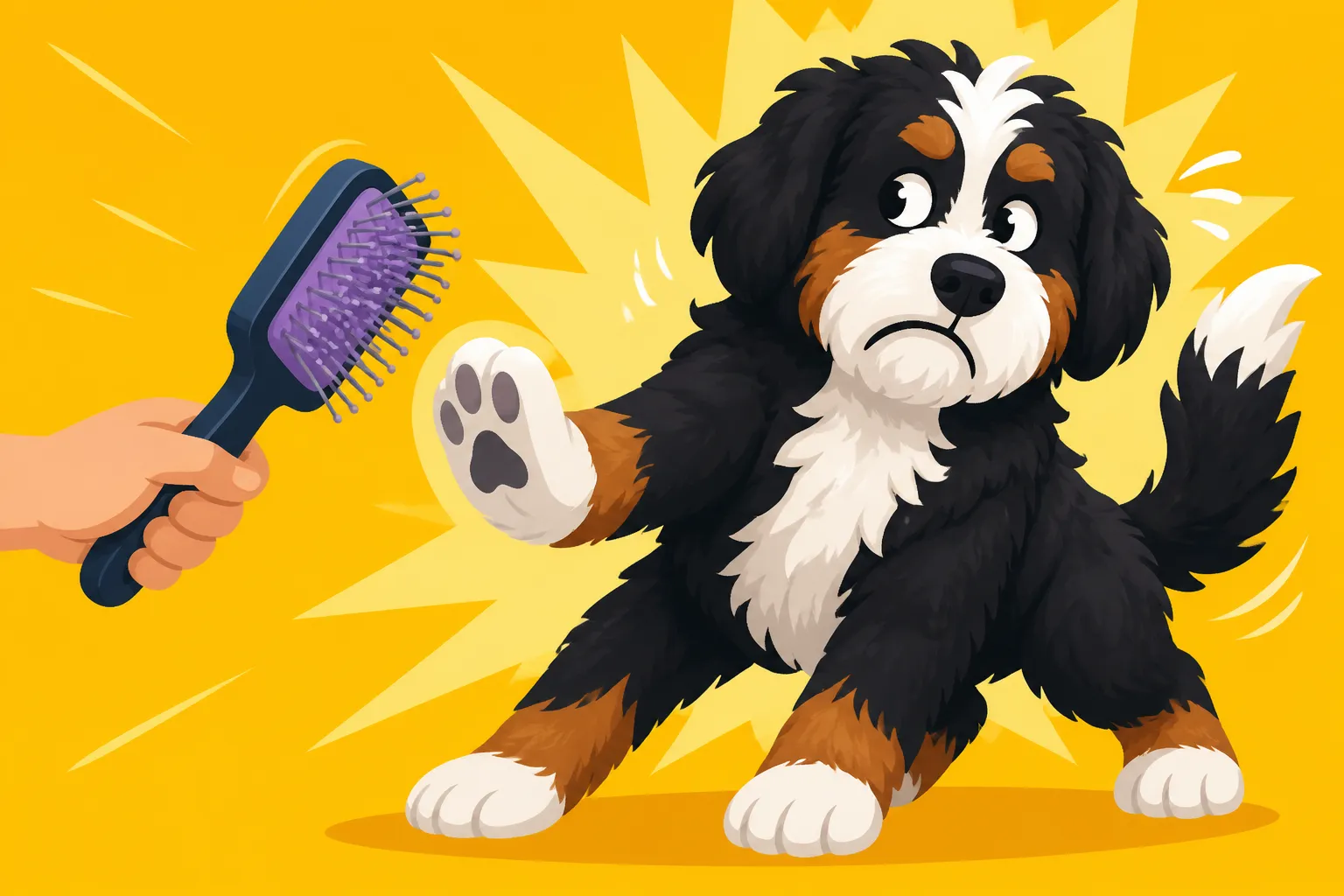
A Bernedoodle That Will Not Stand for Brushing
Oh, the sheer will of a Bernedoodle who decides grooming time is not happening! It's a common battle, I hear it all the time from my fellow Bernedoodle parents. You've got this sweet, fluffy companion, but when that brush comes out, they suddenly transform into a wriggly, floppy, or even nippy creature determined to escape the ordeal. It's frustrating and can quickly lead to painful mats for your pup and even more frustration for you. This guide is all about helping you understand why your Bernedoodle resists brushing and, more importantly, providing practical, empathetic strategies to turn grooming into a positive, cooperative experience.
Understanding Why Your Bernedoodle Hates Brushing
It’s easy to feel like your Bernedoodle is just being stubborn when they refuse to stand still for brushing. And yes, sometimes there's a stubborn streak that comes through, probably from both sides of their lineage! But often, there's more to it than simple defiance. Unpacking the reasons behind their resistance is the first step toward finding a solution that works for both of you.
The Root Causes of Resistance: Fear, Pain, or Discomfort
Imagine someone trying to brush your hair roughly, pulling tangles, or using a tool that feels scratchy and unpleasant. You'd probably squirm, too! For many Bernedoodles, especially those with their dense, often curly or wavy coats, brushing can genuinely be uncomfortable or even painful if they have existing mats or if the wrong tools or techniques are used.
Think about it: a small snag with a slicker brush, a forgotten mat tucked away in an armpit, or an ear that's a little tender from an underlying infection can turn a regular grooming session into a dreaded event. If your Bernedoodle associates the brush with pain, even a tiny bit, their natural instinct is to avoid it. They might flinch, pull away, or even snap as a way to say, "Stop, this hurts!" It’s crucial to rule out any physical discomfort first. A quick check for hidden mats, skin irritation, or sensitive spots can go a long way. Sometimes, the problem isn't the brushing itself, but what the brushing reveals or exacerbates.
Puppyhood Misses: When Early Socialization Goes Wrong
We all start with the best intentions, right? But sometimes, in the flurry of puppy training – potty training, nipping, basic commands – dedicated grooming practice can fall by the wayside. If a Bernedoodle puppy isn't properly introduced to brushing, handling, and grooming tools in a positive and gradual way, they can quickly develop a lifelong aversion.
A puppy’s world is all about new experiences. If their first few brushes were rushed, if a mat was pulled without them understanding what was happening, or if they were simply restrained too long without breaks or rewards, they can learn to fear the process. This isn't just about the brush; it’s about the overall handling. Were their paws held often? Were their ears touched? Did they spend time on a Getting a Bernedoodle Used to the Grooming Table from a young age? Without these foundational positive experiences, a full-grown Bernedoodle can be a real handful, literally, because they haven't learned to tolerate or even enjoy the necessary physical contact that grooming requires.
The Unique Bernedoodle Coat Challenge
Let’s be honest, the Bernedoodle coat is magnificent, but it's also a significant commitment. It’s a mix of the thick, double coat of a Bernese Mountain Dog and the curly, low-shedding (but matting-prone) coat of a Poodle. This combination often results in a soft, wavy, or curly coat that can mat in the blink of an eye. This is especially true during their "coat change" phase, usually between 6 to 18 months, when their puppy fluff gives way to their adult coat. During this time, the loose puppy hair gets tangled in the incoming adult hair, creating a matting disaster zone if not meticulously brushed.
This unique coat is a huge reason why Bernedoodles often resist brushing. If you’re not brushing The Volume of Coat a Bernedoodle Owner Brushes Weekly – and by that, I mean brushing down to the skin – then mats can form underneath the top layer, completely out of sight. When you finally hit one of these hidden mats with a brush, it’s going to hurt. Even without severe matting, the density and texture of their coat mean it takes more effort and time to brush thoroughly, which can test any dog’s patience, let alone one that hasn't been trained for it. This makes consistent, effective brushing absolutely non-negotiable for their comfort and health.
Preparing for a Successful Brushing Session
Before you even touch a brush to your Bernedoodle, setting the stage for success is paramount. It’s not just about the tools, it’s about the environment, your mindset, and getting your dog in the right frame of mind. This preparation can make the difference between a wrestling match and a relatively calm, albeit still challenging, grooming session.
Creating a Calm and Positive Environment
Dogs, especially intelligent and sensitive breeds like Bernedoodles, are incredibly attuned to our emotions and the energy of their surroundings. If you approach brushing with a sense of dread or frustration, your Bernedoodle will pick up on that immediately. The key is to make the grooming space as pleasant and stress-free as possible.
Choose a quiet time when there are no distractions – no kids running around, no TV blaring, no doorbells ringing. Find a designated "grooming spot," whether it’s on a non-slip mat on the floor, a sturdy table (if your dog is trained for it and you have a secure grooming arm), or even a comfortable bed. Use a soothing voice, offer gentle praise, and maintain a calm demeanor yourself. You might even consider playing some calming music or using a diffuser with dog-safe essential oils (like lavender) to help create a tranquil atmosphere. The goal is to build positive associations with this space and activity, slowly transforming it from something to be feared into a predictable, even pleasant, routine.
The Right Tools for the Job
Trying to brush a Bernedoodle with the wrong tools is like trying to cut steak with a butter knife – frustrating for everyone and completely ineffective. Given their unique coat, you need specific brushes and combs to get the job done right and prevent pain.
First, invest in a high-quality slicker brush. This is your workhorse for daily brushing, designed to get through the coat and address tangles. Look for one with fine, bent wire bristles that are firm but not overly sharp. Second, a good metal comb, often called a Greyhound comb, with both wide and narrow teeth, is essential. This is what you'll use to "line brush" and ensure you've brushed all the way to the skin. Finally, a detangling spray can be a lifesaver. It lubricates the coat, making it easier for the brush to glide through and helping to loosen minor mats without excessive pulling. Skip the cheap plastic brushes, they're simply not up to the task of a Bernedoodle's coat. For a deeper dive into specific recommendations, check out The Brushes a Bernedoodle Owner Actually Needs.
| Tool Type | Purpose | Why it's Essential for a Bernedoodle's Coat |
|---|---|---|
| Slicker Brush | Daily detangling, removing loose hair | Gets through dense undercoat, prevents surface matting, and stimulates skin. |
| Metal Comb | Checking for mats, line brushing, finishing | Ensures brushing reaches the skin, detects hidden mats, essential for thoroughness. |
| Detangling Spray | Lubricating coat, easing knot removal | Reduces friction, minimizes pulling pain, makes brushing more efficient. |
| Pin Brush (optional) | Finishing, gentle on longer feathering, less effective for mats | Good for superficial smoothing, but not deep detangling on a Bernedoodle. |
Essential Pre-Brushing Steps
Before you even introduce the brush, there are a few things you can do to make the experience smoother. Start with exercise. A tired Bernedoodle is generally a more cooperative Bernedoodle. Take them for a good walk or engage in some vigorous play to burn off some energy. This can help them settle down and be more amenable to standing still.
Next, have all your tools ready and within arm's reach. This prevents you from having to break the session to grab something, which can disrupt your dog's focus and patience. Have a generous supply of high-value, small, soft treats readily available. These aren't just for after the session; they're for during the session, as rewards for calm behavior. Consider also putting on a favorite show or podcast if that helps you relax, as your calm energy will transmit to your pup. If your Bernedoodle is particularly prone to biting or mouthing, you might consider using a muzzle, especially in the initial stages of training, to ensure everyone's safety, without punishing them for wearing it. Remember, it's about making the entire process as positive and predictable as possible.
Step-by-Step Training Strategies to Overcome Resistance
Once you understand why your Bernedoodle resists and you've prepped your environment and tools, it's time to actually tackle the training. This isn't a one-and-done fix; it's a gradual, consistent process that builds positive associations over time. Patience and persistence are your greatest allies here.
Desensitization and Counter-Conditioning
This is the cornerstone of making your Bernedoodle tolerate, and eventually enjoy, brushing. Desensitization means gradually exposing your dog to the brush and the act of brushing in a way that doesn’t trigger fear or anxiety. Counter-conditioning means changing their emotional response from negative to positive.
Start with the bare minimum. Show your Bernedoodle the brush, let them sniff it, and immediately give them a treat. Don't even touch them with it yet. Repeat this a few times a day. Once they're comfortable with the sight of the brush, gently touch their shoulder with the back of the brush (the non-bristle side), then immediately treat. Gradually progress to a single, gentle stroke with the bristles, then a treat. The key is to keep the exposures brief and always end on a positive note. If they show any signs of discomfort – pulling away, tensing up – stop, take a step back, and try a less intense interaction next time. The goal is to keep them "under threshold," meaning not so stressed that they react negatively. Over time, these tiny, positive experiences build up, teaching your Bernedoodle that the brush predicts good things! Building Confidence in a Timid Bernedoodle can be a helpful guide if your dog's resistance stems from shyness or fear of handling.
Breaking Down the Task: Short, Sweet Sessions
Trying to brush your entire Bernedoodle in one go, especially when they're resistant, is a recipe for disaster. Instead, break down the grooming process into tiny, manageable chunks. Think of it like teaching a child to read – you don't start with a novel, you start with individual letters.
Focus on one small area at a time, for just a few seconds. Maybe it's just one leg, or even just a small patch on their back. Brush for literally 5-10 seconds, then release, praise, and give a treat. Even if they only tolerate one stroke, that’s a win! You want to aim for multiple, very short sessions throughout the day, rather than one long, grueling battle. As your Bernedoodle becomes more comfortable, you can gradually increase the duration or the area you’re brushing. This strategy is also vital when teaching a dog to perform specific actions during grooming, like Teaching a Bernedoodle to Lie Down for Three Hours of Grooming. This systematic approach prevents your Bernedoodle from becoming overwhelmed and helps them build endurance for longer sessions.
Rewarding Cooperation: Positive Reinforcement is Key
Positive reinforcement is non-negotiable when it comes to training a reluctant Bernedoodle to stand for brushing. Every single instance of calm, cooperative behavior, no matter how small, needs to be acknowledged and rewarded generously. This means treats, verbal praise ("Good stand!"), and gentle petting (in areas they enjoy) during and immediately after the desired behavior.
Think of those high-value treats as currency. Your Bernedoodle is working for them. When they stand still for a stroke, they get paid. If they offer a paw when you reach for their leg, they get paid. You can even try using a lick mat spread with peanut butter (ensure it's xylitol-free!) or plain yogurt to keep them distracted and happy during brushing sessions. These long-lasting treats can be great motivators. Products like those available from BAXTER & Bella, which focus on positive training methods, often emphasize similar treat-based strategies. Never punish or scold your Bernedoodle for resistance; this will only increase their fear and make future sessions even harder. Focus solely on rewarding the behaviors you want to see. If you’re struggling with mouthiness, remember to differentiate between fear-based aggression and Whether a Bernedoodle Puppy Bites Hard as part of play.
Handling a Stubborn or Aggressive Bernedoodle During Brushing
There might be times when your Bernedoodle’s resistance goes beyond wiggling and becomes more serious, involving snapping, growling, or even biting. This is where safety, professional help, and realistic management come into play. It’s important to address these behaviors with extreme caution and the right approach.
Prioritizing Safety for Everyone Involved
If your Bernedoodle shows signs of aggression during brushing, your first priority must be the safety of yourself and anyone else in the household. A bite from a large dog like a Bernedoodle can be serious. Never force a dog into a situation where they feel cornered or threatened, as this can escalate aggression.
If aggression is a concern, consider using a basket muzzle during grooming sessions, but ensure it's introduced positively and your dog is comfortable wearing it before you need it for grooming. This isn't punishment; it's a safety tool that allows you to continue training without fear of injury, protecting both of you. You might also want to wear thick gloves. If you cannot safely brush your Bernedoodle without risking a bite, or if you're dealing with extensive matting, it's time to seek professional help. Your vet can advise on potential pain causes, and a certified professional groomer or dog trainer specializing in fear-based aggression can offer hands-on guidance.
When to Call in Professional Help
Sometimes, despite your best efforts, you simply can't make headway with your Bernedoodle's brushing resistance, or the behavior is too severe for you to handle alone. This is not a failure on your part; it's recognizing that some challenges require expert intervention.
A professional groomer has experience with many different dog temperaments and can often work wonders, especially if they use positive reinforcement techniques. They might have specialized equipment, like secure grooming tables or hydraulic lifts, that help manage larger, more difficult dogs safely. However, make sure you find a groomer who is patient and prioritizes humane handling. Some groomers might suggest sedation in extreme cases for safety, which is a big decision and something you should discuss thoroughly with your veterinarian. For behavioral issues, a certified professional dog trainer or a veterinary behaviorist can help you identify the root cause of the aggression or fear and develop a tailored behavior modification plan. Don't be afraid to reach out; a professional can often achieve in one session what might take you weeks or months. For insights into sedated grooming, you might want to read Whether a Bernedoodle Should Ever Be Sedated to Groom.
Managing Mats When Brushing Isn't Possible
Let's face it: sometimes, despite all your efforts, mats happen, especially when a Bernedoodle is actively resisting brushing. If you encounter significant matting, do not try to brush them out yourself if your dog is in pain or if the mats are extensive and tight against the skin. Attempting to brush out painful mats will only solidify your dog's negative association with grooming. Whether a Matted Bernedoodle Is Painful to Handle is a real concern.
Instead, your best course of action is to take your Bernedoodle to a professional groomer. They have the tools and expertise to safely and humanely remove mats, often by shaving them out. While it might mean a very short haircut, it's far better than causing your dog pain and creating further fear. Discuss with the groomer the option of a "strip down" or a very short clip to get rid of all the matting, and then you can start fresh with your brushing routine. This will also give you a clean slate to begin consistent daily brushing without the immediate hurdle of painful existing mats. Be prepared that this service can incur additional costs; you can learn more about What a Matted Bernedoodle Costs to Shave.
Maintaining a Brush-Friendly Bernedoodle for Life
Once you've made progress in getting your Bernedoodle to tolerate or even enjoy brushing, the work isn't over. Maintaining this positive relationship with grooming requires consistency, ongoing positive reinforcement, and a holistic approach to their care.
Establishing a Consistent Routine
Consistency is absolutely vital for Bernedoodles, as it builds predictability and reduces anxiety. A consistent brushing routine isn't just about how often you brush, but also when and where you do it. Try to brush your Bernedoodle at the same time each day or a few times a week, in the same location. This predictability helps them understand what to expect.
For most Bernedoodles, especially with their mixed coats, daily brushing is ideal to prevent matting. If daily is too much, aim for every other day, but no less than three times a week for a full body brush-out. Even on days when you don't do a full session, a quick brush around high-friction areas like the armpits, behind the ears, and in the "britches" can save you a lot of trouble later. Think of it as preventative maintenance. Remember How Often a Bernedoodle Should Be Brushed isn't a suggestion, it's a necessity for their coat health. Integrating this into your daily life ensures that grooming never becomes a crisis point again.
Making Grooming a Positive Family Affair
Grooming doesn't have to be a solo effort, especially if you have a family. Involving other family members in a positive way can reinforce your Bernedoodle's comfort with being handled by different people and make the process more social. Just ensure everyone is using the same gentle techniques and positive reinforcement strategies.
For example, one family member could hold the leash and offer treats while another brushes. Children, if old enough and responsible, can be taught how to gently brush certain areas or simply sit nearby and offer praise. This communal approach helps your Bernedoodle generalize their positive grooming experiences. It teaches them that being handled and groomed by different people is safe and rewarding. This kind of consistency across handlers is especially important for multi-dog households or if your Bernedoodle spends time with other caregivers. You can even find interactive toys or puzzles from places like Amazon to keep them engaged and happy while someone else grooms.
Regular Vet Checks and Professional Grooming Support
Even with the best at-home routine, regular professional support is crucial for a Bernedoodle. Your veterinarian is a key partner in ensuring your dog's overall health, which directly impacts their comfort during grooming. During annual check-ups, your vet can identify any underlying skin conditions, joint pain (making standing uncomfortable), or ear infections that might be contributing to brushing resistance. They can also advise on things like nail trims and ear cleaning, which are often part of a complete grooming routine.
Beyond the vet, don't underestimate the value of professional groomers. Even if you're committed to home grooming, scheduling professional grooming every 6-8 weeks can be immensely beneficial. They can tackle difficult areas, maintain specific clips, and ensure everything is thoroughly de-matted, essentially providing a "reset" for your home efforts. This also gives you a chance to discuss any persistent issues you're facing. This partnership with professionals is a strong support system for keeping your Bernedoodle healthy, happy, and brush-friendly throughout their life. The Screening a Bernedoodle Should Have Yearly often includes checking for skin and coat issues.
Disclaimer
This article is for general informational purposes only and does not constitute professional advice. Laws, prices and regulations vary by location and change over time. Consult a qualified professional for guidance on your specific situation.