A Bernedoodle Meeting the Family Dog
Bringing a new Bernedoodle into a home where another dog already resides can feel like walking a tightrope – you’re excited for the new addition, but you’re also filled with anxiety about whether your existing furry family member will accept them. It’s a common worry, and one that, if not handled carefully, can lead to stress for everyone involved. This comprehensive guide is here to help you navigate those crucial first encounters and beyond, ensuring a smooth, positive transition for your Bernedoodle and your current canine companion.
Setting the Stage for Success: Pre-Introduction Preparations
Before your new Bernedoodle puppy or adult dog even steps paw inside your home, there’s vital groundwork you can lay to make the introduction process as seamless and stress-free as possible. Think of it as preparing the canvas before you start painting; the better the prep, the smoother the masterpiece. Skipping these steps can lead to unnecessary tension and challenges down the road.
Health Checks and Vaccinations
One of the absolute first things you need to confirm, regardless of whether you're getting a puppy or adopting an older dog, is the health status of both your new Bernedoodle and your existing dog. It's not just about physical well-being; it's about preventing the spread of any potential illnesses that could cause serious problems and add immense stress during an already delicate time.
Imagine bringing home a charming Bernedoodle puppy, only to discover a few days later that it's carrying kennel cough or worse. Not only is your new pup sick, but now your beloved resident dog could also catch it. This scenario is a recipe for veterinary bills and emotional strain. Ensure your new Bernedoodle has had all appropriate vaccinations for their age, has been dewormed, and has a clean bill of health from a veterinarian. Similarly, confirm your existing dog is up-to-date on their vaccinations and parasite prevention. A healthy dog is a happy dog, and healthy dogs are much more likely to have positive interactions. This due diligence protects all your pets and gives you peace of mind as you embark on this new journey together.
Scent Swapping and Familiarization
Dogs live in a world dominated by scent, and introducing them through smell before sight can dramatically reduce anxiety and curiosity during their first face-to-face meeting. It’s like getting a peek at someone’s resume before they walk into an interview – you already have some idea of who they are.
Start this process a few days before your Bernedoodle arrives, or as soon as possible if they’re already home but kept separate. Take a blanket, towel, or toy that has the scent of your new Bernedoodle and place it in your resident dog’s sleeping area. Let them sniff it, investigate it, and get accustomed to this new smell without the pressure of a physical encounter. Observe their reaction: calm sniffing is great, but any growling or excessive excitement might indicate more cautious steps are needed. Do the same in reverse, giving your Bernedoodle an item with your resident dog's scent. This exchange allows both dogs to gather vital information about each other's presence, age, and even mood, subtly preparing them for what's to come. It’s a low-stakes way to begin building familiarity and acceptance, making the actual introduction less of a shock and more of a natural progression.
Creating Separate Safe Spaces
Even the most outgoing dogs need their own sanctuary, especially when a new canine family member is introduced. Think about how you feel when you need some alone time; dogs are no different. Establishing separate, designated safe spaces for both your Bernedoodle and your existing dog is critical for preventing stress, resource guarding, and overstimulation.
This means having separate crates, beds, or even entire rooms where each dog can retreat and feel secure. These spaces should be accessible at all times, providing a haven where they can eat, sleep, and relax without intrusion from the other dog. For instance, you might have your resident dog's crate in the living room, and your new Bernedoodle’s crate in a quiet spare bedroom. Use baby gates to section off areas of your home, allowing visual but not physical access initially. This is particularly important with a new Bernedoodle puppy, as they can be boisterous and an older, established dog might need a break from their endless energy. Having these zones clearly defined helps prevent conflict over resources like toys, food bowls, or even your attention. It teaches them that while they are part of the same household, they also have their own personal boundaries and privacy. Caring for a Bernedoodle Past Eight is a good read if your resident dog is a senior and might need more peace and quiet. These designated areas, perhaps with comfortable beds and a favorite chew toy sourced from Amazon, will become invaluable as your dogs learn to co-exist.
The First Encounter: Controlled and Positive
The first face-to-face meeting is undeniably the most critical step. This isn’t a moment to throw caution to the wind and hope for the best. Instead, it requires thoughtful planning, a neutral environment, and a commitment to positive reinforcement to set the tone for all future interactions.
Neutral Territory for Initial Meetings
Resist the urge to have the very first meeting happen right inside your home. Your house is your resident dog's established territory, and bringing a new dog directly into it can trigger territorial instincts, leading to unnecessary stress or even aggression. Instead, choose a truly neutral location, like a local park, a quiet field, or even a friend's securely fenced yard that neither dog considers "theirs."
This neutral ground helps both dogs feel more relaxed and less inclined to guard resources or feel threatened. Ensure the environment is calm, with minimal distractions from other dogs, people, or loud noises. The goal is a low-pressure situation where they can focus on each other. During this initial meeting, keep leashes on both dogs, but hold them loosely to avoid creating tension. You don't want to restrict their natural sniffing and greeting behaviors, but you want to be able to intervene quickly if necessary. Short, positive introductions are key. If they sniff politely and show relaxed body language, that's a huge win. End the meeting on a high note before either dog gets overstimulated or tired, reinforcing that meeting the other dog is a good, enjoyable experience.
On-Leash and Supervised Interactions
Once you’re in your chosen neutral territory, the first actual physical meeting should always be on-leash and under strict supervision. This isn't about punishment or restraint, but about safety and control for both dogs. Ideally, you'll have two handlers, one for each dog, to ensure individual attention and swift intervention if needed.
Keep the leashes loose, allowing them enough slack to approach, sniff, and move naturally. A tight leash can communicate tension and anxiety down the leash to the dog, making them feel less secure. Start with a parallel walk, keeping a comfortable distance apart where they can see and smell each other without direct, immediate interaction. Gradually, as they show calm curiosity, you can allow them to get closer for brief, supervised sniff-and-greet moments. Pay close attention to their body language: loose bodies, relaxed tails (not stiff and high), soft eyes, and exploratory sniffing are all good signs. Avoid any intense staring, stiff postures, growling, raised hackles, or excessive barking – these are red flags that mean you need to increase the distance or end the session. These initial on-leash encounters are about short, positive exposures, building familiarity bit by bit. Remember, a Bernedoodle can be quite large, with a standard growing to [Ninety Pounds], so managing their excitement and potential clumsy interactions is vital, especially with a smaller or older resident dog.
Managing Excitement and Overwhelm
Bernedoodles, especially as puppies, are often bundles of joyful, sometimes clumsy, energy. Their playful nature can be wonderful, but it can also be overwhelming for an older, more reserved, or less tolerant resident dog. It’s absolutely crucial to manage their excitement levels to prevent negative first impressions.
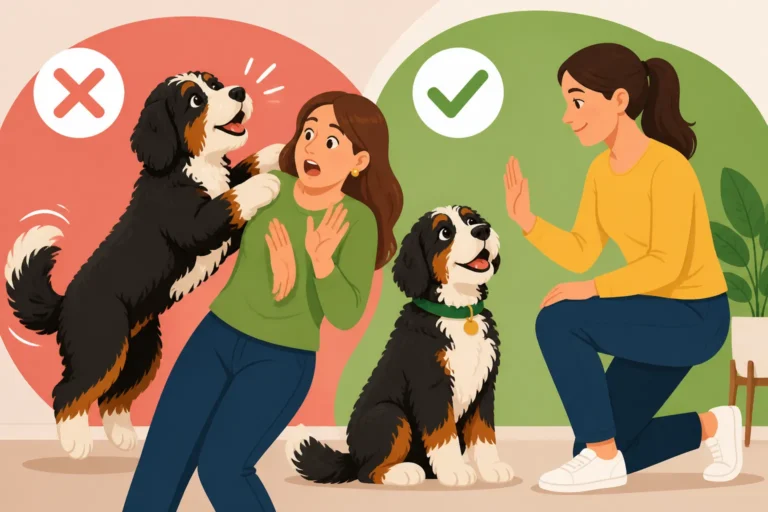
A Bernedoodle puppy, with its boundless enthusiasm, might try to jump on, mouth, or constantly pester an older dog who just wants to nap. While the Bernedoodle is generally a friendly breed, as you can read in Whether a Bernedoodle Is Friendly With Strangers, this enthusiasm needs careful channeling. If you see signs that your resident dog is becoming stressed – tail tucked, lip licking, yawning excessively, looking away, or even growling – it's time to intervene. Gently redirect the Bernedoodle puppy with a toy or lure them away with a treat. Physically separate them briefly to give both a chance to decompress. It's better to end an interaction on a calm note than to let it escalate into conflict or fear. Teach your Bernedoodle impulse control from day one, using positive reinforcement. Reward calm behavior around the other dog. If you notice your Bernedoodle gets over-excited, take a break. Too much stimulation too soon can ruin an otherwise promising introduction. Remember, your goal is a positive association, not forced friendship overnight.
Integrating into the Home: Step-by-Step
Once initial neutral territory introductions have gone well, it's time to bring them into the home environment. This still needs to be a gradual process, focusing on supervised co-existence and positive shared experiences.
Parallel Walking and Co-Existence
Even after positive neutral territory meetings, don't rush into full-house freedom. Continue to build their comfort with each other through parallel walking, both outdoors and eventually indoors. Outdoor parallel walks, where they walk side-by-side but with some distance between them, reinforce the idea that they can be together peacefully. This allows them to continue processing each other's presence through scent and peripheral vision without direct confrontation.
Indoors, use baby gates or crates to create controlled co-existence. For example, have your Bernedoodle in their crate in the living room while your resident dog relaxes nearby, or use a baby gate to separate rooms. This allows them to see, hear, and smell each other while still having individual space. Offer high-value treats to both dogs simultaneously when they are calmly co-existing in sight of each other. This creates a positive association: "When the other dog is around, good things happen!" The idea is to slowly desensitize them to each other's presence, making it a normal, non-threatening part of their daily routine. Keep these sessions short and sweet, always ending before any tension arises. This stage is crucial for building a foundation of calm acceptance before moving to unsupervised interactions.
Supervised Playtime and Shared Activities
Once both dogs are consistently calm and comfortable in each other's presence, it's time to introduce supervised playtime and shared activities. This is where their friendship can truly blossom! However, supervision remains absolutely key to ensure fair play and prevent any misunderstandings.
Start with short play sessions, perhaps 10-15 minutes, in a secure, open area where they have plenty of room to move. Observe their play style carefully. Is it balanced, with both dogs taking turns chasing and being chased? Or is one dog consistently dominating or pestering the other? Bernedoodles, as discussed in The Draft Dog Work a Bernedoodle Can Still Do, are often quite playful and robust, but you need to make sure their play isn't too rough for your resident dog. Provide a variety of toys, ensuring there are enough for both, to avoid resource guarding.
Engage them in shared activities like a training session. Simple commands like "sit" or "stay" can be practiced with both dogs present (and amply rewarded!). This helps them learn to focus on you even with the other dog around, reinforcing your role as the leader and making positive associations with their companion. Online training platforms, like those offered by BAXTER & Bella, can be a great resource for guiding you through these multi-dog training scenarios. If play becomes too rambunctious or one dog seems overwhelmed, separate them for a cool-down period. You want these interactions to be fun and enriching for both, building a positive shared history.
Meal Times and Resource Guarding Prevention
Meal times are often prime opportunities for resource guarding to surface, especially with a new dog entering the household. It's completely natural for dogs to be protective of their food, but this instinct needs to be managed carefully to prevent conflict.
From day one, feed your Bernedoodle and your resident dog in separate locations, out of sight of each other. This might mean one dog eats in their crate, and the other in a different room with the door closed. The goal is to eliminate any perceived competition for food. As they become more comfortable co-existing, you can gradually move their feeding stations closer, perhaps starting with them eating on opposite sides of a baby gate, slowly reducing the distance over days or weeks, always observing for any signs of tension.
Even outside of meal times, be mindful of high-value treats and chew toys. Offer these when the dogs are separated, or give them simultaneously but at a distance from each other. Teach both dogs a "leave it" command, which can be invaluable if one dog shows too much interest in the other's items. If you notice any growling, stiff body language, or attempts to guard food or toys, immediately go back to feeding and treating them in complete isolation. Prevention is far easier than trying to correct established resource guarding behaviors. Remember that a Bernedoodle can be prone to Bloat in a Standard Bernedoodle's Deep Chest, so ensuring a calm, unhurried eating environment is beneficial for their health as well.
Common Challenges and Troubleshooting
Even with the best preparation, integrating a new Bernedoodle can present its unique set of challenges. Being prepared for these bumps in the road and knowing how to address them is key to maintaining harmony.
Jealousy and Attention Seeking
It's completely normal for your resident dog to feel a bit put out or jealous when a new Bernedoodle arrives, especially if they've been an "only child" for a long time. They might suddenly start seeking more attention, nudging your hand, barking when you pet the new pup, or even acting out in ways they didn't before. Conversely, your Bernedoodle might try to monopolize your affection.
The key here is to distribute your attention fairly, but also strategically. Always give your resident dog attention first, particularly when you return home or before offering treats. This subtly reinforces their established status. Make sure to have dedicated one-on-one time with each dog every day, whether it's a special walk, a belly rub session, or a training game. When both dogs are present, praise and reward them both for calm, co-existing behavior. Avoid inadvertently reinforcing attention-seeking behaviors like barking or pawing; instead, wait for a moment of calm, then offer attention. You might even find your Bernedoodle leans on you for attention, as discussed in A Bernedoodle That Leans on Everyone, which can be endearing but needs managing around other pets. Consistency is vital. Both dogs need to learn that while they are part of a larger family, their individual needs and special bond with you are still valued and secure.
Age and Temperament Mismatches
Sometimes, the biggest hurdle isn't aggression, but simply a mismatch in energy levels or social expectations, particularly between a rambunctious Bernedoodle puppy and an older, more sedate resident dog. Your Bernedoodle, The Age a Bernedoodle Stops Acting Like a Puppy, might be full of zoomies and incessant play invitations, while your senior dog just wants peace and quiet.
This mismatch can lead to frustration for both. The puppy might feel ignored or rejected, and the older dog might become stressed and avoidant. It's your job to act as the mediator. Provide separate outlets for each dog's energy. Take your Bernedoodle for their spirited walks and play sessions, ensuring they get The Exercise a Standard Bernedoodle Needs Daily. Meanwhile, give your older dog their familiar, calmer routine. When they are together, use baby gates or tethers to create short periods of supervised interaction, teaching the Bernedoodle to respect the older dog's space. Reward calm behavior from the puppy and tolerance from the senior. Sometimes, you'll need to physically separate them in different rooms or crates to give everyone a much-needed break. Understanding the What a Bernedoodle Keeps of the Bernese Temperament will help you anticipate their social needs. Don’t force interactions, and always respect the older dog's need for quiet time. The goal isn't to make them playmates constantly, but to foster respectful co-existence.
When to Seek Professional Help
There are times when despite your best efforts, the integration process simply isn't going smoothly. Persistent fear, aggression, incessant barking, resource guarding that doesn't improve, or ongoing stress in one or both dogs are all serious red flags that indicate it's time to call in the cavalry. This isn't a sign of failure on your part, but rather a responsible step towards ensuring the safety and well-being of all your pets.
Don't wait until things escalate into a full-blown fight or a constant state of anxiety. Consult a certified professional dog trainer or a veterinary behaviorist who specializes in multi-dog households. They can assess the specific dynamics between your dogs, identify the root causes of any issues, and develop a tailored behavior modification plan. They can also teach you techniques to manage interactions, interpret subtle body language signals, and build confidence in both dogs. A professional can offer an objective perspective and expertise that can be invaluable. For instance, if your Bernedoodle is displaying The Stubborn Streak Under a Bernedoodle's Poodle Brain and not responding to your training, a professional might have alternative approaches. Early intervention is crucial, as behavioral problems tend to become more entrenched and difficult to resolve over time. Investing in professional help now can save you significant stress and heartache in the long run, and ultimately help your dogs build a lasting, positive relationship.
Fostering a Lasting Friendship
The introduction period might be over, but the work of nurturing a harmonious multi-dog household is an ongoing process. Building a lasting friendship between your Bernedoodle and your resident dog requires continuous effort, understanding, and love.
Continuing Positive Reinforcement and Training
Consistency is not just for the early days; it's the bedrock of a harmonious multi-dog home. Continue to use positive reinforcement for calm co-existence and good behavior from both your Bernedoodle and your existing dog. This means regularly rewarding them when they lie politely near each other, share a space without conflict, or engage in appropriate play.
Regular training sessions, both individually and together, are also crucial. Training reinforces your leadership, provides mental stimulation, and strengthens the bond between you and each dog. It also helps them learn impulse control and manners around each other. For example, practicing "settle" commands when they are together can teach them to relax in each other's company. Remember, What a Bernedoodle Will Work For often involves positive reinforcement, so keeping treats handy is a good idea. Even if they’ve been living together for months or years, don't stop reinforcing the behaviors you want to see. This ongoing commitment to positive reinforcement ensures that their relationship remains strong and respectful, preventing old habits from creeping back in and addressing any new challenges that might arise.
Maintaining Individual Attention and Routines
While the goal is for your Bernedoodle and resident dog to get along, it’s equally important that each dog retains their individuality and feels secure in their relationship with you. This means maintaining individual attention and, where possible, their established routines.
Your resident dog, especially, benefited from a routine before the Bernedoodle arrived. Disrupting this too much can cause stress. Try to keep their walk times, feeding schedules, and special cuddle moments consistent. Similarly, your Bernedoodle needs one-on-one time with you – a solo walk, a training session, or just some quiet time for petting and bonding. This individual attention prevents jealousy, strengthens your bond with each dog, and ensures both feel loved and important within the family unit. Think about it: even in human families, individual relationships with parents are vital. For your Bernedoodle, who might be generally friendly but can also be [Naturally Reserved], these moments can be especially important for building trust. It’s about creating a family where each member feels valued, not just merged into a generic "pack."
Understanding Your Bernedoodle's Role in the Pack
Dogs are social creatures, and they naturally look to you, their human, for guidance and leadership within the family "pack." Helping your Bernedoodle and your resident dog understand their place, with you at the helm, is crucial for preventing power struggles and fostering respect.
Bernedoodles are typically intelligent and eager to please, making them receptive to clear communication. Establish consistent rules and boundaries for both dogs. For example, if one dog isn’t allowed on the furniture, neither should the other be, at least initially. Teach them that you control access to resources – food, toys, attention, and even outdoor access. This doesn't mean being harsh; it means being a calm, consistent, and benevolent leader. By providing structure and clear expectations, you minimize opportunities for confusion or conflict between your dogs. When dogs feel secure in their environment and understand the hierarchy (with you at the top), they are more likely to relax and form strong, positive relationships with each other. A strong understanding of What a Bernedoodle Asks of a First Time Owner will give you the confidence to guide your dogs effectively. Ultimately, your consistent guidance helps both your Bernedoodle and your resident dog thrive together as a harmonious part of your family.
| Phase of Introduction | Key Actions | Goals | Brands/Products (Examples) |
|---|---|---|---|
| Pre-Arrival | Vet checks, vaccinations, deworming | Health & safety for both dogs | Vet services |
| Scent swapping (blankets, toys) | Familiarization, reduce novelty anxiety | Dog beds, blankets, toys from Amazon | |
| Establish separate safe spaces (crates, gates) | Prevent resource guarding, provide retreat | Crates, baby gates (e.g., from Amazon) | |
| Initial Meetings | Neutral territory introductions (on-leash) | Low-pressure, stress-free first visual contact | Long leashes, quiet park |
| Parallel walking (supervised) | Build comfort with proximity, subtle interaction | Walking harnesses for control | |
| Manage excitement, end on positive notes | Avoid overwhelm, build positive associations | High-value treats | |
| Home Integration | Continue parallel walks (indoors/outdoors) | Reinforce calm co-existence | Dog walkers, separate walking routes |
| Supervised playtime, shared activities | Foster positive interaction, balanced play | Various toys, dog puzzles, BAXTER & Bella online training | |
| Separate feeding, manage high-value treats | Prevent resource guarding, ensure calm mealtimes | Slow feeder bowls (Amazon), separate rooms | |
| Ongoing Harmonization | Consistent positive reinforcement | Maintain good behavior, strengthen bonds | Treats, verbal praise, affection |
| Maintain individual attention & routines | Prevent jealousy, ensure individual well-being | Dedicated playtime, solo walks | |
| Clear leadership & consistent boundaries | Establish hierarchy, foster respect | Consistent commands, structured environment |
Disclaimer
This article is for general informational purposes only and does not constitute professional advice. Laws, prices and regulations vary by location and change over time. Consult a qualified professional for guidance on your specific situation.