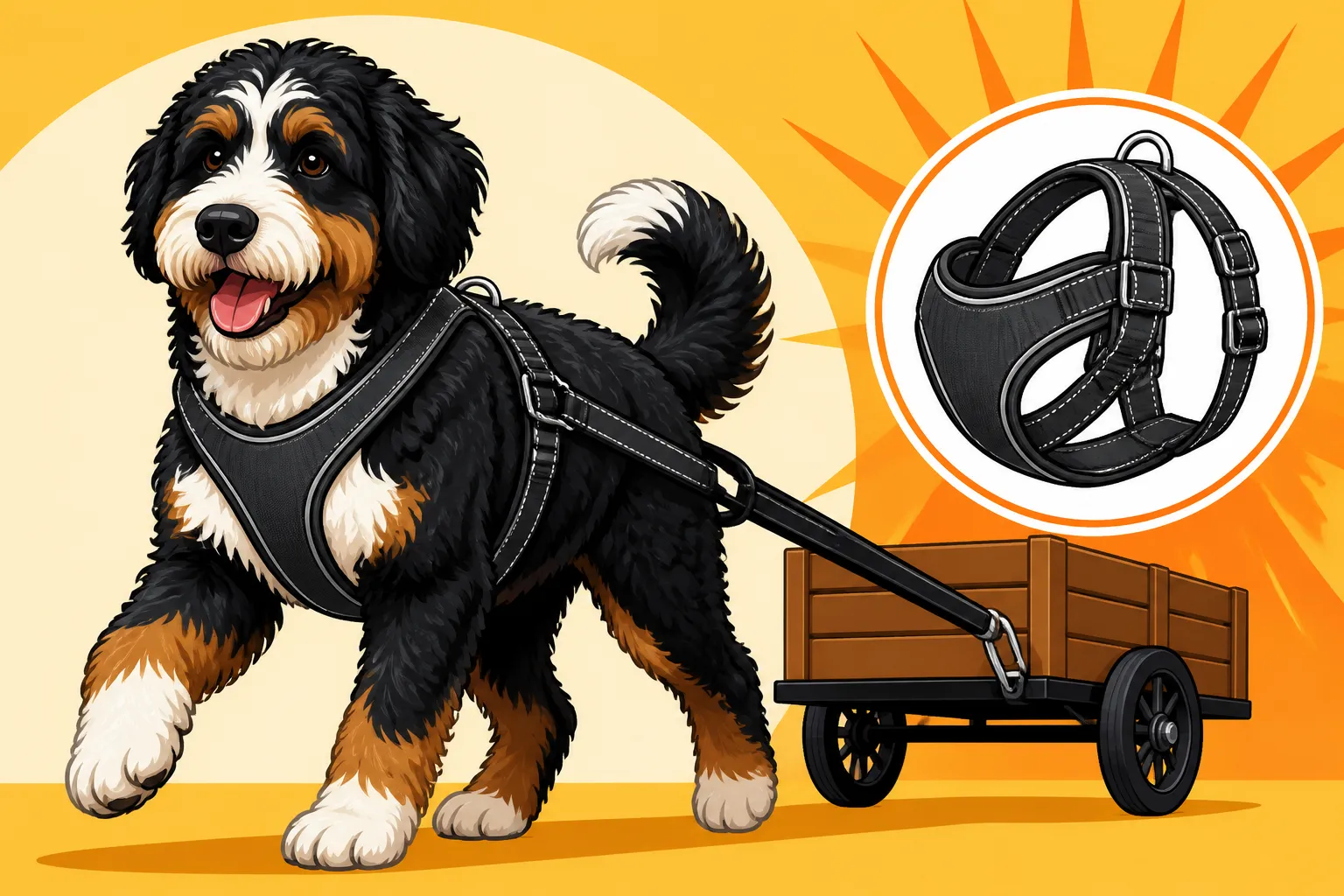
The Harness a Bernedoodle Needs for Drafting
Bringing a Bernedoodle into your life often sparks dreams of long walks, cuddles, and maybe even exploring some fun, unique activities together. But if you’re envisioning your gentle giant taking part in draft work or pulling a cart, you quickly realize that a standard walking harness simply won't cut it. Finding the right specialized harness for a dog of your Bernedoodle's size, strength, and unique physique is crucial, not just for performance but, more importantly, for their safety and comfort. This guide will walk you through everything you need to know to select the perfect drafting harness, ensuring your Bernedoodle can safely and happily engage in this rewarding activity.
Understanding the Difference: Why Regular Harnesses Aren't for Drafting
It's a common misconception that any harness designed to prevent pulling on walks can be adapted for draft work. However, the fundamental purpose and design principles are vastly different. A no-pull walking harness is engineered to redirect your dog's momentum or create discomfort when they pull against it, discouraging the behavior. A drafting harness, on the other hand, is specifically designed to allow your dog to pull efficiently and comfortably, distributing the load safely across their powerful chest and shoulders without causing strain or injury.
The Pitfalls of Using a Standard Walking Harness
Imagine trying to pull a heavy wagon while wearing a backpack that's only secured by thin straps across your chest. That's essentially what a Bernedoodle experiences if forced to draft in a typical walking harness. These harnesses are often too narrow in the straps, especially across the chest and shoulders, which are the primary points of contact for pulling weight. When a Bernedoodle leans into a heavy load with such a harness, those narrow straps can dig into their flesh, restrict their movement, and even chafe their skin, leading to pain and potential injury. Moreover, a standard harness isn't built to withstand the sustained, powerful forces involved in pulling. Stitching can fray, hardware can snap, and the overall structure can deform under pressure, creating a dangerous situation for both you and your dog.
Beyond the immediate physical discomfort, using an inappropriate harness for draft work can also create behavioral issues. If the experience is painful or uncomfortable, your Bernedoodle may develop an aversion to the harness itself or to the activity, making training incredibly difficult and frustrating. You want your Bernedoodle to associate draft work with positive experiences, not with pinching, chafing, or struggling. Investing in the correct equipment from the outset is paramount for success and for fostering a positive relationship with this unique canine sport.
How a Drafting Harness is Built Differently
A true drafting harness is a marvel of ergonomic engineering, meticulously designed to complement a dog's natural pulling mechanics. The most significant difference lies in the width and padding of the straps, particularly across the chest, shoulders, and along the sides. These wider straps distribute the pressure over a larger surface area, preventing concentrated forces that could cause injury. Think of the difference between carrying a heavy bag with a thin rope versus a broad, padded strap – the latter is always more comfortable and efficient.
Furthermore, drafting harnesses feature specific attachment points and overall construction that allow for a smooth, unrestricted range of motion. The goal is to allow the dog to use their full body strength and musculature without any impediment. The material choices are also key: robust, durable fabrics like heavy-duty nylon or leather are common, often lined with fleece or neoprene for added comfort and to prevent chafing, especially in areas where constant friction occurs. Reinforced stitching, heavy-duty buckles, and D-rings are standard to ensure the harness can withstand significant weight and repeated stress over time. This specialized design means the harness works with your Bernedoodle's anatomy, enabling them to pull effectively and safely.
Key Features to Look for in a Bernedoodle Drafting Harness
When you're looking for a drafting harness for your Bernedoodle, you're not just picking something off the shelf. You're looking for specific features that cater to their large size, deep chest, and the demands of pulling weight. These aren't optional extras; they are fundamental components for your dog's safety and effectiveness.
Wide, Padded Straps for Optimal Weight Distribution
This is arguably the most critical feature. Bernedoodles are strong, and when they engage in draft work, they'll be exerting considerable force. Thin straps will inevitably dig into their skin, especially over the shoulders and across the chest, which bear the brunt of the pulling force. Look for harnesses with straps that are at least 1.5 to 2 inches wide, if not more, particularly in the areas that come into contact with the dog's chest, shoulders, and rib cage.
Beyond width, padding is essential. Materials like fleece, neoprene, or heavy felt sewn into the underside of the straps provide a soft buffer against the dog's body, preventing chafing and ensuring comfort even during extended periods of work. This is especially important for areas like the armpits and sternum. A well-padded, wide harness ensures that the pressure from pulling is evenly distributed, allowing your Bernedoodle to work efficiently and without pain. Without this, you risk creating pressure sores, rub spots, and significant discomfort that will make draft work miserable for your beloved companion.
Ergonomic Design and Freedom of Movement
A good drafting harness allows for a full, natural range of motion for your Bernedoodle's shoulders and legs. This means the design should not restrict the shoulder blades or interfere with the natural gait. Look for harnesses that are cut back from the shoulder, allowing full forward and backward movement without impediment. If the harness straps sit too high on the neck or too tightly around the shoulders, it can restrict their stride and lead to muscle strain or injury.
The harness should also provide a secure, snug fit without being tight. There should be no gaping spaces where the harness could shift, but also no pinching or binding when your dog is in motion. The goal is a harness that becomes a natural extension of your dog's body, moving with them seamlessly. A well-designed harness will promote a powerful, efficient stride, rather than hindering it, which is vital for any Bernedoodle who might be Getting a Bernedoodle Started in Carting.
Durable Materials and Reinforced Stitching
Bernedoodles are substantial dogs, and the equipment they use for pulling must be equally robust. You'll want materials that can stand up to significant wear and tear, moisture, and the stresses of heavy loads. Heavy-duty nylon webbing is a popular choice for its strength, durability, and ease of cleaning. High-quality leather is another excellent option, offering superior longevity and conforming to your dog's body over time, though it requires more maintenance.
Regardless of the primary material, inspect the stitching closely. All seams should be reinforced, often with double or triple stitching, especially at stress points where the pulling force is concentrated. Look for sturdy metal hardware—D-rings, buckles, and adjusters—made from steel or other robust alloys. Plastic buckles, while lighter, are generally not suitable for serious draft work due to the risk of breakage under strain. Remember, this harness is supporting your dog's efforts to move weight, so compromising on material quality or construction is never a good idea. A sturdy harness is key to ensuring The Weight a Bernedoodle Can Safely Draft without risk.
Adjustable Fit for Growing Bernedoodles and Varied Builds
Even within the "Standard Bernedoodle" category, there can be significant variations in chest depth, rib spring, and overall body length. Furthermore, a Bernedoodle puppy starting out in draft work will still be growing. Therefore, a harness with ample adjustability is crucial. Look for multiple adjustment points, typically around the neck, chest girth, and possibly along the back strap. This allows you to achieve a custom-like fit that accommodates your Bernedoodle's specific measurements and any future growth or changes in muscle mass.
Adjustability also ensures that the harness can be properly balanced. A poorly balanced harness will pull unevenly, causing discomfort and potentially shifting the load incorrectly. When considering a harness from an online retailer like Amazon, read reviews carefully regarding sizing and adjustability. A harness that can be finely tuned to your Bernedoodle's unique shape will provide the most comfort and efficiency, allowing them to focus on the task at hand rather than wrestling with ill-fitting gear.
Types of Drafting Harnesses for Bernedoodles
The world of drafting harnesses offers a few different designs, each with its own nuances regarding fit and how the pulling force is distributed. Understanding these types will help you choose the best option for your Bernedoodle and the specific kind of draft work you plan to do.
H-Style or Standard Carting Harnesses
The H-style, often referred to as a standard carting or pulling harness, is perhaps the most common design for general draft work. It gets its name from the "H" shape formed by the straps when viewed from above, with a vertical strap running along the dog's back, a horizontal girth strap, and another horizontal chest strap. The pulling force is primarily distributed across the dog's shoulders and chest, with traces (the straps that connect to the cart) attaching to rings on either side of the harness, typically near the dog's hips or further back.
This design is excellent for distributing the load evenly and allowing the dog to engage their full body in pulling. It provides good stability, preventing the harness from shifting too much, and is generally comfortable for most Bernedoodles when properly fitted. H-style harnesses are versatile and suitable for pulling a variety of loads, from small wagons to more substantial carts. They are a solid choice for those just starting out in draft work with their Bernedoodle, as they offer a good balance of support, comfort, and functionality.
Sled Dog (X-Back) Harnesses
While primarily designed for sledding, X-back harnesses can sometimes be adapted for lighter carting or specialized draft work, though they are generally less common for traditional carting with wheeled vehicles. The distinctive "X" shape across the dog's back helps distribute the pulling load along the entire length of the spine and body, with the attachment point for the traces extending further back, often to the base of the tail. This design is particularly effective for low-point pulling, where the load is directly behind the dog and close to the ground, allowing for a continuous pulling motion.
For a Bernedoodle, an X-back harness might be considered if you're exploring activities like skijoring or urban mushing with lighter loads, where the angle of pull is consistent and horizontal. However, for traditional carting where the traces attach to a higher point on a cart, an H-style harness often provides better leverage and load distribution for the type of sustained pulling required. It's crucial that an X-back harness fits perfectly, as an improper length can cause significant discomfort or injury, especially to the hips and lower back. Always consult with experienced draft enthusiasts before opting for an X-back for general carting with a Bernedoodle.
Breastplate or Y-Front Harnesses
Some drafting harnesses incorporate a wide breastplate design, sometimes referred to as a Y-front. In these harnesses, a broad, often padded, section sits across the dog's entire chest, distributing the pulling force over a very large surface area. The straps then typically diverge from this breastplate, forming a "Y" shape over the shoulders and connecting to the girth strap. This design can be particularly comfortable for dogs with very deep chests, like many Bernedoodles, as it minimizes pressure points and spreads the load widely.
The advantage of a breastplate harness is its exceptional comfort and stability, especially for dogs that are new to pulling or those with sensitive chests. The wide chest piece prevents any potential for cutting into the sternum area. However, it's important to ensure that the breastplate doesn't restrict shoulder movement or rub in the armpit area. Like all harnesses, a proper fit is paramount. These types of harnesses are generally excellent for heavy, sustained pulling and can be a fantastic choice for a robust Bernedoodle ready to commit to draft work.
| Harness Type | Primary Use | Key Features | Pros | Cons |
|---|---|---|---|---|
| H-Style/Standard | General carting, pulling wagons | "H" shape, traces attach near hips/back | Excellent load distribution, good stability, versatile for various loads | Less ideal for extremely low-point pulling |
| Sled Dog (X-Back) | Sledding, skijoring, low-point pulling | "X" shape, traces attach at base of tail | Ideal for continuous, low-point pulling, distributes load along spine | Can be less stable for higher cart attachment points, requires very precise fit |
| Breastplate/Y-Front | Heavy, sustained pulling, deep-chested dogs | Wide, padded chest plate, Y-shape over shoulders | Exceptional comfort and stability, excellent load distribution on chest | Ensure it doesn't restrict shoulder movement or rub armpits |
Getting the Right Fit: Measuring and Adjusting for Your Bernedoodle
A perfectly good harness can become uncomfortable or even dangerous if it doesn't fit your Bernedoodle properly. Just like a bespoke suit, a drafting harness needs to be tailored to your dog's unique measurements to function as intended. This isn't a "one size fits all" situation, especially with a breed known for its substantial size and deep chest.
Essential Measurements to Take
Before you even start shopping, you'll need a soft tape measure and a calm Bernedoodle. Here are the crucial measurements:
- Neck Girth: Measure around the widest part of your Bernedoodle's neck, just above their shoulders, where a collar would naturally sit. This ensures the harness won't choke them or allow escape.
- Chest Girth (Girth/Barrel): Measure around the deepest part of their chest, right behind the front legs. This is the largest circumference of their body and a critical measurement for the main body strap.
- Back Length (from Withers to Base of Tail): For some harness styles, especially X-back, knowing the length from the shoulder blades (withers) to the base of the tail is important.
- Sternum Length (Front of Chest to Behind Legs): Measure from the top of the sternum (the prominent bone at the front of their chest) down to a point just behind their front legs. This helps ensure the chest strap sits correctly without rubbing armpits.
Always take these measurements a couple of times to ensure accuracy, and make sure your dog is standing squarely and naturally. It's often helpful to have someone assist you, gently holding your Bernedoodle steady while you measure.
The Goldilocks Zone: Not Too Tight, Not Too Loose
Once you have your measurements and a harness in hand, it's time for the fitting. Put the harness on your Bernedoodle and make initial adjustments. The goal is to find that "just right" fit:
- Two-Finger Rule: You should be able to comfortably slip two fingers flat under any of the straps. If you can't, it's too tight. If you can fit more than two fingers easily, it's likely too loose and could shift or chafe.
- Shoulder Clearance: The straps across the shoulders should sit well clear of the shoulder blades, allowing full, unrestricted movement. Have your Bernedoodle walk, trot, and turn. Observe if the harness bunches, rubs, or impedes their natural gait.
- Armpit Comfort: The chest and girth straps should sit a few inches behind the armpits, never directly in them. Any rubbing in this sensitive area can cause severe chafing and discomfort.
- Trace Attachment: Ensure the trace attachment points on the harness align properly with the height of your cart's shafts or the pulling line. Incorrect alignment can lead to inefficient pulling and strain.
Remember, a Bernedoodle's body changes with movement and muscle engagement. What looks good standing still might pinch when they're actively pulling. Take them for a short "test pull" with a very light load to see how the harness behaves under working conditions. For more general advice on getting your dog comfortable with new gear, resources like BAXTER & Bella’s online training programs can be incredibly helpful for building confidence and acceptance.
Where to Find Quality Drafting Harnesses
Finding a specialized drafting harness isn't quite like picking up a leash at your local pet store. These are niche products designed for a specific purpose, so you'll often need to look in particular places.
Specialized Online Retailers
The internet is your best friend when it comes to finding high-quality drafting harnesses. Many online stores cater specifically to dog sports, working dogs, or outdoor gear. These retailers often carry a wide selection of brands and styles, allowing you to compare features, materials, and sizing charts thoroughly. You might find brands that specialize in mushing or carting, which will have a deep understanding of what makes a good pulling harness.
When shopping online, pay close attention to customer reviews, especially from owners of large, deep-chested breeds similar to Bernedoodles. Look for detailed sizing guides, and don't hesitate to contact the retailer directly if you have questions about fitting or material specifics. While you might not get to physically try the harness on your dog before buying, the wider selection and detailed information available online make it a powerful resource. Amazon is a good starting point for exploring various options and reading reviews, though for truly specialized gear, you might need to dig a little deeper into dedicated sporting dog sites.
Custom Harness Makers
For the ultimate fit, especially if your Bernedoodle has an unusual build or you plan to engage in very serious draft work, a custom harness maker might be the way to go. These artisans create harnesses precisely to your dog's measurements, ensuring an unparalleled fit and often offering a choice of materials and colors. Custom harnesses tend to be more expensive, but the investment often pays off in superior comfort, durability, and performance.
A custom maker can also offer valuable advice on harness design specifics for Bernedoodles, taking into account their unique proportions. They might suggest specific padding placements or strap configurations based on their experience. This personalized approach guarantees that your Bernedoodle's harness is truly one-of-a-kind, designed to maximize their comfort and your success in draft work.
Starting Your Bernedoodle's Drafting Journey
Once you have the perfect harness, the real fun begins! Introducing your Bernedoodle to draft work should be a gradual, positive experience, building their confidence and strength over time. Remember, it's a marathon, not a sprint.
Proper Introduction and Conditioning
Before attaching any weight, allow your Bernedoodle to wear the harness around the house and on short walks. Let them get completely comfortable with the feel of it. Use positive reinforcement, treats, and praise to create positive associations. Once they're happy in the harness, you can introduce the "traces" (the straps that connect the harness to the load) without a load, letting them drag them loosely. This helps them get used to the sensation of something trailing behind them.
Gradually, introduce very light loads – an empty plastic sled, a small empty wagon. Keep sessions short and positive. Your Bernedoodle is still growing and developing, so it's critical to be mindful of their joints. Avoid heavy pulling until they are fully mature, typically around two years of age for a standard Bernedoodle. Even then, The Age a Bernedoodle Can Start Pulling and Whether Pulling Damages a Young Bernedoodle's Joints are important considerations. Slowly increase the weight and duration of sessions, always watching for signs of fatigue or discomfort.
Training for Commands and Safety
Drafting isn't just about putting on a harness and pulling. It requires specific commands and a strong bond of trust between you and your Bernedoodle. Teach fundamental commands like "walk," "stop," "go," "left," and "right" verbally and with hand signals. Consistency is key. Practice these commands regularly, first without a load, then with very light loads.
Safety should always be your top priority. Ensure your cart or wagon is well-maintained and appropriate for the terrain. Always supervise your Bernedoodle, especially when they are pulling. Be aware of your surroundings, potential obstacles, and other distractions. Learning proper techniques for harnessing, hitching, and unhitching is also vital to prevent accidents. Consider joining a local carting club or finding an experienced mentor who can guide you through the initial stages of training. Resources that help with general dog training, such as those offered by BAXTER & Bella, can lay a strong foundation for advanced activities like drafting.
Enjoying the Journey Together
Draft work is a fantastic way to bond with your Bernedoodle, provide them with mental and physical stimulation, and celebrate their natural strength and eagerness to please. Whether you're pulling firewood, helping out in the garden, or simply enjoying a leisurely cart ride through a park, doing it safely with the right equipment and proper training will make the experience enjoyable for both of you.
Remember that every Bernedoodle is an individual. Some will take to draft work with immediate enthusiasm, while others may need more patience and encouragement. Celebrate every small victory and focus on making the experience fun. Your Bernedoodle's willingness to work alongside you, a truly wonderful trait, will shine through as you embark on this unique adventure together. You might even find your Bernedoodle becomes quite adept, earning them recognition in activities where Whether the AKC Lets a Bernedoodle Enter Draft Trials or similar events are held.
Disclaimer
This article is for general informational purposes only and does not constitute professional advice. Laws, prices and regulations vary by location and change over time. Consult a qualified professional for guidance on your specific situation.