The Screening a Bernedoodle Should Have Yearly
Yearly veterinary screenings and blood work catch silent health issues, including kidney, liver, and thyroid conditions, early for your Bernedoodle.
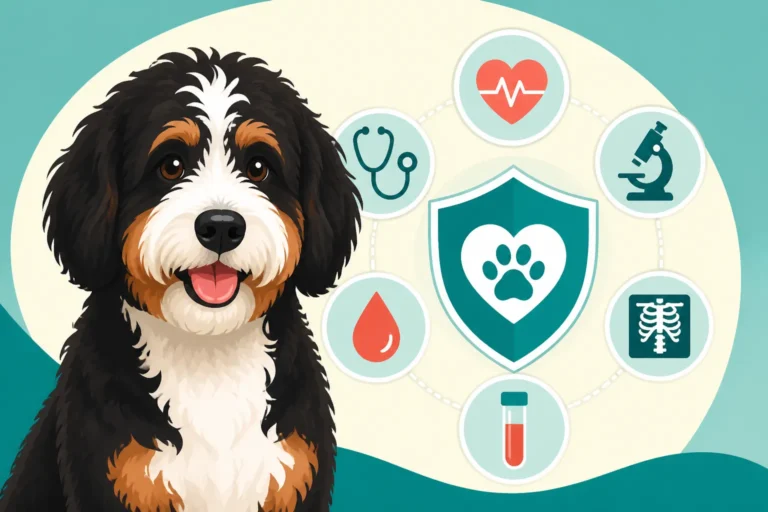
Yearly veterinary screenings and blood work catch silent health issues, including kidney, liver, and thyroid conditions, early for your Bernedoodle.
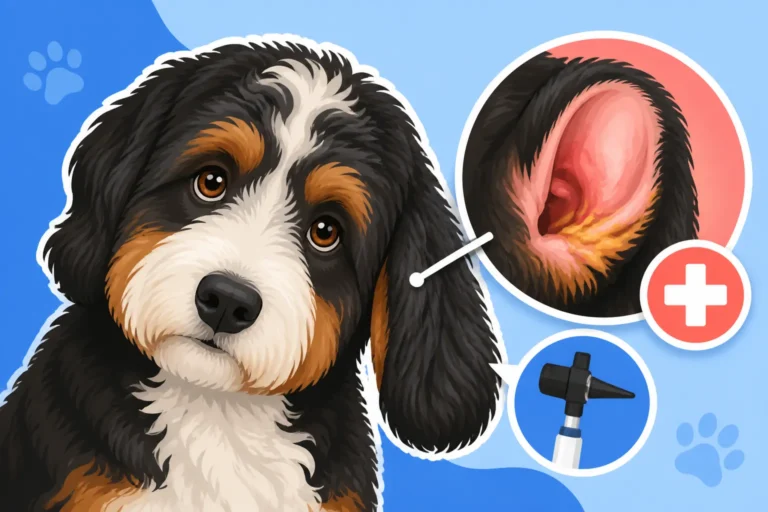
Bernedoodle drop ear anatomy and thick inner canal hair trap moisture, letting bacteria and yeast multiply to cause infections.
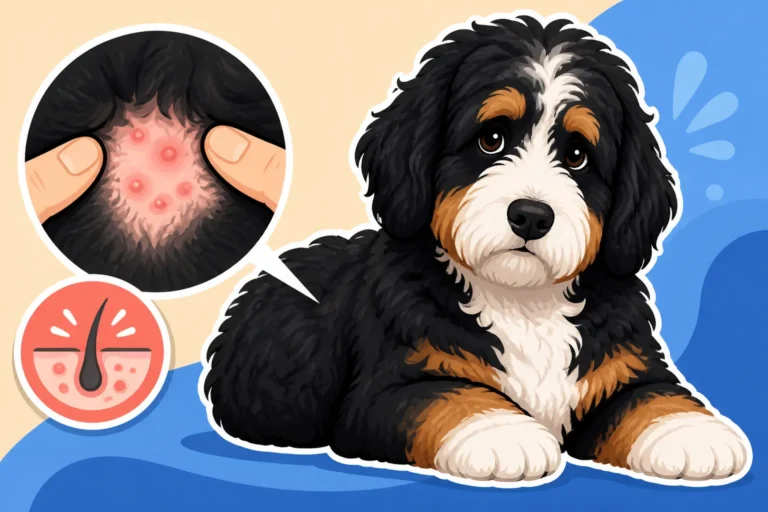
Common Bernedoodle skin problems, caused by dense wavy or curly coats, trap moisture and create breeding grounds for bacteria.
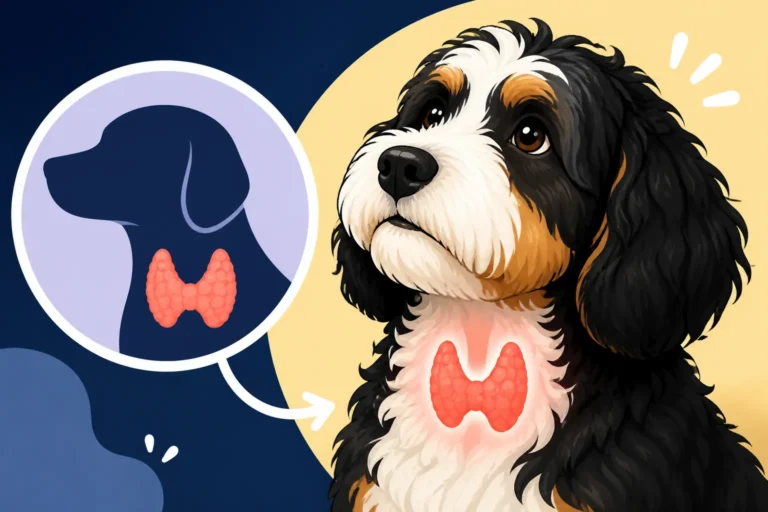
Hypothyroidism in Bernedoodles involves genetic risks inherited from Bernese Mountain Dogs and Poodles, causing slow metabolisms.
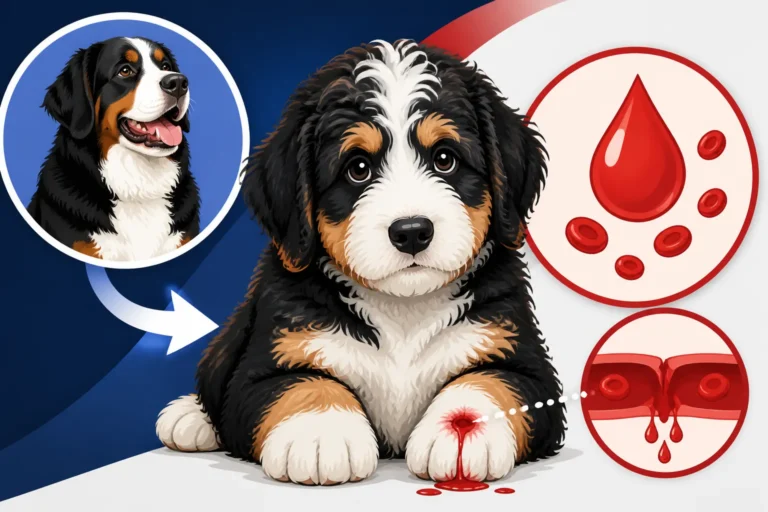
Von Willebrand Disease in Bernedoodles is an inherited bleeding disorder passed down from their Bernese Mountain Dog heritage.
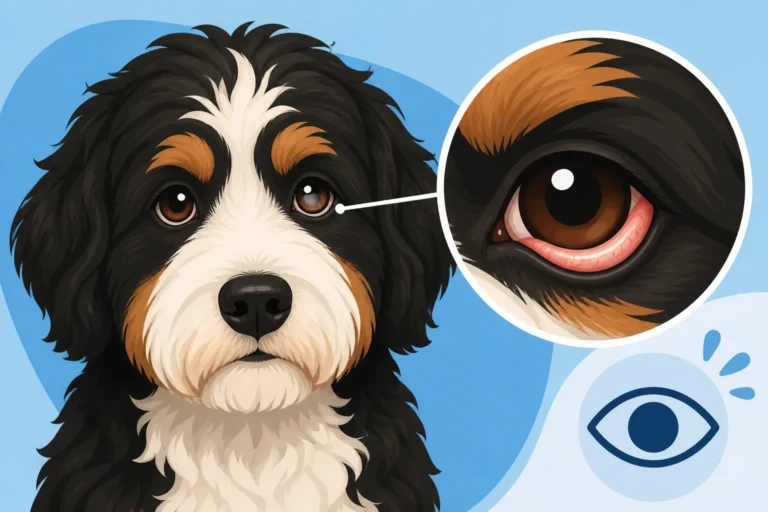
Entropion in Bernedoodles causes inward-rolling eyelids, chronic irritation, and corneal damage, requiring early recognition and intervention.
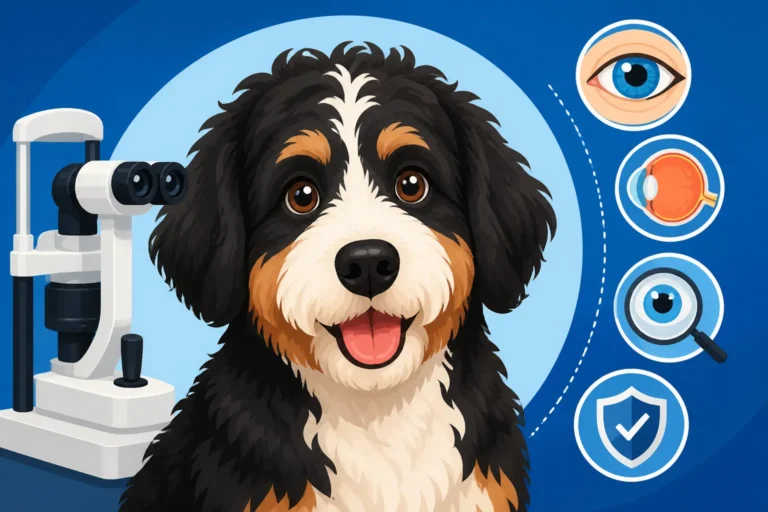
Bernedoodle eye conditions include Progressive Retinal Atrophy, cataracts, entropion, and ectropion passed down from parent breeds.
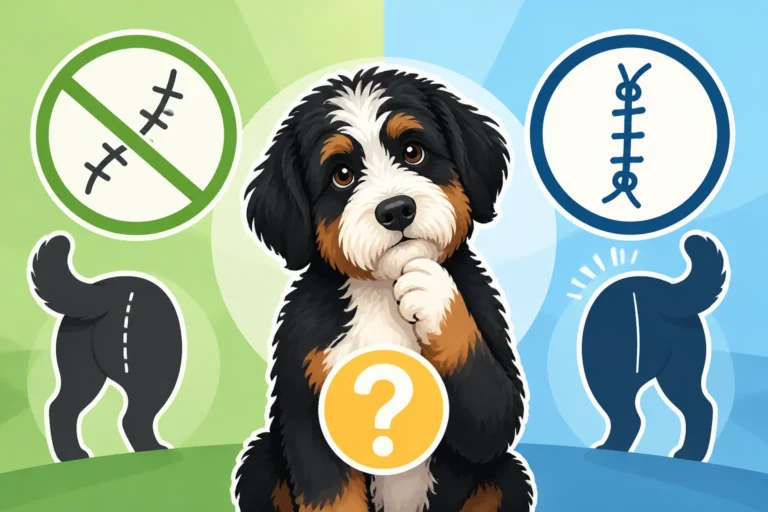
Standard Bernedoodle stomach tacking during spay surgery secures the organ to the abdominal wall to prevent fatal twisting.
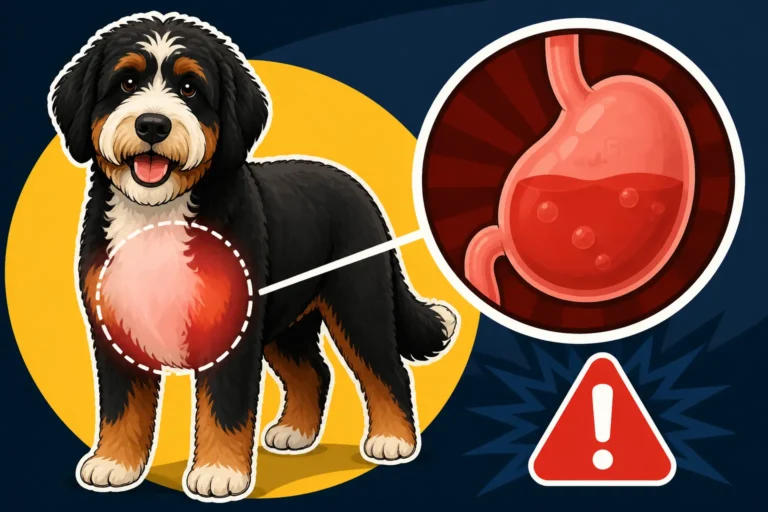
Standard Bernedoodle deep chests create high bloat risk, detailing Gastric Dilatation-Volvulus symptoms, trapped gas, and twisting.
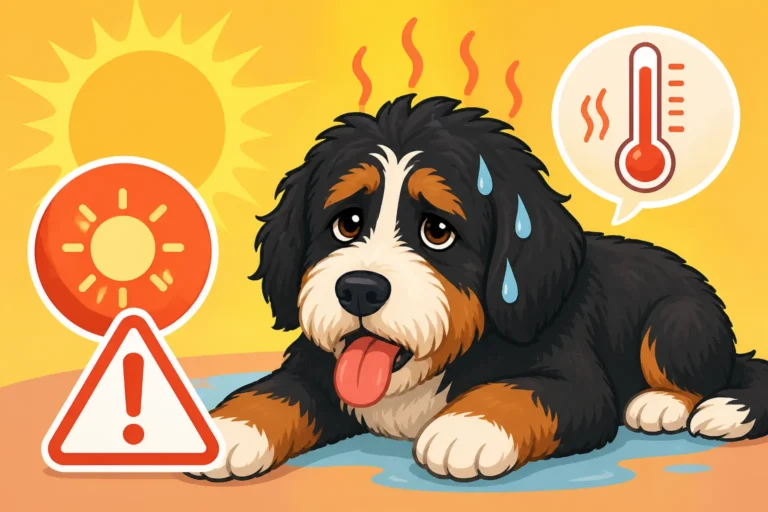
Signs a standard Bernedoodle is overheating include excessive panting, thick coat heat trapping, and high humidity risks.