Whether Breeders Should Cross Two Merle Bernedoodles
Breeding two merle Bernedoodles together creates severe puppy health risks and highlights the dangers of double merle genetics.
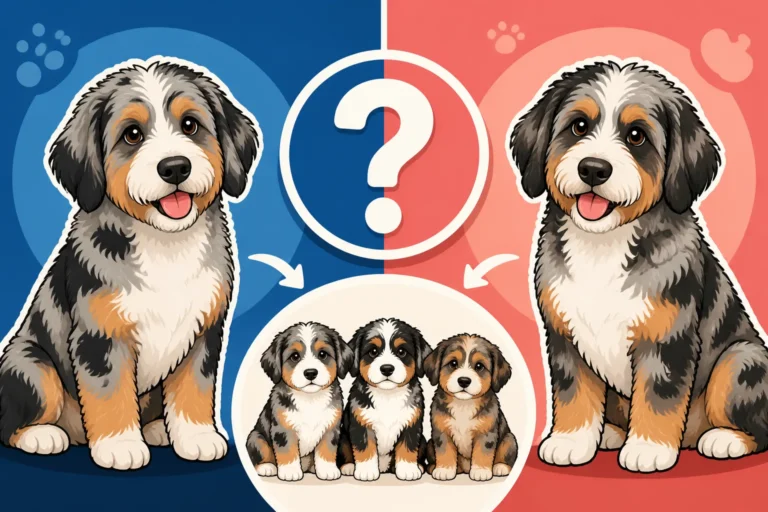
Breeding two merle Bernedoodles together creates severe puppy health risks and highlights the dangers of double merle genetics.

Double merle Bernedoodle genetics explain why puppies inheriting two copies of the merle gene face severe deafness risks.

Bernedoodle merle coat genetics and health risks, explaining that the gene does not originate from Poodles and affects vision and hearing.
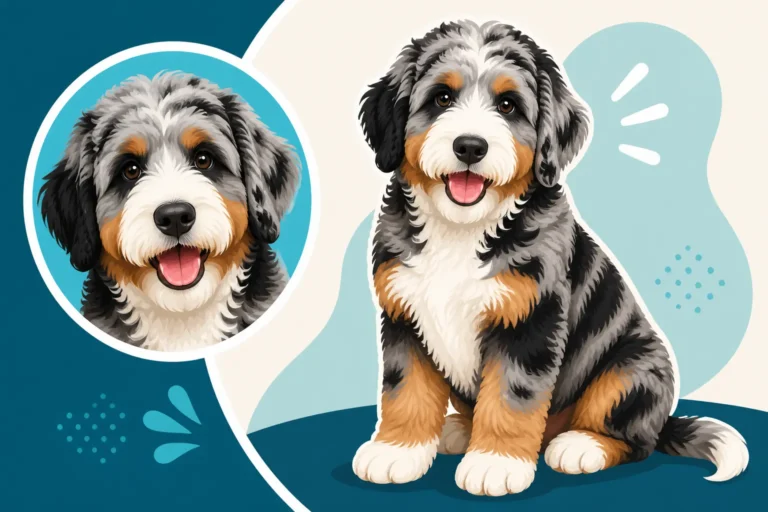
Merle Bernedoodle coats feature irregular diluted patches and unique eye pigmentations caused by a specific gene.

Bernedoodle coat genetics explains why a true chocolate tri Bernedoodle is rare, detailing base coats, tan points, and brown pigment genes.

Traditional tri-color Bernedoodle genetics explain why black, rust, and white markings are rare compared to phantom, sable, or merle patterns.
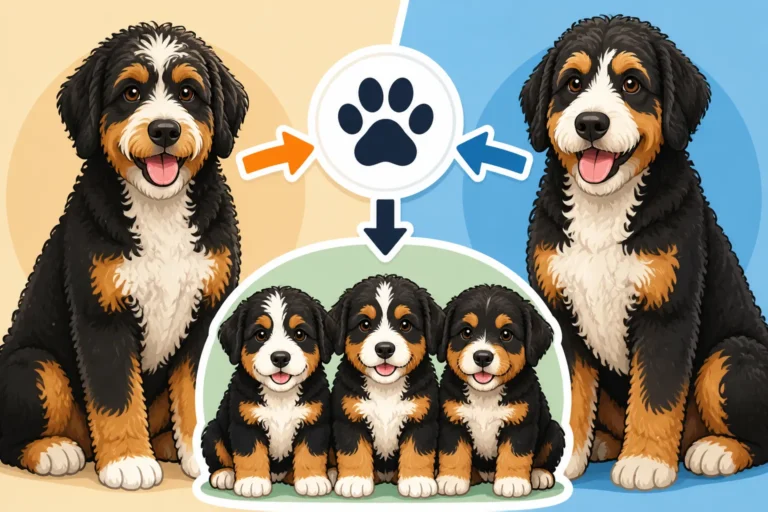
Bernedoodle coat color genetics determine whether two tri-color parents will produce black, white, and rust puppies.

F1b Bernedoodle coat color genetics and gene loci determine if distinctive tri-color or phantom patterns fade as puppies mature.

F1 Bernedoodle tri-color genetics explain coat color possibilities through a fifty-fifty mix of Bernese Mountain Dog and Poodle DNA.

Bernedoodle coat color genetics explains how the A locus, K locus, and B locus create black, white, and rust patterns.