Whether the Bernedoodle Should Become a Breed
A Bernedoodle can look like a recognizable type of dog while still varying widely in size, coat, temperament, and health. That leaves owners and future buyers with a fair question: should the Bernedoodle become a formally recognized breed? This guide explains what recognition would require, what it could improve, and what might be lost if a diverse cross is pushed toward one standard.
What it means for the Bernedoodle to become a breed
A familiar look is not the same as a stable breed
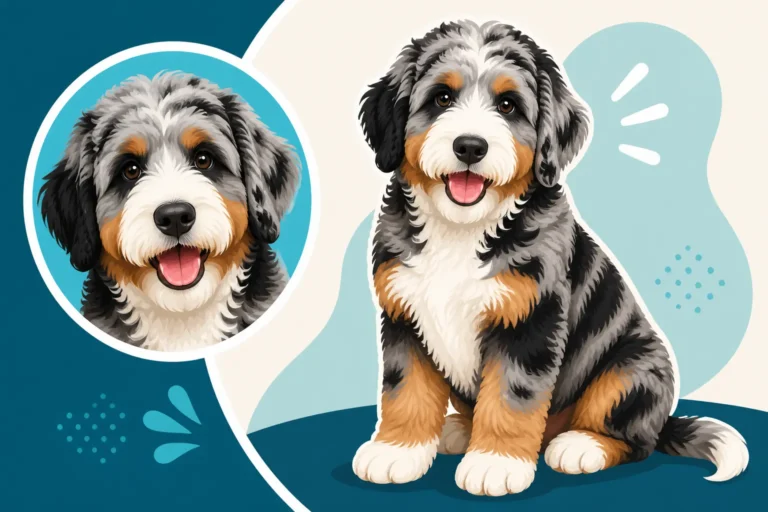
People often recognize a Bernedoodle by its Bernese Mountain Dog and Poodle heritage, wavy or curly coat, and sometimes its traditional tri-color markings. But a familiar appearance alone does not make a population a settled breed. Dogs can share a label and still differ substantially in how large they grow, how much they shed, how they respond to strangers, and what health risks they inherit.
The word “breed” is usually used for a population with a reasonably consistent set of traits that are passed down across generations. That does not mean every dog is identical. It does mean that breeders can make more reliable predictions about the puppies they produce, and that a written standard describes the traits the population is meant to preserve. A Bernedoodle buyer hoping for a predictable adult size or low-shedding coat may discover that a name on a listing does not guarantee either outcome.
This distinction helps explain why questions such as Whether the Bernedoodle Counts as a Breed Yet and Whether a Bernedoodle Will Ever Breed True are not just arguments over labels. They concern the structure of the breeding population, how consistently traits are inherited, and whether breeders share a common long-term goal.
Recognition is a process, not a vote
Formal recognition generally involves more than choosing a breed name and writing a description. A community needs to agree on what the breed is meant to be, keep reliable records of ancestry, and develop a sufficiently consistent population over time. It also needs a governing structure that can maintain rules, promote responsible breeding, and address disputes about which dogs belong in the breeding pool.
For a Bernedoodle, that raises practical questions. Should the breed remain an intentional cross between Bernese Mountain Dogs and Poodles? Should later-generation Bernedoodles be bred to one another, or should new Bernese and Poodle lines continue to be introduced? If outside dogs are allowed, what characteristics and health records should qualify them? Different answers could lead to very different versions of the “Bernedoodle.”
Recognition by a major kennel organization would not automatically make every dog healthier, calmer, or more predictable. It might create more consistent record-keeping and a clearer framework for evaluating breeding stock, but those benefits depend on the rules and the people enforcing them. The debate around Whether the AKC Will Ever Recognize the Bernedoodle is therefore best understood as part of a broader question: what kind of population would recognition actually support?
The potential benefits and drawbacks of recognition
What a breed standard could improve
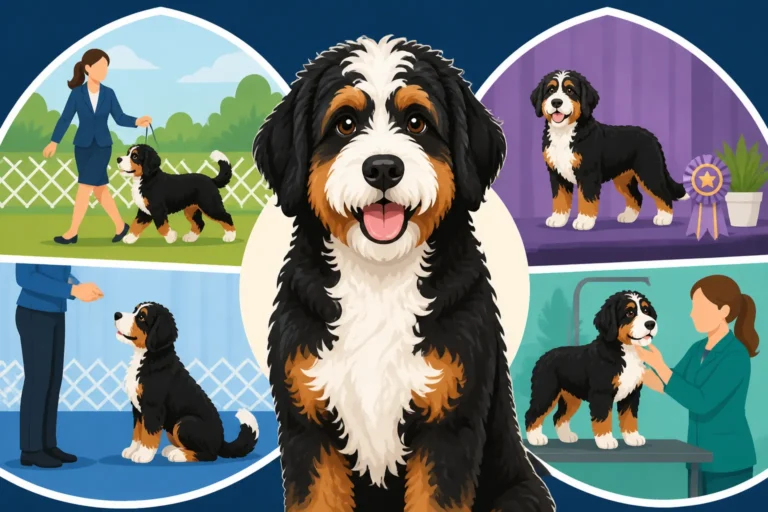
A thoughtful standard could give breeders and buyers a shared reference point. It might describe an acceptable range of size, movement, structure, coat characteristics, and temperament rather than treating one fashionable look as the only correct result. Clear guidance could also help prospective owners understand what a responsible breeder is trying to produce and what traits cannot be guaranteed.
Recognition could encourage better record-keeping, too. When breeders document parentage and health testing in a consistent way, it becomes easier to compare lines and make informed breeding decisions. Owners may have a clearer path for checking a dog’s background, rather than relying on marketing language or attractive puppy photos. The history of how the cross began is part of that context, including The 2003 Litter That Started the Bernedoodle.
There is a possible consumer-protection benefit here. A formal framework could make it harder for sellers to use the name without explaining the dogs’ ancestry or breeding practices. Still, a registry entry or a certificate is not the same as proof of excellent care. Buyers would need to continue asking about health screening, temperament, and how puppies are raised.
What could be lost or made worse
Standardization can narrow a population if breeders focus too heavily on a limited set of appearances. If the market rewards a particular coat texture, color pattern, or small size above other considerations, breeders may feel pressure to prioritize those traits even when they are not the best choices for soundness or health. That risk is not unique to Bernedoodles, but it matters in a cross whose appeal often rests on a combination of traits that are not guaranteed to appear together.
A standard can also create false confidence. Prospective owners might hear “recognized breed” and assume that coat shedding, adult weight, or temperament is now predictable. In reality, recognition does not erase genetic variation, and no written description can promise exactly how an individual puppy will turn out. A family choosing a dog because they need a specific size or low-shedding coat should still ask detailed questions about the parents and relatives.
| Question | A possible benefit of recognition | A possible risk |
|---|---|---|
| Consistency | Shared goals may help breeders make more predictable choices | A narrow ideal may reduce variation too quickly |
| Health records | Common record-keeping could make information easier to compare | A registry listing may be mistaken for a health guarantee |
| Appearance | A standard could describe a range of acceptable traits | Popular colors or coat types could receive too much emphasis |
| Buyer expectations | Clearer terminology may reduce confusion | Buyers may assume recognition guarantees a particular outcome |
| Breeding decisions | Agreed rules could support long-term planning | Poorly designed rules could encourage a small or closed gene pool |
A standard would be most useful if it made room for variation while putting health and functional structure first. If it instead turned the Bernedoodle into a checklist of fashionable features, formal status could amplify the very sales pressures that make choosing a puppy confusing.
Health, records, and the role of registries
Recognition cannot replace health-focused breeding
Bernedoodles can inherit health concerns from either parent population. A responsible breeding program should consider the health history of the individual dogs and their relatives, and use appropriate screening rather than relying on the assumption that crossing two breeds automatically prevents inherited disease. Mixed ancestry can introduce genetic diversity, but it does not guarantee that every puppy avoids conditions found in either family line.
This is one reason the process matters more than the title. If breeders agree on a standard but do not prioritize health testing, transparent records, and sound breeding decisions, recognition alone may accomplish little. Conversely, breeders can make responsible choices and provide useful documentation even when a dog is not part of a formally recognized breed.
Registries may document different things, so buyers should ask what a particular record actually means. A registry can record a dog’s identity or ancestry without certifying that its health, temperament, or breeder meets a particular standard. The practical question is not merely whether papers exist, but what was checked, who maintains the record, and whether the information can be independently reviewed. The Registries That Record Bernedoodles and Whether Bernedoodle Papers Mean Anything are useful topics to explore before treating paperwork as a quality signal.
How prospective owners can assess a breeder
A future owner does not need to settle the recognition debate before choosing a Bernedoodle. It is more useful to focus on the individual breeder’s practices and the likely fit between a puppy and the household. Ask what health evaluations have been completed for both parents, what results are available, and whether the breeder can explain how those results influence pairing decisions. Be wary of vague assurances such as “healthy lines” when no specific records or process are offered.
Ask how the breeder describes uncertainty. A thoughtful breeder should be willing to explain that adult size, coat type, and shedding can vary, especially when the puppy is young. They should also discuss the dogs’ temperaments and daily needs honestly. If a seller promises that every puppy will be hypoallergenic, remain within a very precise weight range, or have a guaranteed personality, treat that certainty as a reason to ask more questions rather than as proof of quality.
Keep your own notes while comparing breeders. Write down the parents’ sizes and temperaments, which screening records are available, what the contract says, and what support is offered if a health or behavior concern emerges. If you are planning supplies before bringing a puppy home, a retailer such as Chewy can be one place to compare food, grooming tools, and basic equipment, but shopping convenience should not substitute for a veterinarian’s guidance on nutrition or an honest discussion with the breeder.
What a responsible future for the Bernedoodle could look like
Recognition should follow shared priorities
The strongest case for recognition is not that Bernedoodles deserve a prestigious label. It is that a well-organized community might set transparent expectations, preserve useful records, and encourage breeding choices that serve the dogs as well as the people who love them. That requires breeders to agree on priorities before they agree on a look.
Those priorities might include health, stable temperament, functional movement, and open communication about uncertainty. They could also include preserving enough genetic diversity to avoid making the breeding population unnecessarily narrow. A standard should describe the kind of dog the community hopes to produce without treating every deviation in color, coat, or size as a failure.
Any recognition process should also be judged by how it affects the dogs over time. Does it lead to better documentation and more thoughtful breeding decisions? Does it help buyers distinguish responsible programs from sellers who use a popular name loosely? Or does it mostly create new marketing claims? Those questions are more meaningful than recognition by itself.
Buyers can make careful choices now
For owners, the most useful approach is to evaluate the dog and the breeder rather than wait for a formal label to settle the issue. Read about the variation in size and appearance, think honestly about how much grooming your household can manage, and consider whether a lively, people-oriented dog fits your schedule. Which Homes a Bernedoodle Belongs In can help frame those lifestyle questions, while What Bernedoodle Owners Wish They Had Known offers a practical reminder that the day-to-day reality matters more than a puppy’s appearance.
It can help to prepare for grooming before the coat becomes difficult to manage. Ask the breeder what coat types appear in the parents’ lines, and talk with a groomer about a realistic brushing and clipping routine. If you are comparing brushes, combs, or other care supplies, Chewy may help you review options in one place; the important part is choosing tools that suit your dog’s coat and learning how to use them without pulling painfully at tangles.
For food and household supplies, Chewy can also be a convenient place to compare product information and plan what you will need. But a Bernedoodle’s actual needs depend on its age, size, health, and activity level, so use your veterinarian’s advice when making decisions about diet or medical care. Recognition or registry status cannot replace that individual guidance.
Whether the Bernedoodle should become a breed depends on what the process is designed to accomplish. If it supports health, transparency, reasonable predictability, and a diverse breeding population, formal organization could be useful. If it prizes a narrow appearance or encourages buyers to expect guarantees that biology cannot provide, a new label may create more confusion than clarity. For now, careful breeding practices and realistic expectations matter more than the name attached to a dog.
Disclaimer
This article is for general informational purposes only and does not constitute professional advice. Laws, prices and regulations vary by location and change over time. Consult a qualified professional for guidance on your specific situation.