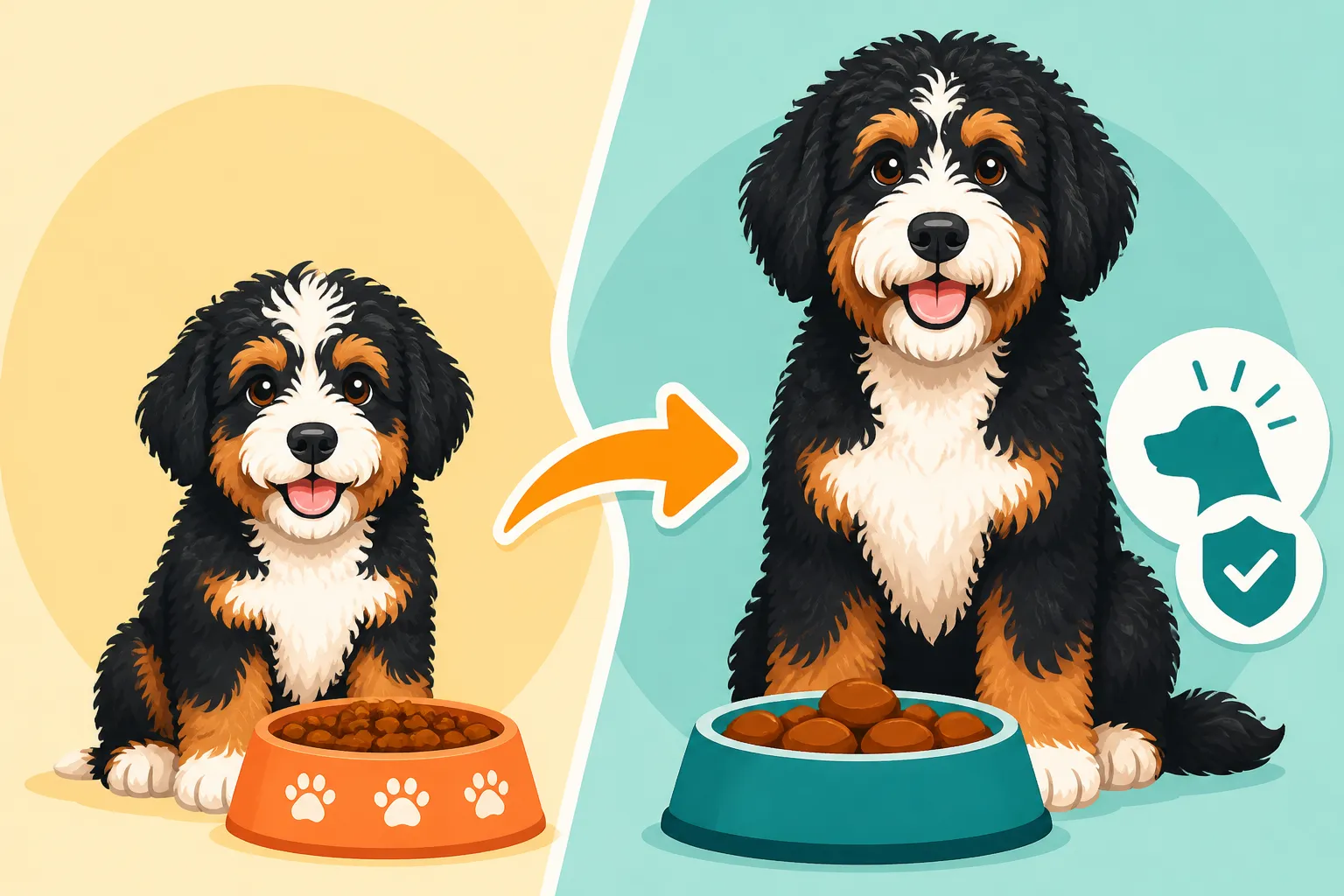
When a Bernedoodle Moves to Adult Food
It's a question every Bernedoodle parent eventually faces: when is the right time to stop feeding that adorable, ever-growing fluffball puppy food and transition them to adult kibble? The sheer volume of information out there can be overwhelming, leaving you wondering if you're doing right by your beloved companion, especially with a breed that grows as quickly and largely as a Bernedoodle. This guide is here to cut through the confusion, offering clear signs and practical steps to ensure a smooth and healthy transition for your Bernedoodle.
Understanding Your Bernedoodle's Unique Growth Stages
Bernedoodles, especially the standard sizes, aren't just any puppy; they're large breed puppies. This distinction is absolutely critical when we talk about growth and nutrition. Their bodies are designed for substantial growth, but it needs to happen at a controlled, steady pace to protect their developing joints and bones. Rushing this process with inappropriate nutrition can have long-lasting, detrimental effects.
Rapid Growth Phase and Specific Nutritional Needs
From the moment you bring your Bernedoodle puppy home, likely around 8-12 weeks, they are in a period of incredibly rapid growth. Think about it – they're going from a tiny bundle of fluff to a significant canine presence in mere months! During this time, their caloric and nutrient needs are extremely high. Puppy food is specifically formulated to support this intense development, packed with higher protein, fat, and a precise balance of vitamins and minerals, particularly calcium and phosphorus.
However, even within the puppy phase, there's a nuance. For large breeds like Bernedoodles, there's a delicate balance. While they need sufficient nutrients to grow, too much, especially too much calcium, can actually be harmful, contributing to conditions like Elbow Dysplasia in a Growing Bernedoodle or hip issues down the line. That's why choosing a high-quality "large breed puppy food" is paramount. These formulas are designed to promote slow and steady growth, rather than rapid bulk, helping to protect those developing joints.
Slowed Growth and Approaching Maturity
As your Bernedoodle moves past the initial explosion of growth, you'll notice a gradual tapering off. They won't seem to grow inches overnight anymore, but will instead start filling out and maturing. For a standard Bernedoodle, this slowed growth typically begins somewhere around 8-12 months of age, though individual dogs can vary. Mini and Tiny Bernedoodles might hit this stage a bit earlier, perhaps around 6-9 months, simply because their adult size is reached sooner.
During this phase, while they're still puppy-like in energy and temperament, their skeletal growth is slowing considerably. Their bodies are focusing more on muscle development and solidifying bone structure rather than adding height or length at a fast clip. This is the window where their nutritional needs start to shift from the intensive demands of a rapidly growing puppy to the maintenance requirements of an adult. It's a subtle but important change that dictates when we should start considering the switch to adult food.
Key Indicators for Switching Your Bernedoodle's Food
While there's no single "magic date" on the calendar when every Bernedoodle simultaneously becomes an adult, there are clear, observable indicators that tell you it's time to make the switch. It's often a combination of these factors rather than just one that signals readiness. Trust your instincts, but also pay close attention to your dog's physical development and behavior.
Age as a Primary Guideline
For most standard Bernedoodles, the general guideline for transitioning to adult food is between 12 and 18 months of age. This extended puppyhood is due to their large size; they simply take longer to reach full skeletal maturity than smaller breeds. For Mini Bernedoodles, this window might be closer to 9-12 months, and Tiny Bernedoodles could be ready as early as 7-9 months.
Why the range? Because every dog is an individual! Some Bernedoodles, especially males, might take a bit longer to fully mature, while others might settle into their adult frame a little sooner. It's not about being "done" growing entirely, but rather about having completed the most critical phases of rapid skeletal development. Always consider age in conjunction with other physical signs, rather than as the sole determinant. Remember, patience is key here, you don't want to switch too early and risk their development.
Size and Weight Milestones
Beyond just age, observing your Bernedoodle's physical size and weight is a huge clue. Has your Bernedoodle reached roughly 80-90% of their anticipated adult height and weight? If they're a standard Bernedoodle, are they approaching the 70-90 pound range, or at least showing a significant slowdown in gaining pounds weekly? For Mini Bernedoodles, this might mean reaching 25-50 pounds, and Tiny Bernedoodles, under 25 pounds.
A good way to gauge this is to compare their current size to the typical adult size of their parents (if you know it) or the average for their specific Bernedoodle size variant. You're looking for that moment when their growth plateaus. They'll still fill out and add muscle, but the dramatic upward trajectory of growth will have largely ceased. This visual assessment is incredibly valuable. If you’re unsure, a quick consult with your veterinarian during a routine check-up can provide much-needed clarity on whether your pup has reached appropriate maturity for a food change.
Behavioral and Activity Level Changes
While not as precise as age or weight, subtle shifts in your Bernedoodle's behavior and energy levels can also offer hints. As puppies, Bernedoodles are often bundles of chaotic energy, exploring everything, and needing frequent naps to recover from their intense play sessions. Puppy food fuels this boundless energy.
As they mature, you might notice their energy becoming more sustained and less erratic. They might still be goofy and playful, but perhaps less prone to those sudden, intense bursts of energy, or they might be able to manage longer periods of activity without crashing quite so hard. Of course, a Bernedoodle's personality can stay quite puppy-like well into their second year, so this indicator should be taken with a grain of salt and combined with the more definitive physical signs. Still, if your Bernedoodle seems to be maintaining a healthy weight and energy level on their current puppy food but isn't packing on mass like they used to, it could be another piece of the puzzle. You’ll want to be sure you understand The Age a Bernedoodle Finally Settles to get a full picture of their maturity.
Choosing the Right Adult Food for Your Bernedoodle
Once you've decided it's time to transition, the next big hurdle is choosing the right adult food. This isn't just about picking any bag off the shelf; it's about finding a formula that supports the unique needs of a large, active, and often sensitive Bernedoodle. The market is flooded with options, and it can feel like navigating a maze, but focusing on a few key criteria can make it much simpler.
Large Breed Formulas vs. All Life Stages
For Bernedoodles, especially standard and even mini sizes, large breed adult formulas are often the best choice. Just as large breed puppy food is crucial for controlled growth, large breed adult formulas are designed to support the specific needs of bigger dogs. They typically have:
- Controlled Caloric Density: Preventing excessive weight gain, which is a major concern for large breeds and their joints.
- Joint Support: Often fortified with glucosamine and chondroitin, vital for maintaining healthy cartilage and combating conditions like Arthritis in a Bernedoodle at Eight.
- Appropriate Protein Levels: Sufficient to maintain muscle mass without being excessively high, which can sometimes contribute to other health issues.
While "all life stages" foods can be technically suitable for adult Bernedoodles, they are often formulated to meet the higher nutritional demands of puppies and pregnant/lactating females. This means they can be richer in calories and some nutrients than an adult Bernedoodle truly needs, potentially leading to unwanted weight gain if portion control isn't meticulously managed. For a large breed prone to joint issues, the extra protection of a large breed specific formula is usually a safer bet. When shopping on sites like Chewy or Amazon, you'll find plenty of filters to specifically search for "large breed adult dog food."
Ingredient Quality and Nutritional Balance
Regardless of whether you pick a large breed specific formula or a carefully chosen all-life-stages food, ingredient quality is paramount. Look for foods where:
- Real Meat is the First Ingredient: Chicken, beef, lamb, or fish should be at the top of the ingredient list, indicating a good source of protein.
- Wholesome Grains (or thoughtfully chosen grain-free): Unless your vet advises otherwise due to a confirmed allergy, quality grains like brown rice, oats, or barley provide essential fiber and energy. The recent discussions around grain-free diets and potential links to dilated cardiomyopathy (DCM) make consulting your vet extra important before choosing a grain-free option.
- Avoidance of Fillers and Artificial Additives: Steer clear of corn, soy, or wheat as primary ingredients, and synthetic colors, flavors, or preservatives. These offer little nutritional value and can sometimes trigger sensitivities in Bernedoodles.
- Healthy Fats: Sources like chicken fat, flaxseed, or fish oil provide essential fatty acids for a healthy coat and skin.
Consider brands that prioritize transparent sourcing and rigorous quality control. Brands like Ollie, for instance, focus on fresh, human-grade ingredients, which can be an excellent option for some Bernedoodle parents looking for premium nutrition, though they often come at a higher price point. Always consult with your veterinarian to ensure the food you choose aligns with your Bernedoodle's individual health profile.
Considering Specific Health Needs
Your Bernedoodle might have specific health considerations that influence your food choice. Perhaps they have a sensitive stomach, or they've shown signs of developing joint issues. Many Bernedoodles, for example, can be prone to Bloat in a Standard Bernedoodle's Deep Chest, so some owners prefer foods with specific characteristics (though diet's direct impact on bloat is debated).
- Sensitive Stomachs: Look for limited-ingredient diets or formulas with novel proteins (like duck or venison) and easily digestible carbohydrates (like sweet potato).
- Joint Support: If your Bernedoodle has any early signs of joint discomfort or a family history of hip or elbow dysplasia, an adult food with added glucosamine and chondroitin is non-negotiable. You can also add supplements, but a food that already incorporates them is a good start. Whether a Bernedoodle needs joint supplements from a year old is a common question, and for large breeds, early consideration is wise.
- Weight Management: If your Bernedoodle tends to be a "chowhound" and is prone to putting on weight, look for formulas designed for weight control, which are lower in calories but still nutritionally complete. This will help with Keeping a Bernedoodle's Weight Down.
- Allergies: If your Bernedoodle has known food allergies, ensure the adult food completely excludes those ingredients.
This personalized approach is vital. What works perfectly for one Bernedoodle might not be ideal for another. Your vet can provide tailored advice based on your dog's medical history and current condition.
The Transition Process: Slowly and Steadily
Making the switch from puppy food to adult food isn't something you do overnight. A sudden change can easily upset your Bernedoodle's digestive system, leading to diarrhea, vomiting, or a general reluctance to eat. Think of it like adjusting your own diet; you wouldn't suddenly go from one eating plan to a completely different one without a few days of adjustment. The key here is gradualism.
Gradual Introduction Schedule
A slow, deliberate transition is the golden rule. This allows your Bernedoodle's digestive system to adapt to the new ingredients and nutrient profile without shock. Here’s a typical schedule that works well for most dogs:
| Day | Old Food Percentage | New Food Percentage | Notes |
|---|---|---|---|
| 1-2 | 75% | 25% | Introduce a small amount of new food. |
| 3-4 | 50% | 50% | Equal parts old and new. |
| 5-6 | 25% | 75% | Primarily new food, with a small amount of old. |
| 7+ | 0% | 100% | If all goes well, transition is complete. |
Some Bernedoodles, especially those with particularly sensitive stomachs, might need an even slower transition, stretching it out over 10-14 days. Watch their stools carefully during this period. If you notice any digestive upset, simply hold at the current ratio for an extra day or two until things normalize before increasing the new food again. There’s no rush, and a slower pace is always better than a distressed tummy. You'll want to remember The Daily Cups a Standard Bernedoodle Needs for adult food will likely be different than their puppy portions.
Monitoring for Digestive Upset
During the transition, your eyes will be your best tools. Keep a close watch on your Bernedoodle's stool. Ideal stool should be firm, moist, and well-formed.
- Soft Stools or Diarrhea: This is the most common sign of digestive upset. If you see this, reduce the amount of new food and hold at the previous ratio for an additional day or two. If it persists or worsens, stop the new food entirely and consult your vet. They might recommend a bland diet (like plain boiled chicken and rice) for a day or two before attempting the transition again, or suggest a different adult food altogether.
- Vomiting: While less common than diarrhea, vomiting is a clear sign that the new food isn't agreeing with your Bernedoodle. Stop the transition and consult your vet immediately, especially if it's accompanied by lethargy or loss of appetite.
- Reduced Appetite: Some dogs might initially be wary of the new food. If your Bernedoodle is picking out the old kibble and leaving the new, or showing general disinterest, try adding a little warm water to the food to enhance the smell, or a small amount of low-sodium chicken broth (ensure it's dog-safe, no onions or garlic!). If they completely refuse to eat, however, this could be a more serious issue, and a vet visit is warranted.
Remember, a Bernedoodle's digestive system can be surprisingly delicate despite their robust size. Being proactive and observant during this period can save you and your dog a lot of discomfort.
Common Pitfalls and Troubleshooting During the Switch
Even with the best intentions, the food transition isn't always perfectly smooth. There are common hurdles Bernedoodle owners face, and knowing how to navigate them can save you stress and ensure your dog's continued health. It's easy to second-guess yourself, especially when your furry family member isn't feeling their best.
Switching Too Soon or Too Late
One of the biggest mistakes is transitioning your Bernedoodle to adult food too early. As we discussed, large breed puppies need a specific nutritional profile for a longer period to support their skeletal development. Switching prematurely can mean they miss out on critical nutrients for bone and joint health, potentially exacerbating predispositions to conditions like hip or elbow dysplasia. If you're unsure, it's always safer to err on the side of waiting a little longer, especially until at least 12 months for standard Bernedoodles.
Conversely, waiting too long isn't ideal either, though generally less harmful than switching too early. Keeping an adult Bernedoodle on puppy food means they're consuming more calories and nutrients than they need. This can lead to excessive weight gain, which puts undue strain on their mature joints and can contribute to other health problems like diabetes or Pancreatitis in a Bernedoodle. It can also mean they're missing out on the joint-supporting ingredients often found in quality adult large breed formulas. The goal is balance, and finding that sweet spot is key.
Ignoring Digestive Signals
It's tempting to push through a transition, especially if you've already bought a big bag of new food. However, ignoring digestive signals like persistent soft stools, diarrhea, or vomiting is a serious misstep. These aren't just minor inconveniences; they're your dog's way of telling you their system is struggling. Continuous digestive upset can lead to nutrient malabsorption, dehydration, and can even signal an underlying sensitivity or allergy to an ingredient in the new food.
If your Bernedoodle experiences more than mild, transient soft stools (i.e., it lasts more than a day or two, or becomes severe), it's crucial to hit pause. Revert to their old food completely, allow their system to recover, and then re-evaluate. You might need to try a different adult food entirely, perhaps one with different protein sources or carbohydrate blends. Don't hesitate to contact your veterinarian for advice; they can help identify potential culprits or suggest strategies to support gut health during the process.
The Temptation of "All Life Stages" Foods
While many "all life stages" foods are technically formulated to meet the nutritional needs of dogs at any age, they can be a bit of a nutritional trap for large breeds like Bernedoodles. Because they have to be robust enough for growing puppies, they often contain higher calorie counts, more fat, and sometimes higher protein than an adult Bernedoodle needs for maintenance.
This isn't to say all "all life stages" foods are bad, but for a Bernedoodle, you have to be extra vigilant about portion control to prevent weight gain. It's often safer and simpler to opt for a large breed specific adult formula that is inherently designed with controlled growth and joint support in mind. If you do choose an all life stages food, carefully review the nutritional analysis and caloric content, and ensure you're feeding appropriate amounts based on your Bernedoodle's ideal adult weight and activity level, rather than just following the bag's general guidelines. Sites like Chewy and Amazon will clearly label foods by life stage, so you can make an informed decision.
Long-Term Nutritional Considerations for Your Adult Bernedoodle
Once your Bernedoodle is happily munching on adult food, your job isn't over! Long-term nutrition is about more than just the type of food; it's about continued vigilance, adapting to changes, and supporting their health throughout their lifespan. A Bernedoodle's dietary needs will shift as they age, and being proactive can make a huge difference.
Maintaining Ideal Body Condition
Perhaps the most critical long-term nutritional goal for a Bernedoodle is maintaining an ideal body condition. These are big dogs, and extra weight puts immense strain on their joints, predisposing them to arthritis and worsening existing conditions. It also contributes to other health issues, potentially shortening their lifespan. You'll want to avoid Whether an Overweight Bernedoodle Loses Years.
How do you know if your Bernedoodle is at an ideal weight?
- Rib Check: You should be able to easily feel their ribs under a thin layer of fat, but not see them prominently.
- Waistline: When viewed from above, your Bernedoodle should have a noticeable waist, an hourglass shape, rather than being straight or bulging out.
- Tuck-Up: From the side, their abdomen should tuck up slightly behind their rib cage.
Regularly assessing their body condition is far more useful than relying solely on the number on the scale. Adjust their food portions as needed based on activity level and body condition. If your Bernedoodle is a couch potato for a week, they might need slightly less food; if you've been on long hikes, they might need a bit more. Treat their food portions like a flexible guideline, not a rigid rule.
Supplements and Special Diets as They Age
As your Bernedoodle approaches middle age (around 5-7 years for a standard) and then their senior years (typically starting around 8 years old), their nutritional needs will subtly change again. This is when supplements and potentially specialized senior diets might come into play.
- Joint Supplements: Many Bernedoodle owners start joint supplements (glucosamine, chondroitin, MSM, omega-3 fatty acids) proactively even before their dog shows signs of arthritis, often around 1-2 years of age. This can be especially important for a breed prone to joint issues. Discussing whether a Bernedoodle needs joint supplements from a year old with your vet can guide this decision.
- Senior Formulas: Senior dog foods are generally lower in calories to account for decreased metabolism and activity, while often boosted with ingredients for joint health, cognitive function (like MCTs or antioxidants), and easily digestible protein. When your Bernedoodle reaches The Birthday a Standard Bernedoodle Counts as Senior, it's a good time to reconsider their diet.
- Dental Health: As dogs age, dental disease becomes more prevalent. While not strictly a food choice, incorporating dental chews or a kibble designed to help clean teeth can be beneficial. Regular dental cleanings by your vet are also crucial.
Remember, any major dietary change or the introduction of new supplements should always be discussed with your veterinarian. They can provide personalized recommendations based on your Bernedoodle's unique health status, existing conditions, and lifestyle. Your vet is your best partner in navigating the nuanced nutritional journey of your beloved Bernedoodle.
Disclaimer
This article is for general informational purposes only and does not constitute professional advice. Laws, prices and regulations vary by location and change over time. Consult a qualified professional for guidance on your specific situation.