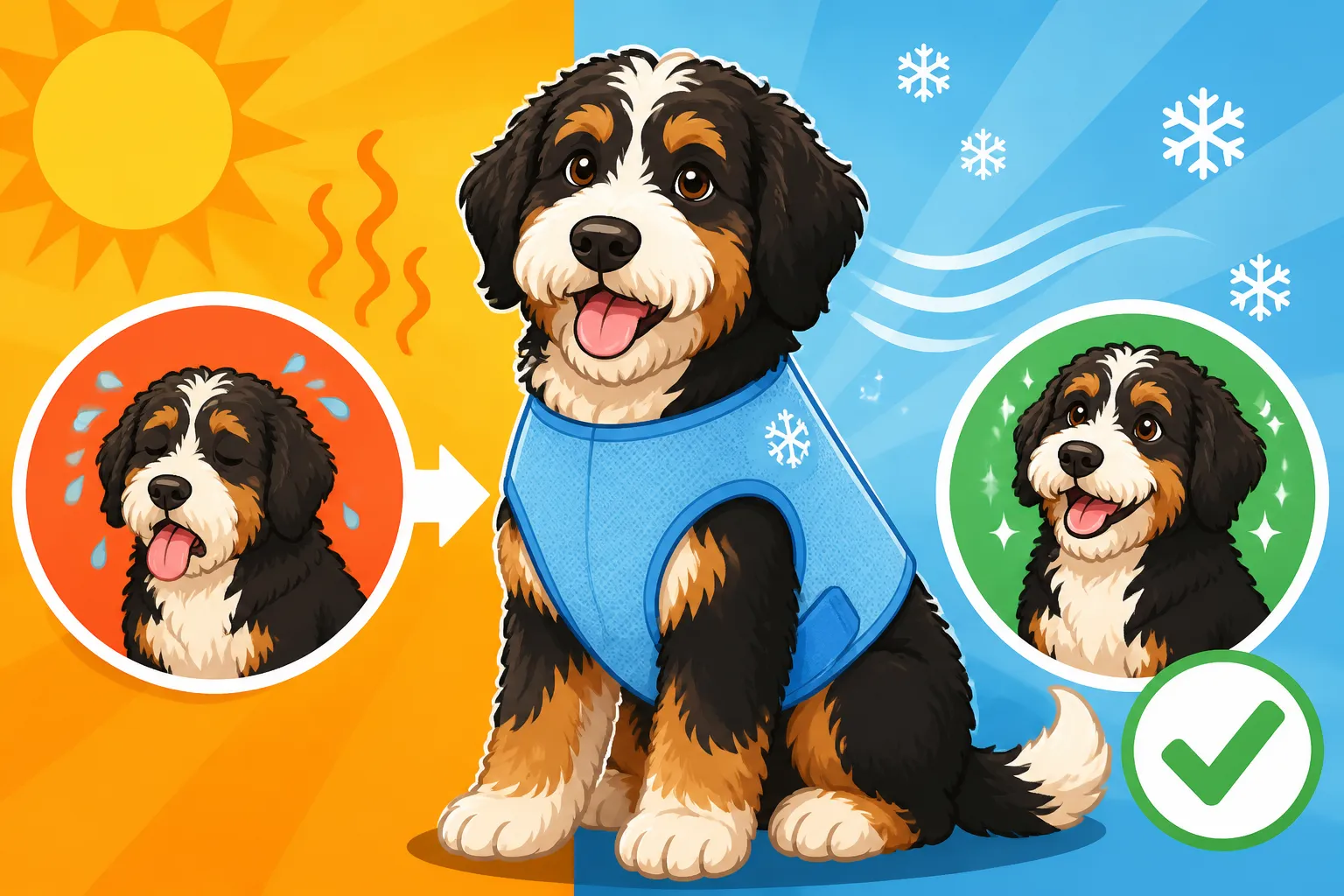
Whether a Cooling Vest Works on a Bernedoodle
It's a hot day, and you look at your beautiful, fluffy Bernedoodle, panting heavily just from a short stroll in the yard, and your heart just sinks. You've heard about cooling vests, seen them online, and you're wondering if this could be the magic bullet to help your furry companion beat the heat without having to spend all summer indoors. This guide will dive deep into whether cooling vests genuinely work for Bernedoodles, what their limitations are, and how to best use them as part of a comprehensive strategy to keep your big, loveable pal cool and comfortable when the temperatures rise.
Understanding Your Bernedoodle's Heat Challenges
Let's face it, Bernedoodles, with their glorious, often thick coats and sometimes substantial body mass, are simply not built for sweltering temperatures. They carry a lot of insulation, and that can be a real struggle when the mercury climbs. It's a common frustration for Bernedoodle owners everywhere, feeling helpless when their dog is clearly uncomfortable.
The Bernedoodle's Thick Coat and Body Type
The Bernedoodle inherits its coat characteristics from both the Bernese Mountain Dog and the Poodle. While the Poodle side often contributes to a curly or wavy, less-shedding coat, the Bernese side brings a dense undercoat and overall thick insulation. This combination can create a thermal barrier that, while fantastic in winter, traps heat in summer. Imagine wearing a heavy wool sweater on a scorching day – that's often what our Bernedoodles are experiencing.
Their body type, particularly for standard Bernedoodles, also plays a role. A larger dog has more body mass to cool down, and they don't dissipate heat as efficiently as smaller, leaner breeds. This makes them particularly susceptible to overheating, sometimes even with seemingly mild exertion. You might have a beautiful black tri Bernedoodle, and while the markings are stunning, Why a Black Tri Bernedoodle Overheats is a very real concern due to the way dark colors absorb solar radiation.
Signs of Overheating and Why Prevention Matters
Recognizing the signs of overheating is critical, as waiting too long can lead to dangerous, even life-threatening, situations like heatstroke. Early symptoms often include excessive panting, drooling, and seeking shade. As it progresses, you might notice lethargy, weakness, an elevated heart rate, vomiting, or even staggering. It's truly heartbreaking to see your usually vibrant dog struggling so much.
Prevention is always, always better than a cure when it comes to heat stress in dogs. Once a Bernedoodle's core body temperature starts to rise rapidly, it can be incredibly difficult to bring it back down safely without veterinary intervention. This is why many owners explore every possible option, including cooling vests, to prevent their beloved companions from ever reaching that critical point. If you're unsure, always check Signs a Bernedoodle Is Overheating.
How Cooling Vests Are Supposed to Work
Cooling vests are designed with a straightforward purpose: to help lower a dog's body temperature and keep them more comfortable in warm conditions. They've gained popularity as a portable and relatively easy-to-use option, but understanding their mechanics is key to knowing what to expect.
The Science Behind Evaporative and Phase-Change Cooling
Most cooling vests fall into one of two main categories based on how they achieve their cooling effect:
- Evaporative Cooling: These vests work much like human sweat. You soak the vest in cool water, wring out the excess, and then put it on your dog. As the water slowly evaporates from the vest's fabric, it draws heat away from your dog's body, creating a cooling sensation. The longer it stays damp and evaporates, the more cooling it provides. This method is generally effective but highly dependent on ambient humidity; in very humid conditions, evaporation slows down significantly, reducing the vest's effectiveness.
- Phase-Change Cooling: These vests use special gel packs or materials that cool down and then maintain a specific temperature (often around 58°F or 14°C) for a period. These materials "change phase" from solid to liquid as they absorb heat from the dog's body, providing a consistent, sustained cooling. They don't rely on evaporation and thus work well in humid environments. They typically need to be "recharged" by placing the inserts in a freezer or refrigerator.
Different Types of Cooling Vests
Beyond the scientific mechanism, there are a few practical design differences you'll encounter when looking for a cooling vest for your Bernedoodle:
- Simple Soak-and-Wear Vests: These are the most common and often the most affordable. They are essentially vests made from absorbent, breathable fabric that you wet down. Brands often focus on lightweight design and good coverage. These are great for walks, yard play, or even just relaxing on the porch.
- Vests with Insertable Gel Packs: These vests have pockets where you can place pre-chilled gel packs. This allows for a longer-lasting, more consistent cool, especially in humid climates where evaporative cooling isn't as efficient. The downside is that the gel packs add weight and bulk, and you need access to a freezer or cooler to recharge them.
- Hybrid Designs: Some vests attempt to combine both concepts, offering a basic evaporative layer with options for adding cold packs for extra cooling power.
When browsing for options, you'll find a wide variety on sites like Chewy or Amazon, ranging from basic options to more advanced designs. Consider your Bernedoodle's size and activity level when choosing.
The Reality of Cooling Vests for Bernedoodles
So, do they work? The short answer is yes, they can work, but they are not a magical solution that negates all heat risk, especially for a large, fluffy Bernedoodle. It's important to have realistic expectations and understand their benefits and limitations.
The Pros: Temporary Relief and Targeted Cooling
Cooling vests certainly offer some advantages:
- Provides Relief: When used correctly, a cooling vest can genuinely help lower your Bernedoodle's surface temperature, making them feel more comfortable. This is particularly noticeable on their core, which is where many vests focus their cooling power.
- Portable and Convenient: Unlike an air-conditioned room or a kiddie pool, a cooling vest can go anywhere your dog does – on a walk, to a friend's house, or even just in the backyard.
- Encourages Movement (Within Reason): For dogs who become completely sedentary in the heat, a vest might provide enough comfort for them to engage in light activity or a necessary potty break without immediately overheating.
- Targeted Cooling: By focusing on the back and chest, cooling vests address large areas of the dog's body, which can make a noticeable difference.
Many Bernedoodle owners report seeing their dogs visibly relax a bit when wearing a properly functioning vest on a warm day. It's not a cure-all, but it can certainly be part of the solution.
The Cons and Limitations
However, cooling vests also come with several important considerations, especially for a breed like the Bernedoodle:
- Humidity Dependence for Evaporative Vests: As mentioned, evaporative vests lose effectiveness in high humidity. If you live in a place like Florida or a particularly muggy summer region, you might find these vests don't do much at all after the initial chill. You might consider a phase-change vest instead, but those have their own quirks.
- Duration of Effect: Neither type of vest provides indefinite cooling. Evaporative vests dry out and need to be re-wet, which can be inconvenient on a longer outing. Phase-change packs eventually absorb all the heat they can and need to be re-chilled. This means constant monitoring and often carrying extra supplies.
- False Sense of Security: This is perhaps the biggest danger. Just because your Bernedoodle is wearing a cooling vest doesn't mean they're impervious to heatstroke. Owners sometimes overestimate the vest's protective capabilities and push their dogs too hard or keep them out too long. A Bernedoodle can still absolutely overheat even with a vest on, particularly if the temperature is extreme or they're exercising vigorously.
- Bulkiness and Comfort: Some vests, especially those with gel packs, can be bulky and heavy. A Bernedoodle already has a lot of coat; adding more layers, even cooling ones, needs to be comfortable for them. Poorly fitting vests can also chafe or rub, leading to skin irritation, especially under that thick fur. You also need to consider Whether a Bernedoodle's Coat Gets Thicker With Age, as sizing might change.
- Potential for Matting: If an evaporative vest is left on a Bernedoodle with a wet coat for too long, or if it isn't dried properly, it can contribute to matting, especially in the armpits or behind the ears where the coat is already prone to tangles. This is something any Bernedoodle owner dreads, as dematting can be painful and costly.
- Wetness and Mess: Evaporative vests are, by nature, wet. This means your Bernedoodle might be dripping water, which can be messy indoors or in your car.
A lot of people ask Whether a Shaved Bernedoodle Handles Heat Better in conjunction with cooling vests. While a shorter clip can help, a vest on its own or a shaved coat on its own isn't a complete solution.
Practical Tips for Use
If you decide to use a cooling vest for your Bernedoodle, here are some tips to maximize its effectiveness and ensure your dog's safety:
- Proper Fit is Paramount: The vest should be snug enough to make good contact with your dog's body, but not so tight that it restricts movement or breathing. Always measure your Bernedoodle carefully before ordering, perhaps checking size guides on Chewy or Amazon listings.
- Pre-Cool for Best Results: For evaporative vests, soak it thoroughly in cool water before heading out. For phase-change vests, ensure the inserts are fully chilled or frozen.
- Monitor Constantly: Even with a vest, keep a close eye on your Bernedoodle for any signs of overheating. They are still at risk.
- Re-wet/Re-charge as Needed: Don't expect a single soaking or set of gel packs to last all day. Bring extra water or replacement gel packs if you plan to be out for an extended period.
- Combine with Other Strategies: A vest is a tool, not the only solution. Pair it with shade, plenty of water, and limited activity.
- Acclimatization: Introduce the vest gradually. Let your Bernedoodle wear it for short periods indoors first to get used to the feeling of it.
- Check Underneath: After wearing a wet vest, always check your Bernedoodle's skin and coat underneath for any irritation or starting mats. Ensure they dry completely.
| Vest Type | Mechanism | Pros | Cons | Best Use For |
|---|---|---|---|---|
| Evaporative | Water evaporation | Lightweight, generally less bulky, simple | Less effective in high humidity, needs frequent re-wetting, can make dog wet/drippy, matting risk | Dry climates, short outings, light activity |
| Phase-Change | Gel packs | Consistent cooling, works in high humidity | Can be bulky/heavy, requires freezer/fridge to recharge, shorter sustained cooling than A/C | Humid climates, specific situations (e.g., car travel) |
Maximizing Cooling Efforts Beyond the Vest
While a cooling vest can be a helpful addition to your Bernedoodle's summer gear, it's truly just one piece of a much larger puzzle. A holistic approach to heat management is essential for this breed.
Environmental Management
Creating a cool environment for your Bernedoodle is your first line of defense against overheating. This is about being proactive and thoughtful about their daily routine.
- Timing Walks and Outdoor Play: This is perhaps the most fundamental tip. Avoid peak heat hours entirely. Schedule walks early in the morning, before 9 AM, and late in the evening, after 7 PM, when temperatures are significantly lower. On scorching days, sometimes a quick potty break is all they can manage outside. Always be mindful of The Temperature a Bernedoodle Should Not Be Walked In.
- Seeking Shade: When outdoors, always provide access to ample shade. If you're at a park, find a large tree. In your backyard, ensure there's a shaded area under an awning or a patio umbrella.
- Indoor Cooling: Air conditioning is truly a Bernedoodle's best friend in warm climates. If you don't have central air, consider investing in window units or powerful fans to keep key areas of your home cool. Remember, Whether a Bernedoodle Needs the House Air Conditioned isn't a luxury; it's often a necessity for their comfort and safety.
- Access to Fresh, Cool Water: Always have plenty of fresh, cool water available. Consider adding ice cubes to their water bowl or having multiple bowls around the house and yard. Portable water bottles with attached bowls are invaluable for walks. Hydration is absolutely key to helping their bodies regulate temperature.
Grooming and Lifestyle Adjustments
How you manage your Bernedoodle's coat and daily activities can make a huge difference in their ability to cope with heat.
- Appropriate Grooming: While shaving a Bernedoodle completely bald is generally not recommended as it can expose their skin to sunburn and interfere with their natural insulation, a shorter summer clip can be incredibly beneficial. Ask your groomer for a "summer cut" that leaves about 1-2 inches of hair, allowing for better air circulation without compromising skin protection. Understanding The Clip a Bernedoodle Owner Should Ask For in July can make a big difference. Regular brushing also helps remove loose undercoat, which can trap heat.
- Avoid Strenuous Activity: During warm weather, dial back intense games of fetch or long runs. Opt for shorter, calmer activities. Even swimming, while cooling, can be strenuous if done excessively.
- Car Safety: Never, ever leave your Bernedoodle in a parked car, even with the windows cracked. The temperature inside a car can rise to dangerous levels in minutes, even on a seemingly mild day. This is an absolute non-negotiable for any dog owner.
- Weight Management: Keeping your Bernedoodle at a healthy weight is vital. Excess weight puts additional strain on their cardiovascular system and makes it harder for them to cool down.
Other Cooling Aids
Beyond vests, there are many other products designed to help keep your Bernedoodle cool. You can find many of these options on platforms like Chewy or Amazon.
- Cooling Mats: These mats are often gel-filled and cool down when your dog lies on them, providing a chilled surface for them to rest. They are fantastic for indoor use or in shaded outdoor areas.
- Elevated Dog Beds: These beds allow air to circulate underneath your dog, preventing heat from getting trapped. They are particularly good for dogs who love to lounge outdoors.
- Kiddie Pools: A shallow plastic kiddie pool filled with a few inches of water can be a huge hit with many Bernedoodles, offering a fun way for them to cool off their paws and bellies.
- Frozen Treats: Homemade pupsicles made with dog-safe ingredients like yogurt, peanut butter, and fruit can be a refreshing and hydrating treat. You might even explore fresh food options like those from Ollie, which often have higher moisture content.
- Cooling Bandanas or Collars: Similar to evaporative vests, these can provide targeted cooling around the neck, an area with major blood vessels close to the surface, aiding in overall temperature regulation.
Ultimately, a cooling vest is best viewed as a supplemental tool. It can certainly provide comfort and some additional protection, but it should always be used in conjunction with common sense, careful monitoring, and a comprehensive approach to managing your Bernedoodle's exposure to heat. Your Bernedoodle relies on you to make smart choices to keep them safe and happy, no matter the weather.
Disclaimer
This article is for general informational purposes only and does not constitute professional advice. Laws, prices and regulations vary by location and change over time. Consult a qualified professional for guidance on your specific situation.