Feeling for a Bernedoodle’s Ribs Under All That Coat
Anyone who shares their life with a magnificent Bernedoodle knows the joy, the fluff, and sometimes, the sheer challenge of figuring out what's really going on underneath all that glorious coat! It's incredibly frustrating when you want to make sure your furry family member is at a healthy weight, but their thick, often dense fur makes it feel like you're trying to find a needle in a haystack. This guide is here to walk you through exactly how to confidently feel for your Bernedoodle's ribs, helping you monitor their body condition and ensure they're staying happy and healthy.
The Unique Challenge of the Bernedoodle Coat
Let's be honest, one of the biggest draws of a Bernedoodle is that stunning, fluffy coat! Whether it's the signature wavy look, the tighter curls, or even a straighter Bernese-like texture, it's undeniably beautiful. But that beauty comes with a practical challenge: it can be a master of disguise, hiding subtle (or not-so-subtle) changes in your dog's body condition. You might look at your Bernedoodle and think they look perfectly fine, only to discover later they’ve either gained a few too many pounds or, conversely, lost weight without you realizing it.
This isn't just a minor annoyance; it's a real barrier to proactive health monitoring. When you can't easily see their waistline or the definition around their ribs, you're missing key visual cues that are typically straightforward with shorter-coated breeds. This means you have to become more attuned to other methods, especially the tactile ones. Understanding what you're up against with their unique fur is the first step in mastering how to assess their weight accurately.
Understanding the Bernedoodle's Diverse Coat Types
Bernedoodles inherit their coats from two famously well-insulated parents: the Poodle and the Bernese Mountain Dog. This means their fur can range quite a bit, even within the same litter, and each type presents its own challenge when you’re trying to gauge their weight. For instance, a Bernedoodle with a truly curly, dense Poodle-like coat can feel like a solid cloud, making it incredibly difficult to feel through the springs of fur to their actual body. These coats tend to stand out from the body, creating an optical illusion of bulk even if the dog beneath is quite trim.
Then there are the Bernedoodles with that lovely, flowing wavy coat, often described as fleece-like. This is perhaps the most common and sought-after texture. While it might seem less dense than the curly coat, it still has significant volume and a thick undercoat, especially if they lean more towards their Bernese heritage. The Coat a Bernedoodle Gets From Two Heavy Coated Parents definitely means there's a lot to work through! This wavy fur can lay in such a way that it smooths out any discernible tuck or curve that would normally indicate a healthy waistline. It simply creates a continuous, soft silhouette that tells you very little about what's underneath.
Even those rare straight-coated Bernedoodles, which might shed more, still possess a double coat designed for mountain climates. The Wavy Coat Most Bernedoodles Carry might be common, but even the less wavy ones are still incredibly fluffy. This isn't like petting a Labrador where you can feel every contour. You're dealing with a generous buffer of hair, often several inches thick, making that direct skin-to-rib connection a focused effort. You really have to get past the initial layers of fluff to get an accurate reading, and this is where many owners get tripped up, either underestimating or overestimating their dog's condition.
Why Visual Cues Are Often Misleading
For most dog breeds, a quick glance is usually enough to tell if they’re looking a little portly or a bit too thin. You can see their waistline tucking up from their chest, maybe even a hint of their last few ribs, and the way their hips narrow. With a Bernedoodle, these visual benchmarks simply don't apply most of the time. Their luxurious coats effectively act as a furry cloak, masking the natural contours of their body. You could have a perfectly lean Bernedoodle, and their fur will still make them look like a cuddly, rectangular puffball.
This visual deception can be particularly problematic because it delays intervention. If you're relying on sight alone, you might not notice your Bernedoodle is starting to carry extra weight until they've actually put on a significant amount, making it harder to correct. Conversely, if they're unwell and losing weight, the coat can keep them looking full and healthy for longer than they actually are, potentially delaying a necessary vet visit. It's a frustrating aspect of owning such a fluffy breed, but it underscores why a hands-on approach is not just helpful, but absolutely essential for their health.
Think about it: in many breeds, you'd look down from above and see an hourglass shape, or kneel down and see a definitive abdominal tuck. With a Bernedoodle, you often just see a fuzzy cylinder. It’s hard to tell where the ribs end and the abdomen begins, or if that fluffy tail-base is actually hiding a layer of fat. This is why we preach the importance of touch, rather than just sight, when it comes to assessing your Bernedoodle's physique.
The Hands-On Approach: How to Properly Feel for Ribs
Okay, so we’ve established that looking at your Bernedoodle might not tell you the full story. Now, let’s talk about getting tactile. This isn't about giving them a rough poke; it's about a gentle, investigative touch that becomes a regular part of your routine. Getting comfortable with this technique will empower you to stay on top of your Bernedoodle's health, rather than guessing or waiting until a vet visit. It’s a simple skill, but one that makes a world of difference for a breed as fluffy as ours.
It might feel a little awkward at first, especially if you’re new to this or your Bernedoodle is particularly squirmy. But with practice, both you and your dog will get used to it. The key is consistency and making it a positive experience – maybe during a relaxed petting session or before their favorite meal. Remember, you’re not just feeling for ribs; you’re building a deeper understanding of your dog’s physical well-being.
Proper Technique for Palpation
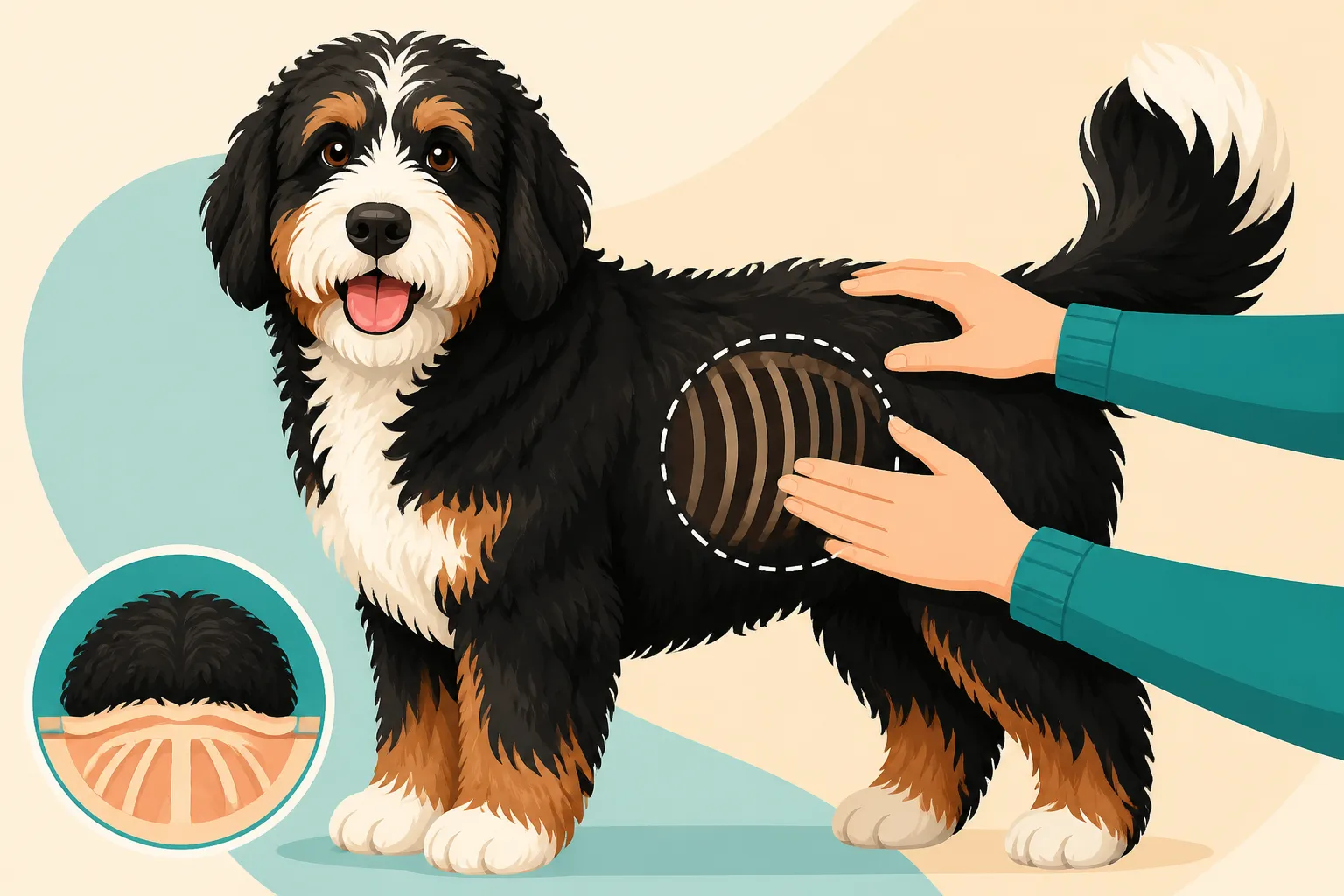
To properly feel for your Bernedoodle’s ribs, you’ll need to use the flats of your fingers, not just the tips. Start by placing both hands on either side of their rib cage, just behind their front legs. You're aiming for that general area where their chest transitions to their abdomen. Don't be shy, but don't press too hard either. The goal is a gentle but firm pressure that allows your fingers to sink through the layers of fur and reach their body.
Once your hands are in place, sweep them backwards along their sides, towards their hips. As you do this, apply a light, consistent pressure. You should feel individual ribs, like running your fingers over a washboard, but gently cushioned. The sensation you’re looking for is similar to feeling the back of your own hand when it’s flat and relaxed – you can feel the bones just under the skin. If it feels more like your knuckles when your hand is clenched, they might be too thin. If it feels like your palm, with no discernable bumps, they might be carrying too much weight. This sweep-and-feel method allows you to get a comprehensive sense of their rib coverage. Make sure you’re doing this when they’re relaxed and standing, not curled up, as that can distort their body shape.
Another tip is to gently compress their chest area from both sides with your hands. Not squeezing, but a gentle inward pressure. This helps you gauge the spring of their ribs and how much padding is around them. Remember, patience is key. If you can’t quite feel them on the first try, adjust your hand position slightly and try again. Sometimes, their deep chest can make it tricky, but persistence pays off.
What You Should and Shouldn't Feel
So, what exactly are we looking for and what are red flags? Ideally, when you sweep your fingers over your Bernedoodle's side, you should be able to easily feel their ribs, but not see them. The ribs should feel distinct, individual, and slightly prominent, but also have a thin layer of muscle and fat covering them. It should feel smooth, not sharp or bony. This indicates a healthy body condition. You’re aiming for that sweet spot where you know they’re there, but they’re not sticking out.
If you find that you have to press quite hard to feel any ribs at all, and it feels like you're pushing through a significant cushion, then your Bernedoodle is likely overweight. This extra padding indicates a build-up of fat, which can be detrimental to their joint health and overall longevity. Keeping a Bernedoodle's Weight Down is crucial for their long-term well-being, especially with their Bernese lineage being prone to joint issues. On the other hand, if their ribs feel sharp, very prominent, and you can practically count each one without much pressure, then they might be too thin. This could indicate insufficient food intake, an underlying health issue, or just a very high metabolism that needs more fuel. Neither extreme is ideal, and both warrant attention.
It's important to differentiate between the feel of muscle and fat. Muscle feels firm and dense, whereas fat feels softer and more squishy. You want to feel good muscle tone over those ribs, not just soft padding. This regular check, perhaps once a week, will help you establish a baseline for your individual dog, allowing you to quickly spot any changes.
Interpreting Your Findings and Taking Action
Now that you’ve mastered the art of feeling for those ribs, what do you do with that information? It’s not just about knowing if you can feel them, but what that sensation means in the broader context of your Bernedoodle’s health. This step involves a bit of interpretation and, if necessary, making adjustments to their diet or exercise routine. Don't be afraid to make changes; it's all part of being a responsible Bernedoodle parent.
Remember that every dog is an individual, and what feels "just right" for one Bernedoodle might be slightly different for another, even if they're the same size. Factors like age, activity level, and genetics all play a role. However, the general principles of body condition remain consistent, and knowing them will help you make informed decisions.
Connecting Rib Feel to Body Condition Score (BCS)
Veterinarians use something called a Body Condition Score (BCS) to objectively assess a dog’s weight, typically on a scale of 1 to 9, where 1 is emaciated and 9 is obese, with 4 or 5 being ideal. While you won't be assigning an exact number, your rib-feel assessment directly correlates with this system.
- Ideal (BCS 4-5): Ribs are easily palpable with a thin fat covering; you can feel them without pressing hard. A slight waist is visible behind the ribs, and the abdomen tucks up when viewed from the side. Your Bernedoodle feels robust but not "padded." This is the goal we're aiming for.
- Overweight (BCS 6-7): Ribs are palpable but require significant pressure. You'll feel a moderate to thick fat covering. The waist is absent or barely visible, and the abdomen might not tuck up. Your Bernedoodle feels more rounded and soft. This is a common trap for our beloved Bernedoodles, as their coats hide the gradual weight gain. Getting Weight Off an Overweight Bernedoodle becomes vital here.
- Obese (BCS 8-9): Ribs are difficult or impossible to palpate due to a very thick fat covering. There's obvious abdominal distension, and heavy fat deposits might be visible over the lumbar area and tail base. Your Bernedoodle feels like a furry couch cushion!
- Underweight (BCS 1-3): Ribs are very easily palpable and may even be visible. There's little to no fat covering. Your Bernedoodle might feel bony and sharp, and you might see muscle wasting. This is less common but can indicate illness or insufficient nutrition.
Regularly performing this check helps you internalize what an ideal BCS feels like for your Bernedoodle. It's about developing a sensory understanding that complements their lovable fluffiness.
When to Adjust Diet or Exercise
Once you have a good sense of your Bernedoodle’s body condition, you can decide if adjustments are needed. If you're consistently feeling too much padding, it's time to review their food intake and exercise. Start by reducing their daily portions slightly. Check the feeding guidelines on their food bag, but remember these are often maximum recommendations. Many owners find success by slightly underfeeding the recommended amount for their dog's ideal weight, rather than their current weight. Considering a food formulated for weight management, available on sites like Chewy, can also be helpful. Some owners even explore fresh food options like Ollie, which can offer precise portion control and high-quality ingredients.
On the flip side, if your Bernedoodle feels too lean, you might need to slightly increase their food, perhaps adding a small extra meal or increasing their portion sizes. Always make dietary changes gradually over several days to avoid upsetting their stomach. For exercise, if they're carrying extra weight, increasing their daily activity level is key. This doesn't mean marathon runs right away, which can be hard on joints. Instead, aim for longer, consistent walks or more active play sessions. Even adding an extra 10-15 minutes to their existing walks can make a difference. How Much an Adult Bernedoodle Eats and The Daily Cups a Standard Bernedoodle Needs are excellent resources for fine-tuning your approach. Remember, any significant dietary or exercise changes, especially if your dog is noticeably underweight or obese, should always be discussed with your veterinarian first. They can help rule out underlying medical conditions and provide personalized recommendations.
Beyond the Ribs: A Holistic View of Bernedoodle Health
While feeling for your Bernedoodle’s ribs is a cornerstone of weight management, it’s not the only piece of the puzzle. A truly holistic approach to their health involves observing several other indicators. By combining your hands-on rib assessment with a broader awareness of their overall well-being, you'll be well-equipped to keep your Bernedoodle thriving for years to come.
Remember, you're their advocate, and paying attention to these various signals allows you to catch potential issues early. This integrated approach ensures you're not missing any subtle cues your Bernedoodle might be sending about their health.
Other Indicators of Healthy Weight and General Well-being
Beyond the ribs, several other factors contribute to an accurate assessment of your Bernedoodle’s healthy weight and overall condition. One of the most telling indicators is their energy level. A dog at an ideal weight typically has boundless energy for play, walks, and daily activities. If your Bernedoodle seems unusually lethargic or struggles to keep up on walks that they once enjoyed, it could be a sign of being overweight or having another health issue. Conversely, a very high, almost restless energy coupled with a lean physique might indicate they’re burning more calories than they're taking in.
Muscle tone is another crucial aspect. Even with their thick coat, you can still feel the firmness of well-developed muscles, particularly along their back and hindquarters. A dog that is too heavy will often have softer muscles, or they might be less defined. Likewise, a dog that is underweight can show muscle wasting. Pay attention to how they move – do they spring up easily, or do they seem a bit stiff? How do they handle stairs? Exercise That Suits a Bernedoodle With Bad Elbows is something to keep in mind, as proper weight management directly impacts joint health.
Finally, just observe their overall demeanor. A happy, healthy Bernedoodle usually has bright eyes, a shiny coat, and is engaged with their surroundings. If you notice any changes in their coat quality (dullness, excessive shedding, or skin issues under the fur), their appetite (sudden pickiness or ravenous hunger), or their bathroom habits, these can all be signals that something is amiss, regardless of what their rib check tells you. These observations, combined with your regular rib checks, paint a comprehensive picture of your Bernedoodle's health.
The Importance of Regular Vet Checks
Even with your newfound expertise in rib palpation and keen observation skills, nothing replaces the regular, professional assessment of a veterinarian. Your vet has specialized training and diagnostic tools to accurately assess your Bernedoodle’s body condition, catch subtle health changes, and offer tailored advice. They can perform a thorough physical exam, weigh your dog accurately on a professional scale, and discuss any concerns you might have about their weight, diet, or activity levels.
During these visits, your vet might also perform blood work or other tests as part of a routine The Screening a Bernedoodle Should Have Yearly. These tests can uncover underlying conditions that might affect weight, such as thyroid issues or metabolic problems. If you've been struggling to help your Bernedoodle lose or gain weight, your vet can provide specific dietary recommendations, suggest appropriate exercise plans, or even refer you to a veterinary nutritionist. They are your best partner in ensuring your fluffy companion lives a long, healthy life. Don't hesitate to schedule an appointment if you have any concerns, especially if you notice a sudden or drastic change in your Bernedoodle's body condition.
Disclaimer
This article is for general informational purposes only and does not constitute professional advice. Laws, prices and regulations vary by location and change over time. Consult a qualified professional for guidance on your specific situation.