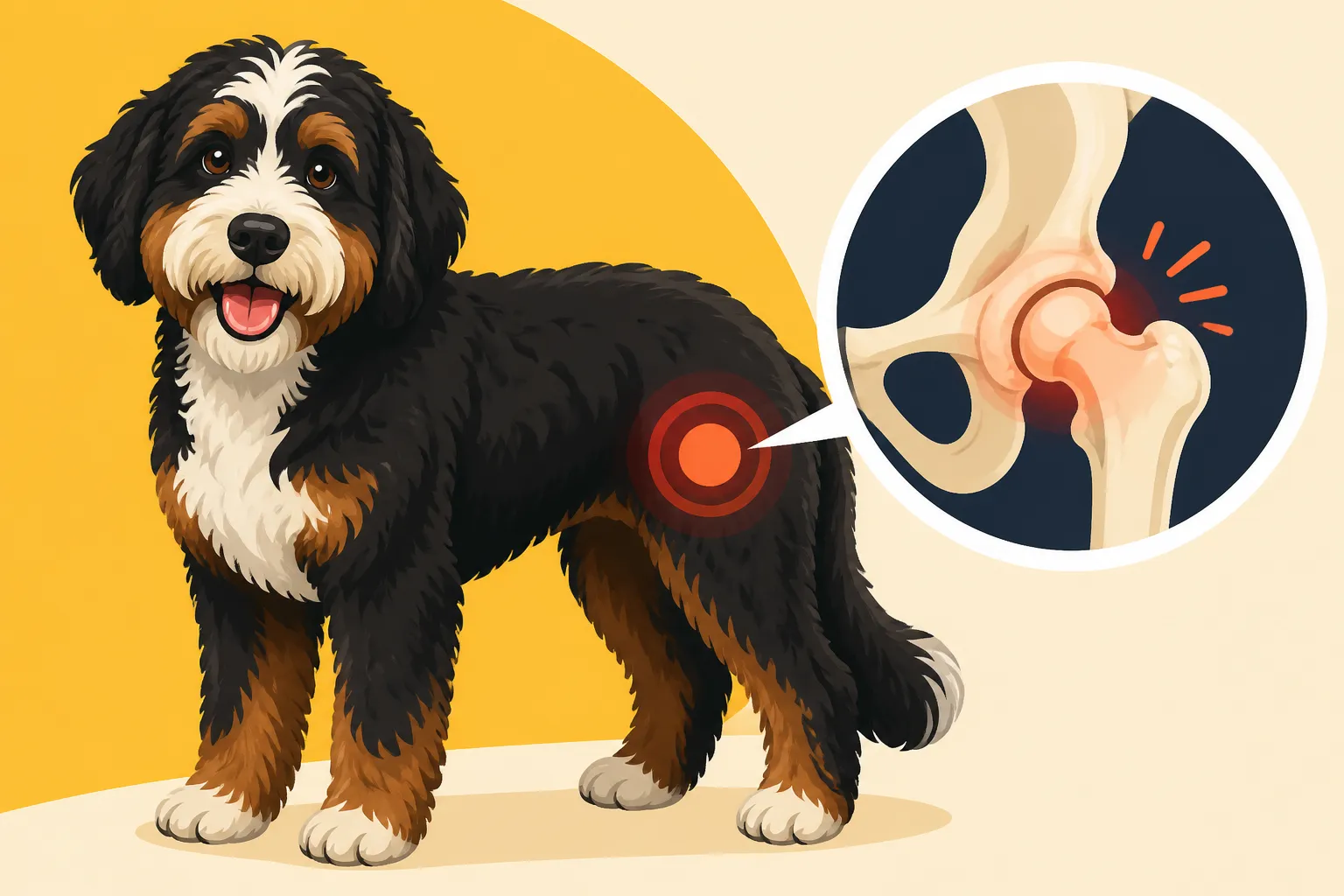
Hips on a Ninety Pound Bernedoodle
Bringing a gorgeous, fluffy Bernedoodle into your home, especially a big standard one that's destined to be a ninety-pound lap dog, is an absolute joy. But let's be honest, alongside all that love and laughter, there's often a nagging worry about their health, particularly their joints. One of the biggest concerns for owners of these magnificent dogs, stemming largely from their Bernese Mountain Dog heritage, is the prospect of hip dysplasia. It's a condition that can steal their comfort and mobility, leading to heartbreaking decisions and significant expenses. This comprehensive guide is here to walk you through everything you need to know about protecting and managing your Bernedoodle's hips, from puppyhood well into their senior years.
Understanding Hip Dysplasia in Large Bernedoodles
Hip dysplasia is a term that often sends shivers down a large dog owner's spine, and for good reason. It's a complex condition that can dramatically affect a dog's quality of life, especially for a breed as substantial as a standard Bernedoodle. Understanding what it is and why our furry friends are susceptible is the first step in prevention and management.
What Exactly is Hip Dysplasia?
At its core, hip dysplasia is an abnormal formation of the hip socket. In a healthy hip, the ball (the head of the femur) fits snugly and smoothly into the socket (the acetabulum of the pelvis). This allows for fluid, pain-free movement. When dysplasia is present, this fit is loose or uneven. Imagine a ball joint where the ball doesn't quite sit right in the cup; it grinds, it's unstable, and over time, it wears down. This poor fit causes friction and instability, leading to cartilage damage, inflammation, and ultimately, debilitating osteoarthritis as the body tries to stabilize the joint by laying down new bone.
This isn't just a painful condition; it's progressive. What starts as a subtle looseness can develop into significant joint degeneration, making every step a challenge for your beloved Bernedoodle. The impact ranges from mild discomfort to severe lameness, affecting their ability to play, walk, and even stand comfortably. It's a truly frustrating reality for many large breed owners, watching their once-energetic companion struggle with basic movements.
Why Bernedoodles Are Prone to Hip Issues
Bernedoodles inherit their genetic predisposition for hip dysplasia primarily from their Bernese Mountain Dog side. Bernese Mountain Dogs are known to have one of the highest incidences of hip and elbow dysplasia among all breeds. While the Poodle side of the Bernedoodle is generally healthier in this regard, the Bernese contribution is significant enough that responsible breeders meticulously screen their parent dogs. The idea behind the Bernedoodle cross, in part, was to introduce hybrid vigor and potentially reduce the incidence of certain breed-specific health issues, including some cancers and joint problems. However, it doesn't eliminate the risk entirely; it merely reduces it when breeders are diligent and selective.
Even with the best breeding practices, the genetic lottery can still play a role. Beyond genetics, environmental factors interact with this predisposition. Rapid growth in puppies, improper nutrition, and excessive exercise during crucial developmental stages can exacerbate a mild genetic tendency, turning it into a full-blown problem. It's a delicate balance, and understanding these factors is crucial for every Bernedoodle owner.
The Impact of Size on Joint Health
A ninety-pound Bernedoodle carries a lot of weight, and that sheer mass puts immense stress on their joints, especially their hips. Imagine the forces at play every time they jump, run, or even simply stand up. Their rapid growth from a tiny puppy to a large adult in a relatively short period is another critical factor. Their bones, muscles, and ligaments are developing quickly, and if any part of this system is compromised, the large size only amplifies the problem. This is why careful management of a Bernedoodle puppy's growth is paramount.
Overfeeding, which leads to too-rapid growth or being overweight, can significantly increase the risk and severity of hip dysplasia. The excess weight adds extra strain to already vulnerable, developing joints. This isn't just about appearance; it's about biomechanics. A heavier dog puts more force through the poorly formed hip joint, accelerating the degenerative changes and increasing pain. This is a primary reason why many vets recommend keeping a close eye on your Bernedoodle's weight throughout their life, but especially during their formative months. Owners often feel this incredible pressure to ensure their giant puppy grows "big and strong," but for Bernedoodles, "slow and steady" wins the race when it comes to healthy joint development.
Recognizing the Early Signs of Hip Problems
Spotting hip dysplasia early in a large Bernedoodle can make a world of difference in managing the condition and preserving their quality of life. Sometimes the signs are obvious, but more often, they are subtle, easily missed, or attributed to normal puppy antics or growing pains. As a vigilant owner, learning to identify these early indicators is crucial.
Subtle Clues in Puppyhood
Even in young Bernedoodle puppies, often before they even reach their adult size, there can be subtle signs that their hips aren't developing as they should. You might notice a reluctance to play as vigorously as their littermates or a slight stiffness after waking up from a nap. They might seem to have less endurance during playtime, needing more frequent rests. Some puppies will exhibit a "bunny hop" gait, where they use both hind legs simultaneously to propel themselves forward, almost like a rabbit, to minimize stress on individual hip joints. This is a classic indicator that many owners often dismiss as just a cute quirk of their puppy. However, if you see your Bernedoodle demonstrating The Bunny Hop Gait in a Young Bernedoodle, it's a definite red flag worthy of a vet visit.
Another less obvious sign can be an awkwardness when navigating stairs or getting into and out of the car. They might struggle more than expected, or appear clumsy in their hindquarters. Some puppies might shift their weight more to their front legs, trying to alleviate pressure on their hips, leading to a more muscular front end and a weaker, less developed rear. These are not always clear-cut symptoms, which can make early diagnosis challenging, but paying close attention to these nuances can lead to earlier intervention.
Visible Symptoms in Adolescent and Adult Dogs
As your Bernedoodle grows into adolescence and adulthood, the signs of hip dysplasia can become more pronounced and impossible to ignore. A common complaint is limping or lameness in one or both hind legs, especially after exercise or a long period of rest. You might notice them favoring one leg or a general stiffness in their hindquarters that seems to worsen in cold or damp weather. Their gait might become noticeably different, appearing more wobbly or uncoordinated. They might stand with their hind legs closer together or show decreased range of motion in their hips, making it difficult for them to stretch out fully.
Other visible symptoms include muscle atrophy in the hind limbs, as they use those muscles less due to pain, and conversely, increased muscle development in the front legs as they compensate. They might also have difficulty rising from a lying position, especially on slippery floors, or show hesitancy jumping onto furniture or into vehicles—activities they once did with ease. You might also observe behavioral changes; a dog in chronic pain may become irritable, withdrawn, or show less interest in activities they once loved. It's truly heartbreaking to see a once-joyful dog become reserved due to discomfort.
Differentiating Hip Pain from Other Ailments
It's important to remember that not all hindquarter lameness or stiffness is automatically hip dysplasia. There are several other conditions that can mimic hip pain in large Bernedoodles, making a thorough veterinary examination essential for accurate diagnosis. For instance, luxating patellas (slipping kneecaps) or torn cruciate ligaments can cause lameness in the hind legs, though the pain is typically centered in the knee rather than the hip. Spinal issues, such as intervertebral disc disease or degenerative myelopathy, can also cause hind limb weakness, incoordination, and difficulty moving. It's vital to know that What Degenerative Myelopathy Looks Like in a Bernedoodle can present similar symptoms, particularly in older dogs.
Conditions like Lyme disease or other joint infections can also cause generalized lameness and discomfort. Even something as simple as a muscle strain from over-exertion can lead to temporary limping. This is why self-diagnosing your Bernedoodle is never a good idea. If you notice any persistent changes in your dog's gait, mobility, or behavior related to their hindquarters, a visit to your veterinarian is the absolute best course of action. They can perform a physical examination, manipulate the joints, and recommend diagnostic imaging, such as X-rays, to get to the root of the problem.
Preventative Measures for Healthy Hips
While genetics play a significant role in hip dysplasia, responsible ownership can significantly influence the severity and onset of the condition, especially for a large Bernedoodle. There are proactive steps you can take from the moment you bring your puppy home to nurture strong, healthy joints throughout their life.
Choosing a Reputable Breeder with Clearances
The single most impactful step you can take to prevent hip dysplasia is to choose a reputable breeder who prioritizes health testing. A responsible Bernedoodle breeder will screen their breeding dogs for hip and elbow dysplasia through organizations like the Orthopedic Foundation for Animals (OFA) or the PennHIP program. These clearances provide a scientific assessment of a dog's hip joint quality. They won't breed dogs with dysplastic hips, significantly reducing the chances of passing the genes on to their puppies.
When speaking with breeders, don't be shy about asking for specific OFA or PennHIP certificates for both parent dogs. They should be transparent and willing to provide this documentation. Look for "Good," "Excellent," or "Fair" ratings from OFA, or PennHIP distraction index scores in the lower percentiles (e.g., in the best 10-30% of the breed). A breeder who says their dogs are "vet checked" or "don't have problems" without providing official documentation is a red flag. This due diligence is crucial because hip dysplasia is a polygenic trait, meaning multiple genes contribute to its expression, and environmental factors can also play a role. Understanding The Five Clearances a Bernedoodle Breeder Should Have is vital for any prospective owner.
The Critical Role of Diet and Nutrition
Proper nutrition, particularly during a Bernedoodle's rapid growth phase, is paramount for healthy joint development. Large breed puppies need specialized food formulas designed to support slow and steady growth, rather than rapid weight gain. These diets typically have a carefully controlled calcium-to-phosphorus ratio and lower calorie density than regular puppy foods. Overfeeding a large breed puppy can lead to excessively fast growth, putting undue stress on their developing joints and significantly increasing the risk of hip dysplasia. You want your Bernedoodle to grow at a moderate pace, allowing their bones and joints to mature correctly.
Consult your veterinarian for specific dietary recommendations tailored to your Bernedoodle's age, size, and activity level. Avoid generic "all life stages" foods during puppyhood unless explicitly recommended by a vet for a large breed. Once they reach adulthood, maintaining an ideal body weight is equally critical. An overweight Bernedoodle will place additional strain on their joints, exacerbating any underlying hip issues. Owners should strive to feel their dog's ribs easily without them being visible, and see a discernible waistline. Remember, a fit dog is a healthier dog, and this is especially true for large breeds prone to joint issues. It's often debated Whether an Overweight Bernedoodle Loses Years, but when it comes to joint health, the answer is a resounding yes.
Controlled Exercise for Growing Pups
While exercise is essential for a Bernedoodle's physical and mental well-being, excessive or inappropriate exercise during puppyhood can be detrimental to their developing joints. High-impact activities such as long runs, intense fetching sessions, jumping off high surfaces (like furniture or out of cars), or repeated stair climbing should be strictly limited, or even avoided, until your Bernedoodle's growth plates have closed, typically around 12-18 months of age. The "five-minute rule" is a good guideline: a puppy should get five minutes of exercise per day per month of age. So, a four-month-old puppy would get 20 minutes of controlled exercise spread throughout the day.
Instead of forced, high-impact exercise, focus on short, gentle walks on soft surfaces, supervised playtime in a secure yard, and mental stimulation through training and puzzle toys. Swimming can be an excellent low-impact exercise for puppies once they are old enough and comfortable in the water, as it strengthens muscles without stressing joints. The goal is to build muscle tone around the joints without putting excessive pressure on the immature bone structure. Learning The Exercise a Bernedoodle Puppy Should Not Do is crucial for protecting their precious joints. Even once they reach full size, usually around The Age a Bernedoodle Reaches Full Height, continued mindful exercise is beneficial.
Diagnostic Tools and Procedures
When hip dysplasia is suspected, your veterinarian will use a combination of physical examination and diagnostic imaging to confirm the diagnosis and assess the severity of the condition. Understanding these procedures can help you prepare and make informed decisions about your Bernedoodle's care.
OFA and PennHIP Evaluations
For definitive diagnosis and screening, two primary methods are widely recognized: the Orthopedic Foundation for Animals (OFA) and PennHIP. Both require sedation or anesthesia to get proper, relaxed positioning for the X-rays, as muscle tension can hide the true laxity of the joint.
- OFA Evaluation: This method involves taking a single, extended hip radiograph. The image is then submitted to a panel of three independent, board-certified veterinary radiologists who evaluate the hip joint for signs of degenerative joint disease. They assign a grade of Excellent, Good, Fair (all considered passing), Borderline, or Mild, Moderate, or Severe Dysplasia. OFA evaluations can typically be performed once a dog is 24 months of age, as their hips are considered mature by then. While widely used, some critics argue it only captures a single angle and might miss subtle laxity.
- PennHIP Evaluation: This method takes three separate radiographs: a distraction view, a compression view, and a hip-extended view. The distraction view, in particular, measures the passive laxity (looseness) of the hip joint, which is considered a strong predictor of future degenerative joint disease. The results are expressed as a "distraction index" (DI), a numerical measurement that indicates the degree of hip laxity, and a percentile ranking within the breed. PennHIP can be performed as early as 16 weeks of age, offering an earlier indicator of potential issues. Many believe PennHIP provides a more accurate and objective assessment of hip quality. If your vet suggests it, understanding Whether PennHIP Suits a Bernedoodle is helpful, as it’s a valid alternative to OFA.
Both systems have their merits, and many reputable breeders utilize one or both to ensure the health of their breeding stock. The key is to have objective, verifiable results.
Veterinary Examinations and X-rays
Beyond the specialized OFA or PennHIP evaluations, a general veterinary examination is the first step when you suspect your Bernedoodle has hip pain. Your vet will perform a thorough physical assessment, observing your dog's gait, palpating their hips and spine, and manipulating their hind legs to check for range of motion, pain, and signs of joint laxity. They might perform specific orthopedic tests to identify instability or discomfort in the hip joint. This initial exam provides crucial clues and helps narrow down the possibilities.
If hip dysplasia is suspected, X-rays (radiographs) are the definitive diagnostic tool. These are typically taken under sedation to ensure the dog is completely relaxed and the hips can be properly positioned, preventing discomfort and ensuring accurate imaging. The X-rays allow the veterinarian to visualize the hip joint structure, assess the fit of the femoral head in the acetabulum, and look for signs of osteoarthritis, such as bone spurs or remodeling. The images will show how loose the joint is, if there's any flattening of the femoral head or shallowing of the socket, and the extent of any secondary arthritic changes. This visual evidence is critical for confirming the diagnosis and determining the severity, guiding subsequent treatment decisions.
Understanding the Results and What They Mean
Receiving a diagnosis of hip dysplasia can be overwhelming, but understanding the results will empower you to make the best decisions for your Bernedoodle. OFA grades range from Excellent to Severe Dysplasia. A dog with an "Excellent" grade has nearly perfect hips, while "Mild," "Moderate," or "Severe" dysplasia indicates increasing degrees of joint abnormality and degenerative changes. For PennHIP, a lower distraction index (DI) indicates tighter hips and a lower risk of developing osteoarthritis, while a higher DI suggests greater laxity and higher risk. The percentile ranking tells you how your dog compares to others of the same breed, which can be particularly useful.
A diagnosis of hip dysplasia doesn't mean your Bernedoodle's life is over. It means you now have a clearer understanding of their joint health and can implement a tailored management plan. The severity of the dysplasia, your dog's age, overall health, and your lifestyle will all factor into treatment discussions. Early, less severe cases might be managed effectively with conservative approaches, while more advanced cases might require surgical intervention. It's a journey, and your veterinary team will be your invaluable guide.
| Feature | OFA (Orthopedic Foundation for Animals) | PennHIP (University of Pennsylvania Hip Improvement Program) |
|---|---|---|
| Primary Goal | Assess hip conformation and presence of osteoarthritis. | Quantify passive hip joint laxity (looseness). |
| Minimum Age | 24 months (official certification); preliminary evaluations possible earlier. | 16 weeks. |
| Views Taken | One extended hip view. | Three views: distraction, compression, and hip-extended. |
| Interpretation | Subjective grading by 3 radiologists (Excellent, Good, Fair, Borderline, Mild, Moderate, Severe). | Objective measurement (Distraction Index – DI) and percentile ranking within breed. |
| Predictive Value | Less predictive of future OA in younger dogs; better at diagnosing existing OA. | More predictive of future OA risk, even in puppies. |
| Anesthesia/Sedation Required | Yes | Yes |
| Cost | Generally lower than PennHIP | Generally higher than OFA |
| Pros | Widely recognized, easier to perform. | More sensitive for laxity, earlier assessment, objective scoring. |
| Cons | Can miss subtle laxity, age restriction for official certification. | Requires specialized training/equipment for vets, higher cost. |
Managing Hip Dysplasia: Treatment Options
Once your Bernedoodle has been diagnosed with hip dysplasia, the good news is there are numerous strategies available to manage the condition and help them live a comfortable, happy life. The approach your vet recommends will depend on the severity of the dysplasia, your dog's age, overall health, and your family's circumstances.
Conservative, Non-Surgical Approaches
For many Bernedoodles with mild to moderate hip dysplasia, or for those who aren't surgical candidates, conservative management can be highly effective. This multifaceted approach focuses on pain relief, reducing inflammation, and strengthening the surrounding musculature.
- Weight Management: This is arguably the most crucial component. Keeping your Bernedoodle at a lean, healthy weight significantly reduces the stress on their hip joints, slowing the progression of arthritis and alleviating pain. Your vet can help you determine an ideal weight and create a feeding plan.
- Medication:
- NSAIDs (Non-Steroidal Anti-Inflammatory Drugs): Medications like carprofen (Rimadyl), meloxicam (Metacam), or firocoxib (Previcox) are commonly prescribed to reduce pain and inflammation. These can make a huge difference in your dog's comfort and mobility, but often require regular monitoring for side effects, especially with long-term use.
- Pain Relievers: Other pain medications, such as gabapentin or tramadol, may be used in conjunction with NSAIDs or on their own for breakthrough pain.
- Joint Supplements: Glucosamine, chondroitin, and omega-3 fatty acids are popular supplements that can help support cartilage health, reduce inflammation, and improve joint lubrication. Brands like Dasuquin, Cosequin, or generally high-quality fish oil supplements are often recommended. While not a cure, they can be a valuable part of a comprehensive plan.
- Physical Therapy and Controlled Exercise: Low-impact exercises, like swimming, controlled leash walks, and specific therapeutic exercises, can help strengthen the muscles around the hip joints without causing further damage. A certified canine rehabilitation therapist can develop a customized program for your Bernedoodle.
- Acupuncture and Laser Therapy: These complementary therapies can offer additional pain relief and help reduce inflammation for some dogs.
- Injectable Treatments: Medications like polysulfated glycosaminoglycans (e.g., Adequan Canine) can help improve joint fluid viscosity and inhibit cartilage degradation. Newer options like Librela (bedinvetmab) target Nerve Growth Factor, offering monthly pain relief injections. These can be particularly beneficial for long-term management of arthritis, providing consistent relief that oral medications sometimes struggle to achieve.
Many owners find a combination of these approaches helps their Bernedoodle maintain an excellent quality of life for years. Regular check-ups with your vet are essential to adjust the plan as your dog's needs change. And when considering the potential ongoing costs of these treatments, having pet insurance from providers like Healthy Paws can truly be a lifesaver, helping to cover unexpected expenses.
Surgical Interventions and Their Efficacy
For Bernedoodles with severe hip dysplasia, particularly those who don't respond well to conservative management, surgery might be the best option to improve their mobility and alleviate pain. There are several surgical procedures, each suited for different ages and severities of dysplasia.
- Juvenile Pubic Symphysiodesis (JPS): This procedure is performed on puppies typically between 16 and 20 weeks of age. It involves fusing a portion of the pelvis, which alters the growth of the pubic bone and encourages the hip sockets to rotate and deepen over time, providing better coverage for the femoral heads. It's a preventative measure only effective in very young puppies before significant arthritic changes occur.
- Triple Pelvic Osteotomy (TPO) / Double Pelvic Osteotomy (DPO): These surgeries are typically performed on dogs under 10-12 months of age with significant hip laxity but without existing degenerative joint disease. The pelvis is cut in three (TPO) or two (DPO) places and then rotated to create a better fit for the femoral head in the socket, and then fixed in the new position with plates and screws. This essentially remodels the hip joint. These are complex procedures requiring specialized veterinary surgeons and a significant recovery period.
- Femoral Head Ostectomy (FHO): This salvage procedure involves removing the head and neck of the femur, eliminating the painful bone-on-bone grinding. The body then forms a "false joint" of scar tissue. While it doesn't recreate a normal hip joint, it can significantly reduce pain and improve mobility, especially in smaller dogs or those who are not candidates for other major surgeries. For a large Bernedoodle, while it can relieve pain, it might result in a less powerful stride, but it's often preferred over continuous, debilitating pain. Owners contemplating this option should definitely inquire about Whether a Bernedoodle Needs a Hip Replacement for comparison.
- Total Hip Replacement (THR): Considered the gold standard for severe, painful hip dysplasia in skeletally mature dogs. This procedure involves replacing both the diseased ball and socket with prosthetic implants (metal and plastic components). THR offers excellent long-term results, with many dogs regaining full, pain-free function. However, it's a major surgery, highly specialized, expensive, and requires a lengthy rehabilitation period. It's truly life-changing for many dogs, allowing them to run and play without discomfort again.
The decision for surgery is a significant one, and your vet will discuss the pros, cons, costs, and recovery involved for each option. Often, surgery is followed by a period of strict rest and then a dedicated physical therapy regimen to maximize recovery.
Long-Term Care and Quality of Life
Regardless of whether your Bernedoodle undergoes surgery or is managed conservatively, long-term care is about maintaining their comfort and quality of life. This involves a commitment to ongoing management. Regular veterinary check-ups are essential to monitor their condition, adjust medications, and catch any new issues promptly. This often involves periodic X-rays to assess the progression of arthritis.
For dogs managed with medication, consistency is key. Missing doses can lead to a return of pain and inflammation. Continuing joint supplements, maintaining an ideal weight, and providing appropriate, consistent exercise are also lifelong commitments. As your Bernedoodle ages, you might need to further adjust their activity levels and consider additional supportive measures such as orthopedic beds, ramps, or harnesses to assist with mobility. Adapting your home environment (which we'll cover next) becomes increasingly important. The goal is to keep your Bernedoodle active, happy, and as pain-free as possible, ensuring they can enjoy their family life to the fullest. Managing Arthritis in a Bernedoodle at Eight is a common challenge, but with dedicated care, they can still thrive.
Living with a Bernedoodle Affected by Hip Dysplasia
Bringing a dog with hip dysplasia into your life, or having your current Bernedoodle diagnosed with it, can feel overwhelming. But rest assured, with some adjustments and a lot of love, you can provide a wonderful, comfortable life for your furry companion. It's about proactive care and creating an environment that supports their mobility.
Adapting Your Home Environment
Making simple modifications to your home can significantly improve your Bernedoodle's comfort and safety, especially if they are struggling with hip pain.
- Non-Slip Flooring: Hardwood, tile, and laminate floors can be incredibly challenging for dogs with joint issues. They struggle to get traction, which can lead to slips, falls, and further injury or pain. Lay down rugs, carpet runners, or anti-slip mats in high-traffic areas and wherever your Bernedoodle rests. This provides stability and confidence, making it easier for them to stand up and move around without fear of slipping.
- Orthopedic Beds: Investing in a high-quality orthopedic dog bed is a must. These beds are designed with supportive foam that cradles joints, relieves pressure points, and provides excellent support, preventing additional stiffness and discomfort. A regular soft pillow bed simply won't offer the necessary support for a ninety-pound Bernedoodle. Look for beds with dense, high-quality memory foam.
- Ramps and Stairs: Minimize jumping and stair climbing, as these high-impact movements put immense strain on compromised hips. Use ramps or doggy stairs to help your Bernedoodle get onto and off furniture, into the car, or navigate outdoor steps. Even for just a few steps, a ramp can make a huge difference in preventing jarring impacts. Many owners consider Whether Ramps Help a Bernedoodle's Joints as soon as signs of stiffness appear.
- Elevated Food and Water Bowls: While sometimes debated regarding bloat risk (though for Bernedoodles, The Chest That Puts a Standard Bernedoodle at Bloat Risk is a factor), elevated bowls can alleviate the need for your Bernedoodle to bend down excessively, which can be painful for dogs with hip issues. This allows them to eat and drink in a more comfortable, upright position.
- Secure Grooming Station: Grooming can be difficult for a Bernedoodle with hip pain. A sturdy grooming table with a non-slip surface and supportive sling can help keep them stable and comfortable during brushing and clipping sessions, minimizing the need for them to stand for long periods or shift weight awkwardly.
These adaptations demonstrate your commitment to their well-being and can dramatically improve their daily comfort and ability to move around their own home.
Physical Therapy and Rehabilitation
Physical therapy and rehabilitation are invaluable components of managing hip dysplasia, whether post-surgery or for conservative management. Just like in humans, targeted exercises can strengthen muscles, improve range of motion, reduce pain, and enhance overall function.
- Hydrotherapy: This is one of the most beneficial therapies for dogs with hip issues. Swimming or underwater treadmill sessions allow your Bernedoodle to exercise without the impact of gravity, building muscle strength in their hindquarters and core. The warm water in therapeutic pools also helps to relax muscles and reduce pain.
- Therapeutic Exercises: A certified canine rehabilitation therapist can teach you specific exercises to do at home. These might include balance exercises, controlled walking on different surfaces, passive range of motion exercises, or targeted stretches. The goal is to improve flexibility, muscle strength, and proprioception (awareness of body position).
- Massage and Manual Therapy: Gentle massage can help alleviate muscle tension and improve blood flow, reducing discomfort around the hips. Manual therapy techniques performed by a professional can help mobilize stiff joints.
- Laser Therapy: Low-level laser therapy (LLLT) can stimulate cellular repair, reduce inflammation, and provide pain relief. Many clinics offer this as part of a rehab program.
- Acupuncture: For some dogs, acupuncture can provide effective pain relief by stimulating specific points on the body, promoting natural healing and reducing inflammation.
A tailored rehabilitation plan, supervised by a professional, can significantly slow the progression of arthritis and keep your Bernedoodle active and comfortable for as long as possible. Pet insurance plans, such as those offered by Healthy Paws, often cover rehabilitation therapies, which can be a huge financial relief for owners.
The Emotional Toll on Owners and Pets
Living with a Bernedoodle affected by hip dysplasia isn't just a physical challenge for the dog; it takes an emotional toll on owners too. It's heartbreaking to watch your once-exuberant companion struggle with pain or lose the ability to do things they once loved, like running freely in the park or greeting you with a joyful jump. You might feel guilt, frustration, or sadness, especially if you feel you could have done more to prevent it. It's okay to acknowledge these feelings.
Your Bernedoodle might also experience emotional changes. Chronic pain can lead to increased irritability, anxiety, or withdrawal. They might be less tolerant of being touched in certain areas, less interested in playtime, or even exhibit subtle signs of depression. It's essential to recognize these behavioral shifts as signs of their discomfort and adjust your interactions accordingly, offering comfort, patience, and continued affection.
Supporting a dog with hip dysplasia requires immense patience and dedication. There will be good days and bad days. Celebrate the good days and be understanding on the tough ones. Seek support from your vet, a canine rehabilitation specialist, or even online communities of owners dealing with similar challenges. Knowing you're not alone can be incredibly comforting. The journey with a dysplastic Bernedoodle is a testament to the powerful bond we share with our pets, and your commitment to their comfort will mean the world to them.
Genetic Predisposition and Responsible Breeding
The complex nature of hip dysplasia means that while environmental factors certainly play a role, the foundation of this condition lies deep within a dog's genetic makeup. Understanding this is crucial for both prospective Bernedoodle owners and those looking to contribute to the breed's health.
The Heritability of Hip Dysplasia
Hip dysplasia is considered a polygenic, multifactorial disease, meaning that multiple genes contribute to its inheritance, and environmental factors influence its expression. It's not as simple as a single gene causing the disease; rather, a combination of genetic markers increases susceptibility. This makes breeding out hip dysplasia a significant challenge, as even parents with excellent hips can, in rare cases, produce offspring with dysplasia, especially if there's a wider genetic pool in their ancestry that carries the predisposition. However, the risk is dramatically reduced when both parents have demonstrably healthy hips, cleared by reputable screening organizations.
The Bernese Mountain Dog, one of the Bernedoodle's parent breeds, has a known high incidence of hip dysplasia. This strong genetic predisposition is directly passed down. The Poodle, while generally having a lower incidence, can also carry genes for hip laxity. Therefore, combining these breeds without careful health screening can inadvertently increase the likelihood of hip problems in the offspring. A truly responsible Bernedoodle breeder understands this genetic lottery and uses all available tools to stack the odds in favor of healthy puppies.
Understanding Genetic Testing and Screening
Beyond the physical X-ray evaluations like OFA and PennHIP, which assess the phenotype (what the hips look like), genetic testing is increasingly becoming a part of comprehensive breeding programs, though it's more complex for polygenic traits like hip dysplasia. While there isn't a single "hip dysplasia gene test" yet that can definitively predict the disease, ongoing research is identifying genetic markers associated with hip health. Breeders who are committed to improving the breed's health will utilize all available tools, including genetic panels, to make the most informed breeding decisions.
Currently, OFA and PennHIP remain the gold standard for assessing a dog's hips for breeding purposes. These screenings allow breeders to select parent dogs with the tightest, healthiest hips, thereby reducing the likelihood of passing on the genetic predisposition to their puppies. Good breeders will readily share these official results, not just for the parents of a litter, but often for grandparents and other relatives if available. This transparency is a hallmark of ethical breeding practices and gives prospective owners peace of mind that their puppy's lineage has been carefully considered. This thorough screening is part of what contributes to the higher cost of a puppy from a reputable breeder, but it's an investment in your dog's future health.
The Ethics of Breeding Dogs with Hip Dysplasia
Ethical breeding dictates that dogs diagnosed with hip dysplasia, especially moderate to severe cases, should not be used for breeding. This includes dogs with "Borderline" OFA scores or high PennHIP distraction indices that indicate significant laxity. Breeding such dogs only perpetuates the problem, increasing the prevalence of the condition in future generations. A breeder's primary responsibility is to produce healthy, well-tempered dogs, and compromising on hip health directly contradicts this principle.
While some might argue that breeding a dog with mild dysplasia to a dog with excellent hips could "dilute" the risk, the polygenic nature of the disease makes this a gamble. Responsible breeders strive for continuous improvement, always selecting breeding pairs with the best possible health clearances to minimize the risk of passing on debilitating conditions. This commitment to health extends beyond just hips; it encompasses other known Bernedoodle health concerns, ensuring a holistic approach to genetic health. For example, a breeder who thoroughly screens for hip dysplasia will also likely test for conditions like Degenerative Myelopathy Both Bernedoodle Parents Can Carry and Elbow Dysplasia in a Growing Bernedoodle, showcasing a comprehensive dedication to their dogs' well-being. Supporting such breeders by choosing their puppies helps promote healthier breeding practices across the entire Bernedoodle community.
Disclaimer
The information provided in this article is for general informational purposes only and does not constitute veterinary advice. Always consult with a qualified veterinarian for any health concerns or before making any decisions related to your Bernedoodle's health or medical care.