How Long a Bernedoodle Takes to Dry Through
One of the biggest frustrations for Bernedoodle owners, especially after a refreshing bath or a romp in the rain, is the sheer eternity it seems to take to get that glorious coat fully dry. You've just spent time getting them clean, only to realize the real work is just beginning. This guide is here to walk you through everything you need to know about effectively and safely drying your Bernedoodle, saving you time, preventing skin issues, and ensuring your furry friend is completely comfortable.
The Mammoth Task of Drying a Bernedoodle
Anyone who's ever given a Bernedoodle a bath knows it's not a quick splash and towel-off situation. Their magnificent, dense coats, a beautiful blend from both their Bernese Mountain Dog and Poodle lineage, are incredibly absorbent and designed to keep them warm. This design, however, becomes a significant challenge when you're trying to get them dry down to the skin. It’s easy to feel like you’re trying to dry a giant, fluffy sponge.
Understanding the Bernedoodle Coat
The Bernedoodle coat typically ranges from wavy to curly, and while it's often marketed as "low-shedding" or "hypoallergenic," it's certainly not low-maintenance. These coats feature a dense double layer in many instances, particularly in F1 Bernedoodles, thanks to the Bernese side. This dense undercoat, combined with the Poodle's characteristic curls, creates countless tiny pockets that trap water. It’s like a natural insulation system, which is fantastic for cold weather, but a real pain when you’re trying to achieve a bone-dry finish. Even a wavy coat, which might seem simpler, still has the density to hold a surprising amount of moisture. For more on this, you might find The Wavy Coat Most Bernedoodles Carry insightful.
Consider a typical scenario: you've just finished bathing your standard Bernedoodle, who weighs in at a solid seventy pounds. The water seems to cling to every strand, soaking deep into the layers. A quick rub with a regular towel barely touches the surface dampness. You can feel the moisture practically radiating from them, even after a vigorous toweling. This isn't just surface-level wetness; it's deep within the coat, right down to the skin, which is exactly where problems can start if not properly addressed.
Why It's Not Like Drying a Short-Haired Dog
If you've previously owned a Labrador or a Beagle, you're probably used to a quick shake and a few minutes in the sun doing the trick. With a Bernedoodle, you need to completely recalibrate your expectations. Their coat volume is immense, and their hair structure is designed to retain warmth and, by extension, moisture. You can't just let them "air dry" in most cases, especially if they have a thicker or curlier coat.
The humidity in your environment also plays a huge role. If you live in a naturally humid climate, air drying becomes even more inefficient and risky. The air itself is already saturated, making it difficult for water to evaporate from your dog's coat. This prolongs the drying process exponentially and increases the chance of fungal or bacterial growth in damp, warm spots. Owners often express frustration watching their dog remain damp hours after a bath, despite their best efforts with traditional towels. It truly feels like an uphill battle.
Key Factors Influencing Drying Time
The question of "how long" is never a simple answer for a Bernedoodle. It depends on several variables, each playing a critical role in the overall time you'll spend. Understanding these factors will help you prepare better and choose the most efficient methods for your specific dog.
Coat Type and Length
A Bernedoodle's coat can vary significantly, even within the same litter, largely depending on the generation and the blend of Poodle and Bernese genetics. A dog with a very curly coat, inherited strongly from the Poodle side, will typically take longer to dry than one with a looser, wavier coat. The tight curls act like sponges, holding onto water molecules within their coils. If your Bernedoodle has a truly curly coat, you'll understand this challenge firsthand, as every strand seems to be clinging to moisture. Further reading on this can be found in The Curly Coat Bernedoodle and Its Upkeep.
Furthermore, the length of the coat is paramount. A Bernedoodle with a long, flowing winter coat will undeniably take a considerable amount of time to dry, perhaps two to three hours or even more for a standard size if done thoroughly. In contrast, a Bernedoodle sporting a freshly clipped, shorter summer cut might dry in half the time. Many owners opt for a shorter clip during warmer months or if they find the drying process after grooming simply too arduous.
The Right Drying Tools Make All the Difference
Trying to dry a Bernedoodle with a standard human hairdryer is like trying to empty a swimming pool with a teacup – it’s inefficient and potentially damaging. Human hairdryers get too hot, risking burns to your dog's skin, and they lack the sheer force needed to push water out of a dense coat. The key tool for efficient Bernedoodle drying is a high-velocity force dryer. These powerful blowers use high-speed, often unheated or low-heated, air to literally blast water out of the coat.
Investing in a quality force dryer is probably the single best decision you can make for your Bernedoodle's grooming routine. Brands available on sites like Amazon or Chewy offer various models, from smaller, portable units to professional-grade machines. Along with a force dryer, super-absorbent microfibre towels are a game-changer. These towels can soak up far more water than traditional cotton towels, significantly reducing initial drying time and helping to lift moisture from the undercoat. They essentially give you a head start before you even turn on the dryer. Whether a Force Dryer Is Worth Buying for a Bernedoodle elaborates on this vital tool.
Size and Density of Your Bernedoodle
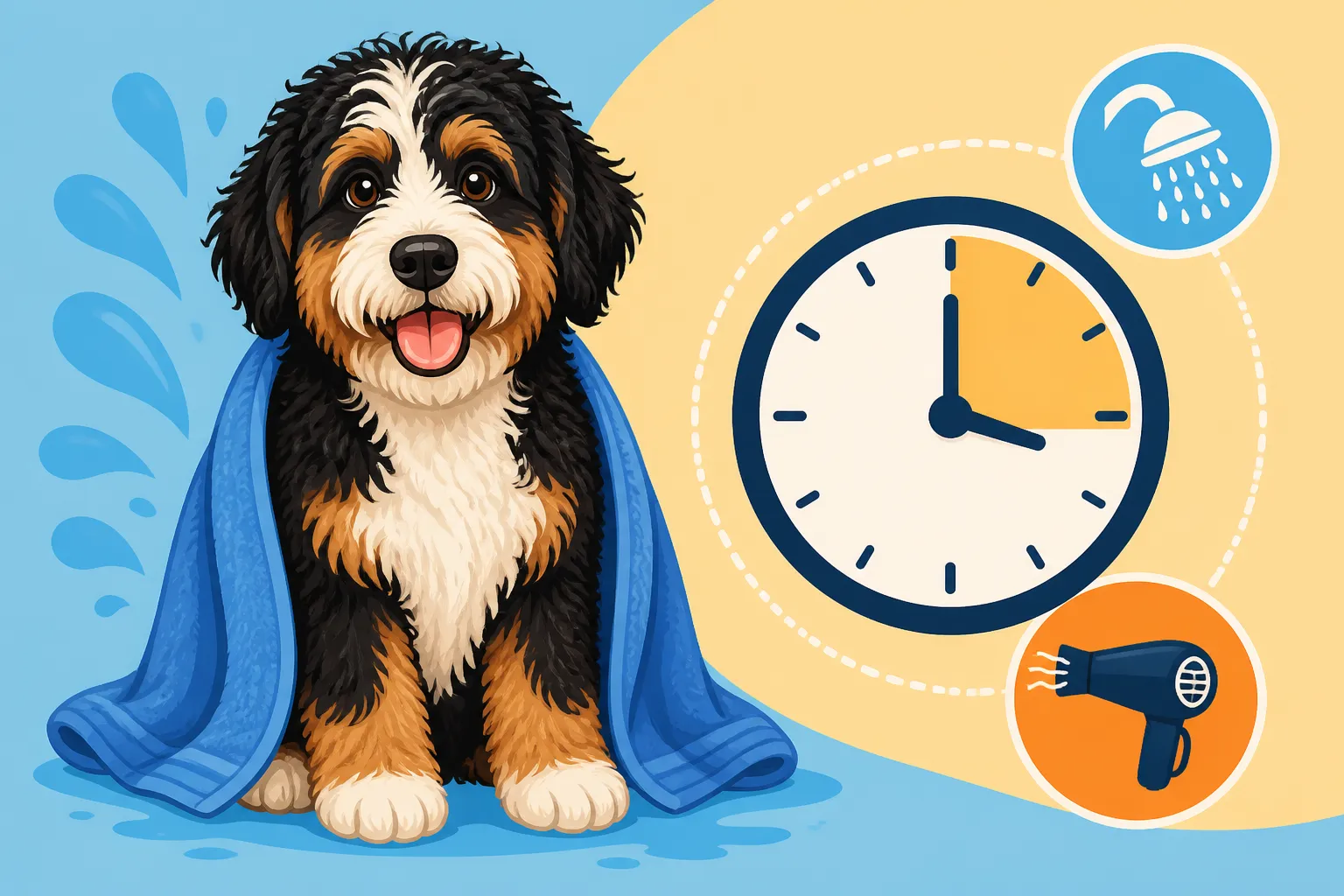
It might seem obvious, but the bigger your Bernedoodle, the longer it will take to dry. A tiny Bernedoodle might be fully dry in 30-45 minutes with a force dryer, while a mini Bernedoodle could take an hour to an hour and a half. However, a standard Bernedoodle, weighing between 70 to 90 pounds with a full, dense coat, can easily demand two to three hours of dedicated drying time. This isn't just about surface moisture; it's about ensuring every layer of that thick coat is completely dry down to the skin.
The density of their undercoat, a hallmark of their Bernese heritage, is a major factor. Some Bernedoodles inherit a very thick, plush undercoat that holds water like nothing else. Even if the topcoat feels dry, the undercoat can still be damp, creating a breeding ground for skin issues. This is why a thorough, methodical approach is crucial, rather than just drying until the visible hair feels dry. This diligence is especially important around thicker areas like the ruff, armpits, and britches.
| Drying Method | Pros | Cons | Estimated Time (Standard Bernedoodle) |
|---|---|---|---|
| Air Dry | No effort, no special equipment | Very long, risk of matting/skin issues, damp smell | 4-8+ hours (often incomplete) |
| Towel Dry Only | Quick initial water removal | Rarely achieves full dryness, can promote matting | 2-4 hours (still damp underneath) |
| Human Hairdryer | Accessible, provides some heat | Too hot for dog's skin, inefficient, noisy, not powerful enough | 1.5-3 hours (risky, likely incomplete) |
| High-Velocity Dryer | Fastest, most thorough, prevents matting | Initial cost, can be noisy, requires training/technique | 1.5-2.5 hours (for a full, thorough dry) |
Your Step-by-Step Guide to a Thorough Dry
Drying a Bernedoodle isn't just about aiming a blower at them; it's a systematic process that, when done correctly, can significantly cut down your time and ensure a happy, healthy dog. It’s a bit of an art form that you’ll get better at with practice, just like any other grooming task.
Pre-Drying Prep Work
Before you even think about turning on a dryer, your goal should be to remove as much water as possible manually. After bathing, gently squeeze the excess water from your Bernedoodle's coat, especially from the longer hair on their legs, tail, and ears. Don't wring; just compress gently. Next, grab those super-absorbent microfibre towels. Pat and rub your Bernedoodle thoroughly, focusing on soaking up water from every part of their body. You might go through several towels to get them adequately damp-dry. Think of it as the first critical step in your drying process, setting the stage for everything else.
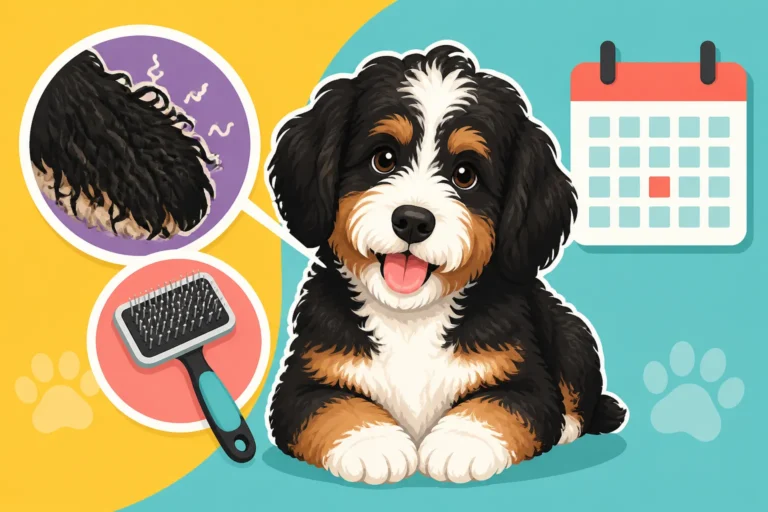
Once they are towel-dried, a quick, preliminary brush-through is a good idea, particularly if their coat tends to tangle easily. This helps to separate the hair, allowing air to circulate more effectively once you start drying. Use a wide-toothed comb or a slicker brush, being careful not to pull on wet tangles. This initial detangling prevents small knots from becoming massive, impossible mats once the drying begins, especially when the hair starts to fluff up.
Mastering the Force Dryer Technique
Now for the main event: the force dryer. When using one, always start on a low setting and gradually increase the power as your dog becomes accustomed to the sound and sensation. It’s a powerful tool, so safety is paramount. Keep the nozzle moving constantly, never holding it in one spot for too long, to prevent skin irritation or overheating. Most quality force dryers have a "no heat" or "low heat" setting, which is what you want to use. You're drying with air velocity, not high temperatures. If your dog is sensitive to noise, consider getting some ear protection for them, and maybe even for yourself!
Work in sections, starting from the hindquarters and moving forward. Use one hand to direct the airflow and the other to line brush the coat, lifting the hair against the direction of growth. This technique helps to open up the dense undercoat, allowing the air to reach the skin and push out trapped water. Keep brushing and blowing until each section is thoroughly dry. Don't forget those often-missed spots: armpits, groin, behind the ears, and between the toes. This methodical approach ensures you're truly Drying a Bernedoodle to the Skin.
The Art of Air Drying and Why It's Not Always Enough
While the force dryer is the gold standard for Bernedoodles, there might be times you consider air drying, especially if your Bernedoodle has a very short haircut or if the weather is warm and dry. For a very short "puppy cut" and in a dry, warm climate, a portion of air drying after a good towel dry and perhaps an initial blast with a low-heat dryer might work for surface drying. However, for most Bernedoodles, particularly those with longer or denser coats, relying solely on air drying is almost never sufficient to dry them completely down to the skin.
The danger of incomplete air drying is significant. The outer layer of the coat might feel dry to the touch, but deep down, against the skin, moisture can linger for hours. This creates a warm, damp environment that is an invitation for bacteria and fungi to thrive. While it might save you time initially, it often leads to bigger, more uncomfortable problems for your dog later. Always err on the side of caution and aim for a full, thorough dry, especially if your Bernedoodle has even a moderately dense coat.
Ensuring the Coat is Dry to the Skin
The ultimate goal is a Bernedoodle that is dry to the bone, not just superficially. How do you know when you've achieved this? After you've gone over the entire dog with your force dryer and brush, run your fingers through their coat, parting the hair and feeling right down to the skin. Pay particular attention to the areas where mats and moisture love to hide: under the armpits, in the groin, behind the ears where the ear leather folds, and on the lower legs and "feathers."
The skin should feel completely dry and warm, not cool or damp. If you feel any hint of coolness or stickiness, keep drying that section. Continue brushing and blowing until there is absolutely no dampness detectable. You can also try giving your Bernedoodle a vigorous shake – if any moisture flies off, they're not dry yet! This final check is crucial for preventing the discomfort and potential health issues associated with an incompletely dried coat.
The Risks of an Undried Bernedoodle
It might seem like a lot of effort to get your Bernedoodle completely dry, but cutting corners can lead to some truly unpleasant and even painful consequences for your beloved companion. The extra time spent is an investment in their health and comfort.
Skin Irritations and Hot Spots
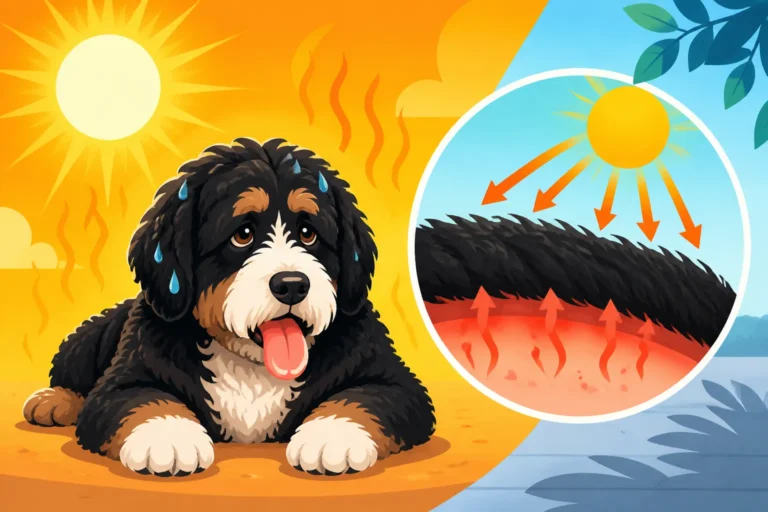
One of the most common issues arising from incomplete drying is the development of skin irritations and "hot spots." When moisture is trapped against the skin for extended periods, especially in areas with dense fur and little air circulation (like the armpits, inner thighs, or under the ears), it creates a perfect breeding ground for bacteria and yeast. This can quickly lead to inflamed, itchy, and painful patches of skin. Your dog will then start licking and chewing these spots, exacerbating the problem and turning a minor irritation into an open, weeping sore.
These hot spots can appear very rapidly and are incredibly uncomfortable for your Bernedoodle. They often require veterinary intervention, including antibiotics, anti-inflammatory medications, and sometimes even shaving the affected area to allow it to breathe and heal. It’s a preventable issue that can cause a lot of distress for your dog and a lot of worry for you. You can learn more about this in Hot Spots Under a Bernedoodle's Thick Coat.
Matting and Undercoat Issues
Damp fur, particularly in Bernedoodle coats which are prone to matting, is a recipe for disaster. When wet hair dries unevenly or without proper brushing, it knots and tangles incredibly quickly, forming dense mats that pull on the skin. These mats aren't just cosmetic; they can be severely painful, restricting movement and causing skin irritation underneath. They act like a tight cast around your dog's body, preventing air circulation and creating further skin problems.
Mats are particularly notorious in areas where the fur moves a lot, like behind the ears, in the armpits, and on the legs. If not addressed, these mats can become so severe that they can only be removed by shaving the dog entirely, which is often a costly and emotionally difficult procedure for both pet and owner. Regular brushing and thorough drying are your best defense against this painful problem. Consider how important this is by reading Whether a Matted Bernedoodle Develops Skin Infections. The issue of specific problem areas is highlighted in The Mat That Forms Where a Bernedoodle's Ear Folds and Mats in a Bernedoodle's Armpits and Britches.
The Lingering Wet Dog Smell
Beyond the health risks, there's the distinct and often unpleasant "wet dog" smell that permeates your home and attaches to your furniture. This isn't just about lingering water; it's often a sign of bacterial or fungal growth on the skin or in the damp undercoat. If your Bernedoodle always smells a bit "doggy" after a bath, it’s a strong indicator that they aren't being dried thoroughly enough. A properly washed and completely dried Bernedoodle should smell fresh and clean, not like a damp old towel.
This persistent odor can be a real nuisance for owners, making you feel like your grooming efforts were in vain. It’s not just an aesthetic issue; it’s a direct consequence of leaving moisture in the coat. Ensuring a full and complete dry, right down to the skin, is the only way to banish that tell-tale damp dog scent and ensure your Bernedoodle is truly clean and fresh from nose to tail.
Disclaimer
This article is for general informational purposes only and does not constitute professional advice. Laws, prices and regulations vary by location and change over time. Consult a qualified professional for guidance on your specific situation.