Helping an Old Bernedoodle Get Up Off the Floor
There's nothing quite so heartbreaking as watching your once-athletic, bouncy Bernedoodle struggle to simply stand up. It’s a moment that tugs at your heartstrings, a stark reminder that our beloved companions are truly entering their golden years. This guide is here to walk you through the realities of an aging Bernedoodle's mobility challenges and offer practical, empathetic ways to help your dear friend rise with dignity and as much comfort as possible.
Understanding Why Rising Becomes a Herculean Task for Older Bernedoodles
When your Bernedoodle starts hesitating to get up, or perhaps struggles with a visible tremor and takes several attempts, it’s not because they’re being stubborn. It’s a clear sign their body is undergoing changes that make simple movements incredibly difficult and often painful. The unique genetics of the Bernedoodle, a blend of Bernese Mountain Dog and Poodle, means they can inherit predispositions to certain conditions that manifest as mobility issues in their senior years.
The Onset of Canine Arthritis
Arthritis, or osteoarthritis, is by far one of the most common culprits behind an older Bernedoodle's struggle to get up. Just like in humans, it's a degenerative joint disease where the cartilage cushioning the joints wears down over time. This leads to bone-on-bone friction, inflammation, pain, and stiffness. Imagine trying to get out of bed every morning with aching knees, hips, and shoulders – that’s often what our senior dogs face.
Given their larger size, especially a standard Bernedoodle, their joints have carried a significant load throughout their lives. Hips and elbows, areas already prone to issues like Hips on a Ninety Pound Bernedoodle and Elbow Dysplasia in a Growing Bernedoodle due to their Bernese heritage, are prime targets for arthritis. A dog that once bounded effortlessly might now wince when putting weight on a hind leg, or struggle to unfold themselves from a lying position. The damp, cold weather can often exacerbate these symptoms, making a typically bad day even worse. Managing Arthritis in an Old Bernedoodle discusses this in more detail.
Muscle Atrophy and Weakness
As Bernedoodles age, especially after reaching What Changes in a Bernedoodle After Eight, their activity levels naturally decrease. Less activity leads to muscle loss, a process known as atrophy. Strong muscles are crucial for supporting joints and enabling smooth movement. When these muscles weaken, the joints bear even more of the burden, increasing pain and instability. This cycle makes it harder to get up, which leads to less movement, which further weakens muscles.
You might notice their hind legs looking a bit thinner, or their gait becoming wobbly and unsure. This muscle weakness can make pushing off the floor incredibly challenging, particularly on slick surfaces. They might splay out or appear to lose their footing even on carpet. It’s not just a matter of strength; it’s about coordination and the core stability that strong muscles provide.
Neurological Conditions Affecting Mobility
While less common than arthritis, certain neurological conditions can also severely impact a senior Bernedoodle's ability to get up and move. Degenerative Myelopathy (DM), though more famously associated with breeds like German Shepherds, can affect Bernedoodles as well, particularly given the Bernese side of their lineage. Degenerative Myelopathy Both Bernedoodle Parents Can Carry is a serious concern. DM is a progressive disease of the spinal cord that eventually leads to weakness and paralysis of the hind limbs.
The early signs might be subtle: a slight dragging of a back paw, unsteadiness, or difficulty rising from a lying position. As it progresses, the weakness becomes more pronounced, making it nearly impossible for them to stand without assistance. It’s a cruel disease because it often isn’t painful, meaning their mind is willing but their body simply can’t obey. Other spinal issues, like intervertebral disc disease, can also cause severe pain and nerve impingement, making movement excruciating. The Age Degenerative Myelopathy Appears in a Bernedoodle offers insights into its progression.
Immediate Aid: Gentle Techniques to Lend a Paw
When you see your Bernedoodle struggling, your first instinct is to help, and rightly so. Knowing how to help without causing further injury or discomfort is key. These immediate aids can make a huge difference in their daily comfort and confidence.
The Gentle Lift: Supporting Their Weight
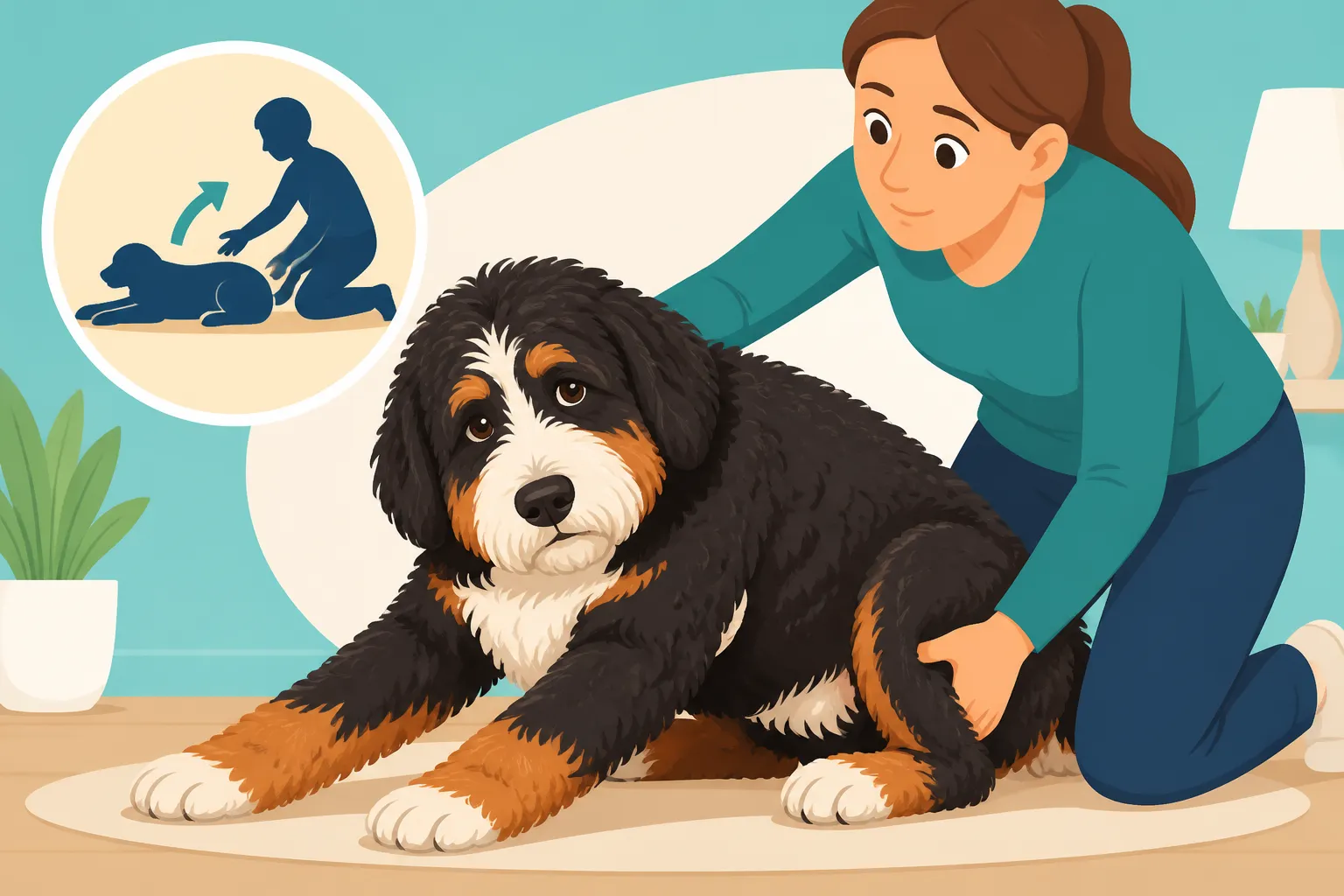
Sometimes, all your Bernedoodle needs is a little leverage. If they’re struggling to push up from a lying position, especially on their hindquarters, you can carefully offer support. Position yourself behind them, placing one hand under their belly or around their hips. Use your other hand to support their chest if needed. Then, gently and slowly, apply upward pressure as they attempt to rise. The goal isn't to lift them entirely, but to provide just enough assistance to counteract their weakness and help them find their footing.
It's a delicate dance, as you want them to engage their own muscles as much as possible to maintain some strength. If they seem to be losing balance, be ready to support them fully. Always communicate with a calm, reassuring voice. Your Bernedoodle trusts you completely, and your calm demeanor will help them feel secure, even when they're feeling vulnerable.
Harnesses and Slings for Assisted Mobility
For Bernedoodles with more pronounced hindquarter weakness, a specialized support harness or sling can be a lifesaver. These devices are designed to distribute their weight evenly and give you a comfortable handle to assist them. A simple towel can serve as a temporary sling, looped under their belly just in front of their hind legs. However, dedicated harnesses offer better support and prevent skin irritation.
You can find excellent options on sites like Chewy or Amazon. Look for harnesses specifically designed for rehabilitation or senior dogs. Some attach to a front harness, offering full body support, while others are just for the rear. When using one, stand beside your dog and lift gently, allowing their front legs to take the initial weight, then help the rear legs follow. This is also incredibly helpful for assisting them up stairs or into a car, which often become monumental obstacles for aging dogs. Supporting an Old Bernedoodle That Cannot Rise is a topic many owners grapple with.
Creating Traction: Non-Slip Solutions
One of the biggest frustrations for an older Bernedoodle with weak legs or arthritic joints is trying to stand on a slippery surface. Hardwood, tile, or laminate floors, which were once perfectly fine, become treacherous ice rinks. Their paws can splay out, leading to falls, increased pain, and a loss of confidence.
Addressing this is crucial. Consider placing runners, area rugs, or non-slip mats in areas where your Bernedoodle spends a lot of time or needs to navigate. Think about their favorite sleeping spot, the path to their food and water bowls, and any high-traffic areas. You can find a vast array of affordable non-slip rug options on Amazon. For short-term solutions or specific areas, even yoga mats can provide temporary grip. Some owners also use dog booties with rubberized soles or toe grips that can be applied directly to their nails to improve traction.
Proactive Care: Making Their World Easier
Beyond immediate assistance, there are many proactive steps you can take to enhance your Bernedoodle's quality of life and make their senior years more comfortable. These involve environmental modifications, dietary adjustments, and ongoing supportive therapies.
Orthopedic Beds and Ramps: A Kinder Home Environment
Think about where your Bernedoodle rests. A plush, supportive orthopedic bed can make a world of difference for achy joints. Unlike standard dog beds, orthopedic beds are designed with dense foam (often memory foam) that conforms to their body, relieving pressure points and providing crucial support. This makes lying down and, more importantly, getting up much less painful. Investing in one of these for your senior Bernedoodle is truly an act of love. Both Chewy and Amazon offer a wide selection of high-quality orthopedic beds specifically designed for large breeds like Bernedoodles. Beds That Support a Heavy Old Bernedoodle elaborates on choosing the right one.
Ramps are another fantastic addition to a senior Bernedoodle's home. Jumping on and off furniture, or in and out of the car, puts immense stress on their joints. A ramp allows them to access these elevated spots without impact. Whether it's a ramp for the sofa, the bed, or for car travel, it eliminates unnecessary strain. You can find durable, non-slip ramps that fold up for easy storage from retailers on Amazon. It might take a little training to get them used to it, but the long-term benefits for their joint health are immeasurable. For ideas, check out Whether an Old Bernedoodle Needs a Ramp.
Dietary Support and Supplements
What goes into your Bernedoodle's body directly impacts their overall health, including their joint function. For senior Bernedoodles, a diet rich in high-quality protein to maintain muscle mass and healthy fats is important. Many premium senior dog foods are formulated with ingredients that support joint health, such as glucosamine and chondroitin.
Beyond their regular food, adding specific joint supplements can be highly beneficial. These often contain glucosamine, chondroitin, MSM, and Omega-3 fatty acids, all known for their anti-inflammatory and cartilage-supporting properties. While not a cure, they can significantly reduce discomfort and slow the progression of joint degeneration. Brands like Chewy offer a wide range of supplements, and even fresh food providers like Ollie sometimes include joint-supporting ingredients or recommend specific supplements to complement their meals. Always discuss any new supplements with your vet to ensure they are appropriate for your dog's specific needs. Whether Joint Supplements Help a Bernedoodle is a common question.
Gentle Exercise and Physical Therapy
It might seem counterintuitive to encourage exercise when your Bernedoodle is struggling to move, but appropriate, gentle exercise is vital for maintaining muscle strength, flexibility, and blood flow. Complete inactivity will only accelerate muscle atrophy and stiffness.
Activities like slow, short walks on soft surfaces (grass or dirt trails, not pavement), or controlled swimming (if they enjoy it and can enter/exit safely) are excellent low-impact options. The buoyancy of water reduces stress on joints while allowing them to move their limbs through a full range of motion. Remember The Five Minute Rule on a Bernedoodle Puppy's Walks as a reference for gentle activity.
Professional physical therapy or canine rehabilitation can also work wonders. A certified canine physical therapist can develop a tailored exercise program, including therapeutic exercises, massage, hydrotherapy, and laser therapy. These therapies can improve strength, flexibility, balance, and reduce pain, giving your Bernedoodle a new lease on life. Exercise for a Bernedoodle With Arthritis provides additional ideas for keeping them moving.
When to Call in the Pros: Seeking Veterinary and Specialized Help
While your love and home care make a massive difference, there are times when professional intervention is absolutely necessary. Knowing when to reach out to your veterinarian or a specialist is crucial for ensuring your Bernedoodle receives the best possible care.
Regular Vet Check-ups and Pain Management
It's important for older Bernedoodles to have regular veterinary check-ups, ideally twice a year. These visits allow your vet to monitor their overall health, assess the progression of any age-related conditions, and make adjustments to their care plan. When your Bernedoodle starts struggling to get up, it's a definite sign to schedule a visit.
Your vet can perform a thorough examination, including orthopedic and neurological assessments, and may recommend diagnostic tests like X-rays to pinpoint the exact cause of their mobility issues. Once a diagnosis is made, they can discuss pain management strategies. This might include anti-inflammatory medications, other pain relievers, or even newer therapies that can offer significant relief. The goal is to keep your Bernedoodle as comfortable as possible. Discussing Caring for a Bernedoodle Past Eight with your vet will help you understand their needs as they age.
Consulting Specialists for Advanced Treatment
If your Bernedoodle’s mobility challenges are complex or not responding well to conventional treatments, your vet might recommend consulting a specialist. A veterinary orthopedic surgeon can assess severe arthritis or structural issues and discuss options like joint injections or, in some cases, surgical interventions if appropriate. A veterinary neurologist would be the go-to specialist for conditions like Degenerative Myelopathy or other spinal cord disorders.
Furthermore, a certified canine rehabilitation veterinarian can provide detailed physical therapy assessments and create a comprehensive plan involving various modalities like acupuncture, chiropractic care, therapeutic exercises, and even fitting for custom braces or wheelchairs. These specialists bring a depth of knowledge and a range of advanced tools that can significantly improve your Bernedoodle's comfort and mobility, often restoring a surprising amount of function.
A Comparative Look at Mobility Aids
To help you visualize some of the support options, here's a quick comparison of various mobility aids you might consider for your aging Bernedoodle:
| Aid Type | Description | Best For | Pros | Cons |
|---|---|---|---|---|
| Support Harness | Wraps around the body (front, rear, or full body) with handles for lifting. | Dogs with hind leg weakness, post-surgery, or general instability. Helps with stairs, car entry, standing. | Provides secure, comfortable lift; easy for owner to use; allows dog to bear some weight. | Can be bulky; may require specific sizing; some dogs resist wearing them. |
| Lifting Sling | Simpler strap or towel-like device that goes under the belly to assist with rear end lifts. | Temporary assistance for hind leg weakness, getting up from lying down, short distances. | Inexpensive; easy to use; good for quick lifts. | Less supportive than a harness for prolonged use; can dig in if not padded; usually only rear-end support. |
| Orthopedic Bed | Beds made with high-density, supportive foam (often memory foam). | All senior dogs, especially those with arthritis, hip dysplasia, or any joint pain. Provides comfort and ease of rising. | Supports joints; relieves pressure points; improves sleep quality; easier to get up from. | Can be more expensive than standard beds; takes up space. |
| Ramps | Inclined surfaces for easy access to elevated areas like furniture, beds, or vehicles. | Dogs with joint pain, difficulty jumping, or spinal issues. Prevents impact and strain from jumping. | Eliminates jumping strain; safe and easy access; good for preventing further injury. | Can be bulky; may require training for the dog to use; might not fit all spaces. |
| Non-slip Mats | Rugs, runners, or adhesive pads for slick floors. | Dogs struggling with traction on hardwood, tile, or laminate. Improves confidence and prevents falls. | Inexpensive; easy to implement; immediate impact on traction; prevents splaying and falls. | Can be tripping hazards for humans if not secured; may need frequent cleaning; less effective for severe weakness. |
| Dog Wheelchair | Cart-like device supporting hind (or full) body, allowing a dog to move independently. | Dogs with severe hind limb paralysis, advanced DM, or severe weakness that prevents walking. | Restores mobility and independence; allows for exercise; improves quality of life. | Expensive; requires custom fitting; dog needs to adapt; can be cumbersome indoors. |
Watching our Bernedoodles age is never easy, but by understanding their needs and providing thoughtful, proactive care, we can ensure their senior years are filled with as much comfort, dignity, and joy as possible. Every effort you make to help them get up off the floor, whether with a gentle hand or a supportive tool, reinforces the incredible bond you share.
Disclaimer
This article is for general informational purposes only and does not constitute professional advice. Laws, prices and regulations vary by location and change over time. Consult a qualified professional for guidance on your specific situation.