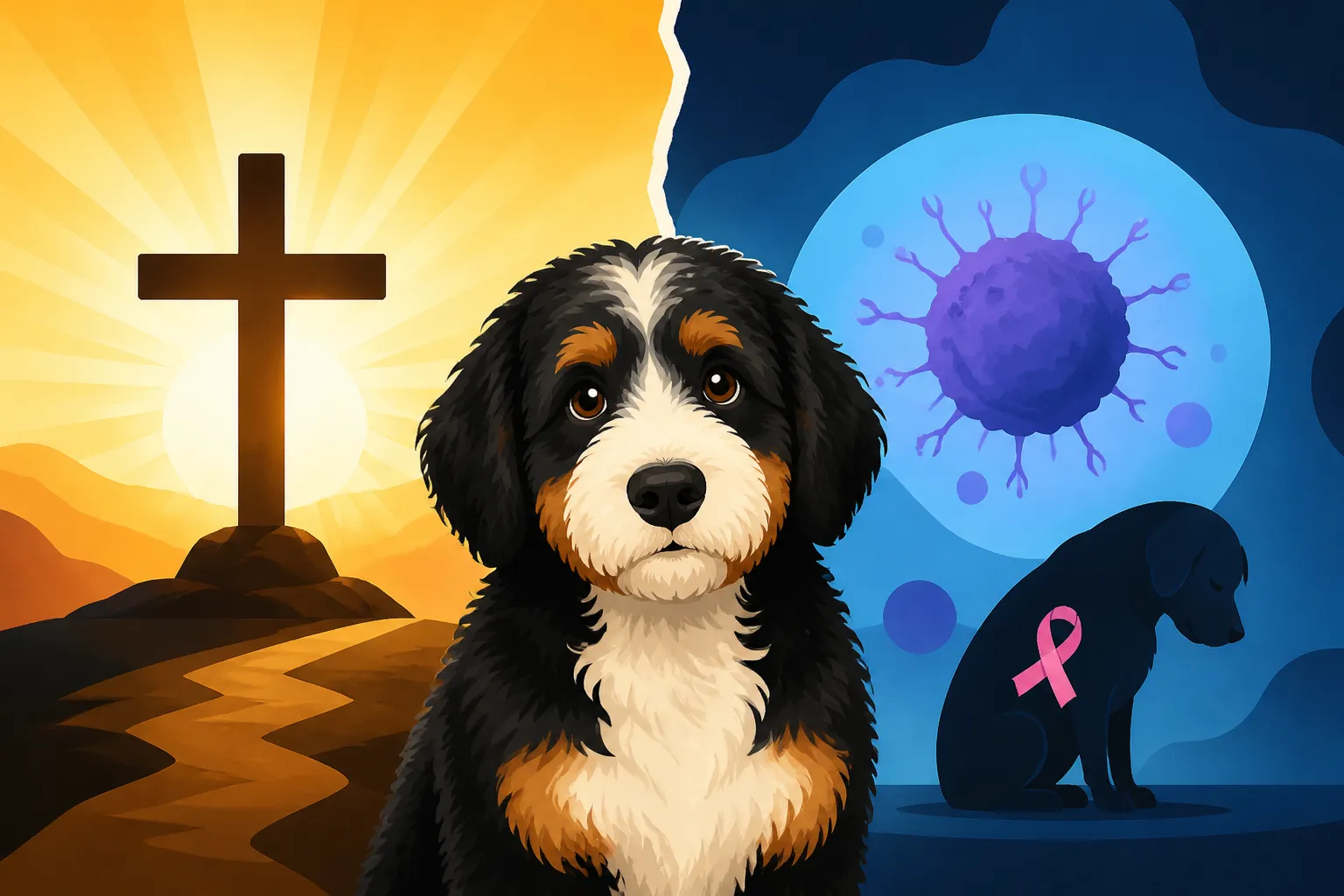
Whether the Cross Was Meant to Fix Cancer
It's a really common, and completely understandable, hope that when you cross two different breeds, you're somehow diluting or entirely erasing the health problems that plague one of them. For Bernedoodle hopefuls, one of the biggest heartbreaks associated with the Bernese Mountain Dog side of the family is the tragically short lifespan, often cut short by aggressive cancers. So, the question naturally arises: was the Bernedoodle cross specifically created to tackle and "fix" this cancer problem? This guide will dive deep into the origins of the Bernedoodle and the reality of genetic health in these beloved hybrids.
The Bernese Mountain Dog's Cancer Predicament
Let's be honest, anyone who has loved a Bernese Mountain Dog, or even just researched the breed, knows the devastating statistics. It's a truth that hits hard, and it's a huge factor in why so many people look to the Bernedoodle.
The Heartbreaking Reality of Bernese Lifespan
Bernese Mountain Dogs are magnificent, gentle giants, but their lifespan is, unfortunately, notoriously short. We're talking an average of 7-8 years, which feels like a blink of an eye for such a cherished family member. This isn't just a statistic; it's a profound source of grief for countless owners who fall head over heels for these dogs only to face early goodbyes. The primary culprit in this abbreviated existence? Cancer. The Seven Years a Bernese Lives and the Twelve a Bernedoodle Might
It's a devastating reality. You bring home this fluffy, sweet puppy, and you know, in the back of your mind, that your time together might be shorter than with many other breeds. This knowledge can cast a shadow, and it’s one of the biggest reasons people seek out crossbreeds like the Bernedoodle, hoping for a different outcome. They want the Bernese charm without the Bernese heartbreak.
Specific Cancers Plaguing Bernese Mountain Dogs
While Bernese Mountain Dogs can get various types of cancer, certain ones are particularly prevalent and aggressive. Histiocytic Sarcoma is perhaps the most infamous, a type of cancer that can appear in multiple organs and spread rapidly. It's a truly formidable opponent, often diagnosed late because its symptoms can be vague until the disease is quite advanced. What Histiocytic Sarcoma Does to a Bernese
Beyond histiocytic sarcoma, Bernese are also prone to mast cell tumors, lymphoma, and osteosarcoma (bone cancer). These aren't just rare occurrences; they are common, often appearing in what would be considered the prime of a dog's life. Imagine your seemingly healthy five-year-old Bernese suddenly showing signs of illness, only to receive a devastating cancer diagnosis. This is the reality many Bernese owners face, and it's a potent motivator for breeders and prospective owners to explore options that might offer a healthier future.
The Inception of the Bernedoodle: A Hope for Health
It's no secret that the desire to improve the health and lengthen the lifespan of the Bernese Mountain Dog was a significant driving force behind the creation of the Bernedoodle. Sherry Rupke of SwissRidge Kennels, credited with breeding the first intentional Bernedoodle litter in 2003, openly states that improving the Bernese's health was a primary goal. Why Sherry Rupke Bred the First Bernedoodle
She saw the tremendous appeal of the Bernese temperament and appearance but also understood the profound challenges of their health, particularly their susceptibility to cancer. By crossing the Bernese with a Poodle, a breed known for its intelligence, generally longer lifespan, and often lower shedding coat, the hope was to introduce genetic diversity that could mitigate some of these inherited health issues. It wasn't just about creating a cute, fluffy dog; it was fundamentally about creating a healthier one.
The Science of Hybrid Vigor and Cancer Risk
When we talk about crossbreeds and health, the term "hybrid vigor" often comes up. But what does it actually mean, and how does it relate to something as complex as cancer? It's not as simple as magically waving away all genetic problems.
What Hybrid Vigor Actually Entails
Hybrid vigor, or heterosis, is the improved or increased function of any biological quality in a hybrid offspring. In simpler terms, when you breed two genetically distinct purebred dogs, their offspring (the F1 generation) often exhibit increased health, fertility, and growth compared to either parent breed. This is because combining two diverse genetic pools can reduce the chances of recessive genetic diseases expressing themselves. If a particular disease-causing gene is rare in one breed but common in another, a crossbreed is less likely to inherit two copies of that recessive gene needed for the disease to manifest.
For a Bernedoodle, this means that the first-generation cross (F1) often benefits from a boost in overall robustness. They might be less prone to some conditions simply because they have a wider genetic pool. However, it's crucial to understand that hybrid vigor isn't a cure-all. It's a statistical advantage, not an absolute guarantee of perfect health. It's also most pronounced in the first generation. Whether Hybrid Vigor Fades in Later Bernedoodle Generations
The Poodle's Genetic Influence on Health
The Poodle brings a lot to the Bernedoodle cross, and a longer average lifespan is certainly one of its most attractive contributions. Poodles, especially Standard Poodles, typically live between 10-18 years, a significant improvement over the Bernese. While Poodles certainly have their own breed-specific health concerns – including certain cancers, hip and elbow dysplasia, eye conditions, and Addison's disease – their genetic makeup is distinct from the Bernese.
By introducing Poodle genes, the hope is that the Bernedoodle inherits some of the Poodle's longevity and general hardiness. For instance, if a specific type of cancer is highly prevalent in Bernese due to certain genetic markers, and those markers are absent or rare in Poodles, then an F1 Bernedoodle has a statistically lower chance of inheriting two copies of the "bad" gene required for the disease to develop. This is the essence of how the cross could reduce the incidence of some inherited conditions.
The Reality of Inherited Cancer Risk
Here's the critical nuance: the Bernedoodle is half Bernese Mountain Dog. This means it still inherits 50% of its genetic material from a breed that is highly predisposed to cancer. While hybrid vigor can reduce the risk of certain conditions, it doesn't eliminate the genes. Whether a Bernedoodle Can Inherit Histiocytic Sarcoma
Think of it like this: if you have a lottery ticket with a certain chance of winning (or, in this case, losing due to cancer), crossing it with another type of ticket might change the odds, but it doesn't mean you'll never lose. The Bernedoodle will still carry some of the genetic predispositions of the Bernese side. Responsible breeding involves health testing both parent Poodles and Bernese to identify and ideally avoid pairing dogs that carry genes for known hereditary diseases, including those that might contribute to cancer susceptibility. Without this careful screening, you're essentially just rolling the dice without improving the odds as much as possible.
Is Cancer Still a Leading Concern for Bernedoodles?
So, has the cross "fixed" the cancer problem? The answer, unfortunately, isn't a simple yes or no. It's more complex, and it comes down to understanding reduction versus elimination of risk.
Reduced Risk, Not Eliminated Risk
Many Bernedoodle owners and breeders genuinely believe that the cross has led to a reduction in the incidence of some of the most aggressive cancers seen in Bernese Mountain Dogs. This often manifests in Bernedoodles generally having a longer average lifespan compared to their Bernese parents. While Bernedoodles might not reach the upper end of the Poodle lifespan, they often land in the 10-12 year range, which is a significant improvement over the Bernese's 7-8 years. This extended lifespan suggests that, on average, they may be less prone to early-onset, rapidly fatal diseases, including some cancers. The Average Age a Bernedoodle Reaches
However, it is vital to be realistic: Bernedoodles can and do still get cancer. It is often still cited as one of the leading causes of death for Bernedoodles, similar to many purebred dogs and other crossbreeds. The idea that crossing with a Poodle creates an "cancer-proof" dog is a myth. What the cross aims for, and often achieves, is a reduced likelihood and potentially a later onset of some of these devastating diseases, thereby extending quality of life. The Cancers That Take Bernedoodles Most Often
The Role of Responsible Breeding and Health Testing
The biggest factor in a Bernedoodle's health, regardless of hybrid vigor, lies in the ethics and practices of the breeder. A responsible breeder will meticulously health test both parent dogs for a range of conditions common to their respective breeds, including those that might predispose to cancer. This includes testing for conditions like hip and elbow dysplasia, eye diseases, and certain genetic disorders, but also carefully scrutinizing the longevity and causes of death in the lines of both parent dogs.
A reputable breeder will be transparent about the health history of their breeding stock, including any incidence of cancer in the lineage, and will be able to show you the health clearances for the parents. Asking a Breeder About Cancer in the Bernese Line If a breeder cannot or will not provide this information, it's a huge red flag. While there isn't a single "cancer gene test" for most common canine cancers, understanding the health history of the lines helps breeders make informed choices to stack the genetic deck in favor of healthier puppies.
Setting Realistic Lifespan Expectations
If you're bringing a Bernedoodle into your life primarily with the expectation that they'll live 15 years and never get sick, you might be setting yourself up for disappointment. While the goal of the cross was certainly to improve upon the Bernese's health challenges, including cancer, the reality is that they are still living beings with genetic predispositions and environmental factors influencing their health.
A good way to frame it is that the Bernedoodle offers a better chance at a longer, healthier life than a purebred Bernese. They often fall somewhere in between the average lifespan of their two parent breeds. They are not immortal, nor are they immune to the myriad health challenges dogs can face. The goal was to give them a fighting chance, to mitigate some of the worst genetic hand they might otherwise be dealt. Whether the Bernedoodle Cross Actually Reduced Cancer
Proactive Care: Beyond Genetics
Even with the best breeding, genetics are only one piece of the puzzle. As Bernedoodle owners, we have a huge role to play in fostering our dog's health and well-being, which can, in turn, influence their susceptibility to diseases like cancer.
The Power of Environment: Diet, Exercise, and Toxins
Genetics may load the gun, but environment pulls the trigger – that's a common saying that holds some truth in canine health. What we feed our Bernedoodles, how much exercise they get, and their exposure to environmental toxins can all play a role in their overall health and potentially influence their cancer risk.
Feeding a high-quality, balanced diet is paramount. Look for dog foods that list real meat as the first ingredient and avoid excessive fillers. Companies like Chewy offer a vast selection of premium dog foods and can deliver them right to your door, making it easier to maintain a consistent, healthy diet. Regular, appropriate exercise helps maintain a healthy weight, which is crucial for overall health and can reduce the risk of many diseases. Obese dogs face a higher risk of various health problems, including some cancers. Limiting exposure to known carcinogens, such as certain pesticides, herbicides, and tobacco smoke, can also contribute to a healthier environment for your furry friend.
Regular Veterinary Care and Early Detection
This cannot be stressed enough: regular veterinary check-ups are your best friend in proactive health management. These aren't just for vaccinations; they're opportunities for your vet to perform thorough physical exams, catch subtle changes, and discuss any concerns you might have. The Screening a Bernedoodle Should Have Yearly
As Bernedoodle owners, you are your dog's first line of defense. Get into the habit of performing regular "at-home" checks. Feel your dog all over for any new lumps or bumps, pay attention to their eating and drinking habits, energy levels, and bathroom routines. Any unexplained weight loss, lethargy, changes in appetite, or development of new lumps should prompt an immediate vet visit. Early detection is often key to successful treatment for many types of cancer. If you spot something unusual, don't wait to see if it goes away. A quick check-up is always worth the peace of mind.
The Financial Reality of Cancer Treatment
While we hope our Bernedoodles never face cancer, it's a realistic possibility. And if they do, the costs of diagnosis and treatment can be astronomical. Understanding this reality beforehand can help you prepare. Things like specialized diagnostics (biopsies, ultrasounds, MRI/CT scans), surgery, chemotherapy, and radiation therapy can quickly add up. What Cancer Treatment Costs a Bernedoodle Owner
Many owners choose to invest in pet insurance specifically because of these potential high-cost medical emergencies, especially given the Bernese lineage. While no one wants to think about it, having a plan in place, whether through insurance or a dedicated savings fund, can allow you to make medical decisions based on what's best for your dog, rather than being solely driven by financial constraints. Companies offer a range of plans, and exploring options on sites like Chewy's pet health resources can be a good starting point.
| Factor | Bernese Mountain Dog (Purebred) | Poodle (Standard, Purebred) | Bernedoodle (F1 Hybrid) |
|---|---|---|---|
| Average Lifespan | 7-8 years | 10-18 years | 10-12 years (often longer than Bernese) |
| Cancer Risk | Very High (e.g., Histiocytic Sarcoma) | Moderate (some types, e.g., hemangiosarcoma) | Reduced from Bernese, but still present |
| Hybrid Vigor | Not applicable (purebred) | Not applicable (purebred) | Present in F1 generation, potentially reducing overall genetic disease expression |
| Key Health Focus | Cancer, Hip/Elbow Dysplasia, Bloat | Addison's, Bloat, Hip Dysplasia, Eye conditions | Hip/Elbow Dysplasia, Eye conditions, still monitor for cancer and bloat |
Disclaimer
This article is for general informational purposes only and does not constitute professional advice. Laws, prices and regulations vary by location and change over time. Consult a qualified professional for guidance on your specific situation.