Whether the Bernese Club Recognizes the Cross
It can be incredibly confusing and sometimes even frustrating when you love a Bernedoodle with all your heart, yet you hear whispers or direct statements about how "real" dog clubs don't recognize them. You might wonder what that even means for your beloved companion, or if it impacts their legitimacy as a wonderful family member. This guide aims to clear up the air, explaining exactly why the Bernese Mountain Dog Club, and other similar purebred clubs, don't recognize the Bernedoodle, and what that distinction truly signifies in the broader dog world.
Understanding Purebred vs. Designer Dog Recognition
When we talk about whether a dog breed is "recognized," it's not about whether your individual dog is loved, healthy, or a perfect family member. It's about a very specific, formal status within the world of kennel clubs and breed associations. This distinction is often misunderstood, leading to a lot of unnecessary concern for proud Bernedoodle owners.
What "Recognition" Truly Means in the Dog World
For major kennel clubs, like the American Kennel Club (AKC) in the United States, or national breed clubs such as the Bernese Mountain Dog Club of America, "recognition" is a deeply formal and highly regulated process. It means that the breed has a long-standing history, a firmly established written standard outlining every physical and often temperament trait, and a dedicated group of breeders committed to preserving that exact genetic blueprint. These clubs exist to:
- Preserve Breed Purity: They maintain meticulous pedigrees to ensure that only dogs of that specific breed are bred together, without introducing outside genetic material.
- Promote Breed Health: While all dogs face health challenges, purebred clubs often fund research and require specific health clearances for breeding stock to try and reduce inheritable conditions within their distinct lines.
- Maintain Breed Type and Temperament: The breed standard dictates everything from ear set and tail carriage to typical temperament traits, ensuring consistency across generations.
- Facilitate Conformation Events: Recognized breeds can compete in dog shows where judges evaluate how closely individual dogs match the ideal breed standard.
For a purebred club, their mission is fundamentally about keeping a breed pure. Introducing a different breed's genetics, even with the best intentions, goes against the very core of their existence. So, when the Bernese Mountain Dog Club doesn't recognize the Bernedoodle, it's not a judgment on the Bernedoodle itself, but a matter of adhering to its mandate to preserve the Bernese Mountain Dog.
The Bernedoodle's Place in This Landscape
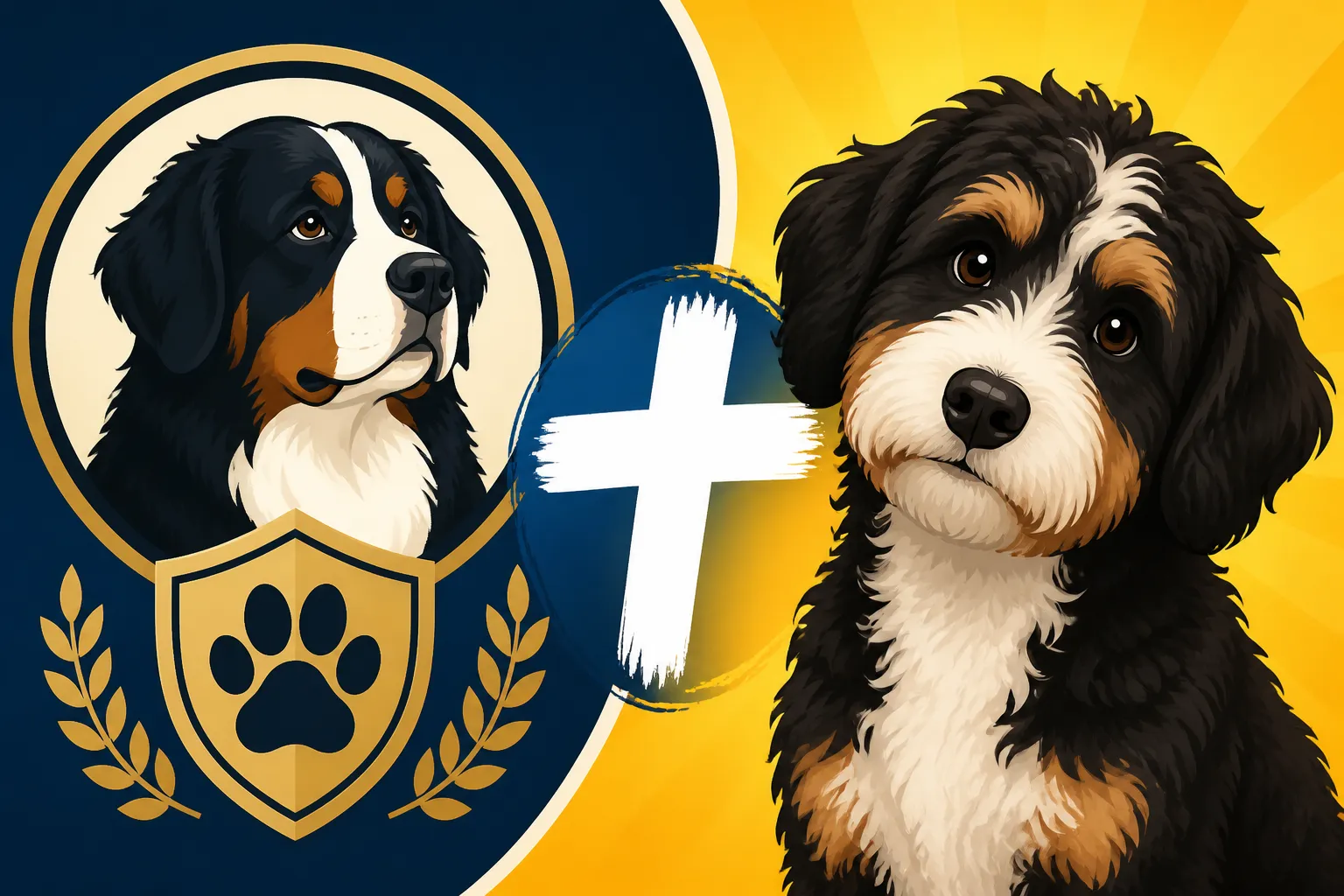
The Bernedoodle is what we affectionately call a "designer dog" or a hybrid. It's the intentional cross between a purebred Bernese Mountain Dog and a purebred Poodle. This cross was initially conceived by breeders like Sherry Rupke of SwissRidge Kennels, with the wonderful goal of combining the beloved temperament of the Bernese with the intelligence and lower-shedding coat of the Poodle, hoping to extend the lifespan that can sometimes be tragically short in purebred Bernese Mountain Dogs. The Seven Years a Bernese Lives and the Twelve a Bernedoodle Might
By definition, a Bernedoodle is not a purebred Bernese Mountain Dog, nor is it a purebred Poodle. It's a blend of the two. Therefore, it cannot be recognized by either parent club as a member of their pure breed. This isn't unique to Bernedoodles; no crossbreed, regardless of its popularity or excellent qualities, is recognized by the parent club of one of its foundation breeds. You won't find the Labrador Retriever Club recognizing Labradoodles, for example. It's simply how the formal dog world is structured around the concept of distinct, pure genetic lines.
The Bernese Mountain Dog Club's Stance on Crossbreeds
It's easy to feel a bit defensive when your dog's "official" status is questioned, but understanding the perspective of purebred clubs can help clarify why their stance is what it is. They operate under a specific set of principles designed to protect the integrity of the breeds they represent.
Upholding the Bernese Breed Standard
The primary objective of the Bernese Mountain Dog Club of America, and similar clubs worldwide, is the stewardship of the Bernese Mountain Dog breed. This means safeguarding its unique characteristics, its heritage, and its genetic health as a distinct entity. Their resources, efforts, and breeding guidelines are all focused on ensuring that future generations of Bernese Mountain Dogs continue to embody the traits defined in their breed standard.
From their viewpoint, introducing a Poodle into the Bernese lineage fundamentally alters the genetic makeup that they are sworn to protect. A Bernedoodle, while sharing some Bernese traits, also carries Poodle traits—in its coat, build, intelligence, and even potential health predispositions. For a club dedicated to the Bernese, this departure from the purebred standard is simply outside their purview. They aren't saying Bernedoodles aren't wonderful dogs; they are merely stating that a Bernedoodle is not a Bernese Mountain Dog. They are dedicated to their purebred line, and any cross is, by definition, outside that line.
The Concern Over Health and Breeding Practices
One of the driving forces behind the Bernedoodle's creation was the hope of improving health and increasing lifespan, particularly to combat the unfortunately high rates of cancer seen in Bernese Mountain Dogs. Whether the Bernedoodle Cross Actually Reduced Cancer This is a deeply empathetic goal that many Bernese lovers share. However, from the perspective of purebred clubs, the introduction of crossbreeding, especially if unregulated, can also present its own set of challenges and concerns.
Purebred clubs often have decades, if not a century or more, of accumulated health data, lineage tracking, and established health testing protocols for their specific breed. Reputable Bernese breeders, for example, typically adhere to strict guidelines for screening hips, elbows, eyes, and hearts, and conduct genetic tests for conditions like Von Willebrand's disease and degenerative myelopathy (see The SOD1 Test Both Bernedoodle Parents Need). They do this to make informed breeding decisions within their purebred lines.
The concern often voiced by purebred clubs regarding designer dogs like Bernedoodles is the perceived inconsistency in breeding practices among crossbreeders. While many Bernedoodle breeders are incredibly responsible and perform all recommended health tests on both parent breeds, the lack of a single, overarching governing body for Bernedoodles means that standards can vary greatly. There isn't a unified database or mandatory reporting structure that purebred clubs rely on to ensure consistent health screening across all Bernedoodle pairings. This can lead to a perception that health outcomes in crossbreeds might be less predictable, even if the intention behind the cross was to improve health. They advocate for predictable health through controlled, tested purebred lines, rather than through hybrid vigor that can be inconsistent.
| Feature | Purebred Bernese Mountain Dog | Bernedoodle (Hybrid) |
|---|---|---|
| Recognition | Recognized by AKC, Bernese Mountain Dog Club of America, etc. | Not recognized by purebred clubs; recognized by hybrid registries |
| Breed Standard | Strict, detailed written standard for appearance and temperament | No single universal standard; traits vary by generation/parentage |
| Purpose | Preserve specific breed traits & lineage | Combine desirable traits from two different breeds |
| Breeding | Bernese bred to Bernese | Bernese bred to Poodle (F1), Bernedoodle to Poodle (F1b), etc. |
| Health Data | Centralized health databases for the specific breed | Health data more varied; dependent on individual breeder testing |
| Conformation | Eligible for AKC conformation shows | Not eligible for AKC conformation shows; may enter performance events |
| Predictability | High predictability of appearance, size, temperament, and coat type | More variability in appearance, size, temperament, and coat type |
What This Means for Bernedoodle Owners and the Breed's Future
So, if the Bernese Mountain Dog Club doesn't recognize your Bernedoodle, what does that actually mean for you and your furry family member? In short, it means very little in terms of daily life and the bond you share. It primarily impacts formal showing and breeding within traditional purebred structures.
Where Bernedoodles Are Recognized and Supported
While purebred clubs maintain their focus, the Bernedoodle is far from unrecognized in other spheres. They are incredibly popular and have a strong community. Many "designer dog" or hybrid dog registries and clubs exist specifically to document and support these crosses. These organizations often establish their own guidelines for ethical breeding, recommended health testing for parent breeds, and even characteristics for Bernedoodles. These clubs allow Bernedoodle owners to:
- Register their dogs: Providing documentation of their Bernese and Poodle parentage.
- Participate in events: While not traditional conformation shows, Bernedoodles can shine in a variety of performance events. Many can participate in AKC Canine Partners programs, which allow mixed-breed dogs to compete in agility, obedience, rally, trick dog, and even earn titles. This is a fantastic avenue for your Bernedoodle to show off their smarts and athletic ability! Which AKC Events a Bernedoodle Can Enter
- Find community: These clubs, along with countless online groups and forums, offer a robust network for Bernedoodle owners to share experiences, seek advice, and celebrate their unique dogs.
Ultimately, recognition comes in many forms. For many Bernedoodle enthusiasts, the recognition from fellow owners and the sheer joy their dogs bring is far more important than a stamp from a purebred club.
The Path to "Breed" Status for the Bernedoodle (If Any)
For a crossbreed like the Bernedoodle to achieve full recognition as a distinct, purebred breed by a major kennel club like the AKC, it's an incredibly long and arduous journey – often spanning many decades, if not a century or more. It's not simply about popularity or demand. The process involves:
- Consistent Breeding: Multiple generations of Bernedoodles would need to be bred exclusively to other Bernedoodles, consistently producing offspring that closely resemble each other in appearance, size, temperament, and health. This is known as "breeding true."
- Established Breed Standard: A detailed, written standard outlining all desired traits would need to be created and strictly adhered to by breeders. This standard would need to be stable and consistently met across the majority of the population.
- Large, Stable Gene Pool: There would need to be a sufficient number of genetically diverse Bernedoodles to ensure the long-term health and viability of the developing breed, avoiding excessive inbreeding.
- Dedicated Parent Club: A dedicated national club for the Bernedoodle would need to form and work tirelessly to manage the breed's development, health, and promotion, eventually applying for provisional and then full recognition.
Currently, the Bernedoodle is still a relatively young cross, with a wide variety of appearances, coat types, and even sizes, depending on the generation (F1, F1b, Multigen) and the size of the Poodle used. This genetic diversity, while beneficial in some ways, also means they don't yet "breed true" in the way a recognized purebred breed does. For example, some Bernedoodles might have wavy coats, while others have curly or even straight coats, and shedding can vary significantly. This variability makes it impossible for them to meet the strict criteria for a single, unified breed standard. Whether the Bernedoodle Counts as a Breed Yet Whether the AKC Will Ever Recognize the Bernedoodle
Therefore, while the Bernedoodle is a beloved and established cross, official purebred recognition is a very distant, and perhaps even unnecessary, prospect for the foreseeable future. The community itself is more focused on responsible breeding within the hybrid framework than on pursuing purebred status.
Navigating the Landscape: A Bernedoodle Owner's Perspective
It’s completely understandable to want the best for your Bernedoodle, and to ensure you’re making informed decisions about their care and even where they come from. The lack of purebred club recognition doesn't mean you can't find a wonderful, healthy Bernedoodle from a responsible breeder. It just shifts where you place your focus and trust.
Choosing a Responsible Breeder Beyond Club Recognition
Since there isn't a single "Bernedoodle Club of America" setting strict, enforceable rules for all breeders, the responsibility falls more heavily on potential owners to vet breeders thoroughly. This is perhaps the most critical takeaway for any aspiring Bernedoodle parent. Don't let the lack of purebred recognition deter you, but empower yourself with knowledge.
Here’s what to look for:
- Comprehensive Health Testing: This is paramount. A responsible Bernedoodle breeder will conduct extensive health tests on both the Bernese Mountain Dog parent and the Poodle parent. This means clearances for hips (OFA or PennHIP), elbows, eyes (CAER exam), and heart. They should also perform genetic tests for conditions prevalent in both breeds, such as Von Willebrand's Disease (vWD), Degenerative Myelopathy (DM), and potentially others like Progressive Retinal Atrophy (PRA). Don't just take their word for it; ask to see the actual certificates and registration numbers. Hips on a Ninety Pound Bernedoodle Elbow Dysplasia in a Growing Bernedoodle Von Willebrand's Disease in a Bernedoodle
- Transparency and Communication: A good breeder will be open about their breeding practices, allow you to visit their facility (or offer virtual tours if distance is a factor), and be willing to answer all your questions. They should also ask you plenty of questions to ensure their puppy is going to a good home.
- Clear Health Guarantee: Reputable breeders typically offer a health guarantee against specific genetic conditions. Make sure you understand the terms of this guarantee.
- Focus on Temperament: A good breeder also prioritizes temperament, ensuring their parent dogs have sound, stable personalities that they are likely to pass on to their puppies. They should be socializing puppies from an early age.
- No Red Flags: Be wary of breeders who offer multiple litters from different breeds, can't provide health clearances, are unwilling to meet in person, or focus solely on rare colors at inflated prices without emphasizing health or temperament.
Resources like Chewy often provide excellent guides and articles on what to look for in a responsible breeder, red flags to watch out for, and how to prepare for a new puppy, highlighting that careful research is key, regardless of a dog's breed status.
Embracing Your Bernedoodle for Who They Are
Ultimately, the official recognition status from a purebred club has very little bearing on the love, joy, and companionship your Bernedoodle brings into your life. These dogs are cherished for their unique personalities, their intelligent yet goofy nature, and their loving, often clingy, devotion to their families.
Instead of focusing on what a Bernedoodle isn't (a recognized purebred), celebrate what they are: a wonderful companion animal with a fantastic blend of traits from two beloved breeds. Focus on their individual health, providing them with proper nutrition (especially important for growing large breeds), consistent training, and plenty of mental and physical enrichment.
The Bernedoodle community is thriving, built on shared experiences of brushing those magnificent coats, laughing at their antics, and navigating the nuances of their unique blend of Bernese steadfastness and Poodle wit. Your Bernedoodle doesn't need a kennel club certificate to be a "real dog" in your heart, or to be a fantastic, well-adjusted member of your family. Their value is intrinsic, not externally validated. Which Homes a Bernedoodle Belongs In What a Bernedoodle Costs Over Its Whole Life
Disclaimer
This article is for general informational purposes only and does not constitute professional advice. Laws, prices and regulations vary by location and change over time. Consult a qualified professional for guidance on your specific situation.