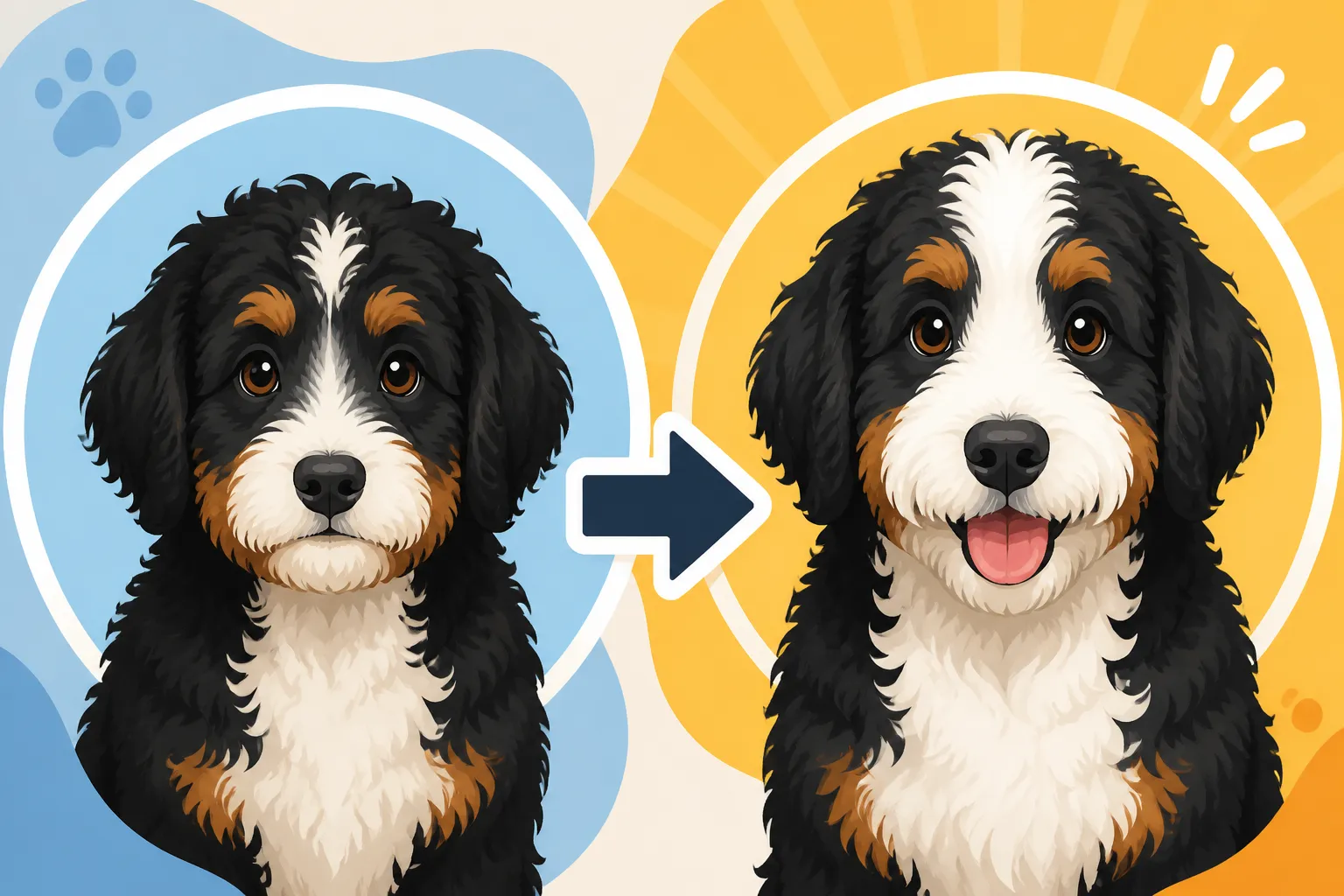
Whether a Bernedoodle’s White Blaze Widens
It's such a common thing to gaze at your adorable Bernedoodle puppy, falling in love with every speckle and marking, only to start wondering, "Will that perfect little white blaze on their face stay just like that, or will it change?" Many of us worry if that charming stripe will widen, shrink, or perhaps even disappear as they grow. This guide dives deep into the fascinating world of Bernedoodle coat genetics and growth, helping you understand why your dog's unique facial markings might appear to shift over time, and what to realistically expect.
The Intricate Dance of Bernedoodle Coat Genetics and White Markings
When you bring a Bernedoodle into your life, you're welcoming a truly unique genetic tapestry. These wonderful dogs are a blend of the majestic Bernese Mountain Dog and the intelligent Poodle, and their coats, including those distinctive white blazes, are a beautiful testament to that heritage. It's not as simple as picking a color from a crayon box; there's a complex interplay of genes at work that determines every strand of fur.
Understanding the 'Flash' and 'Blaze' in Bernese Heritage
The Bernese Mountain Dog, one of the foundational breeds for the Bernedoodle, is famously known for its tri-color coat: jet black, rust, and pristine white. A hallmark of the breed is the "Swiss Cross" pattern, which includes a distinct white blaze running up the face, often meeting a wider white marking on the top of the head or neck. This white flash on the face, usually tapering towards the nose, is a desired trait in Bernese breeding and is genetically coded. It’s part of a group of genes that determine the extent and location of white spotting on a dog's coat, often referred to as the S Locus or piebald gene series.
These genes dictate where pigment cells develop and migrate during embryonic development. When there's a lack of pigment cells in certain areas, you get white markings. In Bernese Mountain Dogs, these genes are typically expressed in a very consistent way, leading to their recognizable patterns. So, when a Bernedoodle inherits genes from its Bernese parent, there's a strong likelihood it will carry the genetic potential for these white markings. The question then becomes how strongly those genes express themselves, especially when mixed with Poodle genetics. The Tri Color Markings People Buy a Bernedoodle For can tell you more about how these colors come to be.
Poodle Influence on White Markings
Poodles, on the other hand, are typically bred for solid, self-colored coats. While you might see white Poodles, their white is usually due to a lack of any pigment (like albinism or extreme dilution), or a very dominant white gene that covers the entire dog, rather than specific patterned white markings like a blaze. However, Poodles can carry hidden genes for white spotting, though they are often masked by their solid color expression. When a Poodle carrying these genes is bred with a Bernese, their offspring, the Bernedoodle, gets a fascinating mix.
The Poodle side can introduce an element of unpredictability. Sometimes, the white blaze might be less defined, or it might be more broken up. Other times, it might be unexpectedly prominent, even if the Poodle parent didn't visibly show much white. This is why you see such a wide variety of Bernedoodle coat patterns, from mostly black with small white touches, to heavily marked tri-colors, and everything in between. The Poodle's influence adds a dash of genetic lottery, making each Bernedoodle truly unique. Understanding Whether an F1 Bernedoodle Can Be Tri Color can help clarify some of these genetic interactions.
The Role of Specific Genes in White Patterns
The white markings, including a Bernedoodle's blaze, are largely controlled by a set of genes known as the S Locus (Spotting Locus). The specific alleles (variations) at this locus determine the amount and distribution of white. For example, the s^p allele is associated with piebald spotting, which can result in the various white patterns we see. It’s not just one gene, but often a combination of modifier genes that fine-tune the size, shape, and crispness of these white areas.
The key takeaway is that the pattern is set at conception. The potential for the size and shape of the white blaze is there from day one. What changes is how that potential expresses itself as the dog grows. Think of it like a blueprint. The house plans are fixed, but how the paint looks on the walls might change slightly under different lighting or as the walls settle. While rare, sometimes a Bernedoodle might display a phantom pattern, which is also genetically determined, often confused with or complementing white markings. What a Phantom Bernedoodle Looks Like details these fascinating patterns.
It's also worth noting that the actual skin under a white patch of fur is often pink or unpigmented. This is the underlying reality of the white marking. The hair color is simply a reflection of whether pigment cells migrated to those hair follicles. So, while we talk about a blaze "widening," it's more about how the hair grows and presents, rather than the skin itself physically expanding its unpigmented area.
How a Bernedoodle's Blaze Appears and Evolves
Observing a Bernedoodle puppy grow is like watching a natural masterpiece unfold. Their coats, initially soft and often a bit indistinct, gradually mature, revealing the full glory of their inherited colors and patterns. The white blaze, in particular, is one of those features that puppy parents watch with bated breath, wondering if it will remain the charming focal point they fell in love with.
Puppy Patterns Versus Adult Appearance
When you first meet a Bernedoodle puppy, its coat is incredibly soft and fluffy – often referred to as "puppy fluff." This initial coat can sometimes make markings, including the white blaze, appear different than they will in adulthood. The hair shafts are finer, less dense, and might not lie in the same direction or have the same texture as the adult coat.
As puppies grow, their heads and bodies develop proportionally. A small blaze on a tiny puppy head might appear much broader on a larger, more mature skull simply because the canvas has expanded. The surrounding darker hair will also grow in thicker, coarser, and potentially shift in shade, which can visually alter the perceived edges of the white blaze. Sometimes, the white areas might have a few stray darker hairs, which eventually fall out or are shed, making the white appear cleaner and more defined. Conversely, some lighter cream or sable markings What a Sable Bernedoodle Looks Like can fade or change hue, subtly altering the contrast against the white blaze over time.
It's similar to how a child's facial features change as they grow; the underlying structure is the same, but the proportions and overall look evolve. Your Bernedoodle's blaze is generally set in terms of its genetic boundaries, but the way the hair grows within those boundaries can create a powerful illusion of change.
Factors That Can Influence Perceived Changes
Several factors can contribute to the perception that a Bernedoodle's white blaze is "widening" or changing:
- Hair Growth and Density: As mentioned, puppy hair is different from adult hair. When the adult coat comes in, it's typically denser and has a different texture. This can make the white areas appear more prominent simply because the surrounding dark fur creates a stronger contrast or because the white hair itself becomes more voluminous.
- Grooming: Regular grooming plays a huge role in how a Bernedoodle's coat looks. If the hair around the blaze is consistently trimmed shorter, it can make the blaze stand out more. If it's left longer and fluffier, it might blend more subtly. Professional groomers often shape the face, which can enhance or soften the appearance of markings. Many Bernedoodle owners get their supplies from places like Chewy, making home grooming a more accessible option.
- Lighting and Angle: This might sound obvious, but how you view your dog can significantly impact your perception. A blaze might look different in bright sunlight compared to indoor lighting. The angle at which you're looking at your dog's face, or even how they hold their head, can make the blaze appear wider or narrower.
- Color Fading or Bleaching: While the white blaze itself won't typically fade (unless it yellows due to staining or sun exposure), the darker surrounding colors can. If a black or brown coat lightens slightly with age or sun exposure, the contrast with the white blaze might lessen, potentially making the white appear less stark, or conversely, if the surrounding color deepens, the white might appear brighter. Whether a Bernedoodle's Markings Fade With Age is a related concern many owners have.
True Widening or Optical Illusion?
For the vast majority of Bernedoodles, a true widening of the white blaze, meaning an actual expansion of the unpigmented skin underneath, does not occur. The boundaries of the white marking are genetically determined early on. What you're typically observing is an optical illusion caused by the factors discussed above.
Consider a simple analogy: drawing a white line on a piece of paper. The line itself doesn't change. But if you then color the paper around the line with a very dark marker, the white line might suddenly seem brighter and more defined, almost as if it "expanded" because of the increased contrast. If you then smudge the edges of the dark marker, the line might appear less sharp.
This table illustrates the common perception versus the reality of blaze changes:
| Characteristic | Puppy Blaze Appearance | Adult Blaze Appearance | Underlying Reality |
|---|---|---|---|
| Perception of Size | Can appear smaller relative to tiny head. | Can appear wider or more prominent on larger head. | Genetic boundary of white pigment is fixed. |
| Definition/Crispness | Often softer, less defined due to fine puppy fur. | Sharper, more distinct as adult coat grows in thicker. | Hair density and texture influence visual edges. |
| Surrounding Color | Puppy coat may be softer in color/texture. | Adult coat typically richer, denser in color. | Contrast with surrounding fur impacts perceived size. |
| Hair Length | Shorter puppy fur often uniform. | Grooming can shape facial hair, altering blaze's look. | Grooming choices directly affect visual presentation. |
While your eyes might tell you that the blaze has grown, it's usually the growth of your Bernedoodle's head, the maturing of their coat, and how that coat is maintained that creates this visual effect. This is why photos taken throughout their growth can be so fascinating to look back on!
Managing Expectations and Appreciating the Unique Look
It's completely normal to feel a deep connection to every aspect of your Bernedoodle's appearance, especially distinctive markings like their white blaze. After all, they’re part of what makes your dog uniquely them. But understanding that some aesthetic changes are a natural part of growth can help set realistic expectations and allow you to appreciate their evolving beauty.
Why Minor Changes Are Normal and Healthy
Embracing the minor shifts in your Bernedoodle's blaze – whether it appears to widen, become more defined, or simply change in contrast with their maturing coat – is part of the journey of dog ownership. These changes are typically indicators of normal, healthy development. Just like a child's hair color might darken slightly with age, or their facial structure becomes more pronounced, your Bernedoodle's appearance is dynamic.
These subtle transformations are not just about aesthetics; they are reflections of your dog maturing, filling out, and developing the adult coat that will protect them throughout their lives. Rather than worrying if the blaze is "perfect," view these evolutions as a fascinating aspect of your dog's natural progression. It’s also a good reminder that while specific markings are beautiful, the most important aspects of your Bernedoodle are their health, temperament, and the loving bond you share. What Changes in a Bernedoodle After Eight highlights other natural changes that occur as they age.
Documenting Your Bernedoodle's Blaze Over Time
One of the most enjoyable ways to track the evolution of your Bernedoodle's blaze and other markings is through regular photography. Take pictures from the same angles and in similar lighting conditions every few weeks or months, especially during their first year. You’ll be amazed to see the subtle transformations that occur.
Keeping a photo diary can be a wonderful keepsake and a great way to visually confirm that any perceived "widening" is often a play of light, growth, and coat texture rather than a fundamental change to the underlying pattern. It also allows you to appreciate the journey of their physical development. As you review these photos, you might even notice other coat changes, such as Whether a Bernedoodle's Coat Gets Thicker With Age or changes in body markings.
Embracing the Evolving Beauty of Your Dog
Ultimately, your Bernedoodle's white blaze is just one of many beautiful characteristics that make them who they are. Whether it seems to widen, stay the same, or become more (or less) prominent, it's part of their individual charm. The beauty of a Bernedoodle lies not just in their striking markings but in their wonderful personalities, their intelligence, and their goofy, loving nature.
Instead of focusing on a static ideal, learn to appreciate the dynamic beauty of your growing companion. Every Bernedoodle is a unique work of art, and their evolving appearance is part of their story. This appreciation extends to all aspects of their care. For instance, finding the right grooming tools on Chewy to maintain their coat, regardless of its markings, or selecting high-quality food to support their overall health, contributes to their well-being and allows their inner and outer beauty to shine. Remember, a happy, healthy Bernedoodle, with whatever unique blaze they possess, is truly the most beautiful sight of all.
Disclaimer
This article is for general informational purposes only and does not constitute professional advice. Laws, prices and regulations vary by location and change over time. Consult a qualified professional for guidance on your specific situation.