Whether a Bernedoodle Carrier Ever Shows Signs
It’s a common worry for any dog parent, especially when you bring home a beloved Bernedoodle, with their mixed heritage bringing a long list of potential genetic considerations. Many of us fret over what hidden health issues might be lurking, particularly if our furry friend is a "carrier" for a genetic disease. This guide will walk you through what it means for your Bernedoodle to be a carrier and, crucially, whether this status ever translates into observable signs or symptoms in their daily lives.
Understanding Genetic Carriers in Bernedoodles
When we talk about genetic conditions in Bernedoodles, we're often delving into the fascinating, yet sometimes intimidating, world of inherited traits. It can feel like a complex puzzle trying to understand how genes work, especially when the health of your furry family member is on the line. But really, understanding what a "carrier" means is simpler than it sounds, and it's a huge step towards proactive care.
The Basics of Recessive Inheritance
Most of the genetic conditions that Bernedoodles can be carriers for are inherited in what's called an autosomal recessive pattern. What does that mouthful mean in plain English? It means that for a dog to actually show symptoms of the disease, they need to inherit two copies of the faulty gene – one from each parent. Think of it like a pair of shoes: you need both the left and the right shoe to walk properly. If you only have one, you might not be able to walk perfectly, but you certainly can't say you're missing both!
A Bernedoodle who is a "carrier" has inherited just one copy of the faulty gene from one parent and a normal, healthy copy from the other parent. Because they have that one healthy copy, it typically "covers up" or compensates for the faulty one, meaning the dog itself won't develop the disease. This is where the term "carrier" comes from – they carry the gene, but they don't express the disease. It's truly a silent role in their own health, though a very important one for breeding decisions down the line.
The Difference Between Carrier, Affected, and Clear
To really get a grip on this, it helps to clearly define the three main genetic statuses your Bernedoodle could have for a specific inherited disease:
- Clear: This is the ideal scenario. A "clear" Bernedoodle has inherited two normal copies of the gene, one from each parent. They do not have the faulty gene, they will not develop the disease, and they cannot pass it on to any offspring.
- Carrier: As we've discussed, a carrier Bernedoodle has one normal copy and one faulty copy of the gene. They are generally healthy and do not show any symptoms of the disease themselves because the normal gene is doing its job. However, they can pass on that faulty gene to their puppies if they are bred.
- Affected: This is the status we want to avoid. An "affected" Bernedoodle has inherited two copies of the faulty gene, one from each parent. With no normal gene to compensate, they will develop the disease and show symptoms, which can range from mild to severe, depending on the condition. They will also pass a faulty copy to all of their offspring.
Understanding this distinction is critical, especially when you're speaking with a breeder or looking at genetic test results. A carrier isn't sick, but they are genetically significant. A clear dog is free and clear. An affected dog requires medical management.
Common Carrier Conditions in Bernedoodles
Bernedoodles, being a hybrid of Bernese Mountain Dogs and Poodles, can potentially inherit genetic conditions from either parent breed. This is why thorough testing of the parent dogs is so vital. While there are many possibilities, two of the most well-known and significant conditions where carrier status is important are Degenerative Myelopathy and Von Willebrand's Disease.
Degenerative Myelopathy: A Bernedoodle Concern
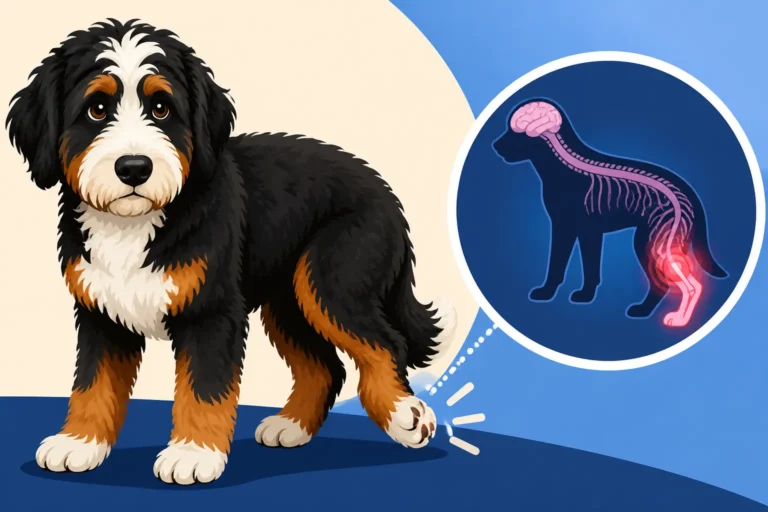
Degenerative Myelopathy, often referred to simply as DM, is a progressive neurological disease that affects the spinal cord. It's a cruel condition because it slowly robs affected dogs of their ability to walk, eventually leading to paralysis, though it's typically not painful. It's a condition that can be carried by both Bernese Mountain Dogs and Poodles, meaning Bernedoodles are certainly at risk if their parents aren't properly screened. You can read more about Degenerative Myelopathy Both Bernedoodle Parents Can Carry.
The key thing to understand about DM, in the context of carriers, is that a Bernedoodle who is a carrier (meaning they have one normal copy of the SOD1 gene and one mutated copy) will, for all intents and purposes, live a completely normal life and never develop DM themselves. The disease only manifests in dogs that are "affected," meaning they have inherited two copies of the mutated SOD1 gene. So, if your Bernedoodle's genetic test results show them as a DM carrier, you can breathe a sigh of relief regarding their personal health; they won't suffer from this debilitating disease. Their carrier status only becomes relevant if you were considering breeding them, as they could pass that single faulty gene on.
Von Willebrand's Disease: Understanding the Bleeding Risk
Another significant genetic condition found in both parent breeds of the Bernedoodle is Von Willebrand's Disease (vWD). This is a hereditary bleeding disorder, similar to hemophilia in humans, where the blood doesn't clot properly due to a deficiency in Von Willebrand factor, a protein necessary for platelet adhesion. There are different types of vWD, but Type I is common in Poodles, and Type III is more severe and seen in Bernese Mountain Dogs. Knowing Which Von Willebrand Type the Bernese Carries can be especially helpful for understanding the risks.
Just like with DM, a Bernedoodle that is a carrier for vWD typically does not show any symptoms of the disease. They have enough normal Von Willebrand factor produced by their one healthy gene copy to allow their blood to clot effectively in most situations. An affected dog, on the other hand, will have a deficiency in this factor, leading to prolonged bleeding after injury, surgery, or even routine procedures like nail trims. For a Bernedoodle carrier, the primary concern again revolves around breeding, as they could pass the gene to their offspring. If you ever have a carrier Bernedoodle needing surgery, it's always wise to inform your vet of their carrier status, as a precaution, although symptomatic bleeding is rare. This is part of why understanding Whether a Bernedoodle Should Be Tested Before Neutering is so crucial.
Recognizing Symptoms in Carrier Dogs or the Lack Thereof
This is truly the million-dollar question for many worried Bernedoodle owners: "If my dog is a carrier, will I ever see any signs that something is wrong?" The answer, in the vast majority of cases for autosomal recessive conditions, is a resounding no.
Why Carriers Often Remain Asymptomatic
The beauty of recessive inheritance, from the perspective of an individual dog's health, is that having one healthy copy of a gene is usually enough to prevent the disease from developing. Think of it like having a spare tire in your car. Even if one of your main tires goes flat (representing the faulty gene), you have a perfectly good spare (the healthy gene) to keep you moving along without issues. You're prepared for a potential problem, but you're not actually experiencing it.
For conditions like Degenerative Myelopathy and Von Willebrand's Disease, carriers produce enough of the necessary proteins or have enough functioning cells to operate normally. They don't experience the progressive weakness of DM or the uncontrolled bleeding of vWD because their body compensates. This is why genetic testing is so important for breeders, as a carrier dog looks and acts perfectly healthy, masking their genetic status. You wouldn't know by looking at them that they carry a gene that could potentially cause serious problems for their puppies if bred to another carrier.
When a Carrier Might Seem Symptomatic
Occasionally, an owner might notice a seemingly related issue in a carrier dog and wonder if it's connected to their carrier status. It's a natural concern when you know there's a "faulty" gene in the mix. However, it's crucial to understand that these observed symptoms are almost always coincidental and not directly caused by the carrier status itself.
For example, a Bernedoodle that is a carrier for DM might start dragging a back foot in their senior years. While this might immediately make an owner think "DM!", it's far more likely to be age-related arthritis, hip dysplasia, or another neurological issue unrelated to DM. Remember, DM carriers do not develop DM. If a dog develops DM, it means they are affected (two copies of the faulty gene), not merely a carrier. Similarly, if a vWD carrier Bernedoodle has a bleeding incident, it's more likely due to trauma, medication, or another underlying clotting issue rather than their carrier status, which typically doesn't cause clinical bleeding.
If you observe any concerning symptoms in your Bernedoodle, whether they are a known carrier or not, the first step is always a visit to your veterinarian. They can perform diagnostic tests to accurately identify the cause of the problem, which is rarely, if ever, the carrier status for these recessive conditions. Always consult with your vet to rule out common ailments or other potential issues.
The Importance of Genetic Testing and Ethical Breeding
Since carriers typically don't show any outward signs, how do we know if our Bernedoodle might be carrying a problematic gene? This is where modern veterinary science and responsible breeding practices come into play. Genetic testing is a game-changer for doodle breeds, allowing us to peek behind the curtain of genetic inheritance.
The Role of DNA Testing for Parents
Ethical Bernedoodle breeders are diligent about health screening their breeding stock. This includes comprehensive DNA testing for a panel of genetic diseases common to both Bernese Mountain Dogs and Poodles. Key tests include those for The SOD1 Test Both Bernedoodle Parents Need for Degenerative Myelopathy and Von Willebrand's Disease, among others. These tests are usually simple, often requiring just a cheek swab, and can definitively identify whether a dog is clear, a carrier, or affected for specific conditions.
The results of these tests are paramount for making informed breeding decisions. A responsible breeder will never breed two carriers together for the same recessive disease. Why? Because if two carriers are bred, there's a 25% chance with each puppy that it will inherit two copies of the faulty gene and be affected by the disease. There's also a 50% chance it will be a carrier, and a 25% chance it will be clear. By breeding a carrier to a clear dog, all offspring will either be clear or carriers, but none will be affected. This drastically reduces the risk of producing puppies that will suffer from preventable genetic conditions. Always ask a breeder for proof of their parent dogs' health clearances, including genetic testing results. You should always be cautious if considering Whether an Untested Bernedoodle Litter Is Worth Buying.
Choosing a Reputable Breeder
This brings us to one of the most critical aspects of bringing a Bernedoodle into your life: choosing the right breeder. A reputable breeder isn't just selling puppies; they are guardians of the breed's future health and well-being. They will be transparent about their breeding practices, openly share genetic test results for their parent dogs, and be able to explain what "carrier" status means for any potential puppy.
They will also provide a comprehensive health guarantee that outlines their responsibilities should a genetic issue arise. Understanding What a Bernedoodle Health Guarantee Covers is essential. These breeders invest significant time and money into genetic screening, hip and elbow evaluations (like OFA and PennHIP), eye certifications, and more, ensuring they are doing everything possible to produce healthy puppies. They understand that while a Bernedoodle carrier might not show signs, preventing affected offspring is a moral imperative. When a breeder can clearly demonstrate The Five Clearances a Bernedoodle Breeder Should Have, it speaks volumes about their commitment to the health of their lines.
Living with a Carrier Bernedoodle: Management and Monitoring
So, you've done your due diligence, or perhaps adopted an adult Bernedoodle, and learned that your furry companion is a carrier for a recessive genetic condition like DM or vWD. What does this actually mean for you and your dog's daily life? The good news is, for their personal health, very little changes.
Implications for Breeding Decisions
The most significant implication of having a Bernedoodle that is a carrier is for breeding purposes. If you had plans to breed your Bernedoodle, their carrier status means you need to be extremely careful in selecting a mate. As discussed, breeding a carrier to another carrier of the same condition is highly irresponsible and risks producing affected puppies. A responsible breeding plan would involve pairing a carrier dog only with a dog that is "clear" for that specific genetic condition. This ensures that no affected puppies are produced, even though some of the offspring might still be carriers.
For most pet owners who have no intention of breeding, this aspect of carrier status is simply a piece of fascinating genetic information. It doesn't impact your dog's quality of life or your relationship with them. If your Bernedoodle is spayed or neutered, their carrier status essentially becomes a non-issue from a hereditary standpoint, as they won't be passing on any genes.
Everyday Life with an Asymptomatic Carrier
For the vast majority of Bernedoodles who are carriers of recessive genetic conditions, everyday life is no different than for a dog that is genetically clear. They are typically asymptomatic, meaning they do not develop symptoms of the disease. You won't see them limping because they're a DM carrier, nor will you see unusual bleeding because they carry a vWD gene. Their lives are full of zoomies, cuddles, and all the joy that comes with being a Bernedoodle.
Your focus should remain on providing them with excellent general care: a high-quality diet, appropriate exercise, regular vet check-ups, and plenty of love and mental stimulation. Knowing your dog is a carrier simply adds a layer of genetic understanding, not necessarily a layer of immediate medical concern. If your vet is aware of your dog's carrier status, they might make a note of it in their file, but it rarely dictates a different treatment protocol for a healthy, asymptomatic dog. Just like us, dogs can carry all sorts of genes without ever experiencing any negative impact themselves.
Proactive Health Management for All Bernedoodles
Whether your Bernedoodle is clear, a carrier, or even if their genetic status is unknown (though we hope you pursued testing!), proactive health management is the cornerstone of a long, happy life. Focusing on overall wellness can often mitigate potential risks and improve their quality of life, regardless of their genetic blueprint.
Regular Vet Check-ups and Monitoring
Consistent veterinary care is incredibly important for all Bernedoodles. Annual or biannual check-ups allow your vet to establish a baseline of health for your dog, catch any subtle changes early, and provide preventative care. During these visits, your vet will perform a thorough physical examination, discuss diet and exercise, and ensure your Bernedoodle is up-to-date on vaccinations and parasite prevention.
Even if your Bernedoodle is a carrier and never shows symptoms, unexpected health issues can arise, making a robust pet insurance policy from a provider like Healthy Paws a wise consideration. These routine appointments are also the perfect opportunity to discuss any concerns you might have about your Bernedoodle's health or behavior, no matter how minor they seem. Early detection of any health issue, genetic or otherwise, often leads to more effective treatment and better outcomes. Remember to prioritize The Screening a Bernedoodle Should Have Yearly.
Nutrition, Exercise, and Environmental Factors
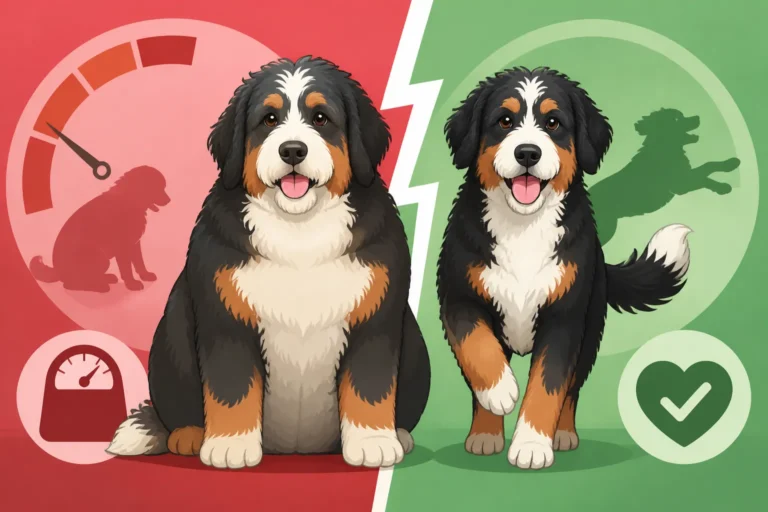
Beyond genetics, lifestyle plays a monumental role in your Bernedoodle's health and longevity. Providing a high-quality, balanced diet appropriate for their age, size, and activity level is fundamental. Avoid overfeeding, as maintaining a healthy weight is crucial for joint health and overall vitality, especially for larger breeds.
Regular, appropriate exercise is also vital. Bernedoodles are active dogs that thrive on daily walks, playtime, and mental challenges. Ensuring they get enough physical activity helps maintain muscle mass, supports joint health, and prevents obesity. However, be mindful of their growth plates as puppies, avoiding excessive impact until they are fully mature.
Environmental factors like avoiding extreme heat (especially for dark-coated Bernedoodles) and providing a safe, stimulating home environment contribute significantly to their well-being. A happy, well-adjusted Bernedoodle, regardless of their carrier status, is one that receives comprehensive care. This holistic approach ensures that you're supporting your Bernedoodle's health from every angle, going far beyond just their genetic profile. For those unexpected twists and turns, having a trusted pet insurance partner like Healthy Paws can provide immense peace of mind. They can connect you with resources, including information on managing potential health costs, which is where services like Healthy Paws can be invaluable.
Carrier Status and Its Impact on Health
Here's a quick reference on how carrier status generally impacts a Bernedoodle's health for common recessive conditions:
| Genetic Status | Example for DM (SOD1) | Example for vWD (Type I) | Clinical Symptoms in Carrier Dog | Breeding Implications |
|---|---|---|---|---|
| Clear | Two normal SOD1 genes | Two normal vWF genes | None, will not develop DM | Can be bred to any dog |
| Carrier | One normal, one faulty SOD1 gene | One normal, one faulty vWF gene | None, will not develop DM | Must be bred to a clear dog only |
| Affected | Two faulty SOD1 genes | Two faulty vWF genes | Will develop DM symptoms | Should not be bred |
Understanding these distinctions is key to responsible pet ownership and breeding. A carrier Bernedoodle is a healthy Bernedoodle, but their genetic information is vital for future generations.
Disclaimer
This article is for general informational purposes only and does not constitute professional advice. Laws, prices and regulations vary by location and change over time. Consult a qualified professional for guidance on your specific situation.