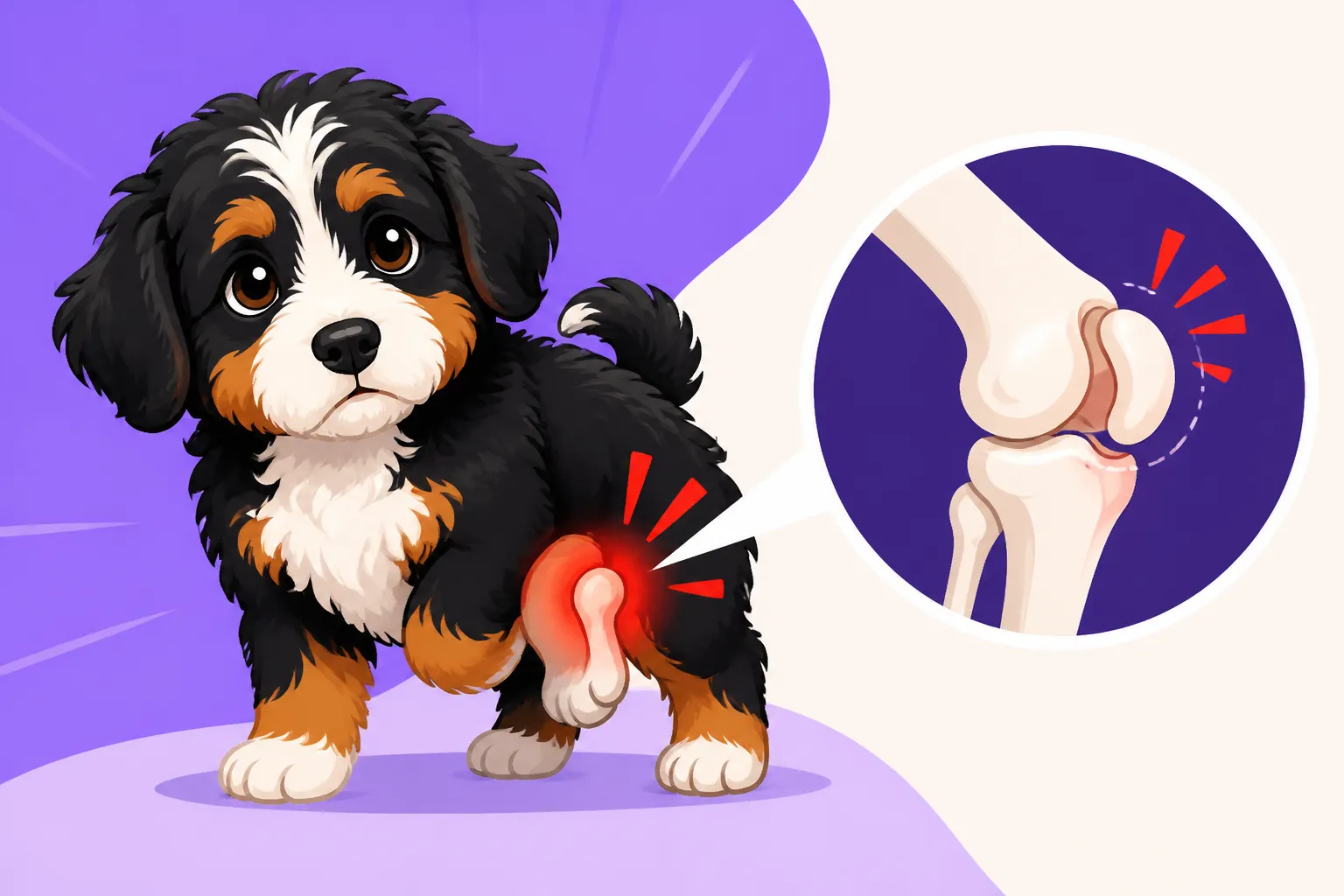
Slipping Kneecaps in a Tiny Bernedoodle
It’s an undeniable worry, isn’t it? When you've brought home that adorable, fluffy tiny Bernedoodle puppy, you envision years of joyful romps and cuddles. But then you notice something: a little skip in their step, a momentary lift of a back leg. Immediately, your heart sinks, and your mind races to "what if?" This guide is here to help you understand one of the more common orthopedic issues for smaller dogs, including our precious tiny Bernedoodles: patellar luxation, or what most of us just call a slipping kneecap. We’ll delve into recognizing the signs, what it means for your pup, and how to navigate treatment and long-term care.
Understanding Patellar Luxation in Tiny Bernedoodles
Bringing a tiny Bernedoodle into your life means embracing all their wonderful traits – their playful spirit, their affectionate nature, and often, their compact size. However, that smaller stature can sometimes come with specific anatomical predispositions, and patellar luxation is definitely one to be aware of. It's not a flaw in your dog; it's simply a genetic lottery ticket that smaller breeds sometimes draw.
What Exactly is a "Slipping Kneecap"?
Let's break down the fancy medical term "patellar luxation." Your dog's knee joint, much like yours, has a kneecap, or patella. This little bone normally sits snugly in a groove at the end of the femur (thigh bone), called the trochlear groove. It's held in place by ligaments and tendons, and its job is to allow the leg to extend smoothly, acting like a pulley for the quadriceps muscle.
When we talk about a "slipping kneecap," it means that this patella momentarily, or sometimes permanently, pops out of that groove. It can slip to the inside (medial luxation, which is most common in small breeds) or to the outside (lateral luxation). This can range from barely noticeable to severely debilitating. Vets grade patellar luxation from I to IV:
- Grade I: The patella can be manually displaced by a vet but pops back into place on its own. Your dog might show no symptoms or just an occasional skip.
- Grade II: The patella slips out spontaneously but can still pop back in on its own or with a little manipulation from your dog (like stretching their leg out). This is where you'll start noticing that characteristic "skip."
- Grade III: The patella is out of the groove most of the time but can still be manually pushed back into place. Your dog will likely show persistent lameness and discomfort.
- Grade IV: The patella is permanently luxated and cannot be manually put back into the groove. This is severe, causing significant lameness and pain, and often leads to the leg being held up constantly.
Understanding these grades is really important because it directly impacts the treatment options and prognosis for your tiny Bernedoodle. It's not just a single condition; it's a spectrum of severity.
Why Tiny Bernedoodles are Particularly Susceptible
The susceptibility of tiny Bernedoodles to patellar luxation largely comes from their Poodle heritage. Poodles, especially miniature and toy varieties, are genetically predisposed to this condition. While the Bernese Mountain Dog side brings its own set of orthopedic challenges, like Hips on a Ninety Pound Bernedoodle or Elbow Dysplasia in a Growing Bernedoodle, patellar luxation is overwhelmingly a small-breed issue.
It boils down to the way their joints develop. Sometimes, the trochlear groove isn't deep enough to hold the patella securely, or the alignment of the bones in the leg (femur, tibia, and fibula) is slightly off, causing a pull on the patella that encourages it to slip. In tiny Bernedoodles, whose bones are naturally more delicate and whose growth plates close relatively quickly, any slight misalignment during development can exacerbate the problem. It’s not about their weight so much as their bone structure and the forces acting on those smaller, often less robust, joints. While a standard Bernedoodle might contend with the sheer stress of its larger size on its joints, a tiny Bernedoodle faces the challenges of delicate, sometimes malformed, knee structures.
Recognizing the Signs of Patellar Luxation
It can be really easy to miss the early signs of patellar luxation, especially if your tiny Bernedoodle is full of playful energy. They’re often so resilient that they’ll try to mask discomfort. But as a vigilant owner, knowing what to look for can make all the difference in getting an early diagnosis and starting appropriate management.
The Classic "Skip" or "Hop" Gait
This is often the first, most tell-tale sign that something might be amiss. You're watching your tiny Bernedoodle trot across the living room, and suddenly, one of their back legs just lifts off the ground for a step or two. They might hold it up, do a little "hop" on three legs, and then, as quickly as it happened, the leg is back down, and they're walking normally as if nothing happened.
What’s happening internally is that their kneecap has slipped out of its groove. When it’s out, it essentially locks the knee, preventing the leg from extending properly. So, your dog lifts the leg to alleviate the pressure and perhaps even to manually, or subconsciously, try to snap the kneecap back into place. Once it pops back in – often with an almost imperceptible flick or stretch from your dog – they can put weight on it again. This skipping can be very intermittent, perhaps only happening after a burst of activity or a sudden turn, which makes it tricky to catch or even believe you saw at first! Don't dismiss it as just "being silly" if you see it consistently.
Other Subtle and Overt Symptoms to Watch For
Beyond the classic skip, there are several other indicators that your tiny Bernedoodle might be experiencing discomfort or more severe patellar luxation. These can range from subtle changes in their behavior to more obvious signs of pain or lameness.
One common sign is a general reluctance to put full weight on a particular back leg. You might notice them favoring one side, even if it's not a full-blown limp. They might also appear stiff, especially after resting, and take a moment to "warm up" before moving comfortably. Watch for any changes in their willingness to engage in activities they once loved. If your tiny Bernedoodle suddenly hesitates to jump onto the sofa (if they're allowed!), or avoids stairs, or doesn't want to play as enthusiastically as before, it could be a subtle signal of joint discomfort.
In more severe cases, or as the condition progresses, you might observe more overt symptoms. Your Bernedoodle might yelp or whimper when trying to move in a certain way, indicating acute pain. The leg might be held up almost constantly, or they might develop a noticeable, persistent limp. Sometimes, you might even feel a slight swelling or warmth around the knee area, although this is less common without significant inflammation or injury. A dog's ability to hide pain is remarkable, so any consistent change in gait or activity warrants a closer look.
Diagnosing Slipping Kneecaps
If you've noticed any of the signs we've discussed, the next crucial step is getting a professional diagnosis. It’s natural to feel anxious, but remember that early diagnosis often leads to more effective management, potentially delaying or even preventing more severe issues down the line.
The Importance of a Thorough Veterinary Examination
When you bring your tiny Bernedoodle to the vet with concerns about their gait, a thorough orthopedic examination will be performed. This isn't just a quick glance; your veterinarian will gently manipulate your dog's kneecaps to assess their stability and range of motion. They'll extend and flex the knee, rotating the lower leg, to see if the patella luxates (slips out) and how easily it returns to its normal position. This manual assessment helps them determine the grade of luxation.
Beyond the physical manipulation, your vet will often recommend X-rays. While patellar luxation itself is primarily a soft tissue and alignment issue that doesn't always show directly on X-rays, the radiographs are incredibly valuable. They allow the vet to assess the overall bone structure of the leg, including the depth of the trochlear groove, any rotation of the tibia, and signs of existing arthritis. X-rays also help rule out other potential causes of lameness or discomfort, such as Hips on a Ninety Pound Bernedoodle (though less common in tiny Bernedoodles, it's still good to rule out) or other bone abnormalities. Getting a clear picture of what's happening internally is paramount for forming an accurate diagnosis and an effective treatment plan.
Differentiating from Other Joint Issues
It's important for your veterinarian to differentiate patellar luxation from other orthopedic problems, as many conditions can present with similar symptoms like lameness or a changed gait. For instance, while much more common in heavier breeds, even a tiny Bernedoodle could theoretically suffer from a cruciate ligament injury, similar to Torn Cruciates in a Heavy Bernedoodle. However, the mechanism and presentation of a cruciate tear are typically different; a cruciate injury usually results in more sudden and severe lameness, often without the characteristic "skip" associated with luxation.
Another consideration is hip dysplasia, which is a concern particularly in their Bernese lineage, although less frequently seen as a primary issue in tiny Bernedoodles compared to patellar luxation. Your vet will perform specific tests to assess hip stability. Over time, an untreated patellar luxation can lead to secondary issues such as Arthritis in a Bernedoodle at Eight, as the abnormal movement causes wear and tear on the joint cartilage. Distinguishing between these conditions often requires a combination of physical examination, X-rays, and sometimes more advanced diagnostics, ensuring that the treatment targets the actual problem your beloved tiny Bernedoodle is facing.
Managing Patellar Luxation: Non-Surgical Approaches
Once your tiny Bernedoodle has been diagnosed with patellar luxation, especially if it's a lower grade (I or II), your vet will often discuss conservative, non-surgical management options. The goal here is to reduce pain, prevent further damage, and maintain a good quality of life without invasive procedures.
Weight Management and Exercise Modifications
One of the absolute best things you can do for any dog with joint issues, especially a tiny Bernedoodle with a slipping kneecap, is to ensure they maintain a lean, healthy weight. Every extra pound puts unnecessary strain on their already compromised knee joints, accelerating wear and tear and potentially worsening the luxation. Your vet can help you determine the ideal weight for your individual dog and advise on appropriate feeding portions. This might mean adjusting their diet, choosing a high-quality food, and being mindful of treats.
Exercise also needs careful consideration. While you want your tiny Bernedoodle to be active and happy, high-impact activities like jumping off furniture, rough-and-tumble play with bigger dogs, or repetitive sprinting and sudden stops can aggravate the condition. Instead, focus on controlled, low-impact exercise. Leash walks on soft surfaces (like grass or dirt trails) are excellent for building muscle strength without jarring the joints. Swimming can also be a fantastic non-weight-bearing exercise if your Bernedoodle enjoys the water. Consider investing in ramps for accessing furniture or the car, reducing the stress of jumping up and down. This might be especially helpful for your tiny Bernedoodle, preventing the kinds of movements that can cause the kneecap to slip out.
Physical Therapy and Supplements
Beyond managing weight and modifying exercise, physical therapy can play a significant role in strengthening the muscles around the knee joint, providing better support for the patella. Your vet might recommend specific exercises you can do at home, or refer you to a canine physical therapist for a more structured program. These exercises focus on building up the quadriceps and hamstring muscles, which can help stabilize the kneecap. Think gentle range-of-motion exercises, controlled leash walks, and perhaps even underwater treadmill sessions if available in your area.
Nutritional supplements can also be beneficial in supporting joint health. Many tiny Bernedoodle owners find success with supplements containing ingredients like glucosamine, chondroitin, and MSM. These compounds are believed to help maintain cartilage health and reduce inflammation, which can be crucial for a dog prone to joint issues. Omega-3 fatty acids, often found in fish oil, are also excellent for their anti-inflammatory properties. While supplements aren't a cure, they can certainly help with comfort and slow the progression of arthritis. It’s always best to discuss any supplements with your veterinarian to ensure they are appropriate for your dog and won't interact with any other medications. You might be interested in delving deeper into Whether Joint Supplements Help a Bernedoodle for more detailed information on options.
| Grade of Patellar Luxation | Description of Kneecap Movement | Common Symptoms | Typical Management |
|---|---|---|---|
| Grade I | Manually displaceable, spontaneously reduces | Occasional skip, often asymptomatic | Weight management, exercise modification, supplements |
| Grade II | Spontaneously luxates, often reduces on its own | Intermittent skipping/lameness, mild pain | Weight management, physical therapy, supplements, pain relief (surgical consideration if worsening) |
| Grade III | Luxated most of the time, manually reducible | Persistent lameness, discomfort, leg held up | Surgical correction often recommended |
| Grade IV | Permanently luxated, irreducible | Severe lameness, constant pain, abnormal limb stance | Surgical correction highly recommended |
Surgical Interventions for Patellar Luxation
For tiny Bernedoodles with higher grades of patellar luxation or those whose lower-grade luxation causes significant pain and impacts their quality of life despite conservative management, surgery often becomes the most effective option. It’s a big decision, but for many dogs, it offers a dramatic improvement in comfort and mobility.
When Surgery Becomes Necessary
Generally, surgical intervention is recommended for tiny Bernedoodles with Grade III or IV patellar luxation, where the kneecap is frequently or permanently out of its groove, causing chronic pain, severe lameness, and potentially leading to more debilitating arthritis. Even Grade II luxation may warrant surgery if your dog is consistently painful, experiences frequent skipping, or if the luxation is progressing and causing structural damage to the joint. The decision to pursue surgery isn't just about the grade, but also about your individual dog's symptoms, age, overall health, and quality of life.
The goal of surgery is to realign the patella and ensure it stays securely within its trochlear groove. Several surgical techniques may be used, often in combination:
- Trochlear Wedge or Block Resection: This involves deepening the trochlear groove so the patella has a more stable channel to sit in.
- Tibial Tuberosity Transposition: If the patellar ligament pulls the kneecap to one side due to the tibia being rotated, this procedure repositions the attachment point of the ligament to create a straighter pull.
- Capsular Overlap: Tightening the joint capsule on one side and releasing it on the other to help hold the patella in place.
These procedures can sound daunting, and it's completely normal to feel apprehensive about putting your tiny Bernedoodle through such an operation. However, for many dogs, these surgeries are highly successful at alleviating pain and restoring normal function. Your veterinary surgeon will walk you through the specifics of the recommended procedure, explaining the benefits and potential risks.
Post-Operative Care and Recovery
The journey doesn't end with surgery; in fact, the post-operative care and recovery period are just as critical for a successful outcome. Your tiny Bernedoodle will require strict rest for several weeks, often confined to a crate or small, easily managed space to prevent excessive movement that could compromise the healing surgical site. This can be challenging for an energetic little pup, so having a plan for mental enrichment (like puzzle toys or gentle petting) is important.
Pain management is a high priority during recovery. Your vet will prescribe medications to keep your Bernedoodle comfortable, including anti-inflammatories and pain relievers. You'll need to carefully follow dosage instructions and watch for any signs of discomfort. Physical rehabilitation typically begins a few weeks after surgery, gradually increasing in intensity. This might involve passive range-of-motion exercises, gentle massage, and eventually controlled walks to rebuild muscle strength and restore flexibility. The recovery period can last anywhere from 8 to 12 weeks, sometimes longer, requiring patience and dedication from you as an owner. Regular follow-up appointments with your veterinarian are essential to monitor healing and adjust the rehabilitation plan as needed. While the upfront costs and time commitment are significant, the long-term prognosis for dogs who undergo successful patellar luxation surgery is generally excellent, allowing them to live pain-free, active lives. Having pet insurance, like a policy from Healthy Paws, can certainly help alleviate the financial burden of unexpected surgeries and extensive recovery.
Prevention and Long-Term Care for Your Tiny Bernedoodle
When it comes to something like patellar luxation, an ounce of prevention is truly worth a pound of cure. While genetics play a huge role, there are certainly steps you can take to minimize risk and ensure your tiny Bernedoodle enjoys the best possible joint health throughout their life.
Choosing a Reputable Breeder
This is, without a doubt, one of the most impactful decisions you'll make in the life of your tiny Bernedoodle. A responsible breeder will be actively working to reduce the incidence of hereditary conditions like patellar luxation in their lines. This means they will perform health clearances on their breeding dogs, specifically screening for orthopedic issues. Don't be shy about asking to see proof of these clearances for both parent dogs. Look for certifications from organizations like the Orthopedic Foundation for Animals (OFA), which includes patella evaluations. A reputable breeder won't just tell you their dogs are healthy; they'll have the documentation to back it up.
If a breeder seems evasive or tells you that "doodles don't need those tests" or "it's not common in our lines," that should be a major red flag. Genetic health is paramount, and good breeders understand that. Inquire about the prevalence of patellar luxation in their past litters and the history of the parent lines. This proactive approach helps ensure you're starting with the best possible genetic foundation for your tiny Bernedoodle's joint health, greatly reducing the chances of dealing with a severely luxating patella later on. It’s part of a broader commitment to health, which includes The Five Clearances a Bernedoodle Breeder Should Have for all their breeding stock.
Proactive Joint Health Strategies
Even if your tiny Bernedoodle comes from impeccably screened parents, ongoing proactive care is essential. Regular veterinary check-ups are key, allowing your vet to monitor your dog's gait and joints for any subtle changes before they become major problems. Early detection, even of a Grade I luxation, allows for early intervention with conservative management, potentially slowing progression.
Maintaining a healthy lifestyle throughout your Bernedoodle's life is critical. We've already talked about weight management and appropriate exercise, but these bear repeating. Avoid over-exercising a puppy, as their joints are still developing. Follow guidelines like the "five-minute rule" for puppy walks (five minutes of structured exercise per month of age, twice a day). Once they're adults, ensure they get consistent, moderate exercise that builds muscle without excessive impact. This can help keep the joint stable and minimize wear and tear. Consider using pet stairs or ramps to prevent jumping, especially when they are small and might overestimate their landing skills.
Finally, planning for the unexpected is a smart move. Even with the best preventative care, sometimes things happen. Many owners find peace of mind with pet insurance. Companies like Healthy Paws can be a lifesaver, covering a significant portion of unexpected veterinary costs, including diagnostics, surgery, and post-operative rehabilitation for conditions like patellar luxation, provided the condition isn't pre-existing when you enroll. Preparing with a good insurance policy from a provider such as Healthy Paws offers a valuable safety net. By being proactive and diligent, you can significantly contribute to your tiny Bernedoodle's long-term joint health and ensure they remain comfortable and active as they reach The Average Age a Bernedoodle Reaches and beyond.
Disclaimer
This article is for general informational purposes only and does not constitute professional advice. Laws, prices and regulations vary by location and change over time. Consult a qualified professional for guidance on your specific situation.