Whether Hybrid Vigor Fades in Later Bernedoodle Generations
It’s a common hope, isn't it? When you're dreaming of bringing a Bernedoodle into your life, you're often picturing a dog that combines the best traits of both the Bernese Mountain Dog and the Poodle, ideally with fewer of the health issues that sometimes plague purebreds. The concept of "hybrid vigor" is a big part of that appeal. But a question many thoughtful prospective owners grapple with, especially as they look beyond the initial F1 generation, is whether this wonderful health boost actually lasts. Does hybrid vigor fade in later Bernedoodle generations, or can we expect the same robust health benefits? Let's unpack this complex topic together.
Understanding Hybrid Vigor in Bernedoodles
The term "hybrid vigor" sounds impressive, and for good reason. It describes a very real biological phenomenon that breeders often aim for. When we talk about Bernedoodles, it’s the initial F1 cross that truly embodies this concept.
What Hybrid Vigor Actually Means
At its heart, hybrid vigor, also known as heterosis, is the increased strength, growth, fertility, and health of a hybrid organism, especially a hybrid between two purebred lines, when compared to the average of the two parent lines. In simpler terms, it's about genetic diversity. When you cross two distinct, unrelated purebreds like a Bernese Mountain Dog and a Poodle, you introduce a wide array of genetic material. Each parent brings a different set of genes to the table.
Many health conditions, particularly inherited diseases, are recessive. This means a dog needs two copies of a faulty gene (one from each parent) to actually develop the disease. If a Bernese parent carries one copy of a problematic gene, and the Poodle parent doesn't carry that specific gene at all, then their offspring (the F1 Bernedoodle) will only receive one copy of the faulty gene and likely won't develop the disease. They might be a carrier, but they won't be affected. This "masking" of recessive genes due to increased genetic diversity is a cornerstone of hybrid vigor.
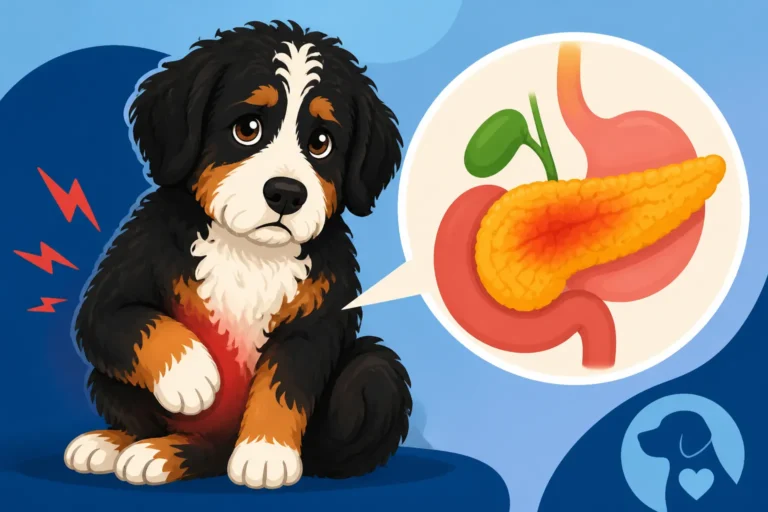
For F1 Bernedoodles, this often translates to a lower incidence of certain inherited diseases common in one or both parent breeds. Owners often report fewer vet visits in their early years for issues like some cancers or orthopedic problems that are unfortunately prevalent in purebred Bernese Mountain Dogs. The hope is that this cross reduces the likelihood of conditions like Histiocytic Sarcoma and Whether a Bernedoodle Escapes It or even Degenerative Myelopathy Both Bernedoodle Parents Can Carry. It’s a powerful argument for the cross, and often, the real-world results are quite positive for these first-generation pups.
Why F1 Bernedoodles Often See the Strongest Boost
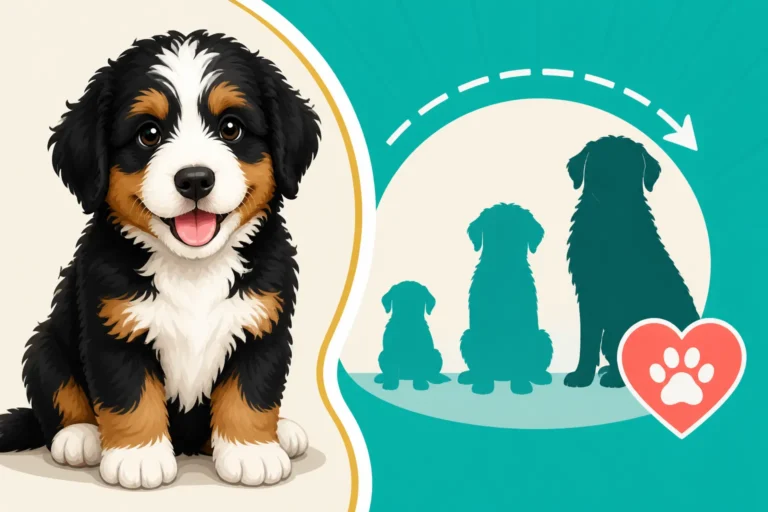
The F1 generation, which is a direct cross between a 100% purebred Bernese Mountain Dog and a 100% purebred Poodle, typically exhibits the most pronounced effects of hybrid vigor. This is where the maximum genetic distance exists between the parents, leading to the greatest increase in heterozygosity (the state of having different alleles at one or more genetic loci). Think of it like this: each parent breed has spent generations being bred selectively for specific traits, which, while creating breed standards, also tends to reduce genetic diversity within the breed over time, concentrating certain genes—both good and potentially problematic.
When you bring two completely different, established purebred lines together for the very first time, you're essentially hitting a "reset" button on many of those concentrated genes. The chances of an F1 Bernedoodle inheriting two copies of the same problematic recessive gene (one from the Bernese and one from the Poodle) are significantly lower, simply because the two gene pools are so different. This genetic lottery often works in their favor, giving them that initial edge in overall health and vitality that many owners cherish. The physical outcome is often a robust, healthy dog that benefits from the genetic "popcorn effect" where undesirable traits are less likely to show up. This robust health is one of the main reasons breeders began the Bernedoodle cross in the first place, particularly to address the shorter lifespan often associated with purebred Bernese Mountain Dogs.
The Nuance of Later Generations (F1b, F2, Multigen)
While the F1 generation shines brightly with hybrid vigor, the story becomes a bit more complex as we move into subsequent generations. It’s not that these dogs are inherently "unhealthy," but the pure, unadulterated boost of the first cross does begin to dilute.
F1b Bernedoodles: A Different Kind of Hybrid Vigor?
An F1b Bernedoodle is the result of breeding an F1 Bernedoodle back to one of the parent breeds, most commonly a Poodle. So, it's an F1 Bernedoodle (50% Bernese, 50% Poodle) bred with a purebred Poodle, making the F1b roughly 75% Poodle and 25% Bernese. Breeders often choose this route to enhance certain traits, particularly for a curlier, more non-shedding coat, which is often a priority for allergy sufferers.
From a hybrid vigor perspective, the F1b generation still benefits, but it's a different kind of boost. You're re-introducing a significant amount of Poodle genetics. While this still provides genetic diversity compared to a purebred Poodle, the genetic distance isn't as vast as the original Bernese-Poodle cross. The hybrid vigor is still present, but it shifts.
The benefit now leans more heavily on the Poodle's typically longer lifespan and often robust health profile. However, by increasing the Poodle percentage, you might also see a higher propensity for certain health issues more common in Poodles, such as The Eye Conditions a Bernedoodle Is Tested For or certain orthopedic problems, though often still at a lower rate than purebreds. The protection against some Bernese-specific ailments might remain strong due to the reduced Bernese genetic contribution, but it's crucial to acknowledge the genetic shift.
F2 and Multigen Bernedoodles: The Dilution Effect
Here's where the discussion around hybrid vigor "fading" really comes into play. An F2 Bernedoodle results from breeding two F1 Bernedoodles together. A multigen Bernedoodle is even further down the line, often F2 x F2, or F2 x F1b, and so on. In these generations, you are essentially breeding Bernedoodle to Bernedoodle, which means the genetic pool is no longer drawing from two distinct purebred lines with maximum diversity. Instead, you're breeding within a nascent "breed" pool.
As Bernedoodle is bred to Bernedoodle, the genetic diversity begins to decrease. The initial random "masking" effect of the F1 generation starts to wear off. When two F1 Bernedoodles, each carrying one copy of a recessive problematic gene, are bred together, there's a 25% chance that their offspring will inherit two copies of that recessive gene and, therefore, manifest the associated disease. This is where the recessive health conditions that were successfully hidden in the F1 generation can reappear.
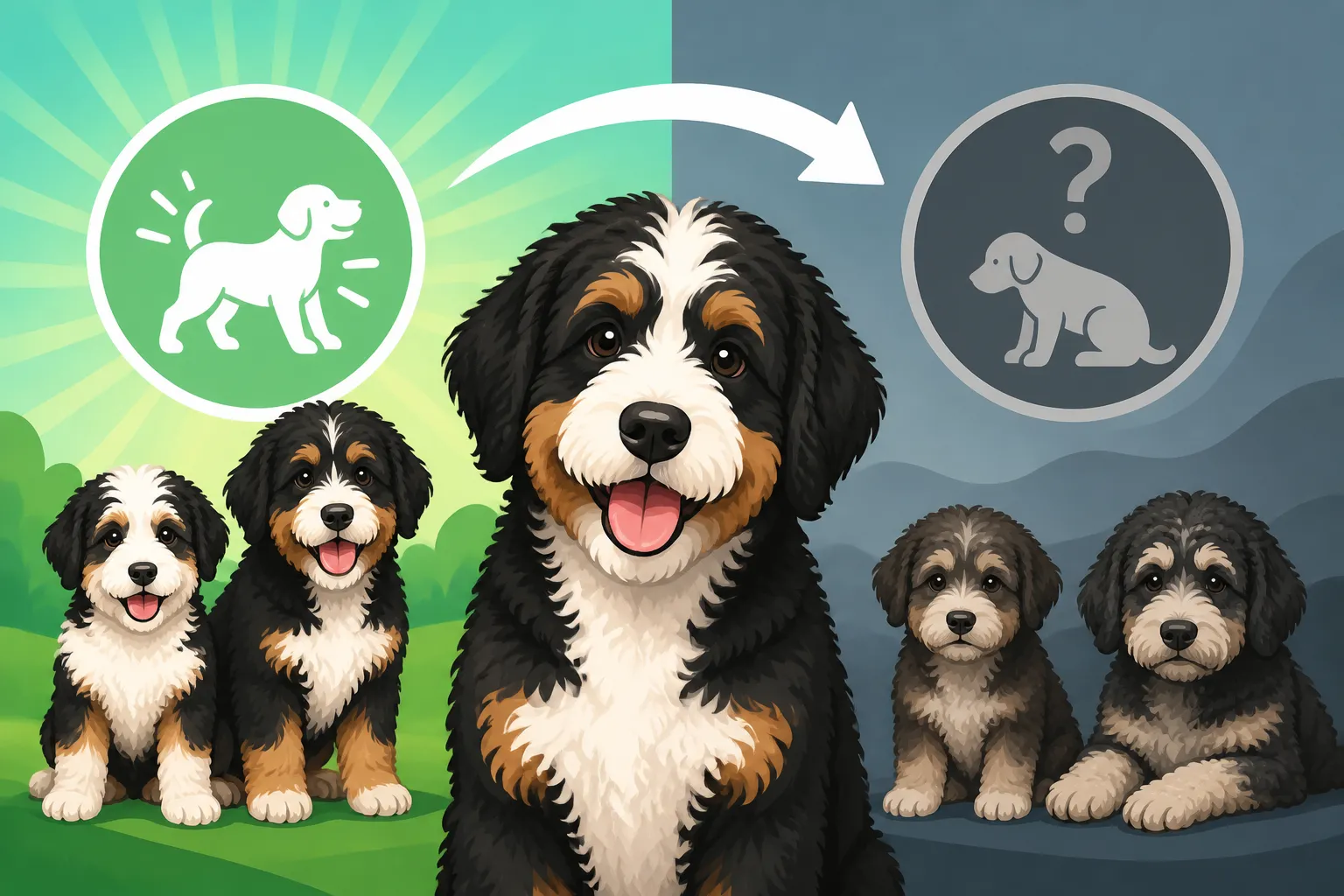
Imagine mixing two different colors of paint – say, a deep blue and a sunny yellow. The first mix (F1) is a vibrant green. If you then mix two batches of that green together (F2), you still get green, but the distinct purity of the original blue and yellow is less pronounced. If you keep mixing only greens, eventually the unique benefits of that initial "pure" color combination start to homogenize. Similarly, as later generations of Bernedoodles are bred, the genetic diversity reduces, and the likelihood of undesirable recessive traits from either original parent breed showing up increases. This is the natural dilution or fading of the strongest hybrid vigor effects. It doesn't mean these dogs are inherently unhealthy, but the automatic health boost seen in F1s is no longer guaranteed.
The Importance of Responsible Breeding in All Generations
This discussion about the fading of hybrid vigor isn't meant to imply that F2 or multigen Bernedoodles are inherently prone to illness. Far from it! It simply underscores the critical importance of responsible breeding practices for these later generations. When you're dealing with F1s, much of the hybrid vigor comes from the sheer act of crossing two distinct purebred lines. But when you start breeding Bernedoodle to Bernedoodle, the genetic robustness becomes much more dependent on the individual health and genetic clearances of the parent dogs.
A truly responsible breeder of F2 or multigen Bernedoodles understands that the "hybrid vigor safety net" has thinned. They should be meticulously health testing all their breeding stock for the known genetic predispositions in both Bernese Mountain Dogs and Poodles. This means OFA clearances for hips and elbows, screening for Von Willebrand's Disease in a Bernedoodle, degenerative myelopathy, progressive retinal atrophy, and other conditions common to the parent breeds.
Good breeders will have a deep knowledge of their lines, tracking the health of previous generations to ensure they are not inadvertently concentrating problematic genes. They understand that without the automatic genetic diversity of the F1 cross, their due diligence in health testing and selective breeding is the new, essential safeguard for the puppies' health. If a breeder isn't doing comprehensive health testing and can't provide verifiable results for several generations back, you should be very cautious, regardless of the generation they are breeding. The responsibility for a healthy puppy shifts heavily to the breeder's practices as hybrid vigor naturally recedes.
Practical Implications for Bernedoodle Owners
For those considering a Bernedoodle, understanding the nuances of hybrid vigor across generations has practical implications for your research and expectations. It's not about one generation being "better" than another, but about being informed.
What to Expect from Different Generations
When looking at different Bernedoodle generations, it's helpful to temper expectations based on the science of hybrid vigor, while also acknowledging that individual dogs are, well, individuals!
- F1 Bernedoodles (Bernese x Poodle): These generally exhibit the strongest hybrid vigor. You can often expect robust health due to the maximum genetic diversity, potentially fewer inherited diseases, and often a very balanced temperament (combining the calm of the Bernese with the intelligence of the Poodle). They are often considered to have the best chance of living a long, healthy life, potentially aligning with the upper end of The Average Age a Bernedoodle Reaches. However, their coats can be varied, from wavy to more Poodle-like, and shedding can be unpredictable.
- F1b Bernedoodles (F1 Bernedoodle x Poodle): Still very healthy, but the hybrid vigor is subtly shifted towards the Poodle's genetics. They are generally sought after for their curlier, more consistently non-shedding, and hypoallergenic coats. While still benefiting from genetic diversity, the increased Poodle percentage means you might see more Poodle-like traits in temperament and health predispositions, though often still more robust than a purebred Poodle.
- F2 and Multigen Bernedoodles (Bernedoodle x Bernedoodle): This is where hybrid vigor, in its purest form, begins to fade due to a narrowing gene pool. It doesn't mean these dogs are guaranteed to be unhealthy, but the genetic lottery benefits of the F1 are reduced. Health outcomes become much more dependent on the rigorous health testing and careful breeding choices of the parents. Temperament and coat can also be more varied, sometimes leading to "flat coat" Bernedoodles that shed more, or temperaments that lean heavily one way or the other. This is precisely why vetting your breeder for these generations is absolutely paramount.
It's important to understand that no matter the generation, every dog has the potential for health issues. Hybrid vigor is a statistical advantage, not a guarantee.
How to Vet a Breeder for Later Generation Bernedoodles
If your heart is set on an F2 or multigen Bernedoodle, perhaps for their specific coat traits or because you've fallen in love with a particular line, your due diligence in vetting a breeder becomes even more critical. You can't rely solely on the "hybrid" label for health assurances.
Here's what to look for and ask about:
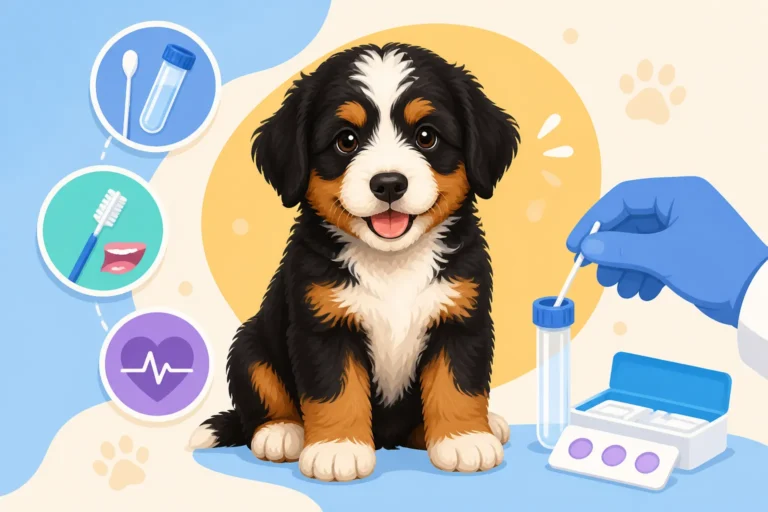
- Comprehensive Health Clearances: This is non-negotiable. Ask for OFA (Orthopedic Foundation for Animals) certifications for hips and elbows, and ideally patellas, from both parent dogs. These should be publicly verifiable on the OFA website. Don't accept vague promises or just "vet checks." They should also provide genetic testing results for common breed-specific diseases, such as Von Willebrand's Disease, degenerative myelopathy (the SOD1 Test Both Bernedoodle Parents Need is essential here), and progressive retinal atrophy (PRA). If they don't test for these, it's a huge red flag.
- Transparency and Pedigrees: A good breeder will be open about the lineage of their dogs, often providing information on several generations. They should be able to discuss the health history of the grandparents and great-grandparents, including any instances of cancer or orthopedic issues. This helps you understand if certain health concerns are running in their lines.
- Breeding Philosophy: Ask why they are breeding F2 or multigen Bernedoodles. Is it purely for profit, or do they have specific goals related to coat, temperament, or improving upon health? A thoughtful breeder will articulate their vision.
- References and Experience: Ask for references from previous puppy buyers. A breeder with a long, positive track record, especially with later generations, is usually a good sign.
- Environmental Enrichment: Beyond genetics, a puppy's early environment profoundly impacts its development. Ensure the puppies are raised in a clean, stimulating home environment, not in kennels, and are well-socialized before they come home.
Remember, a breeder who is truly committed to the health of their multigen Bernedoodles is actively working to counteract the natural dilution of hybrid vigor through diligent testing and selective breeding.
Ongoing Care for Optimal Health
Regardless of whether your Bernedoodle is an F1, F1b, F2, or multigen, optimal health throughout their life also hinges significantly on the care you provide. You play a huge role in supporting their well-being and longevity.
- Nutrition: Feed a high-quality, large-breed appropriate diet, especially during their critical growth phases. Overfeeding a puppy can contribute to rapid growth, which can put undue stress on developing joints and exacerbate conditions like Elbow Dysplasia in a Growing Bernedoodle or Hips on a Ninety Pound Bernedoodle. Maintaining a healthy weight throughout their life is crucial; remember, Whether an Overweight Bernedoodle Loses Years is a real concern.
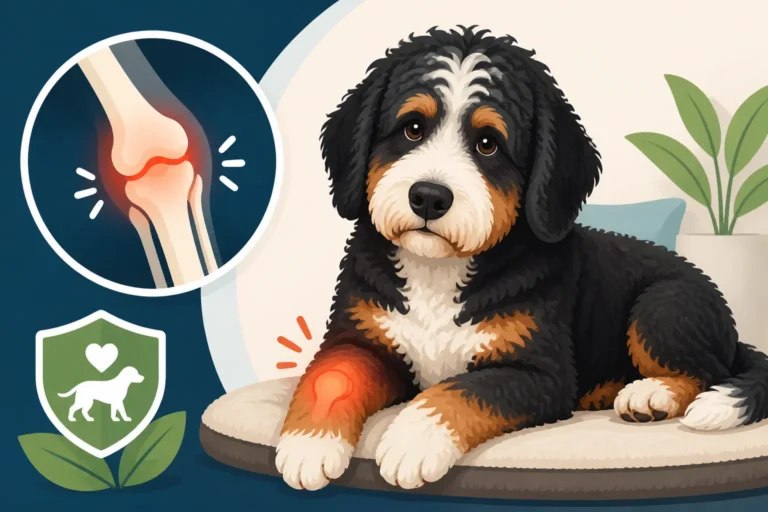
- Exercise: Provide appropriate, consistent exercise without overdoing it, particularly in puppyhood. High-impact activities or excessive running on hard surfaces can be detrimental to their growing joints. As they age, tailor exercise to their needs, especially if they develop arthritis.
- Regular Veterinary Care: Annual check-ups are non-negotiable. Your vet can catch potential issues early, recommend appropriate screenings, and advise on preventative care. As your Bernedoodle ages, these check-ups might become more frequent, especially after they reach the age where What Changes in a Bernedoodle After Eight becomes apparent.
- Grooming: Regular grooming isn't just for aesthetics; it's vital for skin health, preventing painful matting, and allowing you to check for lumps and bumps.
- Mental Stimulation: Keep their intelligent minds active with training, puzzles, and interactive toys. A bored Bernedoodle can develop behavioral issues.
- Pet Insurance: This can be a game-changer for covering unexpected veterinary costs, especially as dogs age or if health issues arise. Companies like Healthy Paws offer comprehensive plans that can help manage the financial burden of serious illnesses or accidents. Many owners find peace of mind knowing they can make decisions based on their pet's health, not just their wallet. It’s definitely worth looking into, as conditions like cancer treatment or orthopedic surgeries can be incredibly expensive. Healthy Paws often covers a wide range of conditions, which is essential for a breed like the Bernedoodle that can still be prone to certain health challenges, regardless of hybrid vigor.
By combining responsible breeding with diligent, loving care throughout their lives, you give your Bernedoodle the very best chance at a long, happy, and healthy existence.
Beyond Hybrid Vigor: The Full Picture of Bernedoodle Health
While hybrid vigor offers a fascinating and often beneficial starting point for the Bernedoodle's health journey, it’s just one piece of a much larger, more intricate puzzle. As we've discussed, the most pronounced genetic benefits typically manifest in the F1 generation, where the crossing of two distinct purebred lines maximizes genetic diversity. However, to truly foster the health and longevity of later generations—F1b, F2, and multigen Bernedoodles—the responsibility shifts significantly to the breeder's ethical practices and the ongoing care provided by dedicated owners.
It’s crucial to remember that hybrid vigor isn’t a magic shield against all health problems, nor is its natural reduction in later generations a sentence for ill health. Instead, it highlights the importance of making informed choices. For later generation Bernedoodles, the health of your puppy is a direct reflection of the careful, comprehensive health testing and selective breeding of their parents and grandparents. A breeder who thoroughly screens for Whether the Bernedoodle Cross Actually Reduced Cancer and other breed-specific issues, and is transparent about their lines, is invaluable.
Ultimately, a Bernedoodle's health and lifespan are a complex interplay of genetics, environment, diet, exercise, and preventative veterinary care. Even with the best genetics, an owner's commitment to regular check-ups, appropriate nutrition, and a stimulating environment is paramount. Considering pet insurance from providers like Healthy Paws can also provide a vital safety net, allowing you to focus on your dog's well-being without added financial stress. So, whether you choose an F1 with its robust hybrid vigor or a carefully bred multigen, a long, healthy life for your Bernedoodle truly comes down to a partnership between responsible breeding and dedicated ownership.
Disclaimer
This article is for general informational purposes only and does not constitute professional advice. Laws, prices and regulations vary by location and change over time. Consult a qualified professional for guidance on your specific situation.