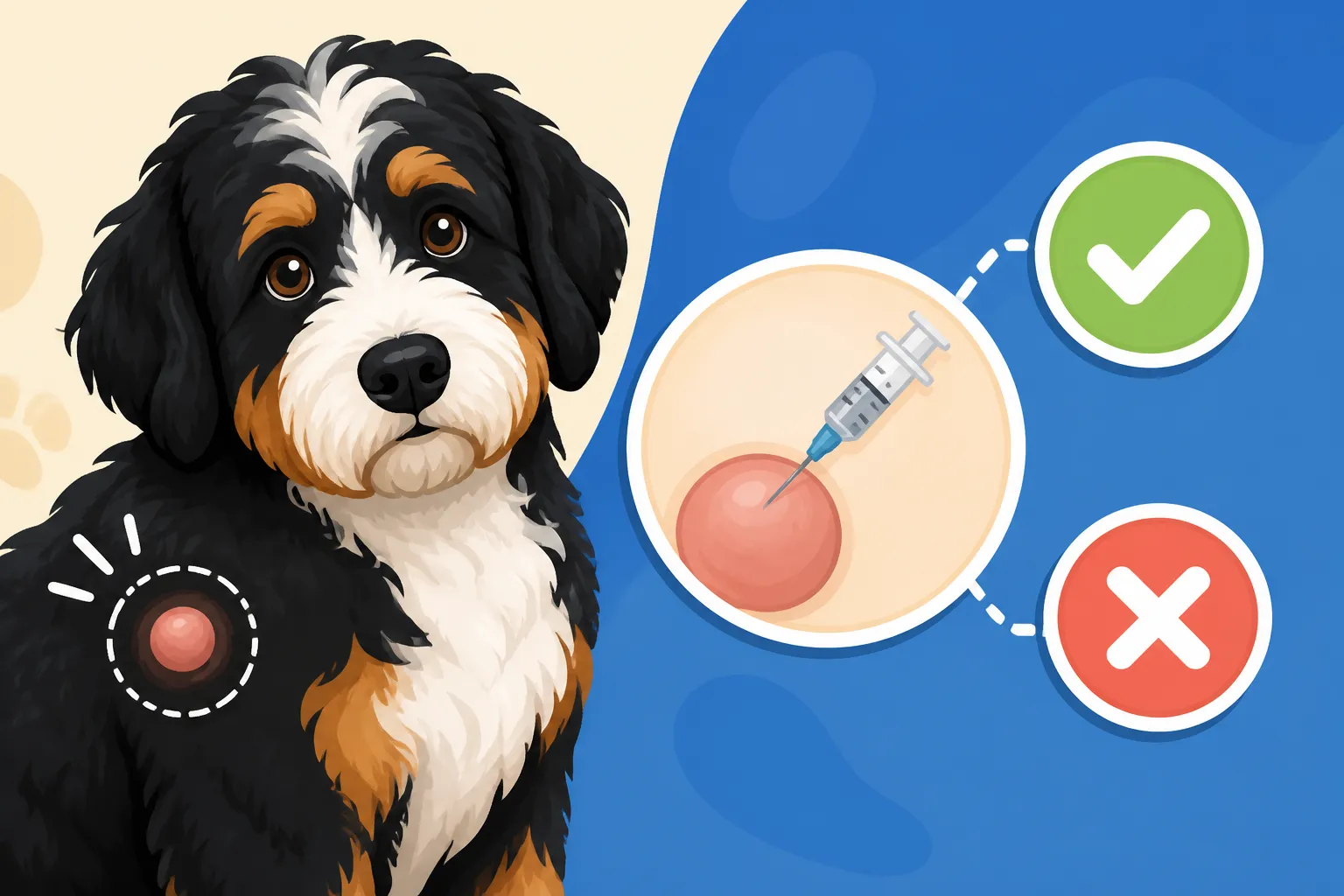
Whether a Bernedoodle Lump Should Be Aspirated
Finding a lump on your beloved Bernedoodle can send a jolt of panic straight through your heart. It’s an immediate, unsettling worry that every pet parent dreads, sparking a flurry of questions and anxieties about what it could be and what steps you need to take. This guide is here to walk you through the essential initial assessment, focusing specifically on why your veterinarian might recommend a fine needle aspiration (FNA) for that mysterious lump, what it entails, and what the results could mean for your furry family member.
The Immediate Concern of Finding a Lump on Your Bernedoodle
It's completely natural to feel a knot in your stomach the moment your fingers brush against an unexpected bump on your Bernedoodle. Whether it’s a tiny little pea-sized nodule or something larger and more noticeable, that initial discovery often leads to a quick internet search and a whole lot of fretting. But before you dive too deep down the rabbit hole of worst-case scenarios, let's talk about why every lump, big or small, deserves your attention and a professional opinion.
Why Every New Lump Needs Attention, No Matter How Small
Bernedoodles, like their Bernese Mountain Dog and Poodle parents, are prone to a variety of skin and subcutaneous growths. Because of their heritage, which includes the Bernese Mountain Dog's well-documented predisposition to certain cancers, owners are rightly concerned. You might find anything from a soft, squishy fatty tumor (a lipoma) to a firm, fast-growing mass. It could be an irritated sebaceous cyst, a benign wart-like growth called a histiocytoma, or something far more serious like a mast cell tumor or other cancerous growth. The sheer variety of possibilities is precisely why an expert eye is needed.
Even if a lump seems insignificant or you remember it being there for a while, it's wise to have it checked out. What feels like a benign fatty lump to us could, in fact, be something that needs immediate attention. Bernedoodles, with their dense coats, can also hide lumps surprisingly well until they reach a significant size. This often adds to the surprise and anxiety when they are finally discovered. Don't ever feel silly for bringing in a small lump; your proactive approach is a testament to your care. When you're constantly checking your dog, you'll pick up on Lumps a Bernedoodle Owner Should Not Wait On much faster.
The Dangers of a "Wait and See" Approach
I know it’s tempting to adopt a "wait and see" attitude, especially if the lump doesn't seem to bother your Bernedoodle. Perhaps you're hoping it will just disappear on its own, or you're trying to avoid the stress and cost of a vet visit. However, with lumps, time is often of the essence. While some benign growths might indeed resolve or remain harmless, others, particularly malignant ones, can grow and spread rapidly. Delaying evaluation means potentially missing a critical window for early intervention, which can significantly impact treatment success and your Bernedoodle's long-term prognosis.
Consider the scenario where a lump turns out to be a fast-growing mast cell tumor. These can be insidious, looking innocuous on the outside but having aggressive tendencies. Waiting a few weeks or months could allow the tumor to grow larger, potentially invading surrounding tissues, making surgical removal more complex and less likely to achieve clean margins. It could also give cancer time to metastasize to other parts of the body. This is why immediate action, often starting with a diagnostic tool like aspiration, is so vital. Catching issues early provides the best possible outcome for your furry friend, and knowing The First Signs of Cancer in a Bernedoodle is always a good idea.
What Aspiration Is and Why It's Often the First Step
Once you've brought your Bernedoodle to the vet for a lump, one of the most common and least invasive first steps your vet will recommend is a fine needle aspiration. It sounds a bit intimidating, perhaps, but it's a truly invaluable diagnostic tool that can provide crucial information quickly and with minimal fuss for your dog.
Understanding Fine Needle Aspiration FNA
A fine needle aspiration, often shortened to FNA, is a procedure where your veterinarian uses a very thin, hollow needle, similar to what's used for vaccines, to collect a small sample of cells from the lump. Usually, this is done with your Bernedoodle wide awake, perhaps with a tasty treat to distract them. No sedation, no extensive prep, just a quick poke and then a few gentle movements of the needle to gather cells. The collected cells are then carefully spread onto a microscope slide and sent to a veterinary pathologist for analysis.
The beauty of an FNA is its simplicity and speed. It provides your vet with a microscopic peek into what the lump is made of. The pathologist can identify various cell types – perhaps benign fat cells indicating a lipoma, fluid and debris from a cyst, inflammatory cells if there's an infection, or, critically, abnormal or cancerous cells like those found in a mast cell tumor or other malignancy. This initial information is absolutely crucial in guiding the next steps, whether that's simply monitoring, surgical removal, or further, more intensive diagnostics. It gives you concrete answers, or at least a strong direction, rather than leaving you to guess.
Limitations of Aspiration and When Further Steps Are Needed
While FNA is an amazing first line of defense, it’s important to understand that it’s not always a definitive answer. Sometimes, the sample collected might be "non-diagnostic" – meaning there weren't enough cells, or the cells were too broken or contaminated with blood to provide a clear picture. Imagine trying to identify a single tree in a dense forest from a tiny snapshot; sometimes you just don't get a clear enough shot. In these cases, your vet might suggest repeating the FNA or moving on to a more invasive procedure.
If the FNA results are inconclusive or if they strongly suggest a more serious issue (like a mast cell tumor or sarcoma), your vet will likely recommend a biopsy. A biopsy involves surgically removing a larger piece of the lump, or even the entire lump (excisional biopsy), for more thorough pathological examination. This allows the pathologist to examine the tissue architecture, not just individual cells, which can be critical for definitively diagnosing certain cancers, determining their grade (how aggressive they are), and ensuring complete removal if surgery is performed. While more invasive and costly than an FNA, a biopsy often provides the most comprehensive and definitive diagnosis when a lump is suspicious.
Deciphering the Results and Planning Next Steps for Your Bernedoodle
Getting those lab results back can be a nerve-wracking experience, but understanding what they mean is the first step toward making informed decisions for your Bernedoodle's health. Your vet will explain everything, but having a general idea can help you process the information better.
Common Diagnoses from Bernedoodle Lumps
When the pathologist examines the cells from your Bernedoodle's lump, they're looking for patterns. Here are some of the more common findings:
- Lipomas: These are benign (non-cancerous) fatty tumors, incredibly common in larger breeds like Bernedoodles, especially as they age. They are typically soft, movable under the skin, and don't usually cause any problems unless they grow large enough to impede movement or become irritated. Your vet might recommend leaving them alone, or surgical removal if they're problematic.
- Cysts: These are typically fluid-filled sacs, often benign. They can sometimes rupture or get infected, leading to inflammation and discomfort. Depending on the type and location, they might be drained, treated with medication, or surgically removed.
- Histiocytomas: These benign skin tumors are more common in younger dogs and often appear as small, red, button-like lesions. They usually regress and disappear on their own within a few months, but aspiration helps confirm they aren't something more concerning.
- Mast Cell Tumors: Now, this is where a definitive diagnosis becomes crucial. Mast cell tumors can range from relatively benign to highly aggressive and can appear almost anywhere on or under the skin. An FNA can often identify mast cells, triggering a recommendation for prompt surgical removal and further staging to check for spread. It's a type of cancer that you really don't want to mess around with, which is why early identification via aspiration is so important. For more on this, check out Mast Cell Tumors Hidden in a Bernedoodle's Coat.
- Other Cancers: Depending on the cell types found, an FNA might indicate other types of cancer, such as fibrosarcomas, hemangiosarcomas, or even a less common one like histiocytic sarcoma, which has a higher incidence in Bernese Mountain Dogs. Knowing Whether a Bernedoodle Can Inherit Histiocytic Sarcoma is a concern for many owners. If any of these are suspected, a biopsy is almost always recommended to get a full diagnosis and determine the best course of action.
Once a diagnosis is made, especially for malignant tumors, your vet will discuss further steps. This could include additional diagnostics like X-rays, ultrasound, or blood tests to determine if the cancer has spread (staging), and then a comprehensive treatment plan.
Financial Considerations and Pet Insurance
Let's be real, facing a potential health crisis with your Bernedoodle can be incredibly stressful, and the financial aspect often adds another layer of anxiety. Diagnostic tests like FNA and biopsies, pathologist fees, potential surgeries, chemotherapy, or even radiation can accumulate very quickly. For example, a simple FNA might be a couple of hundred dollars, but if it leads to a full biopsy, then surgery, and possibly follow-up chemotherapy, you could be looking at thousands, if not tens of thousands, of dollars. Understanding What Cancer Treatment Costs a Bernedoodle Owner can be sobering.
This is precisely why many Bernedoodle owners wisely invest in pet insurance. Having a comprehensive policy, especially from a reputable provider like Healthy Paws, can make an enormous difference during such challenging times. Pet insurance helps mitigate the financial burden, allowing you to focus on getting your Bernedoodle the best possible care without having to make agonizing decisions based purely on cost. Companies like Healthy Paws often cover accidents, illnesses, surgeries, emergency care, and even genetic conditions, which is crucial for a breed like the Bernedoodle that has predispositions to certain issues. Looking into options for Insuring a Bernedoodle Against the Bernese Half when your Bernedoodle is young is a proactive step that can save you significant stress and expense down the line.
Proactive Health Management and When to See the Vet
As Bernedoodle parents, we want to do everything in our power to keep our furry companions healthy and happy for as long as possible. A huge part of that is proactive care, which includes regular checks and knowing when it's time to call in the professionals.
Regular At-Home Checks and Early Detection
One of the best things you can do for your Bernedoodle is to incorporate regular "lump checks" into your routine. This can be as simple as thoroughly petting and grooming them once a week, feeling gently over their entire body – their head, neck, chest, armpits, abdomen, back, and legs. Pay close attention to any new bumps, changes in existing ones, or areas of tenderness. Bernedoodles have thick, sometimes curly coats, which are excellent at hiding growths, so a systematic approach is best.
If you do find a lump, take notes! Document its size, location, texture (soft, firm, movable, fixed), and when you first noticed it. Taking photos with a ruler next to it can be incredibly helpful for tracking changes. Even if it seems harmless, noting its presence and size can help your vet determine if it's new or if it's growing rapidly. Remember, early detection is often key to successful treatment, especially with the types of The Cancers That Take Bernedoodles Most Often that can affect Bernedoodles.
The Importance of Your Veterinarian's Expertise
While this guide offers a lot of information, it’s critical to remember that it’s no substitute for professional veterinary advice. Any time you find a new lump on your Bernedoodle, or if an existing one changes in size, shape, or texture, or if your dog seems bothered by it, a vet visit is absolutely non-negotiable. Only a qualified veterinarian can properly examine the lump, recommend the appropriate diagnostic steps like an FNA or biopsy, and interpret the results to provide an accurate diagnosis and treatment plan.
Your vet is your most important partner in your Bernedoodle's health journey. Don't hesitate to ask questions, voice your concerns, and discuss all available options. They can guide you through the process, from initial aspiration to potential treatment, offering the best possible care tailored to your Bernedoodle's individual needs. Beyond specific lump concerns, ensuring your Bernedoodle gets The Screening a Bernedoodle Should Have Yearly is vital for overall health and early detection of a wide range of conditions.
| Lump Characteristic | Likely Benign (e.g., Lipoma, Cyst, Histiocytoma) | Potentially Malignant (e.g., Mast Cell Tumor, Sarcoma) | Initial Vet Approach |
|---|---|---|---|
| Feel | Soft, movable, well-defined | Firm, fixed, irregular shape, fast growing | Examination, FNA |
| Growth Rate | Slow or static | Rapid, noticeable changes in days/weeks | Examination, FNA (urgent) |
| Appearance | Skin-colored, sometimes red (histiocytoma), clear fluid (cyst) | Can be varied; sometimes red, ulcerated, or hairless | Examination, FNA |
| Dog's Behavior | Usually no discomfort unless very large/irritated | May be painful, itchy, or cause general malaise | Examination, FNA, possibly biopsy/further diagnostics |
| Action | Monitor, or FNA for confirmation/peace of mind | Always FNA immediately; often followed by biopsy | Immediate vet visit |
Disclaimer
This article is intended for informational purposes only and does not constitute medical advice. Always consult with a qualified veterinarian for any health concerns or before making any decisions about your Bernedoodle's care.