Whether a Bernedoodle Should Be Tested Before Neutering
Deciding to neuter your beloved Bernedoodle is a big step, and as a responsible pet parent, you’re naturally going to have a lot of questions. Beyond the usual concerns about recovery and behavior changes, many owners wonder if there are specific health tests their Bernedoodle should undergo before the surgery. This is a really smart question, especially with a mixed breed like the Bernedoodle, which carries the genetic legacy of both the Bernese Mountain Dog and the Poodle. This guide will walk you through the essential pre-surgical screenings and specific genetic tests that can provide crucial information, ensuring your furry friend's safety and your peace of mind.
Understanding Pre-Surgical Screening for Your Bernedoodle
When you schedule a neuter surgery, your veterinarian will undoubtedly recommend some form of pre-surgical screening. This isn't just routine; it's a critical step to ensure your Bernedoodle is healthy enough to undergo anesthesia and surgery. Anesthesia, while generally safe, does carry inherent risks, and these tests help uncover any hidden issues that could lead to complications.
Why Pre-Surgical Testing Matters
Imagine taking your Bernedoodle in for a seemingly straightforward procedure, only for an underlying issue to surface during or after anesthesia. It's a terrifying thought, right? That's precisely what pre-surgical testing aims to prevent. These tests give your vet a snapshot of your dog's internal health, revealing how well their organs are functioning and if there are any silent problems that could put them at risk. For a breed that can grow quite large, like a standard Bernedoodle, even minor internal imbalances can become significant under the stress of surgery and medication. It helps identify potential issues with kidney or liver function, which are vital for processing anesthetic drugs, or even undisclosed infections.
Standard Pre-Neutering Tests
Before any surgical procedure, your vet will typically recommend a basic panel of tests. These usually include:
- Complete Blood Count (CBC): This blood test provides information about your Bernedoodle's red blood cells, white blood cells, and platelets. It can detect anemia, inflammation, infection, and clotting disorders. If your Bernedoodle has a low platelet count, for example, it could indicate a problem with blood clotting, which would need to be addressed before surgery.
- Chemistry Panel (or Blood Chemistry Profile): This panel assesses organ function, electrolyte levels, and blood sugar. Key indicators here are liver and kidney enzymes, which are crucial for metabolizing and eliminating anesthetic agents. If these organs aren't functioning optimally, special precautions or even postponing the surgery might be necessary.
- Urinalysis: A urine test can provide further insights into kidney function, hydration status, and detect urinary tract infections, which could complicate recovery or indicate systemic issues.
- Heartworm Test (if not done recently): While not directly related to anesthesia safety for neutering, ensuring your dog is heartworm-free is a standard part of overall preventative care.
- Fecal Exam: Again, not directly pre-anesthesia, but often performed to check for intestinal parasites, ensuring your Bernedoodle is generally healthy before any procedure.
These standard tests form the foundation of pre-surgical assessment, offering valuable insights into your Bernedoodle's overall health and helping your vet tailor the safest anesthetic protocol.
Bernedoodle-Specific Considerations
Now, this is where the Bernedoodle's unique genetic background comes into play. While the general pre-surgical tests are important for any dog, certain conditions prevalent in their parent breeds – the Bernese Mountain Dog and the Poodle – make specific genetic testing particularly relevant before neutering. This isn't just about the surgery itself; it's about making informed decisions for your Bernedoodle's long-term health and well-being. Knowing about certain predispositions can influence not only the surgical plan but also how you approach their care for years to come.
Genetic Health Conditions Relevant to Neutering and Testing
The beauty of the Bernedoodle lies in its hybrid vigor, but it also means they can inherit predispositions from both sides of their family tree. When considering neutering, two specific genetic conditions often come up in discussion, though they impact surgical safety and long-term health in different ways.
Von Willebrand's Disease (vWD): The Bleeding Concern
Perhaps the most critical genetic test to consider before any surgery, including neutering, is for Von Willebrand's Disease (vWD). This is a hereditary bleeding disorder, similar to hemophilia in humans, that is particularly prevalent in Bernese Mountain Dogs. Knowing if your Bernedoodle carries or is affected by vWD is absolutely vital because it can lead to excessive, uncontrolled bleeding during and after surgery.
There are different types of vWD, but Type I is the most common in Bernese Mountain Dogs and, consequently, in Bernedoodles. Dogs with vWD have a deficiency in von Willebrand factor, a protein necessary for normal blood clotting. If your Bernedoodle has this condition and undergoes surgery without precautions, they could experience significant blood loss, leading to serious complications or even being put to sleep for medical reasons.
A simple DNA test can determine your Bernedoodle's vWD status: clear, carrier, or affected. A dog that is "affected" will have the disease. A "carrier" dog might not show clinical signs but can pass the gene to offspring. Even if your dog is a carrier, it's crucial for your vet to be aware, as sometimes even carriers can have mild bleeding issues under stress. If your Bernedoodle tests as affected, your vet will need to take special precautions, such as administering a blood product rich in von Willebrand factor before surgery, to ensure safe clotting. This is why testing for "The Bleeding Disorder a Bernedoodle Gets From the Bernese" is so important. Understanding "Which Von Willebrand Type the Bernese Carries" specifically helps breeders and owners target the right tests.
Many veterinary clinics offer in-house rapid screening tests for clotting times, but a definitive DNA test is always the most accurate way to know your Bernedoodle's vWD status. This information can truly be life-saving.
Degenerative Myelopathy (DM): A Different Kind of Risk
While Von Willebrand's Disease directly impacts surgical safety due to bleeding risk, Degenerative Myelopathy (DM) is a different kind of genetic concern that, while not affecting the immediate safety of neutering anesthesia, provides crucial information for your Bernedoodle's long-term health plan. DM is a progressive neurological disease that affects the spinal cord, leading to weakness and paralysis, typically in the hind limbs. Both the Bernese Mountain Dog and the Poodle breeds can carry the gene responsible for DM (SOD1). Therefore, it's a condition that "Degenerative Myelopathy Both Bernedoodle Parents Can Carry".
Knowing your Bernedoodle's DM status – clear, carrier, or at-risk – before neutering offers valuable foresight. An "at-risk" dog has two copies of the mutated gene and is highly likely to develop DM later in life, usually in their senior years. While there's no cure, early knowledge allows you to discuss potential future care, management strategies, and quality of life considerations with your vet. This DNA test, often referred to as "The SOD1 Test Both Bernedoodle Parents Need", doesn't change the neutering procedure itself, but it empowers you to be proactive about a serious potential health challenge. For example, if you know your Bernedoodle is at-risk, you might start thinking about things like Wheelchairs and Carts for a Bernedoodle With DM much sooner, and make informed choices about things like joint supplements or appropriate exercise as they age.
Other Health Concerns and Anesthesia
Beyond vWD and DM, other health conditions common in Bernedoodles or large breeds in general can influence pre-surgical discussions, even if they don't necessitate a specific pre-neuter genetic test. For instance, large and deep-chested breeds like the Standard Bernedoodle are prone to bloat, or Gastric Dilatation-Volvulus (GDV). While this isn't usually screened for before a neuter, it's a serious condition that owners of such dogs should be aware of. In fact, some owners opt to perform a prophylactic gastropexy (stomach tacking) at the same time as the neuter to prevent bloat in the future, especially given "The Chest That Puts a Standard Bernedoodle at Bloat Risk". This is a conversation worth having with your vet.
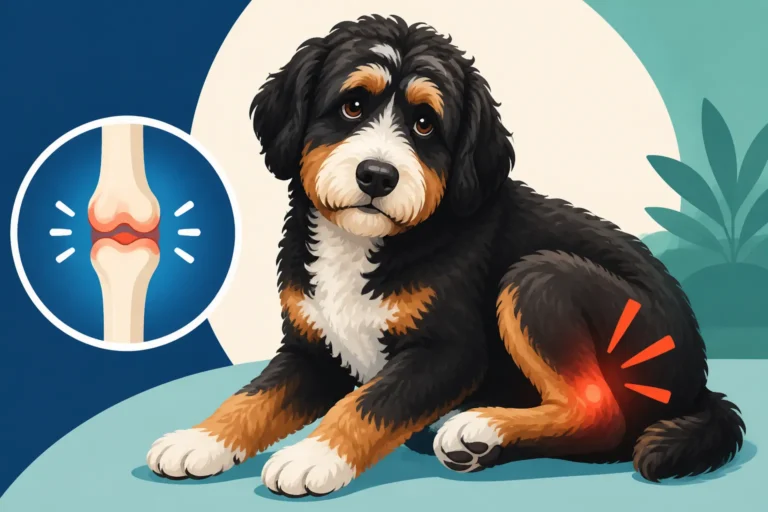
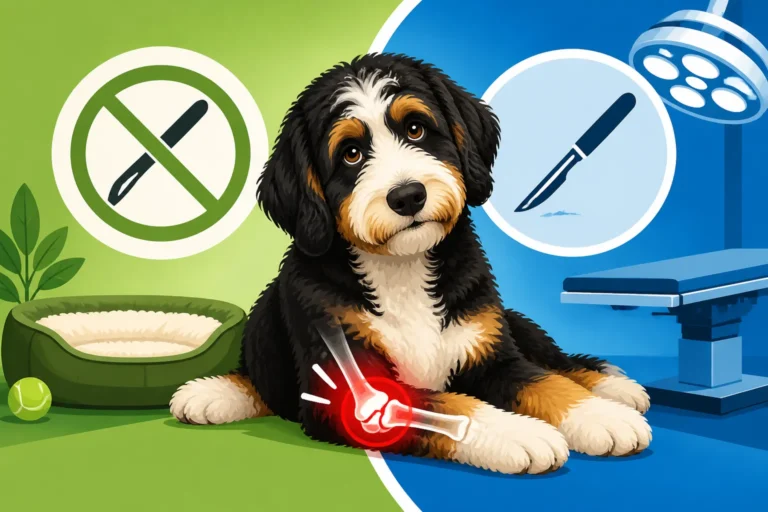
Similarly, conditions like hip and elbow dysplasia, which can affect "Hips on a Ninety Pound Bernedoodle" or elbow joints, are crucial long-term health considerations. While these usually don't impact anesthesia safety for neutering, knowing your dog's predisposition through breeder clearances can inform post-operative care, such as limiting strenuous activity during recovery to protect developing joints. Ensuring a smooth recovery from neutering is important, but preventing future orthopedic issues is also key to your Bernedoodle's overall longevity. As they age, understanding "What Changes in a Bernedoodle After Eight" becomes increasingly important for managing chronic conditions.
Making the Decision: What to Discuss with Your Vet
Deciding which tests are appropriate for your Bernedoodle before neutering can feel overwhelming. The best approach is always an open and honest conversation with your veterinarian, who knows your individual dog and can guide you based on their health history, age, and your breeder's information.
Tailoring the Testing Protocol
Not every Bernedoodle will need every single genetic test under the sun before neutering. The protocol should be tailored to your specific dog. If your breeder has provided comprehensive health clearances for the parent dogs, including vWD and DM status, you might already have some of the answers. A reputable breeder should provide "The Five Clearances a Bernedoodle Breeder Should Have", and these often include genetic testing results. Always "Asking a Breeder About Cancer in the Bernese Line" is also a good practice, as it might highlight other areas for concern later in life, even if not directly impacting a neuter.
Your vet will consider your Bernedoodle's age, general health, any pre-existing conditions, and even their temperament (anxious dogs might require different anesthetic protocols). For a young, seemingly healthy Bernedoodle from a well-screened lineage, a basic pre-surgical blood panel might be sufficient alongside targeted vWD testing. For an older dog, or one with a more uncertain health history, a more extensive panel might be recommended.
Interpreting Test Results and Next Steps
Once the tests are done, your vet will review the results with you. If the standard blood work shows any abnormalities – such as elevated liver enzymes or a low red blood cell count – they will discuss the implications. This might mean postponing the surgery to investigate further, or adjusting the anesthetic protocol to ensure maximum safety.
If your Bernedoodle tests positive for Von Willebrand's Disease, your vet will explain the necessary precautions. This could involve administering a specific medication or a blood product before surgery to help with clotting. While this adds a step, it dramatically reduces the risk of life-threatening bleeding. If DM results show an "at-risk" status, it's a heads-up for future planning. It doesn't mean surgery can't proceed, but it gives you crucial information to prepare for potential future mobility challenges, allowing you to proactively manage their health.
Remember, pet insurance providers like Healthy Paws can be a tremendous help in covering unexpected diagnostic tests or complications that arise. It's always worth researching policies early in your Bernedoodle's life.
The Role of Breeder Health Clearances
A responsible Bernedoodle breeder plays a huge role in this discussion. They should be transparent about the health clearances and genetic testing performed on the parent dogs. If both parents were tested "clear" for vWD and DM, then your Bernedoodle puppy is highly unlikely to be affected by these specific genetic diseases. However, if one or both parents were carriers, it's even more important to test your individual puppy.
Knowing the full genetic background helps you and your vet make the most informed decisions. If you adopted your Bernedoodle and don't have access to breeder records, then comprehensive pre-surgical testing becomes even more critical to establish a baseline for your dog's health profile. While cancer is a leading concern in Bernese Mountain Dogs, and many Bernedoodle owners wonder "Whether Cancer Is Still the Leading Cause in Bernedoodles", genetic tests for specific cancers are not routinely available or typically part of pre-neuter screening, but knowing your dog's overall health gives a better picture. Investing in quality pet insurance from a provider like Healthy Paws early on can offer significant financial protection against future health challenges, genetic or otherwise.
Ultimately, the goal is to provide your Bernedoodle with the safest possible neutering experience and to equip you with the knowledge to care for them throughout their entire life.
| Test Type | Purpose | Bernedoodle Relevance | When to Consider |
|---|---|---|---|
| Standard Pre-Surgical Blood Work | Assess organ function, detect infection/anemia. | Essential for all dogs to ensure anesthesia safety. | Routinely recommended for all neuter surgeries. |
| Urinalysis | Evaluate kidney function, check for UTIs. | General health, critical for anesthetic drug metabolism. | Routinely recommended. |
| vWD DNA Test | Detect Von Willebrand's Disease (bleeding disorder). | Crucial for Bernedoodles due to Bernese predisposition. | Highly recommended prior to any surgery. |
| DM (SOD1) DNA Test | Detect Degenerative Myelopathy (neurological disease). | Informational for long-term health planning. | Recommended for Bernedoodles, ideally before purchase or neuter. |
Disclaimer
The information provided in this article is for educational purposes only and is not a substitute for professional veterinary advice. Always consult with a qualified veterinarian regarding any medical concerns or before making any decisions about your Bernedoodle's health care, treatment, or surgery.