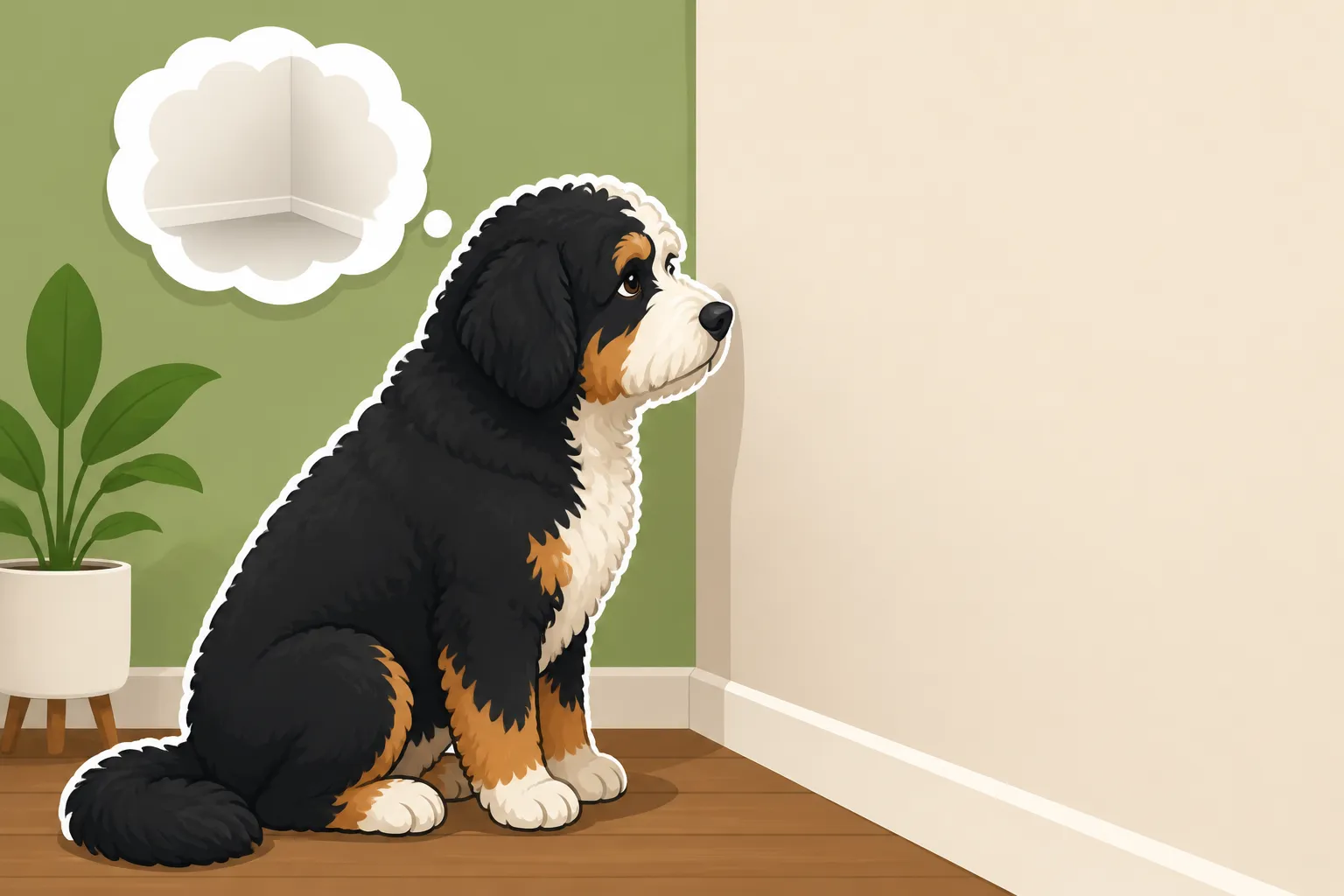
An Old Bernedoodle That Stares at Walls
It's incredibly unsettling, isn't it? To see your beloved senior Bernedoodle, once so full of life and engagement, suddenly stand or sit in a room, gazing blankly at a wall. This behavior can be confusing, alarming, and often signals a deeper issue that needs your attention. This guide is here to walk you through the common reasons why an old Bernedoodle might begin staring at walls, what these signs could mean for their health and well-being, and most importantly, what steps you can take to understand and support your furry family member.
Understanding the "Wall Staring" Phenomenon in Senior Bernedoodles
When your Bernedoodle starts to age, their bodies and minds change in myriad ways. Just like humans, they can experience cognitive decline, sensory loss, and new aches and pains. The seemingly innocuous act of staring at a wall can often be a tell-tale sign that something deeper is at play, moving beyond just a quirky habit into a potential health concern. It's a signal that their world, and their perception of it, might be shifting.
Cognitive Decline and Canine Dementia (CDS)
One of the most common and heartbreaking reasons a senior Bernedoodle might stare at walls is canine cognitive dysfunction syndrome (CDS), often referred to as "doggy dementia." It's essentially the canine equivalent of Alzheimer's disease in humans, affecting their memory, learning ability, and overall awareness. This isn't just about forgetting where the treat jar is; it's a profound change in their brain function.
Think about it from your Bernedoodle's perspective. Their once familiar home environment might start to feel foreign. They might get disoriented in rooms they've known their whole lives, or suddenly seem confused about where they are or what they're supposed to be doing. Staring at a wall or into a corner can be a manifestation of this disorientation. They're not necessarily seeing something there; rather, their brain might be struggling to process their surroundings, leading to a kind of mental 'blank screen' where they simply fixate on an arbitrary point. Other signs of CDS can include changes in sleep-wake cycles (waking up confused at night), increased anxiety, house-soiling accidents, a reduction in social interaction, or even changes in activity levels. This can be especially poignant when you realize that your Bernedoodle, a breed known for its intelligence and affectionate nature, is struggling with something so fundamental. You might find yourself asking, "What Changes in a Bernedoodle After Eight?" and CDS is certainly a significant one.
Vision Impairment and Sensory Loss
Beyond cognitive changes, the simple reality of aging can bring about a decline in your Bernedoodle's senses, particularly their vision. Conditions like cataracts, glaucoma, or progressive retinal atrophy (PRA) can significantly impact their ability to see clearly. Imagine navigating your own home in dim light with blurry vision – it would be disorienting, wouldn't it? For a dog with failing eyesight, a brightly lit, empty wall might appear less confusing or overwhelming than a room full of furniture and shadows.
When a Bernedoodle's vision starts to go, they might become more cautious, bump into objects, or hesitate in unfamiliar places. Staring at a wall could be their way of trying to 'focus' on something, even if they can't see it clearly, or simply a response to being confused by distorted perceptions. Combine this with hearing loss, which often accompanies advanced age, and your Bernedoodle's world can become a very quiet and blurry place, increasing their reliance on familiar routines and potentially leading to more episodes of disorientation. It's important to remember that the Bernese Mountain Dog side can be predisposed to certain eye conditions, and Poodles can carry genes for conditions like Progressive Retinal Atrophy (PRA), making it especially crucial to understand The Eye Conditions a Bernedoodle Is Tested For as they age.
Pain, Discomfort, and Underlying Medical Conditions
Sometimes, the wall-staring isn't just about what's going on in their head or their eyes, but rather a reflection of physical discomfort. An older Bernedoodle, especially a standard size that might weigh upwards of ninety pounds, is prone to conditions like arthritis. Managing Arthritis in an Old Bernedoodle is a common challenge for many owners. If they're experiencing chronic pain, they might withdraw, become restless, or exhibit unusual behaviors as a coping mechanism. Fixing their gaze on a wall could be a way to disengage from their surroundings, or simply a symptom of being unwell.
Beyond joint pain, other serious medical conditions can manifest as neurological signs like staring. Brain tumors, metabolic diseases affecting the liver or kidneys, or even certain endocrine disorders (like thyroid issues, which some Bernedoodles can be prone to develop—you might be wondering Whether a Bernedoodle Gets Thyroid Disease as they age) can all cause changes in behavior, including disorientation and fixed staring. It's critical not to dismiss these behaviors as merely "old age quirks," as some underlying conditions might be treatable, or at least manageable, if caught early. The goal is always to improve their comfort and quality of life, which means getting to the bottom of the behavior.
What to Do When Your Bernedoodle Starts Staring
Discovering your senior Bernedoodle staring at a wall can feel alarming and overwhelming, but there are concrete steps you can take. The first and most crucial action is always to involve your veterinarian. They are your best partner in unraveling the mystery and establishing a plan to support your aging companion.
Schedule a Comprehensive Veterinary Exam
When you notice this kind of behavior, the absolute first thing on your to-do list should be to call your vet and schedule a comprehensive check-up. This isn't just a routine vaccine appointment; you need to specifically mention the wall-staring and any other changes you've observed. Your vet will likely want to perform a thorough physical examination, paying close attention to neurological function, vision, and mobility.
Expect blood work and a urinalysis, which can help rule out systemic diseases such as kidney or liver dysfunction, diabetes, or thyroid imbalances that can impact brain function or overall well-being. They might also suggest imaging, such as X-rays to check for severe arthritis, or potentially more advanced diagnostics like an MRI if a brain tumor or other neurological issue is suspected. Be prepared to provide your vet with a detailed history of the behavior: when it started, how often it occurs, what time of day, and any other associated symptoms. This detailed information is invaluable for diagnosis. Remember, this kind of diligent The Screening a Bernedoodle Should Have Yearly becomes even more important as they age.
Managing Cognitive Dysfunction Syndrome (CDS)
If, after a thorough examination, your vet determines that cognitive dysfunction is the most likely culprit, don't despair. While CDS is progressive, there are strategies and treatments available to help manage symptoms and improve your Bernedoodle's quality of life. Your vet might prescribe medications such as selegiline hydrochloride (Anipryl), which can help improve cognitive function and slow the progression of symptoms in some dogs.
Dietary intervention can also play a significant role. Many veterinary diets are specifically formulated for senior dogs, often enriched with antioxidants, omega-3 fatty acids (like DHA and EPA), and medium-chain triglycerides (MCTs) which can provide an alternative energy source for the brain. Supplements like SAMe (S-Adenosylmethionine) or various brain-support complexes might also be recommended. Consistency in routine, gentle mental stimulation through puzzle toys, and short, familiar walks can also make a big difference in keeping their minds engaged without causing undue stress.
Adapting the Home Environment
Living with a senior Bernedoodle experiencing cognitive or sensory decline means making some adjustments around the house to enhance their safety and comfort. Simple changes can have a profound impact. Try to maintain a consistent environment; avoid moving furniture unnecessarily, as this can be incredibly disorienting for a dog who relies on spatial memory or limited vision.
Ensure good lighting, especially in areas where they spend a lot of time or might need to navigate at night. Consider night lights in hallways or near their bed. If their vision is significantly impaired, you might need to use baby gates to block off stairs or dangerous areas, preventing falls. For homes with slippery floors, laying down Rugs Help an Older Bernedoodle by providing traction, which can prevent slips and falls, especially for a dog with wobbly joints or poor coordination. Think about their water and food bowls – are they easily accessible? Do they have to search for them? Making their essentials easy to find and consistently placed can reduce anxiety.
Supporting Your Senior Bernedoodle's Quality of Life
Beyond addressing the specific medical reasons for wall-staring, the overarching goal for any owner of an aging Bernedoodle is to ensure their remaining years are as comfortable, safe, and fulfilling as possible. It's about recognizing that The Birthday a Standard Bernedoodle Counts as Senior is a milestone that calls for a shift in care and perspective, embracing the changes and providing unwavering support.
Maintaining Routine and Gentle Engagement
Consistency is truly a comfort for dogs, especially those experiencing cognitive decline or sensory loss. A predictable daily routine helps them feel secure and reduces anxiety. Try to stick to regular feeding times, potty breaks, and walk schedules. Even if their mind is foggy, the familiarity of the routine can provide an anchor in their changing world.
While they might not be up for long hikes or intense play sessions anymore, gentle engagement is still vital. Short, slow walks in familiar areas, sniffing around the yard, or very brief, low-impact games can provide mental and physical stimulation without over-tiring or confusing them. Talk to them often, using a calm and reassuring voice. Even if they don't fully understand your words, they'll appreciate the tone and the connection. It's about treasuring these quieter moments, appreciating the companionship, and adapting your interactions to their evolving needs. When you consider Caring for a Bernedoodle Past Eight, remember that gentle engagement plays a huge role.
Ensuring Comfort and Safety
Physical comfort is paramount for a senior Bernedoodle. Invest in high-quality orthopedic beds that support their aging joints, especially if they are a large breed prone to conditions like hip or elbow dysplasia. These specialized beds can relieve pressure points and make resting much more comfortable. Beds That Support a Heavy Old Bernedoodle can make a huge difference in their daily comfort. Ensure they have easy access to food and water, perhaps by placing multiple bowls around the house if they struggle to move far.
For dogs with mobility issues, assistive devices like ramps for getting on and off furniture (if they're still allowed on it, or for getting into a car) or even supportive harnesses can be incredibly helpful. You might even find yourself needing to learn how to help them stand or walk, understanding methods for Supporting an Old Bernedoodle That Cannot Rise. Keeping their environment free of clutter and hazards is also crucial, as their altered perception or unsteady gait can make them prone to tripping or falling. For those really struggling, you might explore options like pet insurance, such as through Healthy Paws, to help manage the potentially significant costs of senior specialized care, from diagnostics to ongoing treatments and assistive devices.
Emotional Support for You and Your Dog
Let's be honest, watching your beloved Bernedoodle age and decline can be incredibly painful and emotionally draining. It's okay to feel sad, frustrated, or even overwhelmed. Acknowledging your own emotions is important. Seek support from friends, family, or online communities of pet owners who are going through similar experiences. Your vet team can also be a wonderful resource, not just for your dog's health, but for your emotional well-being too. They often have resources or advice for coping with pet aging and grief.
For your Bernedoodle, continue to shower them with love, patience, and reassurance. They might not be the same dog they once were, but they are still your dog, and they still deserve your affection. Their quality of life is not just about physical health, but also about feeling safe, loved, and understood in their golden years. Even if their mind wanders, the warmth of your touch and the sound of your voice can provide profound comfort. When considering Feeding a Bernedoodle Past Eight, remember that sometimes a special treat or a hand-fed meal can be an act of love that reinforces your bond during these challenging times.
| Potential Cause of Wall Staring | Key Symptoms (beyond staring) | Immediate Action | Long-term Management |
|---|---|---|---|
| Cognitive Dysfunction Syndrome (CDS) | Disorientation, changed sleep patterns, anxiety, house-soiling, reduced interaction, pacing | Vet check-up, neurological exam | Meds (e.g., Anipryl), brain-support diets/supplements, consistent routine, gentle enrichment |
| Vision Impairment | Bumping into objects, hesitation in new places, dilated pupils, cloudy eyes | Vet check-up, eye exam | Consistent home layout, good lighting, ramps, gentle guidance, Healthy Paws for eye care coverage |
| Pain/Discomfort | Lethargy, reluctance to move, limping, changes in appetite, panting, vocalizing | Vet check-up, full physical, bloodwork, X-rays | Pain medication, joint supplements, orthopedic bed, physical therapy, weight management |
| Other Medical Conditions | Seizures, vomiting, excessive thirst/urination, unexplained weight loss/gain | Emergency vet visit if severe, comprehensive vet check-up, diagnostics | Treatment of underlying condition (e.g., thyroid medication, anti-seizure meds, surgery) |
Disclaimer
The information provided in this article is for general informational purposes only and is not intended as a substitute for professional veterinary advice, diagnosis, or treatment. Always seek the advice of your qualified veterinarian with any questions you may have regarding a medical condition or treatment options for your Bernedoodle. Never disregard professional veterinary advice or delay in seeking it because of something you have read here.