What Elbow Surgery Costs on a Bernedoodle
The heartbreaking reality for many Bernedoodle owners is confronting the possibility of a major health issue, and few are as daunting as elbow dysplasia, especially when surgery becomes necessary. It's a diagnosis that not only brings worry for your beloved companion's comfort and mobility but also a significant knot in the stomach over the financial implications. This comprehensive guide is here to walk you through the various costs associated with elbow surgery for your Bernedoodle, from the initial diagnostic steps to the long road of recovery, helping you understand what to expect and how to prepare.
Understanding Elbow Dysplasia in Bernedoodles
Elbow dysplasia is a complex inherited condition affecting the elbow joint, common in large and giant breeds like the Bernese Mountain Dog, one half of our wonderful Bernedoodles. It's not just one disease but a collection of developmental abnormalities that lead to improper formation and function of the elbow joint. When these issues arise, they can cause pain, lameness, and eventually debilitating arthritis, deeply impacting your Bernedoodle's quality of life. Owners often wonder about Elbow Dysplasia in a Growing Bernedoodle and how early signs might present themselves.
What is Elbow Dysplasia?
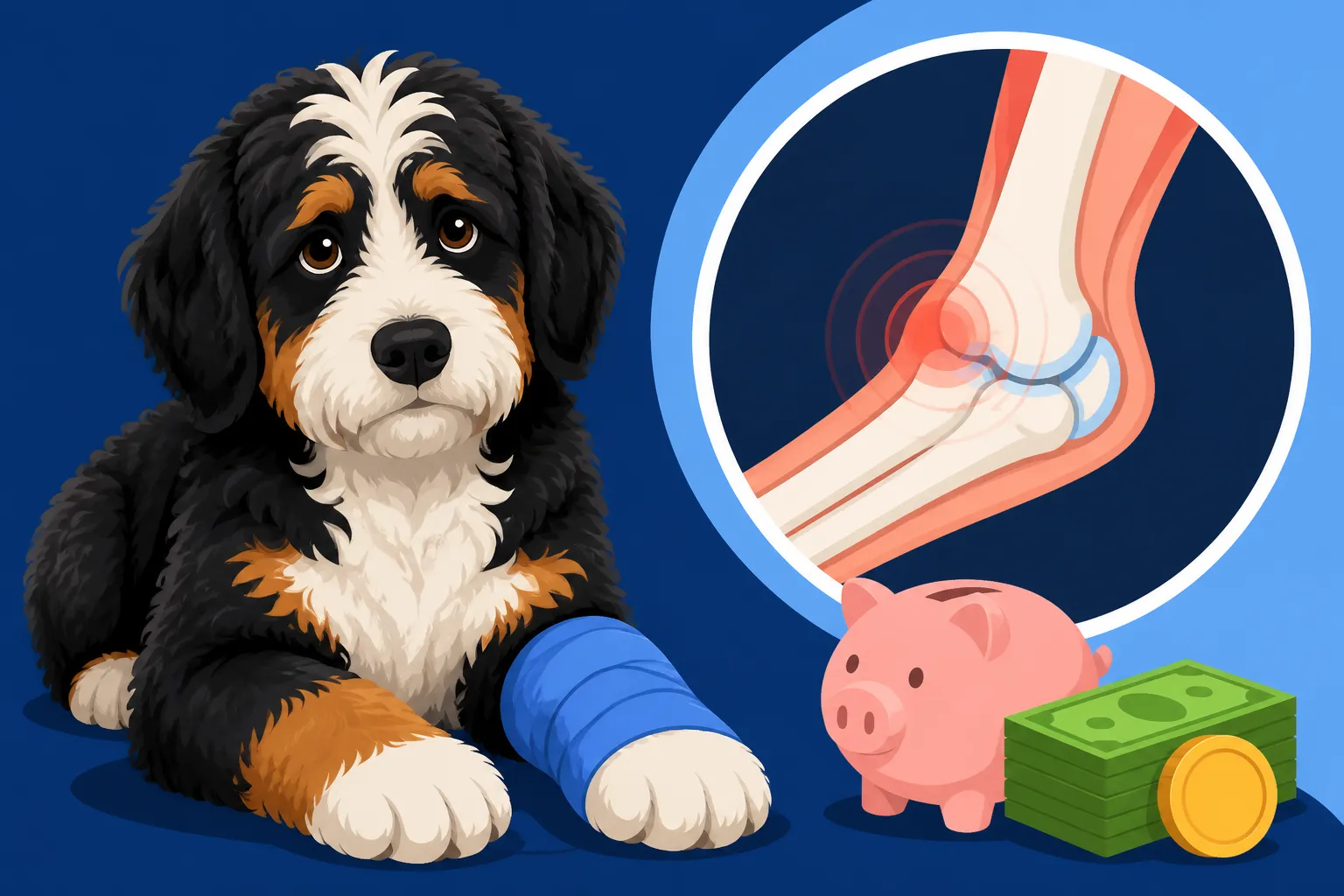
At its core, elbow dysplasia is a misalignment or malformation within the elbow joint, often leading to abnormal pressure and friction. This can manifest in several ways: ununited anconeal process (UAP), fragmented coronoid process (FCP), osteochondritis dissecans (OCD), or incongruity of the joint surfaces. Any of these conditions can cause discomfort, leading your dog to favor a limb, show stiffness after rest, or even have a visible limp. It's a silent and progressive issue, meaning that what starts as subtle discomfort can escalate into chronic pain and severe osteoarthritis if not addressed.
The condition is often genetic, meaning it's passed down from parents. This is why responsible breeders are so diligent about screening their breeding dogs for orthopedic issues. Knowing the genetic predisposition can help you understand why your Bernedoodle might be facing this challenge, even with the best care. It's a stark reminder that even hybrid breeds, while often robust, are not immune to the genetic predispositions of their parent breeds. Many of us have been there, watching a once-active dog struggle, and it's a feeling of helplessness that no owner wants to experience.
Why Bernedoodles Are Prone to It
The Bernedoodle inherits traits from both the Bernese Mountain Dog and the Poodle. While Poodles are generally sound, the Bernese Mountain Dog is unfortunately known for a higher incidence of elbow dysplasia. This genetic legacy means that Bernedoodles carry a notable risk, especially standard-sized Bernedoodles that grow rapidly and put immense stress on their developing joints. The sheer size and weight these dogs attain during their rapid growth phase exacerbate any underlying genetic predisposition, making proper nutrition and controlled exercise crucial during puppyhood.
It's a common misconception that hybrid vigor completely eliminates breed-specific health issues. While it can reduce the incidence of some conditions, it doesn't offer a complete shield, especially when both parent breeds might carry similar genetic susceptibilities or when one parent breed has a strong predisposition to a particular ailment. This is why it's so important for prospective owners to ask questions about The Five Clearances a Bernedoodle Breeder Should Have and review the health clearances of both parent dogs, including elbow scores, which indicate the health of their joints.
The Diagnostic Process and Its Costs
Before any talk of surgery, your veterinarian needs to confirm the diagnosis of elbow dysplasia and pinpoint the exact nature of the problem. This diagnostic phase involves a series of steps, each with its own associated costs. It’s a necessary investment to ensure that if surgery is pursued, it’s the right course of action for your particular Bernedoodle.
Initial Veterinary Consultation and X-rays
Your journey usually begins with a visit to your regular family veterinarian when you notice your Bernedoodle limping, showing stiffness, or hesitating to play. During this initial consultation, your vet will perform a thorough physical examination, feeling the joints, observing your dog's gait, and assessing their pain levels. They'll ask you a lot of questions about when you first noticed symptoms, how they've progressed, and any relevant family history. This first appointment typically involves a consultation fee.
Following the physical exam, the next logical step is usually X-rays. Radiographs are crucial for visualizing the bones and joint spaces, helping the vet identify signs of arthritis, bone fragments, or incongruity. Your Bernedoodle might need to be sedated for these X-rays to ensure they lie still in the correct positions, allowing for clear and diagnostic images. Sedation adds to the cost, but it's essential for getting accurate results and preventing stress or pain for your dog. A series of X-rays, often of both elbows even if only one seems affected, is typically taken to get a comprehensive view.
Advanced Imaging: CT Scans and MRIs
While X-rays are a good starting point, they don't always provide the detailed three-dimensional view necessary to fully understand the complexities of elbow dysplasia. For a definitive diagnosis and precise surgical planning, your vet might recommend advanced imaging techniques like computed tomography (CT) scans or magnetic resonance imaging (MRI). These specialized scans provide much clearer images of soft tissues, cartilage, and subtle bone fragments that X-rays might miss.
A CT scan uses X-rays from multiple angles to create cross-sectional images, giving a highly detailed view of the bone structures. An MRI, on the other hand, uses magnetic fields and radio waves to generate images, which is especially useful for evaluating soft tissues like cartilage and ligaments. Both procedures require general anesthesia, as the dog must remain perfectly still for an extended period inside the scanner. These advanced diagnostics represent a significant leap in cost compared to standard X-rays, but they are often invaluable for a surgeon to determine the best approach and for you to understand the full scope of your Bernedoodle's condition.
Surgical Options and Their Associated Expenses
Once elbow dysplasia is confirmed, and the specific issues identified, your veterinary orthopedic specialist will discuss surgical interventions. There isn't a one-size-fits-all surgery for elbow dysplasia, as the procedure depends entirely on the underlying problem. Each type of surgery carries its own set of costs, influenced by the complexity of the procedure, the length of the surgery, and the equipment required.
Arthroscopy: Minimally Invasive Approach
For many cases of fragmented coronoid process (FCP) or osteochondritis dissecans (OCD), arthroscopy is often the preferred surgical method. This is a minimally invasive procedure where the surgeon makes small incisions and inserts a tiny camera (arthroscope) and specialized instruments into the joint. They can then visualize the inside of the elbow on a monitor, remove loose cartilage or bone fragments, and smooth rough joint surfaces. The advantages of arthroscopy are numerous: smaller incisions mean less pain, faster recovery times, and reduced risk of infection compared to traditional open surgery.
While arthroscopy is considered less invasive, it often still requires highly specialized equipment and a surgeon with advanced training, which can contribute to the cost. The procedure typically involves general anesthesia, monitoring during surgery, and a day or two of hospitalization depending on the specific case. Even with its benefits, it's a sophisticated procedure designed to address specific issues within the joint.
Traditional Open Surgery and Corrective Osteotomies
In some more complex cases, or for conditions like ununited anconeal process (UAP) where a bone fragment needs to be reattached or removed, traditional open surgery might be necessary. This involves a larger incision to directly access the joint. While more invasive, it allows the surgeon a direct view and more extensive manipulation if required. Recovery from open surgery can be a bit longer and more involved than with arthroscopy.
For cases of severe joint incongruity or advanced elbow dysplasia, more drastic measures like corrective osteotomies might be considered. These procedures involve cutting and realigning bones to improve joint mechanics and reduce pain. For example, an ulnar osteotomy might be performed to shorten the ulna and relieve pressure. These are major orthopedic surgeries, requiring extensive surgical skill, specialized implants (plates, screws), and a longer, more intensive recovery period. The financial commitment for these types of procedures will naturally be at the higher end of the spectrum due to their complexity, the time required in the operating room, and the specialized aftercare.
Understanding the Surgical Bill Components
When you receive the estimate for elbow surgery, it’s going to be a detailed document, and it can feel overwhelming. It's not just a single line item; it's a breakdown of all the services and materials involved. Expect to see charges for general anesthesia, which includes the drugs, the time spent under anesthesia, and the monitoring equipment and personnel. There will be surgical fees, reflecting the surgeon’s time and expertise. Implant costs, if any, will be listed, especially for osteotomies. Hospitalization fees will cover your Bernedoodle's stay at the veterinary clinic or specialty hospital, including nursing care, pain management, and any necessary medications administered during their stay.
Diagnostic fees (for the X-rays or CT/MRI mentioned earlier) might be separate or rolled into a pre-surgical package. Post-operative medications, such as pain relievers and anti-inflammatories, will also add to the bill, though sometimes these are dispensed to take home. Don't hesitate to ask your veterinary team to explain each line item so you fully understand what you are paying for. It helps to clarify if things like physical therapy consultations are included in the initial surgical quote or if they are separate, subsequent expenses.
Post-Operative Care: Unseen Costs You Need to Budget For
The surgical procedure itself is only one part of the equation. The recovery period for elbow surgery is often extensive and requires dedicated post-operative care, which can accumulate significant costs. Many owners overlook these "hidden" expenses, but they are absolutely critical for a successful outcome and your Bernedoodle's long-term comfort and mobility.
Medications and Follow-up Appointments
Immediately after surgery, your Bernedoodle will likely be sent home with a regimen of medications. This almost always includes pain management drugs, such as NSAIDs (non-steroidal anti-inflammatory drugs) and potentially stronger opioids for the initial days. Antibiotics might also be prescribed to prevent infection. These medications are essential for controlling pain and inflammation, allowing your dog to rest and heal properly. The cost of these prescriptions can vary depending on the specific drugs, the duration of the treatment, and your dog's size, as larger dogs require higher doses.
Regular follow-up appointments with your veterinarian or orthopedic specialist are also a critical part of post-operative care. These appointments are necessary to check incision sites, monitor healing progress, assess pain levels, and potentially remove sutures. X-rays may be taken at subsequent appointments to ensure proper bone healing or joint alignment, incurring additional imaging fees. These check-ups typically occur weekly or bi-weekly initially, then taper off over several months. Each visit will have a consultation fee, plus any imaging or re-bandaging costs.
Rehabilitation and Physical Therapy
One of the most impactful, yet often underestimated, aspects of post-operative care is rehabilitation and physical therapy. This isn't just about letting your Bernedoodle "take it easy"; it's about actively rebuilding strength, restoring range of motion, and preventing muscle atrophy. Depending on your dog's specific needs and the type of surgery performed, a tailored rehabilitation program might include hydrotherapy (underwater treadmill), therapeutic exercises, massage, laser therapy, and acupuncture. These therapies are performed by certified veterinary rehabilitation professionals and are crucial for optimizing recovery and ensuring the best long-term outcome.
The costs for rehabilitation can add up quickly, as sessions are often recommended multiple times a week for several weeks or even months. Each session has a fee, and while some exercises can be taught for home practice, many require professional guidance and specialized equipment. It's an investment in your Bernedoodle's future mobility, helping them regain strength and confidence in using their limb. Without proper rehabilitation, the risk of developing compensatory issues in other limbs or persistent lameness increases significantly.
Essential Recovery Supplies
Beyond professional medical care, you’ll also need a host of supplies to make your Bernedoodle's recovery at home as comfortable and safe as possible. A high-quality, supportive orthopedic bed is a must to ease pressure on joints and encourage rest. You might need ramps to help your dog get into and out of vehicles or onto furniture, especially if they are a standard Bernedoodle size. Non-slip rugs or runners might be needed on hard floors to prevent slips and falls, which could re-injure the healing joint.
Other supplies could include Elizabethan collars (e-collars) to prevent licking or chewing at incisions, special harnesses or slings to assist with mobility, and even puzzle feeders or enrichment toys to keep their minds engaged while physical activity is restricted. You might also find yourself investing in joint supplements like glucosamine and chondroitin, often recommended for long-term joint health, which can be found through retailers like Chewy or specific veterinary brands. Many owners also consider providing high-quality, easily digestible food during recovery. Brands like Ollie offer fresh, human-grade food that can be gentle on the stomach and provide excellent nutrition for healing.
Managing the Financial Burden: Insurance and Alternatives
Facing the costs of elbow surgery can be daunting, but there are proactive steps you can take to alleviate the financial strain. Pet insurance, savings, and open communication with your veterinary team can all play a crucial role in making these necessary treatments accessible.
Pet Insurance: A Lifeline for Unexpected Costs
Pet insurance can be an absolute lifeline when facing significant veterinary bills like those for elbow surgery. If you have a policy in place before your Bernedoodle develops symptoms or is diagnosed with elbow dysplasia, it can cover a substantial portion of the diagnostic, surgical, and post-operative care costs. Most comprehensive policies will cover accidents and illnesses, including orthopedic surgeries. It's vital to understand your policy's specifics, including deductibles, reimbursement percentages, and annual limits. Companies like Healthy Paws offer various plans that can help manage these expenses.
However, a critical factor with pet insurance is pre-existing conditions. If your Bernedoodle has already shown signs of elbow dysplasia or received a diagnosis before you enroll or during the waiting period, that specific condition will likely be excluded from coverage. This highlights the importance of enrolling your puppy in pet insurance as early as possible, ideally before any health issues arise. While the monthly premiums are an ongoing expense, the peace of mind and financial assistance they provide in an emergency can be invaluable. This is especially true for Bernedoodles, given their predisposition to certain joint issues, and knowing whether Insuring a Bernedoodle Against the Bernese Half is something your policy actively considers.
Payment Plans and Financial Assistance Programs
If you don't have pet insurance or if your policy doesn't cover a significant portion of the costs, don't despair. Many veterinary clinics and specialty hospitals understand the financial challenges of expensive procedures and offer payment options. This could include in-house payment plans, allowing you to pay the bill over several months, or partnerships with third-party medical credit cards that offer deferred interest periods. Always ask your vet's office about their payment policies and available financial solutions.
Beyond payment plans, there are various charitable organizations and foundations that offer financial assistance for pet owners facing high veterinary bills. These programs often have specific eligibility requirements, but they can provide grants or subsidies to help cover a portion of the costs. Research local and national organizations dedicated to helping pets in need; a quick online search can often yield several options. While not a complete solution, every bit of assistance can help lighten the load during a stressful time.
Savings and Emergency Funds
Ultimately, having a dedicated emergency fund specifically for your pet's health can be the most straightforward way to manage unexpected veterinary expenses. Even if you have pet insurance, there will always be deductibles and co-pays, and some costs might fall outside of coverage. Regularly contributing to a savings account earmarked for your Bernedoodle's health creates a buffer against the shock of a sudden, large bill.
Consider setting aside a small amount each month, perhaps the equivalent of what you might pay in pet insurance premiums. Over time, this fund can grow into a substantial resource. It offers flexibility, as you can use it for anything from routine care to emergency surgeries without the constraints of insurance policies or the need to apply for credit. Being financially prepared allows you to focus solely on your Bernedoodle's health and recovery without added stress.
Long-Term Outlook and Continued Care Costs
Elbow dysplasia surgery is often about pain management and improving quality of life, but it’s rarely a "cure" in the sense that the joint becomes completely normal again. The long-term outlook involves continued management of potential arthritis and maintaining your Bernedoodle's comfort and mobility. These ongoing needs come with their own set of costs that you’ll need to factor into your Bernedoodle’s care plan for years to come.
Managing Arthritis and Mobility Issues
Even with successful surgery, almost all dogs with elbow dysplasia will eventually develop some degree of osteoarthritis in the affected joint. This chronic, progressive condition means lifelong management will be necessary. This typically involves a multi-modal approach to pain control and joint support. Daily oral medications, such as NSAIDs, may be required, or periodic injections of joint-lubricating substances like Adequan. These medications are ongoing expenses that can add up over time.
Beyond medication, supportive therapies might continue to be part of your Bernedoodle's routine. Regular low-impact exercise, such as swimming or controlled leash walks, is vital for maintaining muscle mass and joint flexibility. You might also continue with periodic physical therapy sessions, laser therapy, or acupuncture to keep pain at bay and support mobility. For an older Bernedoodle, managing Arthritis in a Bernedoodle at Eight is a common challenge, and the costs associated with keeping them comfortable can be significant.
Lifestyle Adjustments and Supportive Equipment
Life after elbow surgery often necessitates some adjustments to your Bernedoodle's lifestyle to protect their joints. High-impact activities like jumping, intense running, or quick stops and starts might need to be restricted or eliminated to prevent excessive wear and tear on the recovering joint and to minimize the progression of arthritis. This doesn't mean your Bernedoodle won't be active, but their activities might need to be more controlled and less strenuous.
You might find yourself investing in supportive equipment for the long haul. Orthopedic beds will continue to be important for comfortable rest. Ramps for car access or steps for beds and sofas can help reduce strain on the elbows, especially for a heavy Bernedoodle. Non-slip flooring in your home is always a good idea. Harnesses designed to provide extra support and help with mobility can also be invaluable. These items, while often a one-time purchase or replaced infrequently, represent part of the ongoing commitment to managing your Bernedoodle's joint health.
Nutritional Support and Joint Supplements
Diet and nutritional supplements play a significant role in long-term joint health. Your veterinarian might recommend a specialized large-breed senior dog food or a diet formulated to support joint health. These diets often contain higher levels of omega-3 fatty acids, glucosamine, and chondroitin. You might also continue to give your Bernedoodle dedicated Whether Joint Supplements Help a Bernedoodle as an ongoing part of their daily routine, which can be an additional monthly cost.
Ensuring your Bernedoodle maintains a healthy weight is paramount. Excess weight puts immense stress on all joints, particularly those compromised by elbow dysplasia. Regular monitoring of their weight and adjusting food portions as needed are critical. Companies like Chewy offer a wide range of specialized diets and supplements that can be delivered right to your door, making it easier to maintain your Bernedoodle’s nutritional support. Discuss with your vet what specific dietary changes or supplements would be most beneficial for your Bernedoodle's long-term joint management.
Cost Comparison Table: Elbow Dysplasia Treatment
To give you a clearer picture of the potential financial commitment, here's a general breakdown of the typical cost ranges for various stages of elbow dysplasia diagnosis and treatment. Remember, these are broad estimates and can vary significantly based on location, veterinary specialist, and the specific needs of your Bernedoodle.
| Service Category | Typical Cost Range (USD) | Key Components |
|---|---|---|
| Initial Consultation & X-rays | Hundreds | Physical exam, sedation (if needed), multiple radiographs |
| Advanced Imaging (CT/MRI) | Thousands | General anesthesia, specialist fees, detailed imaging |
| Arthroscopic Surgery | A few thousands to several thousands | Surgeon's fee, anesthesia, operating room, hospitalization, post-op meds |
| Open Surgery / Osteotomy | Several thousands to Many thousands | Surgeon's fee, anesthesia, implants, longer hospitalization, complex aftercare |
| Post-Operative Medications | Hundreds to a thousand | Pain relievers, anti-inflammatories, antibiotics, ongoing meds |
| Rehabilitation/Physical Therapy | Hundreds per month to several thousands for a full course | Hydrotherapy, laser therapy, therapeutic exercises, specialist sessions |
| Long-term Joint Supplements | Tens to hundreds per month | Glucosamine, chondroitin, omega-3 fatty acids, specialized diets |
| Supportive Equipment | Hundreds | Orthopedic bed, ramps, non-slip mats, special harnesses |
| Follow-up Appointments | Hundreds (each) | Re-checks, bandage changes, additional X-rays |
This table provides a snapshot, but it's important to have a detailed discussion with your veterinary team to get a precise estimate tailored to your Bernedoodle's specific situation. Planning and understanding these costs can help you navigate this challenging journey with your beloved companion.
Disclaimer
This article is for general informational purposes only and does not constitute professional advice. Laws, prices and regulations vary by location and change over time. Consult a qualified professional for guidance on your specific situation.