When to Walk a Bernedoodle in Summer
The sun is shining, the birds are singing, and all you want to do is grab your Bernedoodle's leash and head out for a nice long walk. But then you feel the intense heat radiating from the pavement, and that familiar knot of worry tightens in your stomach. Is it safe? Will they overheat? It's a common dilemma for Bernedoodle owners as summer rolls around. This guide is here to help you navigate those sunny days, understand your furry friend's heat tolerance, and equip you with the knowledge to make safe choices about when and how to walk your Bernedoodle in the summer.
Understanding Your Bernedoodle's Heat Vulnerability
Let's be real, Bernedoodles are built for comfort in cooler climates, not sweltering summer days. Their Bernese Mountain Dog heritage, combined with the Poodle's dense coat, creates a beautiful but incredibly insulating layer that makes them particularly susceptible to overheating. It's not just about how hot you feel; your Bernedoodle is wearing a permanent fur coat that doesn't come off, and they can't sweat like we do. Ignoring their natural predispositions can quickly turn a pleasant outing into a dangerous situation, leading to heatstroke.
The Double Whammy: Coat Type and Breed Heritage
Think about the Bernese Mountain Dog parentage. These majestic dogs hail from the Swiss Alps, where they were bred to work in cold, snowy conditions. Their thick, often double, coat is designed to keep them warm, not to dissipate heat efficiently. Even though Bernedoodles are a hybrid, many inherit a dense, insulating coat, whether it's wavy or curly. This means that even a "non-shedding" Poodle-dominant coat can still trap a significant amount of heat close to their body, acting like a down jacket in July. This dense insulation is fantastic for winter hikes but becomes a serious liability when the temperatures climb. For Bernedoodles with darker coats, especially those striking black tri-colors, the situation can be even more pronounced, as darker colors absorb more solar radiation. If you have a dark-coated dog, you might find yourself reading Why a Black Tri Bernedoodle Overheats or Whether a Black Bernedoodle Absorbs More Heat to understand this better.
What makes it even trickier is that some Bernedoodles, particularly those with straighter coats or more Bernese influence, might even have an undercoat. This plush layer provides phenomenal warmth, but in summer, it means there's less airflow against their skin, making it incredibly hard for them to cool down. It’s like trying to cool off while wearing a heavy wool sweater – uncomfortable for us, potentially life-threatening for them. Owners often mistakenly believe that because their Bernedoodle doesn't shed profusely, they're less impacted by heat, but it's the density and insulating properties of the coat that are the real concern.
Recognizing the Early Warning Signs of Overheating
Your Bernedoodle can't tell you in words that they're too hot, so it's absolutely crucial for you to be vigilant about the signs. The most obvious sign is excessive panting – much heavier and faster than usual, sometimes with a lot of noise. They might also start drooling excessively, with thick, ropey saliva. Keep an eye on their gums; normally a healthy pink, they might appear darker red or even purplish if they're overheating, indicating a lack of oxygen.
As overheating progresses, you'll see more concerning symptoms. They might become lethargic, stumbling, or show signs of confusion. Their body temperature will rise, and you might even feel it radiating from their ears or belly. Vomiting, diarrhea, and even seizures can occur in severe cases of heatstroke. If you notice any of these signs, especially the more severe ones, you need to act immediately. Get them to a cooler environment, apply cool (not ice cold) water to their belly, paws, and inner thighs, and seek veterinary attention without delay. Knowing Signs a Bernedoodle Is Overheating can truly be a lifesaver.
The Best Times for Summer Strolls: Timing is Everything
When it comes to walking your Bernedoodle in the summer, the clock becomes your most important tool. The scorching midday sun and radiating heat from pavements and other surfaces are your biggest enemies. Planning your walks around the coolest parts of the day isn't just a suggestion; it's a non-negotiable rule for the safety and comfort of your dog.
Embracing the Early Morning and Late Evening
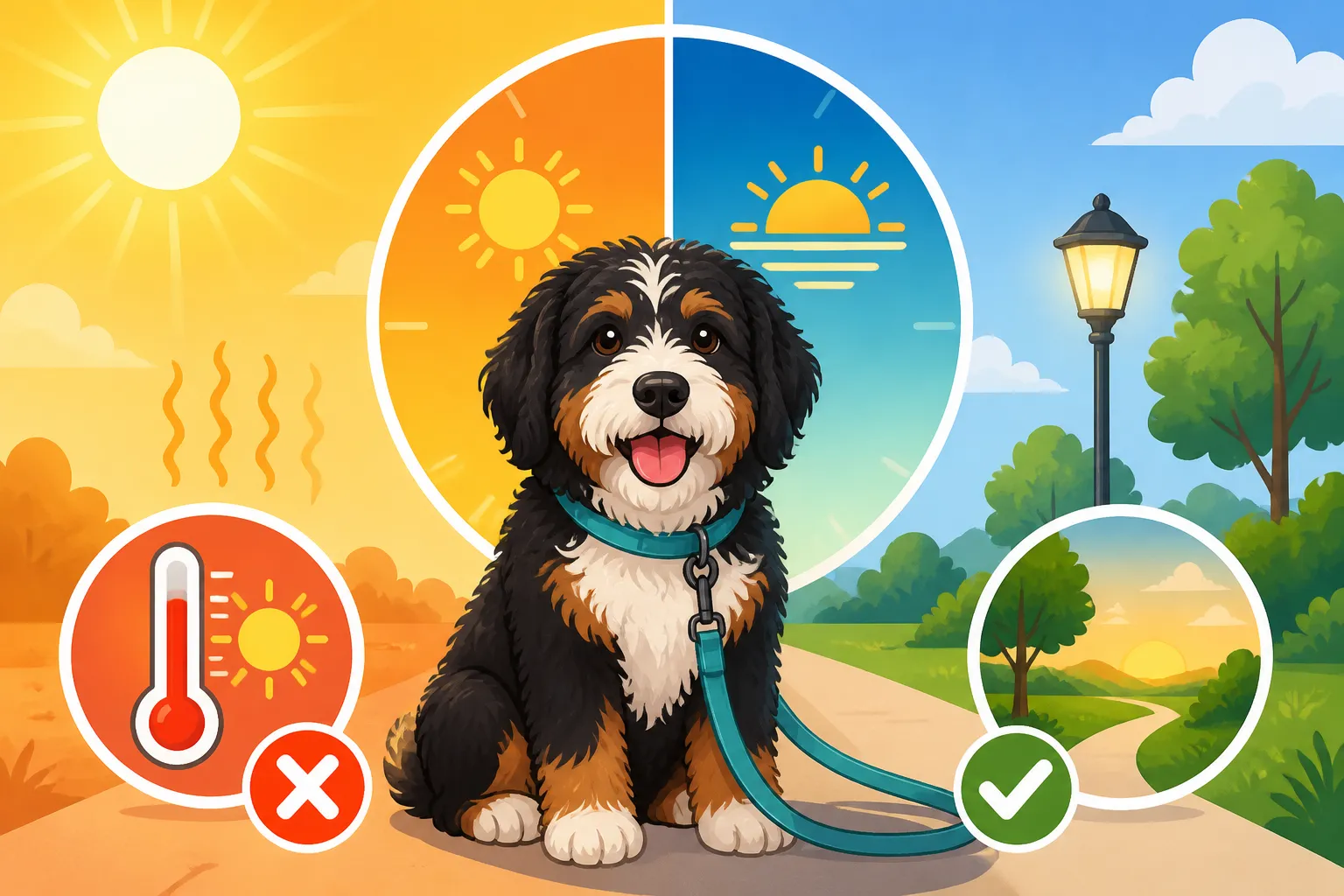
The golden hours for summer dog walks are typically before 8:00 AM and after 8:00 PM, though this can vary depending on your specific climate and location. In the early morning, the air temperature hasn't had a chance to fully heat up from the sun, and any residual heat from the previous day's pavement has usually dissipated overnight. This means cooler ambient temperatures and, critically, cooler ground underfoot. An early morning walk not only allows your Bernedoodle to get their much-needed exercise and mental stimulation but also lets them enjoy the freshest air before the daily grind of heat really kicks in. It’s a peaceful start to the day for both of you.
Similarly, late evening offers another window of opportunity. Once the sun has set and has been down for a while, the ground starts to cool considerably. The air temperature also drops, creating a much more pleasant environment for a walk. While it might still be warm, it's generally far less oppressive than the afternoon. This allows your Bernedoodle to burn off some energy before settling down for the night. Always make sure you're visible if walking in low light, perhaps with reflective gear for both you and your dog. You'll want to avoid The Temperature a Bernedoodle Should Not Be Walked In at all costs.
The Pavement Peril: Protecting Paws from Burns
One of the most overlooked dangers of summer walks is the temperature of the ground itself. Asphalt and concrete absorb and retain heat incredibly well, turning into scorching hot surfaces that can burn your Bernedoodle's paw pads in a matter of seconds. Imagine walking barefoot on hot asphalt – that's what your dog experiences. Even if the air feels mild, the ground can be dangerously hot.
A simple test to remember is the "five-second rule." Place the back of your hand flat on the pavement for five seconds. If it's too hot for your hand to comfortably stay there, it's definitely too hot for your dog's paws. On hot days, aim for walks on grassy areas, shaded trails, or even indoor malls (if pet-friendly) where the surface temperature is much lower. If walking on pavement is unavoidable, consider investing in dog booties to protect their sensitive pads. These aren't just for snow; they're a fantastic summer accessory to prevent burns. Taking preventative measures can save your Bernedoodle from painful blisters and injuries. This concern is real, and it’s why many owners actively seek information on Whether Pavement Burns a Bernedoodle's Pads.
| Time of Day | Air Temperature | Pavement Temperature | Safe for Bernedoodle? | Notes |
|---|---|---|---|---|
| 6 AM – 8 AM | Cool to Mild | Cool | Usually Yes | Ideal for longer walks. Ground has cooled overnight. |
| 8 AM – 10 AM | Mild to Warm | Warming | Potentially, with caution | Check pavement with five-second rule. Stick to shade and grass. |
| 10 AM – 4 PM | Warm to Hot | Hot to Extremely Hot | No | Avoid walks. Pavement can cause severe burns. Restrict outdoor time to bathroom breaks on grass. |
| 4 PM – 7 PM | Hot | Still Very Hot | No | Pavement retains heat even as air might slightly cool. |
| 7 PM – 9 PM | Warm to Mild | Cooling | Potentially, with caution | Check pavement carefully. May still be too warm after a very hot day. |
| 9 PM Onwards | Mild to Cool | Cool | Usually Yes | Best for evening exercise. Ensure good visibility. |
Essential Summer Walking Strategies and Gear
Beyond timing your walks, there are several practical strategies and pieces of gear that can significantly improve your Bernedoodle's safety and comfort during summer excursions. A little preparation goes a long way in preventing heat-related issues. You wouldn't go hiking in the desert without water, and your dog shouldn't go for a summer walk without the right support, either.
Hydration Station: Keeping Your Bernedoodle Quenched
This is perhaps the most critical component of any summer walk: water. Your Bernedoodle will pant to cool down, which means they're losing moisture. Dehydration can happen quickly in the heat, exacerbating the risk of overheating. Always, and I mean always, carry plenty of fresh water for your dog, even on short walks. A collapsible bowl is an absolute game-changer; it folds up small, is lightweight, and makes it incredibly easy to offer your dog a drink whenever needed. You can find excellent portable water bottles with attached bowls at retailers like Chewy or Amazon.
Make frequent stops during your walk to offer water. Don't wait until your Bernedoodle looks parched. A proactive approach is key. If you're out for a longer period, plan your route around water fountains, natural streams, or places where you know you can refill your bottle. Some owners even carry a small spray bottle to mist their dog's paws and belly for quick cooling, although this should be used judiciously and not as a substitute for drinking water. Remember, Cooling a Bernedoodle Down Safely starts with proper hydration.
Smart Gear and Shaded Paths for Cooler Walks
While shaving your Bernedoodle down might seem like a good idea to cool them off, a certain length of coat actually provides insulation against the sun's rays, much like how Bedouins wear robes in the desert. However, there are other pieces of gear that can genuinely help. Cooling vests and bandanas, which you soak in cold water before putting on your dog, can provide significant relief by promoting evaporative cooling against their chest and neck. These work by holding water close to their body, which slowly evaporates and draws heat away. You can find great options on sites like Amazon. It’s worth exploring Whether a Cooling Vest Works on a Bernedoodle to understand their benefits more thoroughly.
When choosing your walking route, prioritize shade over open, sunny areas. Parks with mature trees, trails through wooded areas, or even the shadier side of a street can make a huge difference. The direct sun contributes significantly to overheating. If you live in an urban area with limited shade, try to stick to early morning or late evening when the sun's intensity is much lower. Keeping walks shorter and more frequent on hot days is also a smart strategy. Instead of one long 45-minute trek, try two or three 15-minute bursts during the coolest parts of the day. This allows your Bernedoodle to get their mental and physical exercise without overdoing it in the heat.
When to Skip the Walk Entirely (And What to Do Instead)
There will be days when, despite your best intentions and careful planning, the weather simply isn't cooperating. It's incredibly tempting to stick to your routine, but there's a point where pushing a walk becomes not just uncomfortable, but genuinely dangerous for your Bernedoodle. Knowing when to wave the white flag and opt for indoor alternatives is a sign of responsible pet ownership.
Recognizing Unsafe Conditions: Beyond Just Temperature
It's not just the mercury reading that matters. Humidity plays a massive role in how well your Bernedoodle can cool down. Dogs primarily regulate their body temperature through panting. This process relies on evaporating moisture from their respiratory tract. When the humidity is high, the air is already saturated with moisture, making it much harder for that evaporative cooling to happen effectively. So, a 85-degree day with high humidity can feel, and be, far more dangerous than a 90-degree day with low humidity. Always check the "feels like" temperature or the heat index, not just the raw temperature. If it feels oppressive to you, imagine how it feels for a dog in a fur coat. This is exactly why you need to carefully consider Whether a Bernedoodle Should Be Walked in Summer on certain days.
Consider your specific location too. Cities with lots of concrete and asphalt create a "heat island" effect, trapping and re-radiating heat, making them hotter than suburban or rural areas. If there's no breeze, that's another factor that can increase the risk. Ultimately, trust your gut. If you step outside and immediately feel overwhelmed by the heat, it's a clear signal that it's an indoor day for your Bernedoodle. A cancelled walk is far better than a trip to the emergency vet.
Indoor Activities and Alternative Exercise
Just because a traditional walk is off the table doesn't mean your Bernedoodle's day has to be boring! There are countless ways to provide mental stimulation and physical exercise indoors. For mental stimulation, puzzle toys or even a special treat dispensing toy filled with something delicious from a quality brand like Ollie can keep them happy. Snuffle mats are fantastic for engaging their natural foraging instincts, turning mealtime into a fun brain game. You can hide kibble or treats around the house, creating a "scavenger hunt" that engages their nose and mind without overexerting their body.
For physical activity, even in a small space, short bursts of indoor fetch or a game of tug-of-war can help burn off some energy. Practicing obedience commands, learning new tricks, or even just working on polite leash walking indoors can be surprisingly tiring for them. Remember, a tired mind is often as effective as a tired body. Bernedoodles are intelligent and generally enjoy learning, so turning training into a game is a great way to bond and exercise them. You might be surprised at how well a Bernedoodle adjusts to an indoor routine, especially if you focus on variety and engagement. Knowing Whether a Bernedoodle Is Calm Indoors often depends on how much mental enrichment they get. Even though Bernedoodles need regular activity, The Exercise a Standard Bernedoodle Needs Daily doesn't always have to come from a long outdoor walk.
Disclaimer
This article is for general informational purposes only and does not constitute professional advice. Laws, prices and regulations vary by location and change over time. Consult a qualified professional for guidance on your specific situation.