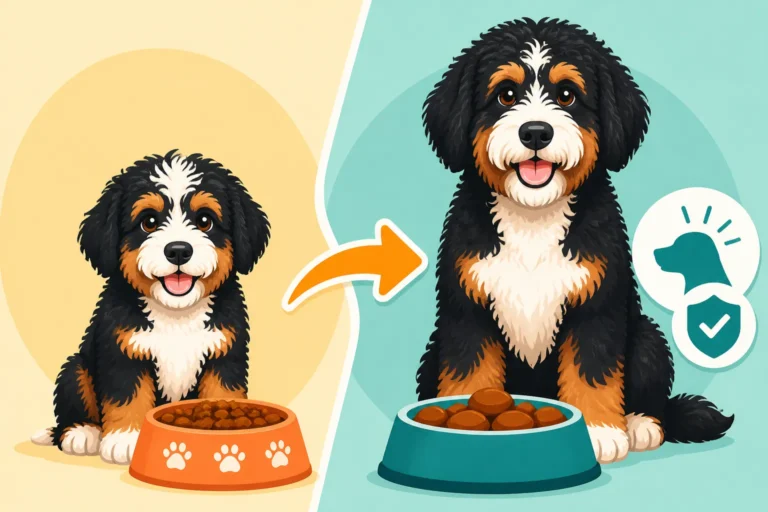
Large Breed Puppy Food for a Standard Bernedoodle
Bringing home a standard Bernedoodle puppy is an absolute joy, but it also comes with its fair share of worries, especially when you consider how rapidly these sweet giants grow. One of the biggest concerns new owners often face is figuring out the best way to fuel that incredible growth without causing future health problems. This comprehensive guide will walk you through everything you need to know about selecting and feeding large breed puppy food to ensure your Bernedoodle thrives.
The Unique Nutritional Demands of a Growing Giant
It’s easy to think all puppy food is created equal, but when you’re raising a standard Bernedoodle that could eventually weigh 70 to 90 pounds, nothing could be further from the truth. These aren't your average small or medium-sized pups; their bodies mature at a different pace, and their nutritional needs are specifically tailored to support that journey. Ignoring these distinct requirements can, unfortunately, pave the way for avoidable health issues down the line, which is the last thing any loving Bernedoodle parent wants.
Why Size Isn't Just a Number for Bernedoodle Puppies
A standard Bernedoodle isn't just a big puppy; it's a large breed puppy, and that classification carries significant weight in terms of diet. Unlike smaller breeds that reach their adult size relatively quickly, a Bernedoodle's bones, joints, and internal organs need a much longer, more controlled period of development. Imagine building a skyscraper versus a cottage; both need strong foundations, but the skyscraper requires a slower, more deliberate construction process to ensure its long-term stability. Your Bernedoodle's skeleton is no different. It's growing a massive frame, and that process must happen at a steady, appropriate rate.
This isn't just about weight gain; it's about the intricate development of cartilage, bone density, and joint integrity. The Bernese Mountain Dog side of your Bernedoodle brings with it a predisposition to certain orthopedic issues, and while the Poodle side might offer some hybrid vigor, prudent feeding during puppyhood is still paramount. You're not just feeding a cute fluffball; you're actively supporting the structural soundness of a dog that will be a significant presence in your life for many years.
The Dangers of Too-Rapid Growth in Large Breeds
One of the most crucial concepts for standard Bernedoodle owners to grasp is the idea of "slow growth." While it might feel counterintuitive to deliberately slow down your puppy's growth when all you want is for them to be big and strong, allowing a large breed puppy to grow too quickly can be genuinely detrimental. This rapid expansion can put undue stress on their developing growth plates and joints, leading to a higher risk of conditions like hip and elbow dysplasia. It's a real worry, especially when you see how fast they're putting on size, and it’s a constant thought for owners of big, lovable breeds. You can read more about how intentional feeding strategies contribute to long-term health in Growing a Standard Bernedoodle Slowly on Purpose.
Think of it like this: if a skyscraper's foundation is rushed, cracks can form, compromising the entire structure. Similarly, a Bernedoodle puppy growing too fast can develop micro-traumas or abnormal joint development that might not show up until they're older, manifesting as pain, lameness, or severe arthritis. It’s a silent threat that careful nutrition can help mitigate. Many owners feel immense pressure to "bulk up" their puppies, perhaps seeing a thin puppy as unhealthy, but with large breeds, a leaner, slower growth trajectory is almost always healthier for their long-term orthopedic health.
Cracking the Code: Key Nutritional Components for Bernedoodle Puppies
Navigating the world of dog food labels can feel like deciphering a secret language, full of percentages and ingredient lists that don't always make immediate sense. For your standard Bernedoodle puppy, getting the balance right is absolutely critical, and it really comes down to understanding a few key components. You're looking for ingredients that support their specific growth needs, rather than a generic "one size fits all" approach.
Protein and Fat: Balancing Energy and Muscle Development
Protein is essential for any growing puppy, forming the building blocks of muscles, organs, and tissues. For a standard Bernedoodle, you need a good quality protein source, usually chicken, beef, or lamb, as the primary ingredient. However, "more protein is always better" isn't quite the right mantra for large breeds. While they need sufficient protein, excessively high levels can sometimes contribute to rapid growth, which, as we discussed, isn't ideal. Most large breed puppy formulas aim for a moderate protein content, typically around 26-30%, to support lean muscle mass without over-accelerating bone growth.
Fat provides concentrated energy and helps with nutrient absorption, which is vital for an active, playful Bernedoodle puppy. Just like protein, it needs to be present in adequate amounts, but not in excess. Too much fat can lead to unnecessary weight gain, adding stress to those developing joints. A large breed puppy food will typically have a fat content in the range of 12-18%. Look for healthy fat sources like chicken fat or salmon oil, which also provide essential omega fatty acids for coat health and cognitive development. It's all about finding that sweet spot where they get enough fuel without gaining too much weight too quickly.
The Critical Calcium-Phosphorus Balance for Bone Health
This is arguably the most critical aspect of large breed puppy nutrition, and it’s where many owners inadvertently make mistakes. Large breed puppies need a very specific, controlled amount of calcium and phosphorus, and more importantly, a precise ratio between the two. Too much calcium, or an incorrect calcium-to-phosphorus ratio, can severely interfere with bone development, leading to skeletal abnormalities like osteochondrosis (OCD) or other forms of Elbow Dysplasia in a Growing Bernedoodle and hip issues. You’ll find more information on the specific concerns in Why Calcium Levels Matter for a Growing Bernedoodle.
A good large breed puppy food will have a calcium content between 0.7% and 1.2% on a dry matter basis (DMB), and a calcium-to-phosphorus ratio typically between 1.1:1 and 1.4:1. This is a narrow window, and it's why feeding "all life stages" food or supplementing with extra calcium (like dairy or bone meal) is highly discouraged unless specifically instructed by your veterinarian. It’s a complex biochemical dance happening inside your puppy’s growing body, and disrupting that balance, even with good intentions, can have serious consequences. Many owners feel this anxiety about getting it perfectly right, and it’s a valid concern, so choose food explicitly formulated for large breed puppies.
Navigating the Aisles: Choosing the Best Bernedoodle Puppy Food
With so many brands and formulas on the market, choosing the right food for your standard Bernedoodle puppy can feel overwhelming. It's not just about picking a reputable brand; it's about understanding what makes a food truly suitable for their unique needs. Don't fall for marketing hype; learn to read labels critically and prioritize ingredients that support healthy, steady growth.
Decoding Labels and Certifications for Quality Assurance
When you're standing in the pet food aisle, or browsing online on sites like Chewy or Amazon, the sheer number of options can be dizzying. The first thing you should always look for is a statement from the Association of American Feed Control Officials (AAFCO). This statement, usually found on the back of the bag, should clearly say that the food is "formulated to meet the nutritional levels established by the AAFCO Dog Food Nutrient Profiles for growth of large size dogs" or "for all life stages, including growth of large size dogs." This small phrase confirms that the food has been specifically designed with your Bernedoodle's needs in mind. Without this, you're essentially gambling on your puppy's development.
Beyond the AAFCO statement, scrutinize the ingredient list. The first few ingredients should ideally be whole, identifiable animal proteins, such as deboned chicken, lamb meal, or fish meal, rather than vague "meat by-products." While some by-products can be nutritious, specific names give you a better idea of quality. Avoid foods with excessive fillers, artificial colors, flavors, or preservatives. Quality matters because better ingredients mean better absorption and utilization by your growing Bernedoodle's body.
Considering Specific Brands and Formulas
While I can't recommend specific products or brands, I can tell you what to look for generally. Many well-known pet food companies offer excellent large breed puppy formulas that adhere to the critical calcium and phosphorus guidelines. Brands with a strong history of research and development, often collaborating with veterinary nutritionists, are typically a safe bet. When you're searching for these specialized foods, you'll find plenty of options on platforms like Chewy or Amazon, offering a wide array of brands. Some owners also opt for fresh food delivery services, and while I can't speak to specific companies, services like Ollie are often discussed in Bernedoodle communities for their customized approach, though it's always critical to ensure any fresh food option is balanced for large breed puppy growth.
It’s worth noting that some Bernedoodle parents have found success with grain-inclusive diets, as recent discussions in the veterinary community have raised questions about potential links between grain-free diets and certain cardiac issues in some dogs. Always discuss your food choices with your veterinarian, especially for a rapidly growing puppy, to make sure you're making an informed decision tailored to your individual dog's health profile.
Dry Kibble vs. Other Options
For large breed puppies, dry kibble is often the most recommended and widely used option due to its precise nutritional balance and affordability. High-quality large breed puppy kibble is formulated to contain the exact ratios of nutrients needed for controlled growth, something that can be very difficult to achieve with homemade or raw diets without expert guidance.
However, some owners explore other options:
- Wet Food: While palatable, wet food is typically lower in calories by volume, meaning your Bernedoodle puppy would need to eat a much larger quantity to get enough nutrients, which can be expensive and lead to a very full tummy. It can be used as a topper or for medication, but a primary diet of wet food for a large breed puppy is less common.
- Raw or Homemade Diets: These can be tricky. Achieving the correct calcium-to-phosphorus ratio and overall nutrient balance is incredibly difficult for an inexperienced owner, and imbalances can have serious, irreversible health consequences for a growing large breed. If considering this, work very closely with a board-certified veterinary nutritionist who specializes in large breed puppy growth to formulate a balanced diet. Without this expertise, the risks far outweigh any perceived benefits.
- Fresh Cooked Diets (Commercial): Some services like Ollie or The Farmer's Dog offer fresh cooked, balanced meals. If you choose this route, ensure the specific formula is designed and balanced for large breed puppies, paying close attention to the calcium and phosphorus levels. These can be excellent options but often come at a higher cost due to the fresh ingredients and careful formulation.
Ultimately, the best choice is the one that is nutritionally complete and balanced for large breed puppy growth, fits your budget, and that your Bernedoodle puppy thrives on.
The Art of Feeding: Portions and Schedules for Optimal Growth
Once you’ve chosen the perfect food, the next challenge is actually feeding your Bernedoodle puppy correctly. It's not just about what you feed, but how much and when. Getting this right is crucial for managing their growth rate and preventing conditions often exacerbated by overfeeding. Many owners feel like their big puppy is always hungry, and it’s hard to resist those pleading eyes, but discipline here pays off immensely in their long-term health.
How Much, How Often: General Guidelines and Monitoring
Most large breed puppy food bags will provide a feeding chart based on your puppy's current weight and age. This is your starting point, but it's not a rigid rule. Every Bernedoodle puppy is an individual, with varying metabolism and activity levels. I've often heard owners worry about whether they're giving enough or too much, and it's a completely understandable concern. The goal is for your puppy to grow steadily, not rapidly, and maintain a lean body condition. You should be able to easily feel their ribs, but not see them prominently. When you look down from above, you should see a discernible waist.
A standard Bernedoodle puppy should typically be fed three times a day until they are around 6-9 months old, then transition to two meals a day. This helps manage their metabolism and prevent them from becoming overly hungry, which could lead to them inhaling their food too quickly – a potential concern for bloat in deep-chested breeds. Monitoring their body condition weekly is far more important than strictly adhering to a feeding chart. If your puppy looks too thin, slowly increase the portion. If they look a bit chunky, slightly reduce it. Remember, you're aiming for a lean, athletic physique, not a pudgy one.
Here’s a simplified guide, but always defer to your specific food’s guidelines and your vet:
| Age (Months) | Meals Per Day | Activity Level | Goal Body Condition |
|---|---|---|---|
| 2-6 | 3 | Moderate-High | Lean; ribs felt, not seen |
| 6-12 | 2 | Moderate-High | Lean; ribs felt, not seen |
| 12+ | 2 | Moderate | Maintained healthy weight |
Always consult your veterinarian for precise feeding amounts tailored to your individual Bernedoodle puppy.
Monitoring Growth, Not Just Weight
While you'll certainly be weighing your Bernedoodle puppy regularly, especially at vet visits, it's equally important to monitor their type of growth. We want bone and muscle development to be proportionate and gradual, particularly until their growth plates have closed, which typically happens around 12-18 months for large breeds. This is why The Age a Bernedoodle Reaches Full Height is such a crucial marker. This slow and steady approach is a cornerstone of preventing orthopedic issues like Hips on a Ninety Pound Bernedoodle and Elbow Dysplasia in a Growing Bernedoodle.
A lean, athletic build is far preferable to a bulky, rapidly growing one during puppyhood. Imagine a long-distance runner versus a powerlifter; during the developmental stage, you're training for the marathon of a healthy life, not a quick burst of growth. Your vet will be a great resource for assessing your puppy's growth rate and body condition, and they can help you adjust feeding if needed. Don’t hesitate to ask them to show you how to feel for your puppy’s ribs and waistline to ensure they are on the right track. This partnership with your vet is invaluable in raising a healthy Bernedoodle.
Common Missteps and How to Avoid Them
Even with the best intentions, it's easy to make mistakes when feeding a rapidly growing Bernedoodle puppy. The sheer volume of information out there can be contradictory, and the desire to give your beloved pup "the best" can sometimes lead to decisions that are actually counterproductive. Let's talk about some common pitfalls and how to steer clear of them to protect your Bernedoodle's long-term health.
The Perils of Overfeeding a Large Breed Puppy
This is probably the most common and damaging mistake made by owners of large breed puppies. It's incredibly tempting to overfeed. Your Bernedoodle puppy always seems hungry, they eat so quickly, and they're just so darn cute! But overfeeding, even with a high-quality large breed puppy food, can significantly increase the risk of orthopedic problems. Excess calories lead to faster weight gain and accelerated bone growth, putting strain on immature joints before they've had a chance to properly develop and harden. This is why it's so important to understand Whether Overfeeding a Bernedoodle Puppy Damages Its Joints.
It’s not just orthopedic issues; overfeeding can also contribute to obesity later in life, which comes with its own host of health problems like diabetes, heart disease, and further joint degeneration. Many owners tell me they worry their pup isn't getting enough, but trust me, a slightly lean Bernedoodle puppy is a healthier Bernedoodle puppy. Stick to the guidelines, measure your food, and resist the urge to free-feed. If your Bernedoodle inhales their food, consider a slow feeder bowl to make mealtime last longer and reduce bloat risk. You might also want to look into Whether a Standard Bernedoodle Should Rest After Meals to further reduce potential digestive issues.
Avoiding "All Life Stages" Formulas for Large Breeds
While an "all life stages" food might seem convenient, and some are technically balanced for large breed puppies, they aren't always the optimal choice. The calcium and phosphorus requirements for an adult dog are different from those of a growing large breed puppy. A food that meets "all life stages" might have calcium levels that are perfectly fine for an adult, but potentially too high for a rapidly developing large breed puppy, which, as we discussed, can lead to skeletal problems.
Dedicated large breed puppy formulas are specifically formulated with controlled calcium, phosphorus, and energy levels to promote slow and steady growth. They are designed to meet the unique physiological demands of breeds like Bernedoodles during their most critical developmental period. Think of it like a specialized diet for an athlete versus a general diet for everyone; the specialized diet is tailored for peak performance and long-term health in that specific context. Don't compromise your Bernedoodle's foundational health by opting for a generalist food when specialists are available and recommended.
The Big Transition: Moving Your Bernedoodle to Adult Food
Your sweet, clumsy Bernedoodle puppy will eventually grow into a majestic, playful adult. This transition is exciting, but it also means a change in their dietary needs. Knowing when and how to make the switch from puppy food to adult food is an important step in their continued health and well-being. It’s a milestone that often catches new owners off guard, thinking puppy food is fine for longer than it truly is.
When to Make the Switch to Adult Food
For standard Bernedoodles, the transition to adult food typically happens later than for smaller breeds, usually between 12 to 18 months of age. There's no single magic number, and it depends on your individual dog's growth and maturity. Generally, you'll want to consider the switch when your Bernedoodle has reached roughly 80-90% of their adult height and their growth plates are closing. Some veterinarians might recommend keeping them on large breed puppy food a bit longer, up to 18-24 months, especially if they are still growing or if they have a leaner body condition.
Signs your Bernedoodle is ready include:
- Reaching near adult height: They won't grow much taller, though they may fill out more. You can check The Age a Bernedoodle Reaches Full Height for general timelines.
- Body condition: They are maintaining a healthy, lean weight, and not looking too thin or too heavy.
- Veterinarian’s advice: Your vet is your best resource here. They can assess your Bernedoodle's physical development and advise on the optimal time for the switch based on their overall health and skeletal maturity.
Making the switch too early could mean missing out on crucial nutrients still needed for final development, while waiting too long means your Bernedoodle is getting excess calories and potentially unbalanced calcium for their adult needs.
A Gentle Hand: The Transition Process
Once you've decided it's time to transition to adult food, do it gradually to avoid upsetting your Bernedoodle's stomach. A sudden change in diet can lead to digestive issues like diarrhea or vomiting, which is unpleasant for everyone involved. Aim for a transition period of about 7-10 days, slowly increasing the new food while decreasing the old one.
Here’s a typical transition schedule:
| Day | Old Puppy Food | New Adult Food |
|---|---|---|
| 1-2 | 75% | 25% |
| 3-4 | 50% | 50% |
| 5-6 | 25% | 75% |
| 7+ | 0% | 100% |
Watch your Bernedoodle closely during this period. If they show any signs of digestive upset, slow down the transition. For example, if they get diarrhea on day 3, go back to the day 1-2 ratio for a few more days before trying to increase the new food again. The goal is a smooth transition that allows their system to adjust comfortably. This careful approach sets them up for a lifetime of healthy eating habits and helps you stay ahead of potential issues. Keeping a Bernedoodle at a healthy weight throughout their life is critical, and you can learn more about managing that in Keeping a Bernedoodle's Weight Down.
Disclaimer
This article is for general informational purposes only and does not constitute professional advice. Laws, prices and regulations vary by location and change over time. Consult a qualified professional for guidance on your specific situation.