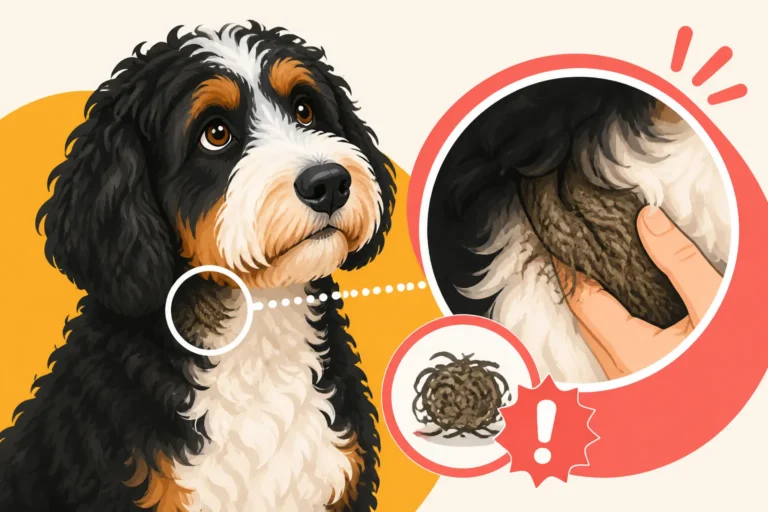
Whether a Bernedoodle Mats Overnight in the Coat Change
You wake up, ready to greet your adorable Bernedoodle, only to discover a tangled mess where a smooth, flowing coat was just last night. The dreaded "overnight matting" during the coat change is a common, often frustrating, experience for Bernedoodle owners, leaving many wondering if their dog secretly wrestled a porcupine in their sleep. This guide will delve into the realities of Bernedoodle coat change matting, explain why it feels so sudden, and equip you with practical strategies to manage this challenging phase.
Understanding the Bernedoodle Coat Change: A Rite of Passage (and Challenge)
The coat change in a Bernedoodle is a significant developmental stage, often catching new owners off guard with its intensity. It's not just a little extra shedding; it's a profound transformation of their fur, and it's where the matting really kicks into high gear.
When the Puppy Fluff Gives Way: The Timeline of Transformation
Typically, a Bernedoodle puppy begins to transition from its soft, fluffy puppy coat to its denser, adult coat between 6 to 18 months of age. This isn't a hard and fast rule; some might start a little earlier, others a little later, and the process can ebb and flow over several months. During this period, the fine, single-layered puppy hair is gradually replaced by the more complex adult coat, which can be wavy, curly, or even straight, carrying characteristics from both the Bernese Mountain Dog and the Poodle. This is also when you start to really see The Coat a Bernedoodle Gets From Two Heavy Coated Parents and understand the blend. The problem arises because the shedding puppy hair gets trapped within the developing adult coat, creating a perfect storm for tangles. Imagine trying to brush out a mixture of baby fine hair and coarse adult hair all at once – it's a recipe for knots!
The Unseen Battle: Why Adult Coats Are Prone to Matting
Even outside of the specific coat change period, Bernedoodles are inherently prone to matting. Their coats, especially the wavy and curly types, are designed to hold onto shed hair rather than letting it fall out. This is a blessing for those seeking a "low-shed" dog, but it's a curse for daily grooming. The Bernese contribution often means a dense undercoat, which, when mixed with the Poodle's tendency for tightly curled hair, creates a formidable mat-making machine. These coats are often described as "wool" or "fleece" and require consistent attention. Without diligent brushing, these trapped hairs quickly intertwine, forming tight, painful mats close to the skin. It’s not just about aesthetics; mats can pull on the skin, restrict movement, cause hot spots, and hide skin infections. Understanding Why the Undercoat Is What Mats on a Bernedoodle is crucial for effective grooming.
The Overnight Matting Myth vs. Reality: Why It Feels So Sudden
The feeling that mats appear "overnight" isn't entirely a myth. While a truly mat-free dog won't suddenly develop severe matting in a few hours, existing micro-tangles and loose hair can indeed worsen dramatically in a short span, especially with certain environmental and behavioral factors.
The "Magic" of Matting: How Friction and Moisture Accelerate the Process
Imagine your Bernedoodle settling down for the night. As they shift, roll, and scratch, their coat experiences friction against bedding, carpets, or even their own body. This friction causes loose hairs to rub together, knotting them into small tangles. If the coat is even slightly damp from an evening walk, humidity in the air, or even just body moisture, those tangles tighten significantly. It’s like wet hair becoming much harder to brush out than dry hair. These small knots then act as anchors, catching more loose hair and escalating into larger mats surprisingly quickly. A warm, humid night, combined with a Bernedoodle's natural movement during sleep, can truly make it seem like mats materialize out of thin air. It's not magic, but a rapid acceleration of a process that's always subtly at play.
Where Mats Love to Hide: Common Trouble Spots That Appear Suddenly
During the coat change, mats have their favorite hideouts, often in high-friction areas or places that get compressed while sleeping. These are the spots you check religiously during the day, only to find them surprisingly tangled by morning. The area behind the ears is a prime example; the skin folds, combined with head movements, make it a mat magnet. Armpits and inner thighs are another common problem, as limbs rub together. The "britches" – the longer hair on their rear legs – also mat easily, especially if your dog sleeps curled up. Don't forget under the collar or harness, as friction here can also create quick tangles. If your Bernedoodle often sleeps on their side or back, pay extra attention to the areas of their body that are compressed against the bed or floor. These are The Places a Ninety Pound Bernedoodle Mats First, and recognizing them is half the battle.
Proactive Strategies to Combat the Coat Change Chaos
Combating the coat change effectively requires a consistent, multi-pronged approach. It’s about building a routine that prevents mats before they take hold, rather than constantly trying to untangle them after the fact.
The Daily Brush-Out: Your Best Defense Against Matting
During the coat change, a daily brushing routine isn't just recommended; it's absolutely essential. Even if you usually brush every other day, this period demands daily attention, sometimes even twice a day for particularly dense or rapidly changing coats. The key is "line brushing," a technique where you part the hair and brush in sections, working from the skin out. This ensures you're getting all the way down to the roots, where mats typically start, rather than just skimming the surface. A simple surface brush might make the top layer look good, but it leaves the undercoat and new adult hair to tangle underneath. Aim for at least 15-30 minutes of focused brushing, ensuring you cover all those notorious matting spots like behind the ears, armpits, and britches. This consistent effort will save you a lot of heartache and your Bernedoodle a lot of discomfort. How Often a Bernedoodle Should Be Brushed is a question many owners grapple with, and during this phase, the answer is "often!"
Tools of the Trade: Equipping Yourself for Success
Having the right tools makes a world of difference. You'll need more than just a single brush. A good quality slicker brush is vital for detangling and removing loose hair. Look for one with fine, sturdy pins. An undercoat rake can also be incredibly useful for reaching down through the dense layers, particularly if your Bernedoodle inherited a significant undercoat from their Bernese side. A metal comb with both wide and fine teeth is perfect for checking your work and teasing out smaller tangles, especially in sensitive areas like the face and ears. Don't forget a detangling spray; a quick spritz before brushing can help loosen knots and reduce static, making the process more comfortable for your dog. You can find excellent options for these grooming tools on platforms like Amazon or Chewy, ensuring you have everything you need to manage that beautiful coat. The Slicker and Rake a Bernedoodle Needs article offers more detailed advice on choosing the right equipment.
Environmental Management: Minimizing Risk Factors While They Sleep
While you can't stop your Bernedoodle from moving in their sleep, you can control their immediate environment to reduce matting risks. Consider the type of bedding they use. Smooth, satin, or silk pillowcases (yes, even for dogs!) can reduce friction on their coat, especially around the ears and neck. Avoid fuzzy or woolly blankets that can contribute to tangles. Ensure their sleeping area is dry and relatively cool. If your dog gets damp from playing outside or a bath, make sure they are thoroughly dry and brushed before bedtime. Even simple things like removing their collar or harness overnight can prevent significant matting in those areas. This small step can make a big difference, especially since a Whether a Heavy Duty Harness Mats a Bernedoodle can be a real concern.
When Mats Happen: Gentle Solutions for Tangled Bernedoodles
Despite your best efforts, mats can and will happen during the coat change. It’s how you handle them that matters. Aggressive pulling or cutting can injure your dog and make them fearful of grooming.
Breaking Down the Mats: Techniques and Patience
If you find a mat, the first rule is: don't panic and don't pull. Start by isolating the mat and applying a generous amount of detangling spray or a dog-safe conditioner. Using a mat splitter or a seam ripper (carefully!), you can gently slice through the mat lengthwise rather than pulling it out. This breaks the mat into smaller, more manageable sections. Once it's split, use the wide-toothed side of your metal comb or the very tip of your slicker brush to gently tease out the tangles, working from the outside edges of the mat inwards. Always hold the hair closest to the skin while you brush to prevent pulling. This takes time and immense patience, but it’s crucial for your dog’s comfort. Remember, Splitting a Mat on a Bernedoodle needs a delicate touch.
| Matting Severity | Recommended Action | Tools Needed | Key Principle |
|---|---|---|---|
| Minor Tangles | Daily line brushing, focus on trouble spots. | Slicker brush, metal comb, detangling spray. | Prevention is best. |
| Small Mats | Isolate, apply detangler, split lengthwise, gently tease out. | Mat splitter/seam ripper, metal comb, slicker brush. | Patience and gentle technique. |
| Moderate Mats | Follow small mat steps. May require multiple short sessions. | All above, possibly specialized detangling tools. | Don't rush, prioritize dog's comfort. |
| Severe/Tight Mats | Professional groomer or veterinarian. Do NOT attempt at home. | Professional tools, possibly sedation. | Safety first; avoid pain/injury. |
When to Call in the Professionals: Knowing Your Limits
There comes a point where home detangling is no longer safe or feasible, both for your dog's well-being and your sanity. If a mat is very tight, close to the skin, or if your dog is showing signs of pain or extreme discomfort during brushing, it's time to call a professional groomer. They have specialized tools and techniques, and the experience to safely remove mats, often with less stress for the dog. In severe cases, where mats are extensive and pulling on the skin, the kindest and safest option might be a full shave-down, performed by a groomer or veterinarian. While this might be disappointing for owners who love the fluffy look, it’s far better than putting your dog through prolonged pain. They will grow back! Sometimes, Whether a Matted Bernedoodle Must Be Shaved Down becomes the only humane option. Discussing these tough decisions with your groomer or vet is always a good idea.
Living Through the Coat Change: Patience and Persistence
The coat change can feel like an endless battle, but it does eventually subside. Understanding the duration and committing to a consistent routine will make the process much smoother.
How Long Does This Last Anyway? Managing Expectations
The coat change isn't a single event but a process that can span several months. While the most intense phase, where the puppy coat is actively shedding and getting caught in the new adult coat, might last 2-4 months, you might see residual matting tendencies for a good portion of their first year and a half. For some Bernedoodles, especially those with particularly dense or curly coats, the "coat blowing" phase might even re-emerge in milder forms around 2-3 years of age as their coat fully matures. It's a journey, not a sprint. During this time, consistency is your greatest ally. Think of it as a significant, but temporary, increase in your grooming duties. Knowing How Many Months a Bernedoodle's Coat Change Runs can help you mentally prepare for the commitment needed.
Maintaining the Routine: Beyond the Coat Change
Even after the primary coat change is over, Bernedoodle coats still demand regular attention. While you might not need to brush daily, maintaining a consistent schedule of brushing every 2-3 days, along with professional grooming appointments every 6-8 weeks, will be crucial for the rest of their lives. This breed isn't one where you can skip grooming for months without consequences. Continue to use your slicker brush, comb, and detangling spray. Even if you've chosen a slightly shorter clip for easier maintenance, vigilance is still key to preventing painful matting. The Bernedoodle's beautiful coat is one of its most defining features, but it truly is a commitment. Embrace the routine, and your Bernedoodle will thank you with a comfortable, gorgeous coat for years to come. For additional tips on long-term care, consider reading The Volume of Coat a Bernedoodle Owner Brushes Weekly.
Disclaimer
This article is for general informational purposes only and does not constitute professional advice. Laws, prices and regulations vary by location and change over time. Consult a qualified professional for guidance on your specific situation.